
Two leading-edge facilities set to open in 2022 will further strengthen U of T Engineering as a powerhouse for clean energy research and commercialization.
This week, the National Research Council of Canada announced a new advanced materials research facility in Mississauga. Among other things, the facility will house the Collaboration Centre for Green Energy Research Materials (CC-GEM), a partnership between U of T and NRC that focuses on both fundamental discoveries and their translation into commercial technologies.
Professor Timothy Bender (ChemE) is one of two co-leads for CC-GEM. His research expertise focuses on the development of organic chemical substances that convert light into electricity or vice versa. These materials have important applications in display screens — from smartphones to big-screen TVs — and could also provide low-cost alternatives to the silicon-based products that currently dominate the solar power industry.
“Sustainably meeting our growing energy needs is one of the most critical challenges we face,” said Christopher Yip, Dean of U of T Engineering. “Professor Bender and his multidisciplinary team have a strong track record of success in transforming fundamental insights in chemistry, engineering and materials science into innovative technologies.
“This partnership will catalyze the transformation of these discoveries into innovative products and new business ventures that will power a greener Canadian economy.”
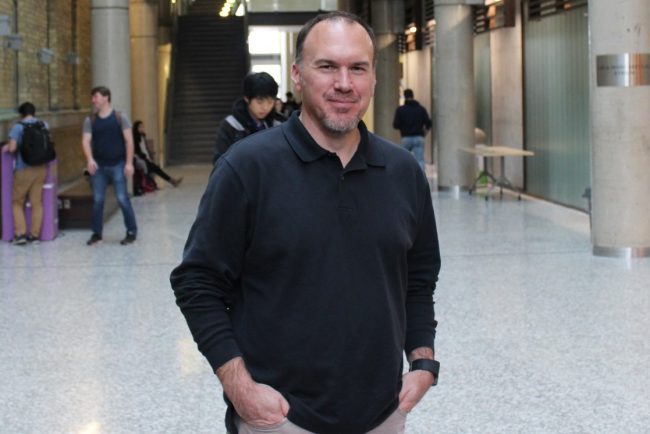
Bender says that one of the most important functions of CC-GEM will be fostering new collaborations between U of T Engineering professors and students and NRC experts who have long-standing research programs in the field of photovoltaics.
“I’m excited because this centre will open up access to cutting-edge equipment and new kinds of experimental scenarios,” says Bender. “These are opportunities we currently don’t have at U of T.”
But CC-GEM is not the only new facility on the horizon. On the St. George campus, Bender is also one of the leading proponents of another emerging initiative: U of T Engineering’s Sustainability Lab (S-Lab).
This new facility will be housed atop the Wallberg Building, and will focus on accelerating research in areas such as smart grids, carbon management and advanced materials, to name a few.
S-Lab will be an open-concept, multidisciplinary space, encouraging students and researchers from more than a dozen lab groups across the Faculty to collaborate, share tools, equipment and resources, catalyzing new ideas to tackle the climate crisis.
“Going from no space to two facilities focused on exclusively on sustainability is quite extraordinary,” says Bender. “I see these two hubs as being connected; they will both enable us to foster important discoveries and industry collaborations, allowing us to quickly move these key green technologies to market.”
A camera and a bottle of Gatorade were the key pieces of equipment for a recent virtual lab in Professor Jennifer Farmer’s (ChemE) course, CHE204: Applied Chemistry.
“We told students that they’d have to determine the amount of food dye in the drink,” explains Farmer.
Any other year, students would learn to operate a spectrometer to find the answer.
“Well, we don’t have spectrometers at home — or do we?”
During the COVID-19 pandemic, instructors and teaching assistants (TAs) across U of T Engineering have had to get creative in finding new, engaging and equitable ways to conduct labs — a traditionally hands-on and collaborative in-person learning experience — without on-campus equipment, software or space.
Farmer is using a combination of “kitchen labs,” simulated lab platforms and data analysis reports to create a new lab experience. And in the case of this recent assignment: students used a camera or smartphone in place of a spectrometer.
“It was important that the labs were accessible and that students could use what they have on hand at home instead of procuring specialty items and tools,” says Farmer.
Another important goal of Farmer’s is to ensure her students still get to build relationships with their peers. For the kitchen labs, she puts students into teams to mimic the interactions of a lab setting.
“Normally, students will be looking over and going, ‘Oh, it didn’t work for you either? Ok, so is it the chemistry that’s not working?’ and they talk it out to solve it,” she says. “I want to provide that same conversation from their own homes.”
“It was important that the labs were accessible and that students could use what they have on hand at home.”
In AER 210: Vector Calculus and Fluid Mechanics, second-year Engineering Science students in Professor Alis Ekmekci’s (UTIAS) course would typically learn fundamental fluid mechanics concepts by participating in a flow visualization lab.
This activity involves using Particle Image Velocimetry (PIV), an optical flow measurement technique, to analyze data, sketch flow lines and do calculations. In the past, the team used software that runs concurrently with the flow visualization lab equipment on physical computers within the laboratory.
When faced with the challenge of pivoting the lab online, Ekmekci and her TA, Pouya Mohtat (UTIAS PhD candidate), were determined to find a solution to deliver a similar experience remotely.

“We could have just given the students readily analyzed experimental data and asked them to put together a lab report on it, but that would not be very interactive — they need to experience handling data and extracting results,” says Ekmekci.
Mohtat spent the summer developing an interactive and user-friendly tool to help students with the lab exercises on flow visualization. The tool runs on virtual machines in the cloud, making it accessible for students wherever they are.
“What we have built enables students to do interactive exercises on their own time. They can analyze PIV data sets by themselves, run computational flow simulations, and compare experimental and computational results using the user-friendly interactive tools that we have developed for them,” says Mohtat.
Ekmekci hopes that their approach and solution will help other faculty members looking for accessible and interactive exercises for their students.
“We could have just given the students readily analyzed experimental data… but that would not be very interactive — they need to experience handling data and extracting results.”
Professor Chris Bouwmeester (BME) is looking ahead to the Winter term and how he’ll foster engagement among graduate students in BME 1802: Applying Human Factors to the Design of Medical Devices.
“I’m playing around with a couple of ideas,” says Bouwmeester. Normally for each lecture, Bouwmeester would bring in different medical devices for students to study and pass around the class.
“My goal was to always put these instruments in students’ hands so they can understand how they work, and how confusing or straightforward these devices can be,” explains Bouwmeester. “To recreate that experience virtually is a tough challenge.”
Inspired by his daughter’s love of the stop-motion animated show Tiny Chef, “I thought, maybe I could do these little stop-motion videos of the instruments I have on hand at home.”
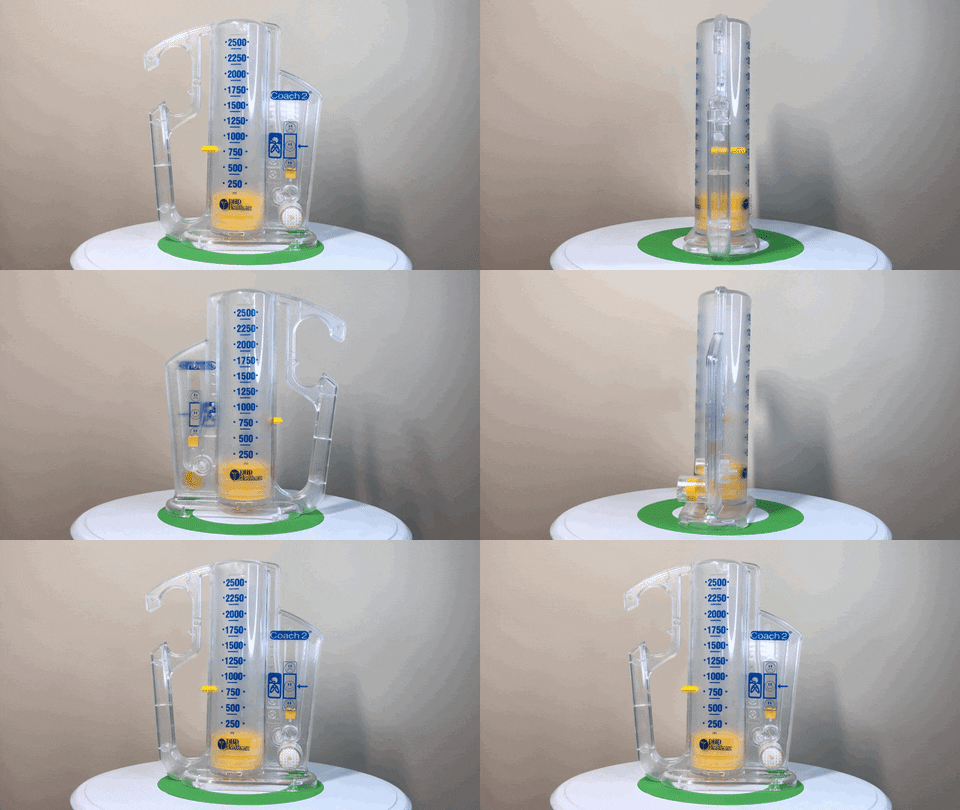
The stop-motion aspect of filming the devices means students can rotate them, go backward and forward, in order to better understand them.
“I could have just filmed them, that would be much easier,” says Bouwmeester. “But if students wanted to pause at a part, the device might look blurry. I wanted to give each movement purpose.”
Another activity in the course enables students to experience administering Naloxone, a medication used to quickly counteract the effects of opioids. Using a simulated version of the Naloxone kit, students would time themselves as they open the kits, read the instructions, open the practice vials and inject the drug into an orange.
“The course is about how to redesign devices to be safer and easier to use, so it’s important for students to get to experience the equipment and to experience the errors that are easy to make,” he says.
“My goal was to always put these instruments in students’ hands.”
Though still in the brainstorming phase, Bouwmeester hopes to translate this experience remotely by mailing out the simulated kits to students, having them film themselves administering it and getting other students to watch and observe any errors.
“I’ve had to think harder this year, because my philosophy is to have students get that hands-on experience — that was my whole reason for teaching in the Myhal Centre,” says Bouwmeester. “Labs and design classes are all about applying your knowledge, iterating and learning from your mistakes. And that should still be true online.”
More cool labs
Other U of T Engineering professors who are thinking creatively to deliver their lectures and labs include:
- Professor Emeritus Joseph C. Paradi (ChemE, MIE) and Lecture Fellow Margarete Von Vaight, a trained opera singer, engineering consultant and Faculty of Music alumna, are leveraging music and creativity to deliver Entrepreneurship & Small Business. This includes the voluntary Dollar Store Challenge, where students are assigned a fictional case and are tasked to create a musical instrument, costing under $10, for an individual suffering from a physical or mental health issue.
- ECE students can conduct many of their labs at home, thanks to “CPUlator,” a free CPU simulator designed and maintained by alumnus Henry Wong (CompE 0T6, ECE PhD 1T7). The computer program effectively and efficiently simulates hardware that they would use when learning the fundamentals of how computers work. Wong’s simulator has been used 280,000 times — both by U of T Engineering students and students at other institutions.
- Professor Grant Allen, Chair of ChemE, has produced a video series that uses a leaf blower as an example of a fluid mechanics device that uses a ‘pump’ and transfers momentum. The videos, which have received overwhelmingly positive reactions from students, were produced near his family cottage and feature ample cameos from his dog, Layla.
Locke Davenport Huyer (ChemE PhD 1T9) remembers the moment his team had to make the call.
“All of the programming was developed and ready to go,” says Davenport Huyer, now a postdoctoral fellow at Johns Hopkins University. “We were going to start right after March Break, but then everything shut down.”
Davenport Huyer is the co-founder and Logistics Director of Discovery, an educational initiative that originated within U of T’s Institute of Biomedical Engineering. Since it launched in 2016, the program has engaged with hundreds of students from selected Toronto-area high schools to build critical thinking skills through inquiry focused learning.
The team knew right away that cancelling outright wasn’t going to be an option.
“The outcomes of this program can represent 10 or 15% of a student’s grade in a given course,” says Professor Dawn Kilkenny (BME, ISTEP), Faculty Liaison for Discovery.
“Fortunately, our amazing volunteer instructors are very driven, and they were willing to help any way they could.”
In a typical year, Grade 11 and 12 students in the Discovery program visit campus three times over the course of a semester. This enables them to immerse themselves within leading-edge engineering laboratory facilities such as the BME Undergraduate Teaching Laboratory, ChemE undergraduate labs, and the Myhal Fabrication Facility.
They also have the opportunity to interact with U of T Engineering graduate students, learning more about what it is like to study or conduct research in this field.
In between visits, the students continue to work in teams on their research projects modelled on the capstone courses taken by undergraduate engineering students. Topics are linked to the high school science curriculum, but the hands-on projects emphasize skills such as iterative design, collaboration and human factors engineering.
For example, a team of physics students might design a low-cost device to measure breathing rate in asthma patients, while a team of chemistry students might work to optimize a biomaterial that releases drugs at a slow, steady rate to treat chronic illnesses.
“From the beginning, I knew that Discovery would be a game changer for us,” says Sara Dicks, a secondary teacher and head of the science department at George Harvey Collegiate Institute.
“Equity of access is a significant barrier to the student population of my school. This program provides opportunities for students to see themselves within the context of attending a top Canadian university, and hopefully ignite creativity, innovation and a passion for science.”
With campus visits off the table, the Discovery team quickly set up a virtual classroom so that teams could meet with their U of T Engineering graduate student mentors. They also re-designed the research project to focus on the analysis of large blocks of data.
For example, physics students focused on classifying patient breathing and coughing patterns using data generated by smartphone accelerometers.
The team also partnered with Labster, a company that provides virtual lab simulations for secondary and post-secondary students.
“The simulation software enabled us to walk the high school students through assays and other procedures in a way that was very similar to what they would have experienced in our facilities,” says Kilkenny. “That way, when they were given the data challenge, they could connect the concepts.”
The culminating assessment, which would normally have been a scientific symposium-style poster session, was replaced with an online slide presentation. For the fall semester, this was changed to pre-recorded video presentations, which Davenport Huyer says helped reduce the intimidation factor that can accompany a live presentation.
“I think moving online also gave us an opportunity to establish better relationships between the high school participants and the graduate student mentors,” he says. “Instead of three visits, they met on a weekly basis, and they continue to do so right now. That makes for more meaningful mentorship.”
Davenport Huyer, Kilkenny and the team recently published a journal article in Biomedical Engineering Education that describes how the program successfully pivoted online, offering a model for other institutions around the world.
For her part, Dicks says that she and her students are excited and grateful to know that the program will continue, albeit with modifications.
“Discovery is an amazing opportunity for staff and students alike,” she says. “At its heart, it’s about how to think critically and analytically, and the learning pathways it adds to our curriculum are not matched by any other program I am aware of.”
“COVID added a layer of complexity, but we were still able to deliver the true essence of the program, and the benefits that come with that,” she says.
LegUp Computing Inc., a startup with origins in The Edward S. Rogers Sr. Department of Electrical & Computer Engineering (ECE) has been acquired by Microchip Technology Inc.
Leveraging technology originally developed at the labs of Professors Jason Anderson (ECE) and Stephen Brown (ECE), LegUp Computing was co-founded in 2015 by Professor Anderson, and alumni Andrew Canis (CompE PhD 1T5), Jongsok Choi (CompE MASc 1T2, PhD 1T6), and Ruolong Lian (ElecE BASc 1T3, CompE MASc 1T6).
LegUp built a high-level synthesis (HLS) tool that makes the design of field-programmable gate arrays (FPGAs) much easier. FPGAs usually require hardware design skills, but an HLS tool, such as LegUp’s, allows programmers to write software that can be converted automatically into a hardware circuit.
This acquisition moves Microchip’s platform in line with their two biggest competitors, Xilinx and Intel, who have their own HLS tools.
Anderson is pleased that the LegUp team will stay together. “The last five years has seen us develop such a great working relationship. The culture fit is very good with Microchip. It’s also very gratifying that the LegUp tool will be used by so many engineers.”
“The success of Professor Anderson’s research-based startup is an indication of the importance of entrepreneurship within ECE as an accelerator of innovation and impact,” adds Professor Deepa Kundur, Chair of ECE.
Microchip’s Bruce Weyer, Vice President of the FPGA business unit, cites LegUp’s deep experience in HLS and related technologies as a huge plus for the Microchip client community. He says they will quickly see the benefits of the easy-to-use compiler.
Microchip plans to fully integrate the LegUp tool into its platform by mid-2021.
Scientists can now select individual cells from a population that grows on the surface of a laboratory dish and study their molecular contents. Developed by researchers at the Institute of Biomedical Engineering and the Donnelly Centre, the new tool will enable a deeper study of stem cells and other rare cell types for therapy development.
The method is the first to marry cell microscopy with omics platforms to link the cells’ physical parameters that are visible by eye, such as appearance, the presence of surface markers or cell-cell contacts, to their molecular makeup.
“We give the user the power to take beautiful fluorescence microscopy images to learn everything that can be learned about cells growing in situ and then connect that information with the cell’s genome, transcriptome and proteome,” says Professor Aaron Wheeler (Chemistry, BME, Donnelly Centre), who led the work.
The platform is described in a paper out today in the journal Nature Communications.
Named DISCO, for Digital microfluidic Isolation of Single Cells for -Omics, the method allows researchers to select single cells in their local environment and analyse their contents with the DNA and protein sequencing technologies to read the cell’s DNA (genome), the genes’ RNA transcripts (transcriptome) and protein molecules (proteome).
The rise of single-cell analyses over the past five years has enabled researchers to measure tens of thousands of molecules in each cell, transforming their ability to study tissues and organs on a granular level. But these approaches miss important information about the cells’ physical features and local environment because the cells have to be placed in suspension and separated from each other prior to analysis.
“There’s a revolution going on right now with single cell omics,” says Wheeler, who is Canada Research Chair in Microfluidic Bioanalysis. “But I came across people who were disappointed that there weren’t able to capture phenotypic information about the cell in its in situ environment.”
“And I thought we might be able to come up with a way to select particular cells from that population and analyse them,” he says.
DISCO is composed of a microscope fitted with a high frequency laser and a microfluidic chip for the collection of cellular material. The microscope allows the user to take detailed images of the target cell before shining the laser on it. The energy from the laser causes a tiny bubble to form and pop in the proximity of the cell, rupturing its membrane and shooting its contents up into a droplet on the microfluidic chip, from where it is retrieved for molecular sequencing.

“Our platform focuses on the metadata that you lose when you do single cell suspension, things like cell position, what were its morphological properties, who were its neighbours? Those are all the things that we can capture before we do the single cell sequencing ,” says Erica Scott, a postdoctoral fellow in the lab who spearheaded the work along with two PhD students in the lab, Julian Lamanna and Harrison Edwards.
“To our knowledge, this is the only platform that can take cells in culture and do this kind of thing,” she says.
In proof of principle experiments, the researchers demonstrated DISCO’s ability to faithfully relate omics data to individual human and mouse brain cancer cells that were cultured side by side.
But the findings also brought into sharp focus the extent to which the contacts between cells can influence their molecular states. The expression of a whopping 5,000 mouse genes—about a fifth of the genome— was altered in individual mouse cells that had been surrounded by human cells instead of their own kin.
The findings could have important implications for many labs that seek to gain a better understanding of healthy and diseased human tissue, such as tumours, by growing them in mice so that they can be studied in a whole-body environment. If gene expression is similarly affected in the human graft, these changes could have ramification for treatment development, said Wheeler.
Fortunately, DISCO may soon offer a window into the cells in their natural environment as the researchers are working to adapt it to the analysis of tissue slices. Their ultimate goal is to apply DISCO to the study of rare cell types, such as stem cells, whose regenerative potential is in large part regulated by their immediate environment, to help advance new therapies.
This research was supported by Genome Canada, through Ontario Genomics, the Connaught Innovation Award, the Canadian Foundation for Innovation (CFI), the Ontario Research Fund (ORF), the Natural Sciences and Engineering Research Council (NSERC), and by the University of Toronto’s Medicine by Design initiative, which receives funding from the Canada First Research Excellence Fund (CFREF).
This week, U of T Engineering Dean Christopher Yip took a virtual trip around the world.
Using the digital meeting platform Zoom, Dean Yip facilitated a series of open discussions for undergraduate students, who are currently studying remotely in dozens of locations around the world — from Toronto to Tehran to Taipei — due to public health restrictions put in place to combat the spread of COVID-19.
“We wanted to do this session because we are now more than halfway through the semester, which is the time when the stress level naturally starts to inch up a bit,” said Dean Yip in his opening remarks.
“I want to hear from you about what’s working and what isn’t, but I also want to give you a chance to connect with other students in your time zone who may be going through the same challenges you are.”
More than 100 students registered for the three sessions, each of which was scheduled at times convenient for a certain section of the globe. Session 1 covered Southeast and East Asia, while Session 2 covered Europe, Africa, Central and South Asia, and the Middle East. Session 3 was aimed at students in North, Central and South America.
The Dean was joined by front-line staff including academic advisors, learning strategists and the Faculty’s registrar and Mental Health Programs Officer.
Also joining were more than a dozen alumni, from recent graduates to seasoned professionals. Each shared their own experiences on how students can make the most of their time at Skule™, how to network and prepare for future career opportunities, and offered to connect with those in their regions of the world.
“I was really grateful to get a chance to talk to Faculty, alumni, and students from U of T Engineering because it demonstrated the support and availability of the community from all over the world,” said Carmelle Chatterjee (Year 3 ChemE), who attended remotely from Frankfurt, Germany.
“Especially in these times. it’s nice to get a reminder of what we all have in common and how we can connect, regardless of our background or where we may be situated in the world.”
This event was the first of its kind, but it likely won’t be the last. U of T Engineering has extended its Remote Access Guarantee for the Winter semester.
“I’ve been so gratified and impressed to see how everyone has handled the current situation, using their engineering talent to develop creative solutions to unusual challenges,” said Dean Yip. “Going forward, I think it’s really important to continue to maintain our strong community, form new connections and for me to hear directly from students.”