
University Professor Molly Shoichet (ChemE, BME, Donnelly Centre), a world-leading researcher in tissue engineering, has received the Gerhard Herzberg Canada Gold Medal for Science and Engineering — Canada’s most prestigious award for science and engineering research.
The Herzberg Gold Medal is awarded by the Natural Sciences and Engineering Research Council (NSERC) in recognition of research contributions characterized by both excellence and influence.
“I was completely overwhelmed when I was told the good news,” says Shoichet. “There are so many exceptional people who’ve won this award and I admire them. To think of my peers putting me in that same category is really incredible.”
A pioneer in regenerative medicine, tissue engineering and drug delivery, Shoichet and her team are internationally known for their discovery and innovative use of 3D hydrogels.
“One of the challenges facing drug screening is that many of the drugs discovered work well in the lab, but not in people, and a possible explanation for this discrepancy is that these drugs are discovered in environments that do not reflect that of the body,” explains Shoichet.
Shoichet’s team has invented a series of biomaterials that provide a soft, three-dimensional environment in which to grow cells. These hydrogels — water-swollen materials — better mimic human tissue than hard two-dimensional plastic dishes that are typically used. “Now we can do more predictive drug screening,” says Shoichet.
Her lab is using these biomaterials to discover drugs for breast and brain cancer and a rare lung disease. Shoichet’s lab has been equally innovative in regenerative medicine strategies to promote repair of the brain after stroke and overcome blindness.
“Everything that we do is motivated by answering a question in biology, using our engineering and chemistry tools to answer those questions,” says Shoichet.
“The hope is that our contributions will ultimately make a positive impact in the cancer community and in treating diseases for which we can only slow the progression rather than stop and reverse, such as with blindness.”
Shoichet is also an advocate for and advisor on the fields of science and engineering. She has advised both federal and provincial governments through her service on Canada’s Science, Technology and Innovation Council and the Ontario Research Innovation Council.
From 2014 to 2018, she was the Senior Advisor to the President on Science & Engineering Engagement at the University of Toronto. She is the co-founder of Research2Reality, which uses social media to promote innovative research across the country. She also served as Ontario’s first Chief Scientist, with a mandate to advance science and innovation in the province.
Shoichet is the only person to be elected a fellow of all three of Canada’s National Academies and is a foreign member of the U.S. National Academy of Engineering, and fellow of the Royal Society (UK) — the oldest and most prestigious academic society.
In 2014, Shoichet was appointed University Professor, a distinction held by less than two percent of the faculty at the University of Toronto. In 2017, she was awarded the Killam Prize in Engineering. She is a member of the Order of Ontario and an Officer of the Order of Canada.
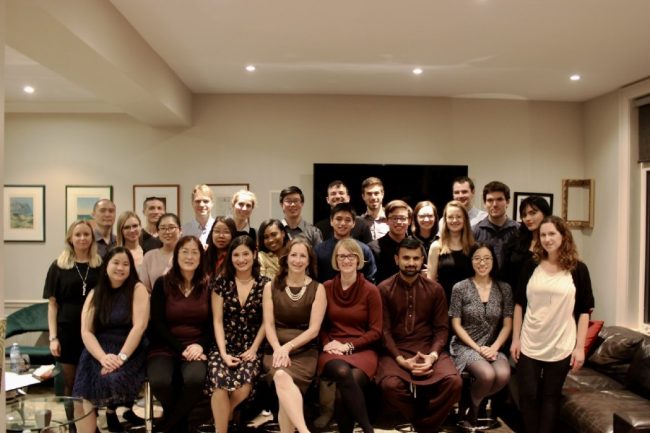
“What’s really wonderful for me in getting this Herzberg Gold Medal is the recognition of the importance of interdisciplinary research, and the recognition of the team — of the brilliant graduate and undergraduate students, post-doctoral fellows, technicians and collaborators with whom I have the privilege to work,” says Shoichet.
“I’m so grateful to work with amazing people who bring their creative ideas and challenge me to think more innovatively.”
“The University of Toronto is delighted to see University Professor Molly Shoichet’s ground-breaking work, her leadership and innovation recognized with Canada’s highest honour for science and engineering research,” said University Professor Ted Sargent (ECE), U of T’s vice-president, research and innovation, and strategic initiatives. “She has been a passionate advocate for science, generously sharing her expertise with federal and provincial governments, colleagues and students – and her contributions to the cancer community have made a significant impact in Canada and around the world.”
“Professor Shoichet is a trailblazer and an inspiration to the engineering and science community, here at U of T, across the country and around the world. Her research continues to advance knowledge towards practical, and incredibly vital, applications in human health,” says U of T Engineering Dean Chris Yip. “On behalf of the Faculty, my enthusiastic congratulations to Molly on receiving this tremendous honour.”
U of T Engineering and Japan’s Fujitsu Laboratories Ltd. have agreed to renew, for three years, a partnership that seeks to advance innovative computing research projects with wide-scale applications.
The partnership extension was marked this week by a transglobal videoconference that included Fujitsu CEO Hirotaka Hara, U of T Engineering Dean Chris Yip, University Professor Ted Sargent (ECE), vice-president, research and innovation, and U of T President Meric Gertler, as well as other senior leaders and researchers.
The group discussed the progress of the partnership — which launched in 2018 and involved the establishment of the Fujitsu Co-Creation Research Laboratory at U of T’s Myhal Centre for Engineering Innovation & Entrepreneurship — and what can be achieved in the future.
“Fujitsu is one of the world’s most admired companies and Fujitsu Laboratories is a major engine of research and development in leading innovation clusters around the world including Beijing, Silicon Valley, London and now, of course, Toronto,” President Gertler said during the videoconference.
“The University of Toronto and our department of electrical and computer engineering both enjoy very high rankings globally, and we are the academic anchor of an impressive innovation ecosystem here in the Toronto region.”
Since its launch, the Fujitsu Co-Creation Research Laboratory has been credited with such major advancements as the advent of the Digital Annealer, a computing architecture that is inspired by quantum principles and can carry out operations beyond the scope of conventional computers, opening up potential applications in health care, drug discovery, finance, logistics, transportation and more.
Fujitsu also launched an R&D centre in Toronto in 2017 as part of its partnership with the university.
President Gertler said the collaboration between U of T and Fujitsu is testament to the richness of Toronto’s technology and innovation ecosystem.
“Toronto is increasingly recognized as a global investment destination,” he said. “The University of Toronto is a major factor in shaping that status and making Toronto so attractive, and the presence of Fujitsu Laboratories has helped raise this attractiveness even further”
Hara, who was appointed the CEO of Fujitsu Laboratories in 2019, said the company is excited about its ongoing association with U of T and the potential research outcomes of the partnership.
“As a global brand, Fujitsu is always looking for innovative solutions to real-world problems,” he said. “Through this partnership, we have the opportunity to work with world-class researchers to contribute to social impact.”
He added that the Fujitsu Co-Creation Research Laboratory was responsible for important developments.
“The Digital Annealer is a great example of the exciting technology we have been developing together. Therefore, we would like to engage in future research of the Digital Annealer with U of T with greater outcomes.”
The partnership between U of T Engineering and Fujitsu Labs can be traced back more than two decades to 1998, when Professor Ali Sheikholeslami (ECE), then a PhD student in electrical engineering at U of T, did a six-week internship at Fujitsu Labs.
Following the internship, Sheikholeslami continued to work with Fujitsu Lab researchers, and a formal collaboration was established after Sheikholeslami was hired as a faculty member at U of T Engineering.
Today, Sheikholeslami is the head of the Fujitsu Co-Creation Research Laboratory, which has engaged more than 10 faculty members and 25 graduate students and post-doctoral researchers from fields ranging from electrical, computer, mechanical and industrial engineering to medicine, finance and statistics.
In collaboration with Fujitsu, Sheikholeslami said the researchers aim to improve the speed, accuracy and flexibility of the Digital Annealer technology. He added quantum computing is another promising avenue.
“We would like to collaborate with Fujitsu and expand our collaboration into the area of quantum computing,” Sheikholeslami said. “As you know, a quantum computer is a natural extension of the Digital Annealer.
“What we would like to do is build quantum computing systems in the near future. We have a lot of expertise at U of T — all the expertise that it takes to build this quantum processing unit. We have expertise in physics, hardware, algorithm and in software. We will be discussing the possible collaboration.”
Sheikholeslami said U of T and Fujitsu have applied for – or are in the process of applying for – patents on a range of inventions. “More inventions are in the making, and there’s a possibility now of U of T and Fujitsu co-creating startups for the first time,” he said.
In his closing remarks, President Gertler lauded the progress achieved by the partnership and highlighted that the best is yet to come.
“As the platform expands now to include even more disciplines, no doubt it will enable even greater accomplishments in the years to come,” he said. “I, for one, will be truly delighted to follow its progress.”
Eleven outstanding members of the U of T Engineering community were recognized Nov. 5 at the 2020 Engineering Alumni Network (EAN) Awards.
The evening awards ceremony, held virtually this year, celebrated alumni and students for their accomplishments and their contributions to the Skule™ community.
“The Faculty has just been amazing in its resilience, and tonight’s winners really embody that spirit,” said Dean Christopher Yip. “You illustrate the role that engineers can play in meeting the world’s most daunting challenges.”
“When I came to Toronto from Hong Kong in the late 1980s, I didn’t know that getting an engineering degree from U of T would set me up for a lifetime of success, but it has,” said Allen Lau (ElecE 9T1, ECE MASc 9T2), one of this year’s winners of the Engineering Alumni Hall of Distinction Award. “I call on my fellow engineering alumni to think about how the training and skills you’ve gained at U of T can improve business, society, diversity and equity in the city and country we call home.”
This year’s recipients were:
Engineering Alumni Medal
First awarded in 1939, the Engineering Alumni Medal is the highest honour awarded by the Engineering Alumni Network. High achievement is the common thread that links past recipients of this medal. In their diverse careers, these individuals have demonstrated superior accomplishments and have responded with flair and excellence to the challenges they have faced. They are outstanding role models for U of T Engineering students.
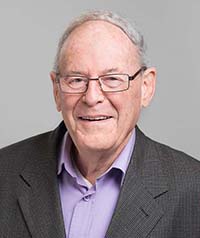
Edward J. Davison (Eng Phys. 6T0, MA 6T1) received the A.R.C.T. degree in piano in 1958, the B.A.Sc. in Engineering -Physics and the M.A. in Applied Mathematics from the University of Toronto in 1960, 1961 respectively, and his Ph.D. degree and Sc.D. degree from Cambridge University in 1964 and 1977, respectively. Ted began his service to the Department of Electrical Engineering in 1964, progressing to become University Professor for ECE, and later Professor Emeritus in 2004. This also included time as an Assistant Professor at University of California, Berkeley, from 1966-1967.
Ted was inducted into the University of Toronto’s Engineering Alumni Hall of Distinction in 2003, and was awarded the Electrical and Computer Engineering Club Teaching Award in 2002. His research interests are in the area of Control Systems Theory and Automation, with a particular interest in Large Scale Systems, Decentralized Control, Robustness, Controller Design of Large Flexible Space Structures, and Process Control.
Learn more about Edward J. Davison (video)
Engineering Alumni Hall of Distinction Award
The Hall of Distinction is an assembly of extraordinary alumni, selected for membership by their peers for their exemplary accomplishments. These are graduates whose performances have ultimately defined what is most outstanding in our graduates and in our profession. The careers of the members stand as examples and add a sense of reality to the aspirations of successive generations of U of T Engineering students.
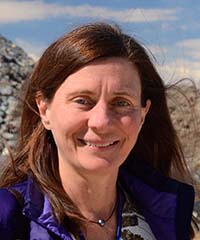
Patricia Burchat (EngSci 8T1) is a Professor in the Physics Department at Stanford University. Her research focuses on studies of the Universe at both the largest and smallest scales. She helps lead a large international team of scientists preparing to analyze data which will provide the most extensive census of the Universe to date. She and her collaborators will use these data to investigate the nature of dark matter and dark energy, and the cosmological evolution of the Universe.
At Stanford, she has served as Chair of the Physics Department and has numerous awards for excellence in teaching. She was elected as Fellow of the American Association for the Advancement of Science and the American Physical Society. Pat has played a leading role in the growth of the APS Conferences for Undergraduate Women in Physics, and has been recognized for her dedication to mentoring students.
Learn more about Patricia Burchat (video)
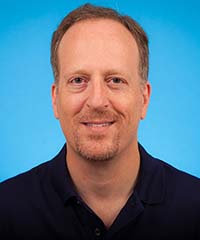 Howard Ginsberg (EngSci 8T9) is a graduate of the University of Toronto Neurosurgery Program (0T3), with additional fellowship training in neurosurgical and orthopedic spinal surgery techniques. He also holds degrees from U of T in Engineering Science (8T9), an MD (9T3), and a PhD in Biomedical Engineering (0T1). He is an Assistant Professor in U of T’s Department of Surgery, and a neurosurgeon and the Spine Program Director at St. Michael’s Hospital.
Dr. Ginsberg’s research focuses on engineering applications to neurosurgical procedures with the goal of improving safety and outcome for patients. He has supervised several engineering students on research projects, trained surgeons from around the world and helped thousands of patients during his career. Dr. Ginsberg is the co-founder and chief medical officer of Point Surgical Inc., a spin-off company that has developed new technology for immediate and accurate intra-surgical identification of cancer types through a combination of laser vaporization and affordable mass spectrometry.
Learn more about Howard Ginsberg (video)
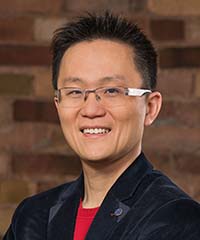 Allen Lau (ElecE 9T1, ECE MASc 9T2) is the CEO and co-founder of Wattpad, the global multiplatform entertainment company, where he leads the company’s vision to entertain and connect the world through stories.
A leader in Canada’s technology sector and startup ecosystem, Allen is a member of the Canadian Council of Innovators, a lobby group that advances the interests of Canadian technology companies at all levels of government. He is also the co-founder of Two Small Fish Ventures, a fund that invests in Toronto and Waterloo-based early stage internet companies with strong network effects.
Prior to Wattpad, Allen co-founded FeedM8, a mobile advertising company that was later acquired. He also previously co-founded Tira Wireless, where he helped leading brands optimize content for mobile delivery.
Allen received his Bachelor’s and Master’s degrees from the University of Toronto’s Electrical Engineering program.
Learn more about Allen Lau (video)
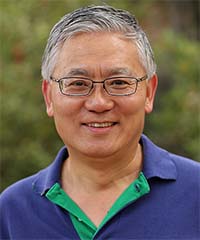 Shumin Zhai (MIE PhD 9T5) is a Principal Scientist at Google where he leads and directs research, design, and development of input systems, interaction methods, and mobile haptics. His past research career has contributed to theoretical models and understandings of human-computer interaction as well as broadly deployed practical user interface designs and product innovations.
He originated and led the SHARK/ShapeWriter project at IBM Research and a start-up company that pioneered the swipe typing keyboard paradigm. His academic publications have won the ACM UIST Lasting Impact Award and a IEEE Computer Society Best Paper Award, among others. He served as the 4th Editor-in-Chief of ACM Transactions on Computer-Human Interaction. He received his Ph.D. degree at the University of Toronto in 1995. In 2006, he was selected as one of ACM’s inaugural class of Distinguished Scientists. In 2010 he was named Member of the CHI Academy and a Fellow of the ACM.
Learn more about Shumin Zhai (video)
2T5 Mid-Career Achievement Award
The Class of 2T5 was the first class in Canada to receive iron rings at The Ritual of the Calling of an Engineer. Since 1975, the Class of 2T5 annually presents the 2T5 Mid-career Achievement Award. This award recognizes a graduate (11 to 25 years from undergraduate graduation) who has earned respect within the profession as well as the broader Canadian community.
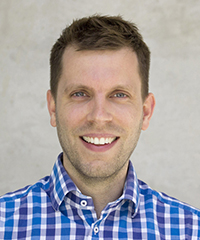 Michael Helander (EngSci 0T7, MSE PhD 1T2, ChemE PDF 1T4) is President and CEO of OTI Lumionics Inc., an advanced materials company he cofounded during his PhD at the University of Toronto in 2011. The company commercializes disruptive materials and process technology for OLED displays and lighting, from headquarters in Toronto and offices in Asia. The company’s technology, based on more than a decade of intensive research and development and backed by a robust intellectual property portfolio, offers substantial savings and performance and lifetime improvements.
Helander received a BSc in Engineering Science and a PhD in Materials Science & Engineering from the University of Toronto. He was a visiting scientist at the Xerox Research Centre of Canada and was a Governor General Gold Medal winner, Vanier Canada Graduate Scholar, and Chorafas Prize winner. He is also an alumni of the Creative Destruction Lab, the Next Founders, and the Canadian Technology Accelerator.
Learn more about Michael Helander (video)
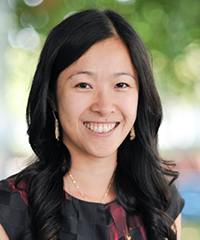
Angela Tran (EngSci 0T5, ChemE MASc 0T7, ChemE PhD 1T2) is a native Torontonian who calls San Francisco home, where she is a General Partner at Version One. Investing in the US and Canada, she has a unique perspective on both ecosystems. Angela’s desire to help others and work with people who are bringing about positive transformational change led her to the world of VC, where she quickly made a big impact.
Angela focuses on health/bio, AI/ML, social platforms and other startups leveraging network effects. She is a firm believer that good investing is both value- and data-driven. Prior to Version One, Angela co-launched Insight Data Science, a YC-backed startup designed to help PhDs transition from academic research to careers in industry via a six-week training program.
Angela is a trustee on the board of the Computer History Museum where she chairs the NextGen advisory committee. She is a board member for the C100 and is involved with the Creative Destruction Lab in Vancouver.
Learn more about Angela Tran (video)
7T6 Early Career Award
The Class of 7T6 annually presents the 7T6 Early Career Award to engineering graduates who have attained significant achievement early in their career and shows promise of further contributions. The award is presented to an individual who is distinguished early in their profession, community, university and other related fields.
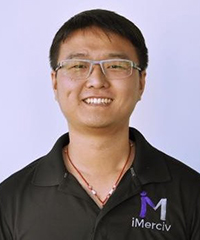
Bin Liu (CivE 1T4) graduated from the civil engineering program at U of T in 2014, he is the Co-Founder and CEO of iMerciv. iMerciv’s mission is to cater to the orientation and mobility of people living with vison loss. The first product, the Buzzclip is a wearable sensor that help users safely navigate around any objects that they may encounter. It is currently in market and empowering the lives of people with vision loss in over 25 countries.
iMerciv is currently launching Mapinhood with the support of the Microsoft AI for accessibility grant, Mapinhood is a crowdsourced pedestrian navigation app that provides personalized and barrier free navigations for all pedestrians.
Learn more about Bin Liu (video)
Malcolm F. McGrath Alumni Achievement Award
Named in honour of Malcolm McGrath on his retirement as assistant dean — alumni liaison, this award recognizes contributions of personal service to the Faculty, the University or to the community. McGrath was the first assistant dean responsible for alumni affairs and development in the Faculty. Among his many accomplishments are the growth of the Annual Fund, the Engineering Open House, the introduction of the Skule™ Stage Band, and the establishment of the Graditude Campaign.
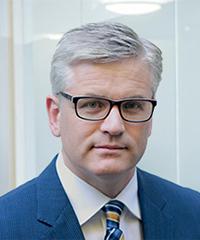
Eric Matusiak (MechE 9T1) is an experienced consultant with a passion for retail and the broader consumer business sector. He has over 20 years of consulting to leading retailers in North America across multiple formats including department stores, specialty apparel, footwear and mass merchandise. He has worked across all departments and functions from store to back office, enabling him to address client challenges and opportunities from multiple perspectives.
As the National Retail Industry Leader at BDO, Eric leads a group of retail and IT professionals who implement ERP, POS, BI and other retail technologies that enrich consumers’ experiences and improve retailers’ business results. Eric also advises retailers on technology strategy and helps organizations manage the process and organizational components of their business to ensure that technologies align to business strategy.
Based in Toronto, Eric is a member of the Retail Council of Canada, an alumni board and committee member at the University of Toronto and alumni mentor at the Richard Ivey School of Business.
Learn more about Eric Matusiak (video)
L.E. (Ted) Jones Award of Distinction
This award was established to acknowledge the contributions of Professor Emeritus L.E. (Ted) Jones and is in recognition of the contributions over his long and distinguished career to students, alumni and the Faculty. It also pays tribute to his continuing support and dedication to the Engineering Society and the Engineering Alumni Network (EAN) of the University of Toronto. The award endorses Jones’ great appreciation of the arts and his love of music.
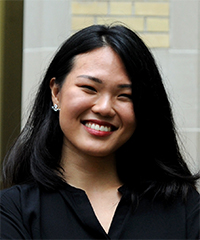 Kate Sohn (EngSci 1T9 + PEY) was exceptionally dedicated to music and dance during her time at U of T, often fulfilling not only artistic roles but also positions of leadership and mentorship in the community. While regularly performing as a violinist in various orchestras and chamber ensembles, she also directed Skule Orchestra as Managing Director and Concertmaster. She often volunteered as an independent musician, most notably for events hosted by the Division of Engineering Science.
As a freelance composer, her composition has been featured in an animated short which was accepted to the Reel Asian International Film Festival 2019. She began her dance training in university and performed with community and competition teams whose styles ranged from hip-hop, jazz funk, heels, street and K-Pop cover. Kate hopes to continue to nurture her passion for both music and dance alongside a career in medical devices.
Learn more about Kate Sohn (video)
Honourary Member of the EAN
Acknowledges the exceptional contributions of an individual who is not a member of the EAN but has contributed in a very significant way to bettering the Faculty, the EAN and/or the lives of current or future members of the EAN.
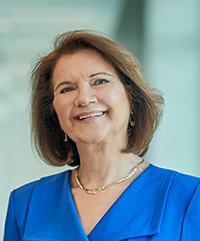
Cristina Amon is Alumni Distinguished Professor in Bioengineering and Dean Emerita at the University of Toronto’s Faculty of Applied Science & Engineering. Under her leadership, Canada’s #1 ranked engineering school has become a global hub for inter-disciplinary research and education known for its strategic Faculty-wide initiatives, cross-Faculty centres and institutes, and innovative undergraduate and graduate programming. Her commitment to outreach and diversity has set a new standard for Engineering schools worldwide: the number of women faculty members at U of T Engineering has doubled in the last decade and the Faculty celebrated an historic 40% women first-year undergraduate enrolment for its second consecutive year in 2017.
Prior to her deanship at U of T, Amon was the Raymond J. Lane Distinguished Professor of Mechanical Engineering and Director of the Institute for Complex Engineered Systems at Carnegie Mellon (until 2006). She received her master’s and doctorate degrees from MIT in 1988. Her research pioneered multidisciplinary thermal designs and made ground-breaking innovations to transient thermal management, optimization algorithms for renewable energy, nanoscale transport in semiconductors and biological systems. Her scholarly contributions are published in 16 book chapters and over 350 articles in education and research literature.
She has been inducted into the Canadian Academy of Engineering, Hispanic Engineer Hall of Fame, National Academy of Engineering, Royal Academy of Spain and Royal Society of Canada, and elected fellow of all major professional societies in her fields. Additional accolades include the ASEE Westinghouse Medal, ASME Heat Transfer Memorial Award and SWE Achievement Award, the highest honour.
Professor Amon received the Engineers Canada Award for the Support of Women in 2010, was named one of the YWCA’s Women of Distinction in 2011 and one of Canada’s 25 Most Influential Women in 2012, and received the Ontario Professional Engineers Gold Medal in 2015 – the most prestigious honour for engineering public service, technical excellence and professional leadership.
Learn more about Cristina Amon (video)
From take-out pizza to online shopping — which nearly doubled in Canada this year— the use of home delivery has greatly increased during the COVID-19 pandemic.
But according to Professor Matt Roorda (CivMin), what happens between clicking “add to cart” and picking up a package on the doorstep is a complex process, one that could really benefit from some fresh ideas.
“Our whole economy and way of life depend on freight transportation,” says Roorda. “COVID-19 has highlighted some key issues, but the need for innovation was clear before the pandemic and will continue after it’s over.”
Roorda chairs the Smart Freight Centre (SFC) a centre of excellence for goods movement. SFC is a collaborative network established in 2019 by the Region of Peel, McMaster University DeGroote School of Business, York University Lassonde School of Engineering and the University of Toronto Transportation Research Institute (UTTRI).
“Approximately $1.8 Billon goods move through Peel on daily basis, accounting for 43% of jobs in Peel Region,” says Peel Regional Chair Nando Iannicca. “But with strong growth pressures and the current pandemic situation, businesses are becoming increasingly challenged and need even greater support. This partnership is key to helping us find innovative solutions for safe and efficient movement of goods and ultimately creating more jobs for Canadians.”
This fall, SFC received an NSERC Alliance Grant to fund a new research initiative — CLUE: City Logistics for the Urban Economy. More than $3 million in NSERC funding is matched by contributions from the institutions and partner organizations for a grand total of over $11 million in direct and in-kind support.
“Goods movement hasn’t been studied as extensively as people movement but interest is growing as it becomes clear just how much we rely on an efficient goods movement system,” says Dr. Judy Farvolden, Executive Director of UTTRI. “CLUE addresses issues of significance to Canadians and this collaboration of public and industry partners further strengthens our chances of success.”
The CLUE initiative includes 24 separate research projects on a wide range of topics, from driver training and supply-chain resilience to automated delivery of goods and the impact of local bylaws.
“The goal is to provide efficient goods movement while minimizing the negative impact on neighbourhoods in terms of safety, noise or pollution,” says Roorda.
For example, last year SFC completed a pilot study on off-peak delivery, in which industry partners at Walmart, Loblaws and LCBO stores shifted key deliveries from daytime hours to the early morning (before 7 a.m.) and late evening (between 7 and 11 p.m.)
Preliminary results showed that the change increased the average speed of trucks by 18 percent, with associated reductions in key air pollutants of between 10 percent and 15 percent. The team plans to conduct a larger and more detailed study as part of the CLUE initiative.
Another research direction looks at what is known as “curbside management.”
“The curbside is a very busy place with many competing needs: parking, bicycle lanes, loading zones and even outdoor dining,” says Roorda. “We can use cameras to study how these spaces are being used now, and leverage this data to model how they could be used more efficiently in the future.”
Other CLUE projects will examine alternative modes of local delivery. These could include electric trucks, pedal-powered vehicles, autonomous robots or even the use of commuter vehicles, a concept known as “crowdsourced delivery.”
“There are companies trying these strategies out today, including here in Toronto,” says Roorda. “What our research can provide is rigorous scientific analysis of what works and what doesn’t. That should help everyone make smarter decisions going forward.”
Professor Daniela Galatro (MIE PhD candidate) has joined U of T’s Department of Chemical Engineering & Applied Chemistry as an Assistant Professor, Teaching Stream. Beginning in 2021, Professor Galatro will be teaching courses on heat and mass transfer and data-based modelling for prediction and control.
Galatro joins the Department from U of T’s Department of Mechanical & Industrial Engineering (MIE) where she is completing the final year of her PhD. Galatro’s PhD research investigates lithium-ion battery aging in electric vehicles and second-life stationary applications under the supervision of Dean Emerita Cristina Amon.
Writer Amanda Hacio sat down with Professor Galatro to learn more about what she’s most looking forward to, how global experiences have shaped her career and how she will be approaching online learning.
Why did you choose U of T?
U of T is a world-class university that excels in quality education and research. It pioneers as an equitable and inclusive community that encourages both students and professors to reach their full potential.
As a professor, what advice do you have for new students?
Identify new challenges as opportunities, be creative, work hard, work smart, never stop learning, there is not just one path to reach your goals, and finally, be true to yourself.
What are you most looking forward to in your new position?
I’m looking forward to interacting with students, professors and staff from diverse backgrounds.
What do you hope to accomplish during your time at U of T Engineering?
Create innovative learning spaces and maximizing every student’s potential.
How have your global experiences shaped you as a teacher? What has been most rewarding about having these global experiences, personally and professionally?
My experience studying and working worldwide made me a global citizen and helped me find my place in the world. I studied and worked in Venezuela; I also worked in Germany and Canada. While working in Germany, I had assignments and business trips to several countries, such as the United States, Russia, China, UAE, Malaysia, Greece, Spain, and Turkey. I’m also a native speaker of Spanish and Italian, I’m fluent in English and I have professional working proficiency in German, limited working proficiency in French, and elementary proficiency in Portuguese.
Whenever I was learning or teaching about a chemical process, operation or engineering standard, it was not only about presenting, reading, and processing information or solving engineering problems. I looked at the world’s context around it — I analyzed the impact of my work on communities and the environment.
By learning languages and knowing about different cultures, I also embraced respect, tolerance, broke down barriers, overcame stereotypes, which ultimately shaped me as a person.
COVID-19 is changing the way students learn. How will you be approaching online learning next semester? What are you most looking forward to?
I will approach online learning by engaging with my students online, being both visible and available, as well as making the content of the course more interesting. I’m looking forward to creating a supportive, collaborative and exciting learning environment.
What is something most people might not know about you?
I play piano, I compose and sing my own songs for which I have won several contests. I love astronomy. From childhood to now I’m still fascinated by LEGO, from Star Wars to Architecture. I love all sports: I play soccer, ping-pong and bowling; and of course, I’m a Blue Jays and Toronto FC fan.
Canada’s forests are a key source of renewable materials, from paper to lumber. Yet many of the industry’s most common products — such as cardboard and newsprint — are on the low end of the value chain. Professor Ning Yan (ChemE) aims to change that.
“The analogy we use is to a petroleum refinery, where the crude oil feedstock is made into thousands of different products, from lower-value fuels to higher-value commodity chemicals,” says Yan. “We can do the same with our renewable resources, such as forest biomass.”
Yan is the director of the newly formed Low Carbon Renewable Materials Centre (LCRMC) at U of T Engineering, which is supported by the Dean’s Strategic Fund. LCRMC researchers work closely with forestry companies and industry associations to transform forest biomass — including materials that today are discarded as waste — into commercially valuable products.
In some cases, these new products would be the same as those that currently come from fossil fuels, enabling more oil to stay in the ground. In others, they could be combined with fossil-fuel derived products to enhance their performance.
Much of Yan’s research focuses on tree bark, which she believes is currently under-utilized in pulp mills.
“Right now, bark is typically burned as a low-grade fuel in order to generate energy,” says Yan. “But from an engineering perspective, it contains all kinds of unextracted value.”
One example is epoxy resins, a group of chemicals that are widely used in industrial-strength adhesives and composites.
“Epoxies are used in everything from flooring to airplane composites,” says Yan. “One of the key chemical building blocks of epoxies is bisphenol A (BPA), which industry would like to phase out because of its potential health impacts.”
Yan and her team have shown that bark extracts can be used to make a BPA-free epoxy resin. Like the traditional product, bark-derived epoxy resin can be mixed with a hardener to create an industrial-strength adhesive.
Another recent line of research involves polyurethanes, a class of polymer chemicals that are used in an array of products, including couch cushions, synthetic clothing and even house insulation. As with epoxies, polyurethanes are made using ingredients with potentially negative health impacts.
“Most commercial polyurethane foams are made using isocyanate, which is a toxic chemical,” says Yan. “Even worse, isocyanate is made from phosgene, which is even more toxic, so much so that it was used as a chemical weapon using the First World War.”
Yan and her team showed that tree bark can be used to create an isocyanate-free version of polyurethane. The bark is liquified into an oil, which is then mixed with CO2 to create a product known as cyclic carbonate, a precursor for polyurethane. The cyclic carbonate product contains 15% CO2 by weight, providing a new path to sequestering this greenhouse gas.
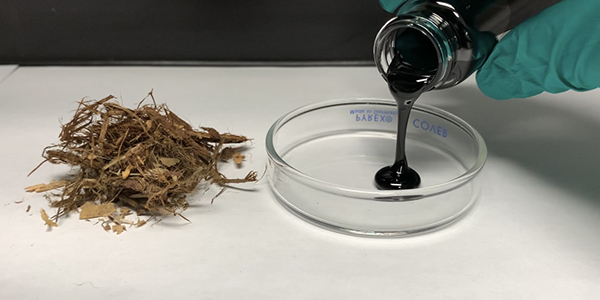
Last month, the team published a new method for making different kind of polyurethane pre-cursor. Shape-memory polyurethane (SMPU) is used in mattresses, shoes and many other products. Yan and her team created a new form of SMPU from abietic acid, a chemical extracted from tree bark.
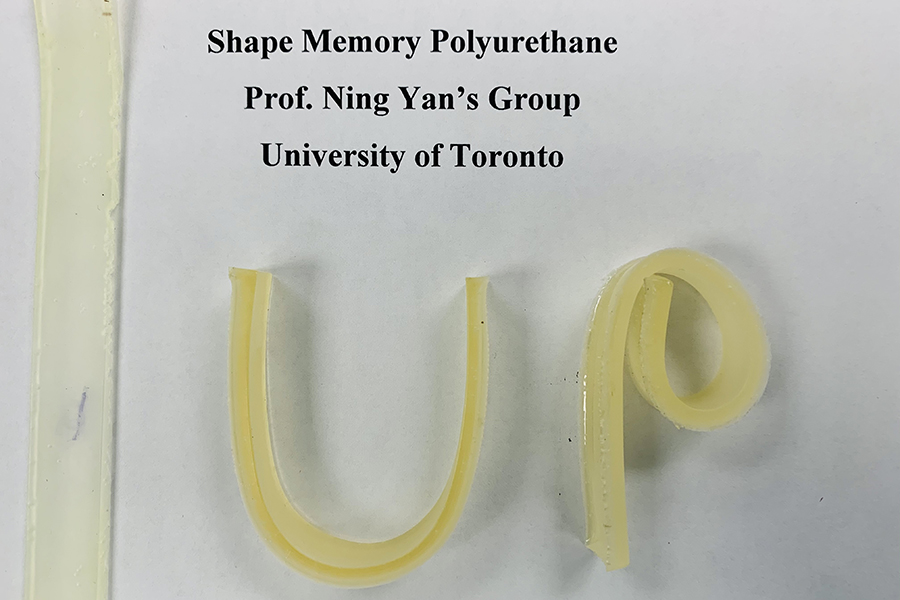
While these proof-of-concept studies are encouraging, Yan says that there is still some distance to go before such products can be commercialized.
“There are still some challenges with respect to performance, especially in terms of strength,” says Yan. “We also have to consider how these chemical processes will be scaled up so that they can be implemented on the industrial scale.”
LCRMC researchers are working with players all the way along the value chain, from polymer foam companies such as Woodbridge to pulp and paper companies such as Domtar, as well as organizations focused on research and development, such as FPinnovations.
Together they aim to create new pathways to translate their innovations into full-scale applications.
“I see this as an opportunity to develop a greener, more sustainable economy,” says Yan.