
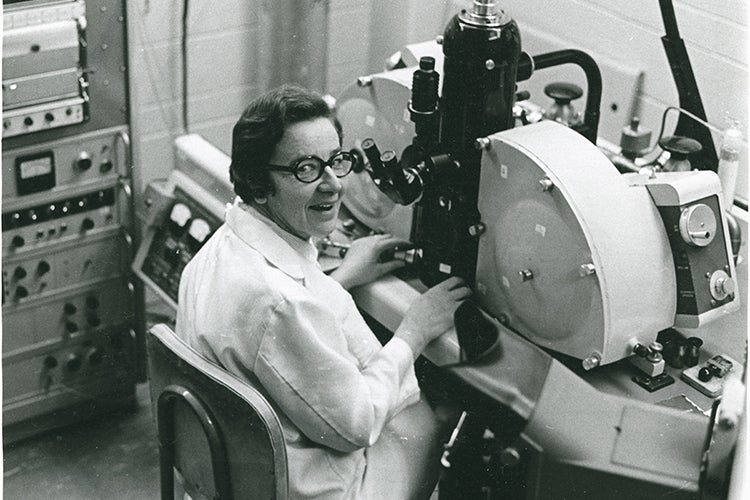
ECE alumna Elsie MacGill (ElecE 2T7) was the first woman in Canada to receive a bachelor’s degree in electrical engineering and the world’s first female aeronautical engineer. In celebration of MacGill’s enduring legacy and contributions to the engineering profession, she has been immortalized in a Heritage Minute, released today by Historica Canada in conjunction with Women’s History Month.
Historica Canada is a not-for-profit organization dedicated to enhancing the awareness of Canadian history. It has produced more than 90 Heritage Minutes: bilingual 60-second short films that depict a significant person, event or story in Canadian history. First released in 1991, these videos have become a part of Canadian culture and are shown on television, in cinemas and online.
“Elsie MacGill has inspired so many of our alumnae who came after her — including me,” says Professor Deepa Kundur, Chair of the Edward S. Rogers Sr. Department of Electrical & Computer Engineering (ECE). “We take pride in knowing she is part of our Departmental history and that this Heritage Minute will help inspire more young women to follow in her footsteps at ECE.”

After graduating from ECE— then known as the Department of Electrical Engineering — MacGill went on to attend the University of Michigan where she became the first woman to receive a master’s degree in Aeronautical Engineering.
She then enrolled at MIT to continue her post-graduate work in aeronautics and returned to Canada where she became the chief aeronautical engineer at the Fort William plant of Canadian Car and Foundry Company Limited in Thunder Bay, Ont. There, she worked on overall design of the Maple Leaf II, a two-seat, single-engine biplane.
During World War II, the plant was reconfigured to accommodate large-scale production of military aircraft. MacGill led the engineering team that produced the Hawker Hurricane fighter. By 1940, 4,500 staff were producing three fighters each day — in two years, 1,450 Hurricanes were produced — and MacGill had earned the nickname “Queen of the Hurricanes.”
After the war, she founded an aeronautical consulting business and became a leading voice in the women’s rights movement. She was named to the Royal Commission on the Status of Women in Canada and co-authored the report published in 1970. MacGill was bestowed the Order of Canada in 1971 for “services as an aeronautical engineering consultant and as a member of the Royal Commission on the Status of Women.”
Today there are more than 7 million electric vehicles (EVs) in operation around the world, compared with only about 20,000 a decade ago. It’s a massive change — but according to a group of U of T Engineering researchers, it won’t be nearly enough to address the global climate crisis.
“A lot of people think that a large-scale shift to EVs will mostly solve our climate problems in the passenger vehicle sector” says Alexandre Milovanoff, lead author of a new paper published today in Nature Climate Change.
“I think a better way to look at it is this: EVs are necessary, but on their own, they are not sufficient.”
Around the world, many governments are already going all-in on EVs. In Norway, for example, where EVs already account for half of new vehicle sales, the government has said it plans to eliminate sales of new internal combustion vehicles altogether by 2025. The Netherlands aims to follow suit by 2030, with France and Canada to follow by 2040. Just last week, California announced plans to ban sales of new internal combustion vehicles by 2035.
Milovanoff and his supervisors, Professors Daniel Posen and Heather MacLean (both CivMin) are experts in life cycle assessment — modelling the impacts of technological changes across a range of environmental factors.
They decided to run a detailed analysis of what a large-scale shift to EVs would mean in terms of emissions and related impacts. As a test market, they chose the United States, which is second only to China in terms of passenger vehicle sales.
“We picked the U.S. because they have large, heavy vehicles, as well as high vehicle ownership per capita and high rate of travel per capita,” says Milovanoff. “There is also lots of high-quality data available, so we felt it would give us the clearest answers.”
The team built computer models to estimate how many electric vehicles would be needed to keep the increase in global average temperatures to less than 2 C above pre-industrial levels by the year 2100, a target often cited by climate researchers.
“We came up with a novel method to convert this target into a carbon budget for U.S. passenger vehicles, and then determined how many EVs would be needed to stay within that budget,” says Posen. “It turns out to be a lot.”
Based on the scenarios modelled by the team, the U.S. would need to have about 350 million EVs on the road by 2050 in order to meet the target emissions reductions. That works out to about 90% of the total vehicles estimated to be in operation at that time.
“To put that in perspective, right now the total proportion of EVs on the road in the U.S. is about 0.3%,” says Milovanoff.
“It’s true that sales are growing fast, but even the most optimistic projections suggest that by 2050, the U.S. fleet will only be at about 50% EVs.”
The team says that in addition to the barriers of consumer preferences for EV deployment, there are technological barriers such as the strain that these vehicles would place on the country’s electricity infrastructure.
According to the paper, a fleet of 350 million EVs would increase annual electricity demand by 1,730 TWh, or about 41% of current levels. This would require massive investment in infrastructure and new power plants, some of which would almost certainly run on fossil fuels.
The shift could also impact what’s known as the demand curve — the way that demand for electricity rises and falls at different times of day — which would make managing the national electrical grid more complex. Finally, there are technical challenges to do with the supply of critical materials, such as lithium, cobalt and manganese for batteries.
The team concludes that getting to 90% EV ownership by 2050 is an unrealistic scenario. Instead, what they recommend is a mix of policies, including many designed to shift people out of personal passenger vehicles in favour of other modes of transportation.
These could include massive investment in public transit — subways, commuter trains, buses — as well as the redesign of cities to allow for more trips to be taken via active modes, such as bicycles or on foot. They could also include strategies such as telecommuting, a shift already spotlighted by the COVID-19 pandemic.
“EVs really do reduce emissions, but they don’t get us out of having to do the things we already know we need to do,” says MacLean. “We need to rethink our behaviours, the design of our cities, and even aspects of our culture. Everybody has to take responsibility for this.”
In a variety of environments — lakes, soils, even mining wastewater — bacteria carry out a wide range of chemical reactions. But a new study from Professor Lesley Warren (CivMin, Lassonde Institute) and her collaborators suggests that previously unknown viruses might also play a key role. The biocatalytic power of these organisms could one day be harnessed in the fight against climate change.
The past year has demonstrated just how powerful and disruptive viruses can be, not only to our health but also risks to our social structures, economies and even our planet.
But viruses don’t only cause disease in humans; plenty of them also infect bacteria. Known as bacteriophages, or just phages, the vast majority of these viruses are poorly understood due to the challenges of growing and studying them in the lab.
However, earlier this year, a new paper in Nature outlined surprising findings from this field: the discovery that some naturally-occurring phages have very large genomes. This is in contrast to previously held understanding that because viruses rely on their host’s replication machinery to multiply, they contain very few genes.
“The discovery that these viruses have large genomes and possess potentially functional genes leads us to ask: what can these genes do?” says Warren. “What are their undiscovered capabilities? What are we underestimating about them?”
Warren and her colleagues use a technique known as metagenomics to learn about wild viruses without having to culture them directly. By extracting and studying viral genetic sequences from wastewater, soil or other media, they can learn about the biochemical processes these life forms may be able to perform.
Last month, Warren, along with Professor Jill Banfield and Dr. Lin-Xing Chen (first author) of the University of California, Berkeley, co-authored a paper in Nature Microbiology that offers some answers.
The team sampled freshwater systems around the world, including Syncrude Canada’s Base Mine Lake, a commercial size demonstration of water capped tailings technology in northern Alberta. Owned by Syncrude Canada, Base Mine Lake serves as a research facility to test and demonstrate new tailings management technologies and to improve reclamation success outcomes for pit lakes.

From this location and others, the research team identified 22 large-genome phages that encode a critical gene called PmoC, which are called PmoC-phage. This PmoC gene is similar to genes present in bacteria that are capable of carrying out methane oxidation.
“Methane is a critical contributor to greenhouse gas emissions — it is 14 times more effective than CO2 at trapping heat in the atmosphere,” says Warren. “When oxidized, either by bacteria or perhaps as now as this paper identifies, viruses, it gets converted to carbon dioxide. That’s still a greenhouse gas, but it’s much less harmful than methane.”
The presence of PmoC-phage and bacteria capable of methane oxidation were strongly correlated with each other. In fact, the team determined that some of the most rapidly-growing, methane-eating bacteria were infected by three PmoC-phages at one time. These findings indicate that PmoC-phages may actually be increasing methane consumption by these bacteria.
On a fundamental level, these results provide more evidence that viruses are more than just infection vectors of other organisms — they may be important players in key environmental processes that regulate the planet.
In the future, harnessing naturally-occurring entities, such as viruses in addition to microorganisms, to change one gas into another could have important implications in the fight against climate change. This is especially true in places such as the Alberta oil sands, where methane emissions are of concern.
“Exploring these PmoC-phages in Base Mine Lake can help us design a bio-tech solution that would be cost-effective for industry, while helping fight greenhouse gas emissions and climate change,” says Warren. “Our work with Syncrude Canada over the past ten years is helping to develop research-powered solutions and technology for their real-world challenges.”
“Our analyses from not just Base Mine Lake, but other freshwater contexts globally, suggest that these PmoC-phages have the potential to impact methane consumption as well as the carbon cycle of the surrounding environments,” says Professor Banfield. “The inferences of this study expand our understanding of phage capabilities and highlight new ways for us to mitigate and modulate other aspects of our environment, perhaps in even larger contexts.”
Student-founded startup Themis — which leverages artificial intelligence (AI) to streamline contract-drafting for lawyers — recently took home the top prize at the eighth-annual Hatchery Demo Day 2020, hosted by the Entrepreneurship Hatchery.
The event is the culmination of the Hatchery Nest program, a four-month accelerator that connects student teams with experienced mentors and industry leaders to develop their businesses.
Amid the COVID-19 pandemic, Demo Day took place virtually over the course of a week. A panel of judges and registrants had the opportunity to view pitch videos made by 16 competing Nest teams, as well as four Go-To-Market Stage teams — startups that are further along in their businesses.
Joseph Orozco, executive director of the Entrepreneurship Hatchery, says although the pandemic had made putting on Demo Day a challenge, it enabled students to pitch on the world stage.
“We received 2,900 votes and 1,800 views of your video pitches,” says Orozco. “These came from all over the world — San Francisco, Boston, Oxford and Mumbai, to name a few.”
“I want to extend my congrats to all the participants in the Hatchery for your resilience and being able to pivot in these times. As one of the judges, I was amazed by the initiative, entrepreneurship, innovation and professionalism,” says Dean Chris Yip, U of T Engineering. “The Hatchery is the jewel in the crown of our startup ecosystem at the Faculty, and has been such a huge attractor for students in choosing to go to U of T Engineering.”
Themis was among four companies to share a total of $42,500 in seed funding, composed of one $20,000 grand prize and two $10,000 runner-up prizes. A $2,500 Orozco prize is furnished through funds raised by the students themselves.
Here are this year’s four startups to watch:
$20,000 Hatchery Prize: Themis — AI-powered add-in simplifies contract drafting for lawyers
Drafting a legal contract can take hours. With the power of AI, the Themis team aims to simplify this process with the click of a button.
Their Microsoft Word add-in streamlines the contract-drafting process for lawyers by automatically building a library of clauses from a lawyer’s own precedents and makes these clauses conveniently available within Word.
“There are no competitors who provide this fully integrated solution out of the box. Our competitors generally either allow lawyers to manually add their clauses to a library or provide generic clauses, but do not provide a fully automated solution as Themis,” says Rishi Dhir, a corporate lawyer at Stikeman Elliott LLP who co-founded the company alongside fellow lawyer Jey Kumarasamy, Amardeep Singh (ChemE MEng candidate) and Cindy Chen (Year 4 EngSci).
Looking ahead, the team will beta test their prototype and look to partner with small law firms across Canada to gather feedback. The team plans to use their $20,000 prize money to fund development costs to increase the number of clauses and definitions Themis can identify, as well as to support infrastructure costs.
“We are also very proud of ourselves for making it this far. Each of our co-founders were either working or studying full-time during the summer and we had to be creative and disciplined to find the necessary time to work on Themis,” says Kumarasamy. “It wasn’t easy but in the span of four months we successfully delivered a functioning, viable product.”
$10,000 Hatchery Prize: Indus — 3D-printed smart soil gives a novel, futuristic approach to growing root vegetables
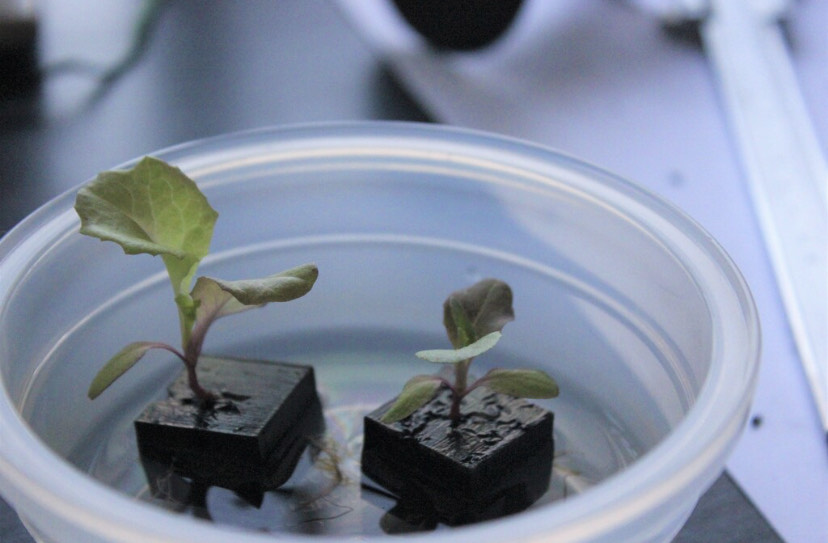
Indus aims to manufacture 3D-printable “soil” to grow root vegetables within existing commercial hydroponic systems.
Hydroponics — a controlled, soilless method of agriculture — still requires plants to be held within a porous material called “growing media,” which replicates the physical properties of soil.
“Our competitors in this space have no efficient solution to grow a high yield of root crops, as they don’t have the technical ability to engineer their materials with specific fluid retention properties essential for important staple crops, such as root vegetables, to thrive in a hydro-culture environment,” explains Adnan Sharif (Cell and Molecular Biology). The Indus team also includes Chihiro Tow (Architecture), Patrick Diep (ChemE PhD candidate) and alumnus Gamen Liu (ChemE 1T9).
The co-founders are recreating the physical properties that root vegetables require to thrive within soil into one robust material, optimizing it to be more applicable in more widely practiced commercial hydroponic techniques.
“Our team is confident that, with our technical prowess and connections within our respective fields, we’ll help to disrupt the hydroponics space within the decade with our engineered smart soil,” says Sharif, adding that winning the $10,000 prize is one big step towards meeting this goal.
$10,000 Hatchery Prize: Toothpod — Triple-action chewing gum for cleaner teeth

We all know we should brush our teeth twice a day, but many of us don’t spend the full amount of time on oral health that we should. Ninety-six percent of Canadian adults have had at least one cavity, despite the fact that this outcome is largely preventable.
Toothpod’s answer is a smart gum that cleans your teeth as you chew. It contains three different components to clean your tongue and mouth, and is designed for any situation where it is inconvenient to brush your teeth — when you’re on the go, at work, on an airplane, camping, etc.
“We worked very hard this summer to understand the customer need and develop Toothpod prototypes despite restricted lab access,” says Toothpod founder and CEO Vishar Yaghhoubian, a U of T student in Health Studies, Global Health and Psychology.
“This award validates our mission and tells us we’re on the right track,” she says.
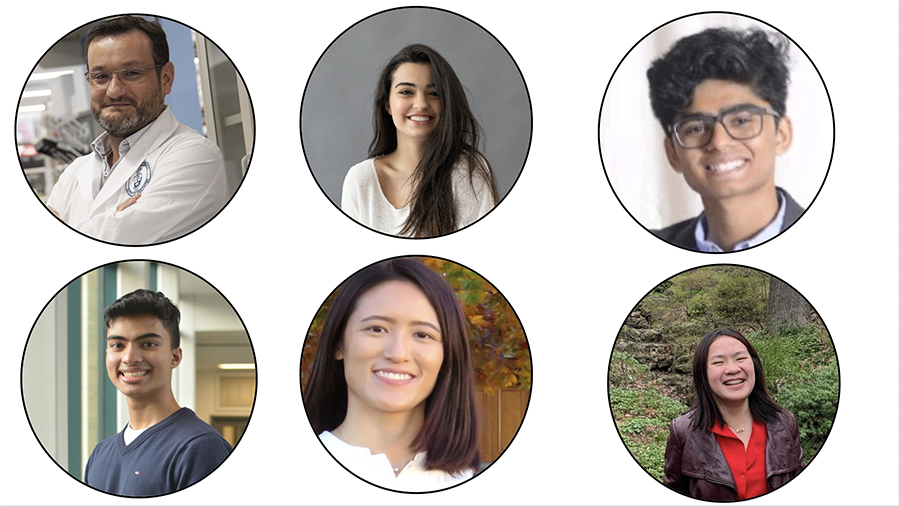
The team also includes Lucy Chen, Alton Rego and Nikhil Konduru (all Year 3 ChemE) as well as Jenise Chen (Chemistry).
“The most valuable part of the Hatchery process was hearing the comments from mentors on our pitch, and those of other startups,” says Konduru. “Many of the mentors are investors and entrepreneurs with decades of experience. They taught me a lot about what investors and key stakeholders care about when they put their trust and money behind you.”
Toothpod plans to use the seed funding to file their patent by the end of October and begin the process of getting the gum approved as a Natural Health Product by Health Canada in May. If all goes well, the product could be available in stores by 2022.
$2,500 Orozco prize: ID Green — Aerial imaging and analysis for precision agriculture

ID Green is leveraging precision agriculture to increase the profitability of small and medium-sized farms. Using drone-mounted cameras, the team analyzes images of crops in order to diagnose problems and recommend solutions.
“Our solution provides actionable data for plant counting, detecting disease, assessing the nutrient and water status, and predicting the yield,” says team member Ehsan Vaziri (UTIAS PhD candidate). “Our cloud-based platform transforms complex data into easy-to-use insightful reports, which help crop advisors and farmers make precise and timely decisions.”
In addition to Vaziri, the team includes Muhammad Omar Sawal (Year 4 MIE), Eric Jiang (Computer Science), along with precision farming specialist Mohamad Yadegari and hardware-software integration expert Samira Eshghi.
Over the next few months, the team plans to continue their involvement with The Hatchery, moving from the NEST program into the Go-to-Market phase, for startups that are further along the path toward commercialization.
“Compared to where we were at the start of the NEST program, a lot has changed,” says Vaziri. “Our business model has flourished, and our mindset about the market has improved. This was all because of meetings with Hatchery connectors and the board members. We made a lot of valuable connections through this program.”
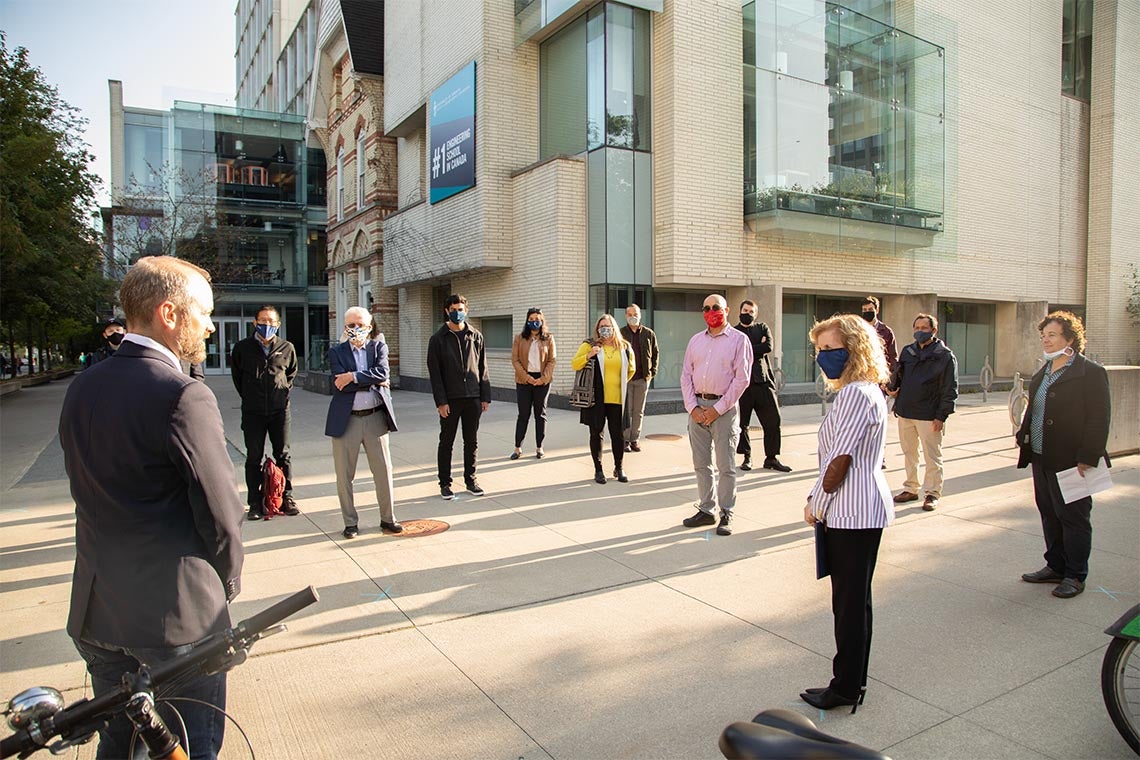
The University of Toronto this week commemorated the renaming of a street on the St. George campus in honour of University Professor Emerita Ursula Franklin (MSE), the distinguished physicist and metallurgist who taught at U of T Engineering for more than 40 years.
Ursula Franklin Street connects Spadina Avenue and St. George Street on the western strip of campus, near the heart of U of T’s engineering footprint and such key buildings as the Myhal Centre for Engineering Innovation & Entrepreneurship.
Formerly Russell Street, the renamed roadway now commemorates one of the most influential scientists and engineers in Canada’s history and a feminist and peace activist whose contributions transcended her prolific scholarly achievements.
“Professor Franklin was an outstanding scholar and a beloved teacher who spent enormous amounts of time mentoring students,” said Vice-President and Provost Cheryl Regehr at a small ceremony held on campus Monday. “She was also known for her incredible advocacy, as an advocate of women and girls and a peace activist.
“This street – this historical marker – is a true testament to Professor Franklin’s cherished intellect and societal impact. We are so very proud to have it here at the University of Toronto.”
Monday’s ceremony was also attended by several members of Franklin’s family and Dean Chris Yip, U of T Engineering.
Born in Germany in 1921, Franklin came to U of T as a post-doctoral student in 1949 after surviving the Holocaust. In 1967, she became the first female professor in what is now the department of materials science and engineering. In 1984, she became the first woman to receive the honorific of University Professor, a designation that recognizes unusual scholarly achievement and pre-eminence in a field.
Franklin received an array of honours including honorary degrees from more than 20 universities and was named a Companion of the Order of Canada, a member of the Order of Ontario and a recipient of the Award of Merit from the City of Toronto. Her work advancing the equality of girls and women was also recognized by a Governor General’s Award. Franklin died in 2016 at the age of 94.
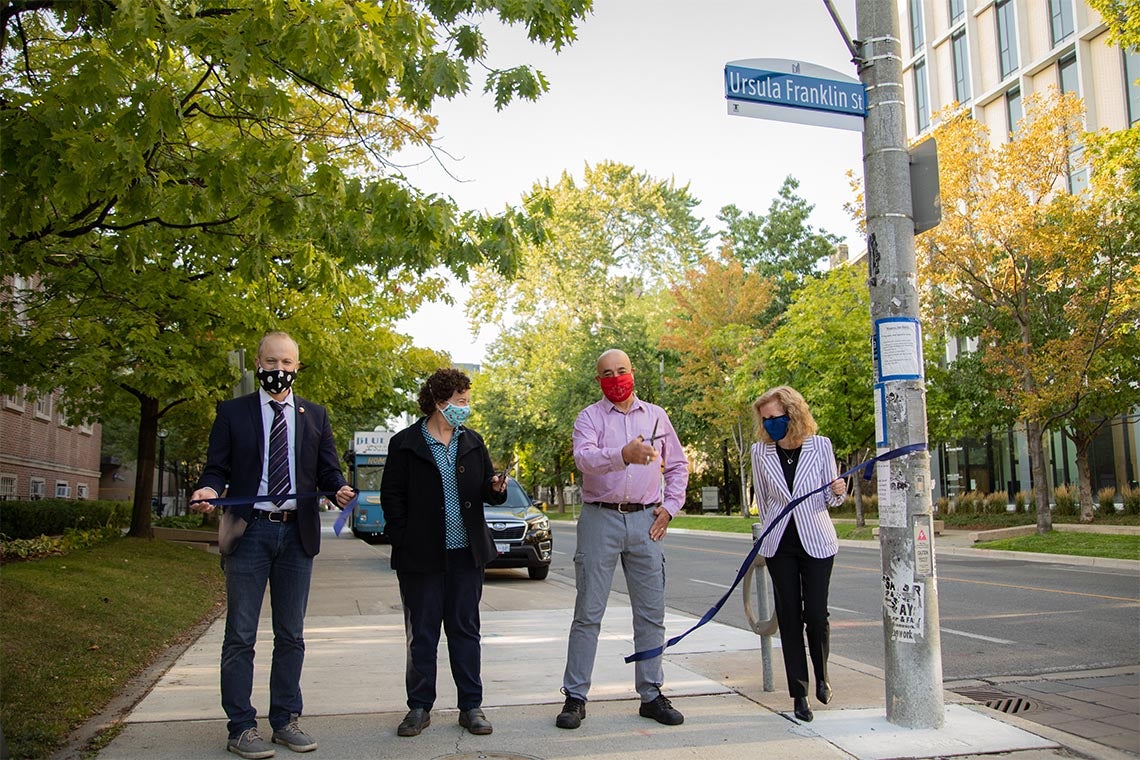
Local city councillor and U of T alumnus Mike Layton said the renaming of the street marked “a process of turning the past into a new interpretation of the people that made this city great, made this university great and made our country and the world a better and more special place.
“This means a lot not only to Professor Franklin’s family, but also to the wider university family, and is just a small way to recognize her contributions to the University of Toronto.”
Franklin’s daughter, Monica Franklin, said her family was proud to see the street named in her mother’s honour.
“I know my mother would be pleased by having a street named after her, as well as its location, a stone’s throw – although she would object to the analogy – from Engineering and the Wallberg Building where she spent most of her U of T Engineering life,” she said in her prepared remarks.
“It is also not far from Massey College, where she spent much of her last 20 to 25 years. As well, it is the address for other U of T departments – astrophysics, anthropology and Earth sciences – appropriate given her life’s work making connections between disciplines.”
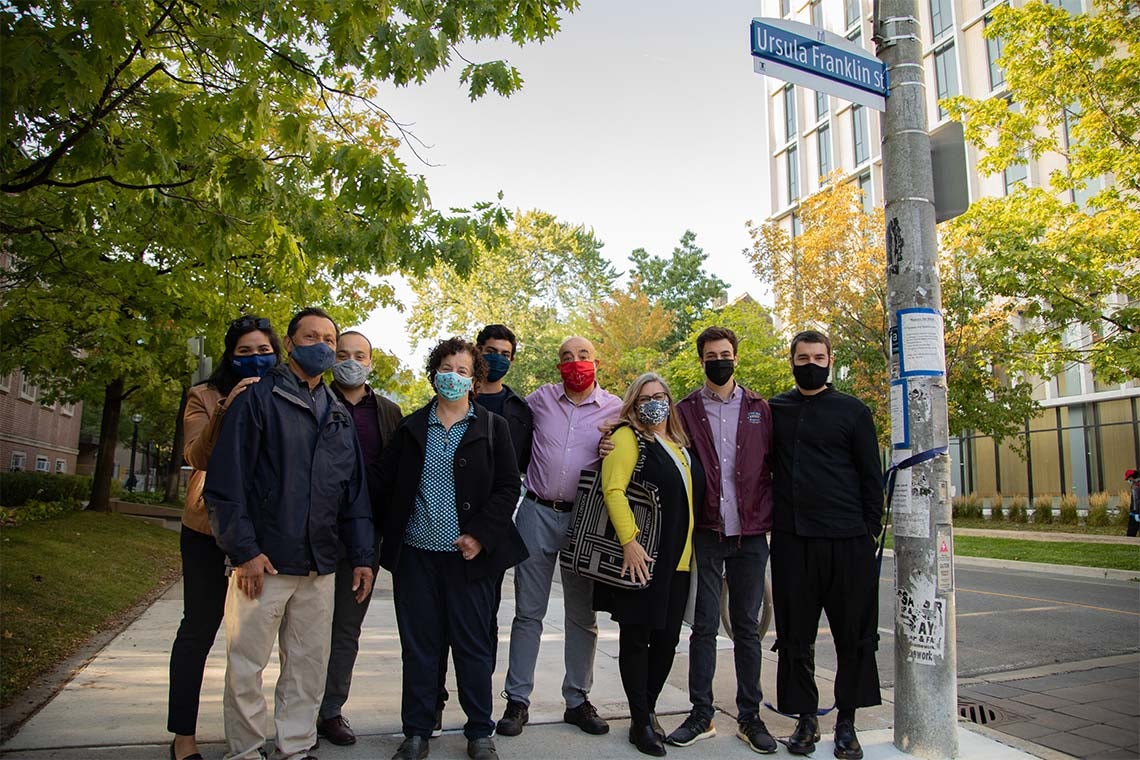
The naming of Ursula Franklin Street was set in motion following a request to Councillor Layton from Michael Valpy of the Munk School of Public Policy & Global Affairs and Massey College. The street was previously named for Peter Russell, the first administrator of Upper Canada and an opponent of efforts to abolish slavery in the colony.
The decision to rename the street was approved by a unanimous vote of the Toronto and East York Community Council in March.
Franklin’s daughter said her mother’s life and activism held within it a message that’s timely to the ongoing reckoning with racism and intolerance in society.
“I knew she would abhor the tribalism and how easy it is to fear the ‘other’ – those who are not like us, who look and act differently, who come from different backgrounds,” she said. “She would urge us to find what we have in common – that we are all seeking a better, more just and equitable society for ourselves and our children.”
It’s a Back-to-Skule™ like no other, but this year’s Pearson Scholars are taking it all in stride.
Named after Canada’s 14th prime minister, Nobel Peace Prize laureate and U of T graduate Lester Bowles Pearson, the Pearson Scholarships recognize exceptional academic achievement, creativity, leadership potential and community involvement among international students. The award covers tuition, books and incidental fees for four years.
This year, four Pearson Scholars chose to join U of T Engineering, all of whom are beginning their studies from home, taking advantage of the Faculty’s remote access guarantee. Via email, they spoke to writer Tyler Irving about their experiences so far.
Luca Anthony Franchi, Year 1 ElecE — London, U.K.
Franchi was born in London, U.K. to parents who had immigrated from The Netherlands and Italy. His love of mathematics and science is strong, but he says that for him engineering is about more than the technical aspects.
“I chose to study engineering because I felt it was the best and most interesting way to make a difference in the world,” he says. “Applying my knowledge to help people and bring about genuine, tangible change seems so special to me.”
Franchi says he chose U of T Engineering for its human-centred approach. “It is an institution that cares about the student as a whole, and part of a university that values what is done outside of the classroom,” he says. “It is an environment to achieve great things.”
His original plan was to move to Toronto, a journey of more than 5,700 km that he describes as a “leap of faith” considering that he has never visited the city before. Franchi is studying remotely for now, but he says he is keen to come to Toronto as soon as it is safe to do so.
“I’m very grateful to be able to make a start even if not in person,” he says. “What I’m most looking forward to about first year is meeting all kinds of new people as the next chapter of my life begins.”
Priyansh Parakh, Year 1 CompE — Jodhpur, India
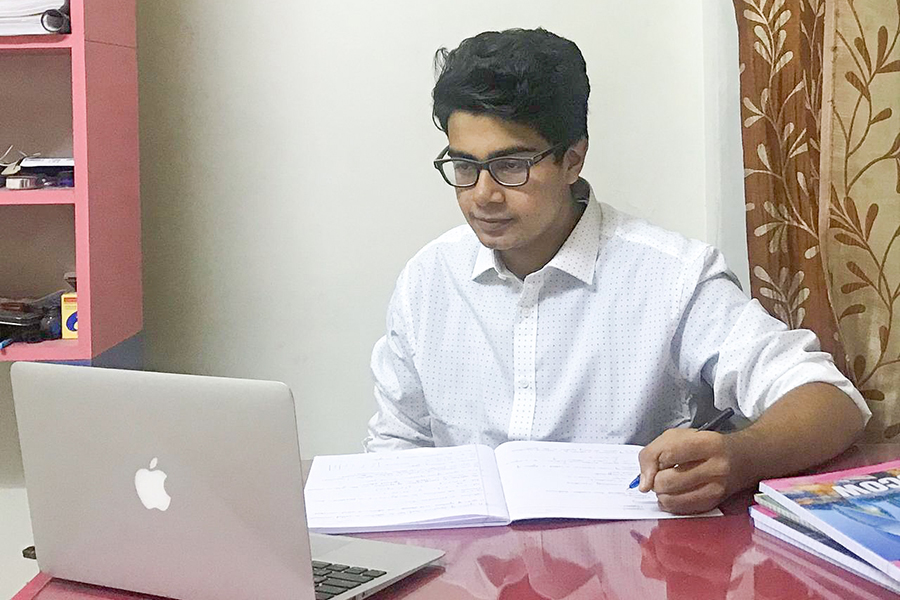
Parakh attributes some of his passion for science and engineering to his parents. Both were physicians, specialists in pediatric neurology and obstetrics/gynecology, and always encouraged him to follow his dreams. He is also inspired by his elder sister, who has autism.
“I have always wanted to work in a field that can provide me with the means and skills to improve the quality of lives for people, especially the underprivileged and people with disabilities,” he says.
“I chose U of T because of its global community, vast alumni network and the tremendous number of academic and co-curricular opportunities that it provides, including the PEY Co-op program and the numerous research opportunities available to undergraduates.”
Parakh describes the remote access guarantee as “the best news that came along my way this year.”
“I am beyond impressed by the amount of hard work that has been put in by the Faculty to plan and to execute one whole semester online, synchronously or otherwise,” he says. “I find this initiative very reassuring and plan to make the most out of it.”
Currently Parakh is keeping an open mind about what he wants to do after graduation.
“I would like to go to graduate school and pursue my studies in an interdisciplinary field, though at this point I have no clue as to what that field may be,” he says. “But I know that over the next four years I will collaborate with, be inspired by and contribute to the wonderful academic environment at U of T. I am certain that these experiences will prepare me well.”
Diana Virgovičová, Year 1 CompE — Pezinok, Slovakia

Virgovičová has been excited about engineering for as long as she can remember. While still in high school, she discovered a new type of photocatalyst using quantum chemistry software, an achievement that earned her a Diploma of Excellence at the Stockholm Junior Water Prize.
“This proved to me that engineering is one of the fields that can improve and save millions of lives,” she says.
Virgovičová says she chose U of T Engineering because of its excellence in education as well as the diversity of the city. “Studying at U of T means meeting students from all the possible cultures,” she says. “Speaking with them is almost like making trips around the world every day.”
While she won’t be able to have those conversations in person yet, Virgovičová says she plans to make the most of the opportunities for interaction available via her online courses. She also plans to join some clubs that are making their activities available online.
“I am looking forward to working in teams and making new like-minded friends,” she says. “My dream is to use my degree to solve some of the most challenging global problems through modern technology. I also aim to build and support platforms that help women and girls from developing communities gain education and empowerment.”
Buse Guler, Year 1 ChemE — Istanbul, Turkey
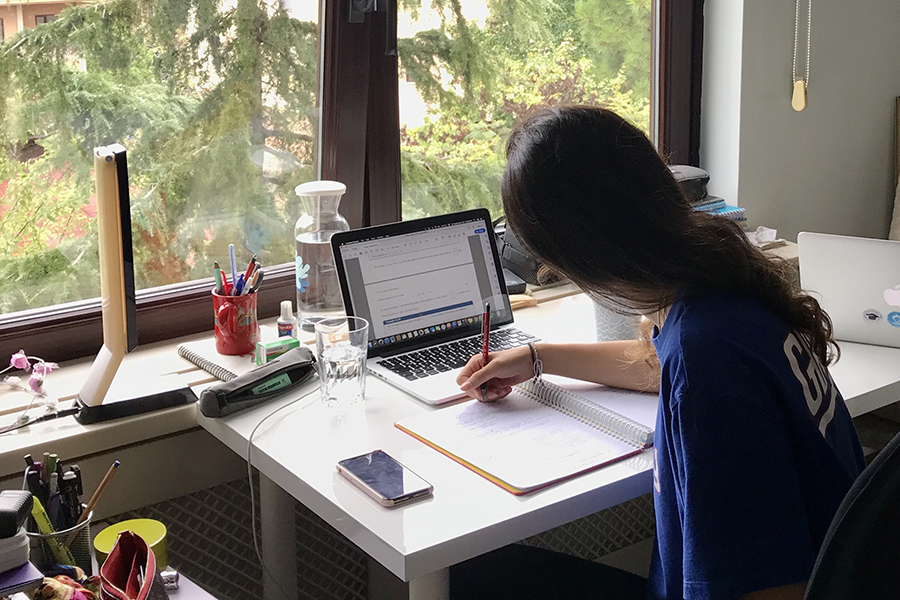
Even before starting her first year, Guler has already spent time as an intern in a chemical engineering lab. “Conducting experiments of my own design really excites me,” she says.
She chose U of T Engineering because of its status as one of the best engineering schools in the world, but also because of its diverse community and rich student life.
“I like that U of T cares a lot about its students learning experience, providing them with many different opportunities,” she says. “Growing up in a diverse and vibrant city like Istanbul has affected the way I was raised. Although I never visited Toronto, I feel like I will really enjoy it for the same reasons.”
While Guler is studying remotely from Istanbul for now, she is still planning to get involved in activities such as the Professional Engineering Year Co-op Program when she arrives.
“Four years from now, I expect I will be working part-time in the company where I completed PEY Co-op while finishing up my senior year studies at U of T,” she says. “I see myself as a significant part of the community.”