A new U of T Engineering outreach program is empowering Black students from across Canada to explore their future in science, technology, engineering and math (STEM).
Launched this summer, Blueprint engages Black students in Grades 9 to 11 who have a love of STEM. It offers them a chance to extend their knowledge of STEM topics, and connects them with mentors who can help them understand what it is like to study and work in STEM on a day-to-day basis.
In its first year, Blueprint has attracted more than 50 participants from across Canada.
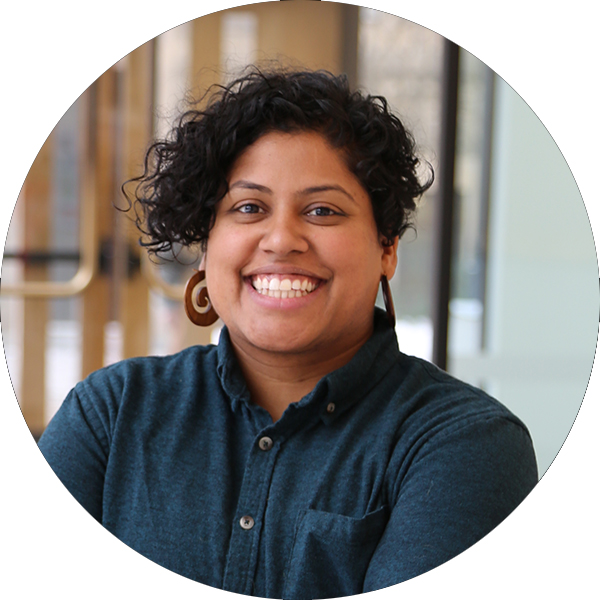
“I often hear Black students say that they are the only ones who look like them in their classrooms,” says Cassandra Abraham. She joined Engineering Outreach in 2019 with a mandate to enhance programs focused on equity, diversity and inclusion, and directed the team that designed and delivered Blueprint.
“As a Black student who graduated in STEM from a Canadian university, I relate to that feeling,” says Abraham. “By connecting students with mentors — Black undergraduate students at U of T Engineering who are also members of the National Society of Black Engineers (NSBE) — that have also had that experience, we were able to start building a whole new community.”
Blueprint builds on other U of T outreach programs, such as ENGage, aimed at Black students in Grades 3 to 8. Delivered in collaboration with the U of T Chapter of NSBE, ENGage has been running for 10 years, and aims to spark a lifelong interest in STEM.
ENGage has also spawned new programs, such as Launch: Science and Engineering Camp, which has run in various neighbourhoods around Toronto since 2018, and ENGage High School Saturdays, which began in 2020.
“After a decade of running programs like these, we now see a critical mass of students,” says Dawn Britton, Associate Director, Engineering Student Outreach. “The switch has been flipped, they sense that STEM is for them, and they want to know more. Blueprint is about giving them the tools they need to take the next steps.”
The first cohort of Blueprint participants were identified by their teachers, their parents or by members of their communities as being passionate about STEM. While some had previously participated in the outreach programs mentioned above, others were interacting with U of T for the first time, including many who live outside Ontario.
The original plan was to bring students to U of T’s St. George campus for five weeks, taking courses and interacting with mentors. But when the COVID-19 pandemic hit, the team was able to pivot quickly.
“Cancelling never felt like an option,” says Luisa Gragirena-Husbands, another member of the Blueprint team. “We were hearing such enthusiasm from the students and their parents that we knew they would want this to happen, even if it had to be a modified experience.”
Over the course of the summer, Blueprint participants completed three academic courses online, each of which addressed a critical topic in STEM:
- Foodology & The Hunger for Change
- Equity & Ethics in Artificial Intelligence
- Designing Tomorrow’s Sustainable Cities
All courses were taught by a U of T Engineering graduate student who acted as a subject-matter expert. The courses were designed to provide a taste of what post-secondary education is like, and to expose students to advanced STEM concepts.
The Black undergraduate students who served as mentors were present online before, during and after each class. This enabled the kind of informal community-building interactions that many of the program’s participants would not otherwise have had access to.
“As students trickled in there would be music playing, and organic conversations about whatever was happening,” says Gragirena-Husbands. “Sometimes it was a pop culture reference, or something to do with what they learned in class yesterday. After class, they would want to chill and hang out with each other. While we couldn’t tour the CN Tower like we had planned, we showed movies and did Tik Tok challenges. We had really high attendance throughout.”
The program also included sessions on career exploration, directed by the questions the students themselves were asking.
“They were super curious about resumes, and they wanted to know how to get their first job, so we had a session for that,” says Gragirena-Husbands “We also covered other aspects of professional development such as interviewing tips and SMART Goal Setting.”
Though the five weeks of academic programming have now been completed, Blueprint is far from over. The students are continuing to spend at least six hours per month with their mentors, and the team is hoping to host an in-person conference in March if COVID-19 guidelines allow.
For the entire team, the biggest measures of success were the testimonials received from both the students and their parents.
“Parents told us that their kids would get up early and were excited to log on, because it was the first time they were in a class full of people who look all like them, who all had experiences like theirs, and who all have the same interests as them,” says Gragirena-Husbands. “That in itself is revolutionary.”
“Students told us: ‘It was amazing to see brilliant Black engineering students at U of T come together to teach and inspire me, and I want to be like them,’” says Britton. “In my mind, that equals success.”
Two U of T Engineering research projects have received a boost from Connaught New Researcher awards.
Professor Merve Bodur (MIE) will investigate new ways to optimize strategic decisions for electric car sharing systems, while Professor Nicolas Papernot (ECE) aims to make machine learning more trustworthy.
The annual awards are only provided to U of T assistant professors within the first five years of a tenured-stream academic appointment to help them establish strong research programs.
“It is a great honour to receive this award,” says Bodur. Her research project aims to develop new mathematical models that can reduce the operating costs of electric car sharing services, while also improving quality of service, making the systems more viable and sustainable.
For example, the models can be used to help system operators determine whether it is more cost-effective to purchase parking lots, or instead make use of free-floating parking permits. They also optimize the locations of car charging stations and even the overall size of the fleet.
“We hope that the new analytical methods will not only advance car sharing systems, but also bike sharing, scooter sharing, and general city planning challenges such as the allocation of parking lots.”
For his part, Papernot and his team will focus on developing algorithms for trustworthy machine learning.
“The widespread adoption of machine learning raises security and societal concerns,” he says. “For instance, learning algorithms can easily be manipulated by adversaries capable of perturbing the data that algorithms analyze.”
By designing machine learning algorithms that can detect and avoid such manipulation, Papernot aims to both increase the algorithms’ ability to learn effectively and responsibly, and to help humans put more trust in machine learning.
“Trustworthiness is instrumental to ensuring a beneficial impact of machine learning,” he says. “We strive to design our experiments in a way that facilitates the translation of our research results into practical techniques and best practices.”
Bodur and Papernot are among 56 principal investigators across U of T to share more than $1 million in funding through the Connaught New Researcher awards.
“Supporting early-career researchers as they build up their programs is a key priority for U of T Engineering,” says Ramin Farnood, Vice-Dean, Research at U of T Engineering. “I look forward to seeing the exciting technologies that will come out of these innovative projects, and the positive impact they will have on our world.”
Nearly 40 years ago while at U of T Engineering, Professors Adel Sedra and K.C. Smith (ECE) launched what would become the classic introductory textbook for students and instructors of electronics. This fall semester, the 8th edition will also be available as an enhanced e-book — ideally suited for the online course delivery model that is becoming prevalent in the era of COVID-19.
Microelectronic Circuits (known to students and instructors simply as “Sedra/Smith”) was revolutionary when it first appeared in the early 80s. To that point, the study of electronics had begun with first principles, a bottom-up approach.
“Sedra/Smith was the first book to say, if we’re really going to take full advantage of this new technology, we can’t be starting from ground zero all the time,” says Professor Tony Chan Carusone (ECE), one of the new edition’s four authors. “You don’t have to think in binary digits every time you sit down to write code. Similarly, you don’t have to think about electrons every time you design a circuit.”
Sedra/Smith’s reputation as the go-to textbook was further cemented by the richness of its problems and the expressiveness of its prose. The sustained effort to keep it up to date, with new editions every five years, means that even an instructor from outside the field could step in and find everything they need all laid out for them.
Today the book has sold more than one million copies and been translated into 11 different languages. “It’s not just a textbook. It’s a good read too,” says Chan Carusone.
He remembers the breakfast five years ago when Sedra first proposed that he take on the co-authorship of the next edition. “I jumped at it. I was honoured. It was important to me to keep U of T’s tradition as a worldwide leader in electronics.” University of Waterloo Professor and U of T Engineering alumnus Vincent Gaudet (ECE MASc 9T7, PhD 0T3) is the other next-generation author.
The guiding principle behind the digital enhancements in the 8th edition was to make Sedra/Smith even easier to learn from. Pop-ups over figures and equations provide quick reference, while collapsible tables preserve the reading flow. The show/hide function on each problem’s solution eliminates the need to constantly flip to the end of the book, and the work now includes 40 instructor videos linked to pivotal concepts in the material.
“We shot these videos using lightboard technology, writing with a marker on an illuminated pane of transparent plexiglass,” says Chan Carusone. “When you film it from the other side of the glass, you can see both my face and writing floating in midair.” He adds, “They’re a lot of fun.”
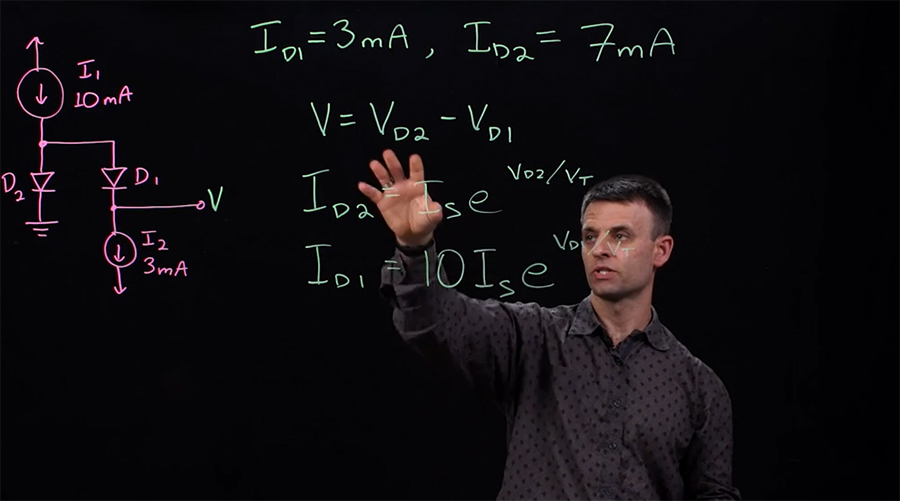
Chan Carusone emphasizes that the writing process — which took five years and reduced the overall length of the book by about 200 pages — was very collaborative.
“We surveyed both users and non-users of the book, and everyone was incredibly receptive and generous with feedback,” he says. “So many people felt they had a stake in this book.”
The new edition is arriving just as engineering schools around the world ramp up their efforts in e-learning. For example, changes to this year’s U of T Engineering classes include a remote access guarantee, which will allow every student to complete all academic requirements remotely.
Chan Carusone hopes that the care and effort that has gone into the enhanced digital content of Sedra/Smith will resonate with students who engage in remote learning.
“This is the first time I could imagine someone having only the e-book,” he says. “But in light of the recent pivot to online learning, this version could provide a better learning experience than the hard copy.”
A new consortium — featuring players from industry, academia and government — will use the power of artificial intelligence (AI) to accelerate design of the next generation of high-performance materials, with applications from renewable energy to consumer electronics.
“Materials discovery has always started with what we find in nature. We combine and adapt found materials for properties like strength, elasticity and electrical conductivity,” says Professor Ted Sargent (ECE), the principal investigator of the new consortium. “But what if AI can help us flip this process on its head? Could we start from the properties we’re seeking, and work backwards?”
This is the paradigm-shifting goal of the Alliance for AI-Accelerated Materials Discovery (A3MD), which brings together world-leading researchers from the University of Toronto, McMaster University and the National Research Council of Canada, as well as industrial partners LG and TOTAL.
Together, the team aims to discover advanced materials, both to convert atmospheric CO2 into usable energy and to enhance the performance of consumer products such as bright and vivid displays.
The A3MD co-investigators include:
- Professor Alan Aspuru-Guzik (Chemistry, Computer Science, U of T)
- Professor Cathy Chin (ChemE)
- Professor Drew Higgins (McMaster University)
- Professor David Sinton (MIE)
- Dr. Isaac Tamblyn (National Research Council of Canada)
- Professor Alex Voznyy (Physical and Environmental Sciences, UTSC)
This multidisciplinary team will develop new strategies to address one of the key challenges in the discovery and synthesis of new materials: the immense size of the search space.
“The Materials Project, which aims to provide a computational library of known materials, currently predicts properties for over 700,000 of them,” says Aspuru-Guzik. “But those materials can be combined in myriad ways. There are simply too many possible permutations to try them all.”
Historically, the discovery of functional material has involved informed trial and error — and many trial tests. Moreover, the design of those experiments was subject to human bias: researchers tend to focus in on combinations of elements that their own experience suggest would be interesting.
In 2017, Aspuru-Guzik and Sargent, along with several other collaborators, issued a call to action in the journal Nature, arguing that emerging tools from the fields of AI and machine learning could play a key role in speeding up the search for new high-performance materials.
Properly trained algorithms can sort through vast libraries of simulated materials and recognize promising combinations in a fraction of the time, pointing researchers in fruitful directions.
Ultimately, these materials need to be synthesized and tested in the lab. And here too, AI can help: when combined with advanced robotics, it enables the use of high-throughput screening (HTS).
“With HTS, you can fabricate and test many different materials in parallel, rather than one at a time,” says Sinton. “Robotic devices take care of the repetitive lab work, doing it more quickly and repeatably. HTS is most powerful when guided using AI: each new iteration is informed by the analysis of the one that came before.”
The combination of AI and robotics provides rich opportunities for synergy that benefits all players.
“When looking for practical solutions on such a scale, it’s vital for researchers to cultivate partnerships with industry and other research institutions,” says ECE Chair Professor Deepa Kundur.
“A3MD is an excellent example of an initiative that actively engages perspectives to keep the focus on solutions that will make a tangible difference.”
In the first year, A3MD will put in place the needed infrastructure — including precision robotics — for high-throughput experimentation. The consortium will also convene several machine learning and data science bootcamps, training a new generation of experts, and will also organize a speaker series with leading researchers in the relevant fields. Graduate students and post-doctoral fellows will drive key aspects of the research and professional development strategy for the alliance.
In its second year, A3MD will expand further, adding industry and academic partners who bring additional expertise and offer new avenues to commercialize the novel technologies that will be developed.
“Partnerships are the backbone of innovation,” says Professor Alex Mihailidis (BME, Medicine) , U of T’s Associate Vice-President of International Partnerships. “They find better solutions faster because they bring disparate groups together. A3MD is a great example of U of T’s spirit of collaboration and desire to work alongside such talented and invested partners.”
As classes start remotely this week, the U of T Engineering community has a message to new and returning students, and to one another: we got this.
The Faculty has launched the Back to Skule™ video capsule, inviting faculty, staff, students and alumni to record messages of encouragement, support and advice. The project serves as a reminder to its community that they are not alone in navigating the challenges of the COVID-19 pandemic and the school year ahead.
“As Dean, my goals this year is to find the resources and opportunities to make sure that you are successful while you’re here,” says Chris Yip, Dean of U of T Engineering, in his welcome message. “But probably my most important goal is to think of new ways to reach out and connect to each and every one of you.”
The start of #Skule™ may look different this fall, but the spirit of our #UofTEngineering community remains strong. Join us in showing support for one another 💙. We’re agile. We’re resilient. #WeGotThis. Submit your own video message🤳 : https://t.co/xieXxqvYKP pic.twitter.com/e53zoBcfzN
— University of Toronto Engineering (@UofTEngineering) September 2, 2020
“Welcome to U of T or welcome back. Whether you’ve been here a while or are new to U of T, we are all class of 2-T-COVID,” says Professor Dionne Aleman (MIE) in her message. “Things are strange and different these days, like working from home, but there’s a light at the end of the tunnel. We’ll all be able to go back to normal, we just got to do our part to be responsible.”
While #BackToSkule may look a little different this year, #UofTEngineering Professor Dionne Aleman (@uoftmie) knows that whether you're a new or returning student, we're all in this together: https://t.co/zQdevVffAn #WeGotThis #BackToSkule pic.twitter.com/fH5q8vIAQn
— University of Toronto Engineering (@UofTEngineering) September 10, 2020
In sharing advice to first-year students, Adriana Diaz Lozano Patiño (Year 3 EngSci) says to never hesitate to ask for help. “If you’re struggling through something, just reach out… make sure that you feel connected and that you don’t feel alone. We’re all here to support you.”
https://www.instagram.com/p/CE7Iv6Ih96q/
Mikhail Burke has experienced U of T Engineering as a student, instructor and as the Faculty’s Inclusion & Transition Advisor. His advice is to “stay calm and be you.”
“You’re the best at being you. Community will find you,” says Burke. “And if you still feel unsure about your place here at U of T, we have great resources, like me, to reach out to for help…. you got this.”
Stay calm and be you — #UofTEngineering student advisor & @uoftalumni, Mikhail Burke, has solid advice for our incoming class of 2T4 💙: https://t.co/zQdevVffAn #WeGotThis #BackToSkule pic.twitter.com/qmYBvVZ95O
— University of Toronto Engineering (@UofTEngineering) September 4, 2020
At time of publication, the capsule has received nearly 50 video messages. To watch, or record a message, visit: uofteng.capsule.video.
This year, U of T Engineering students are preparing for a very different back-to-school season. Keeping mental health in mind will be more important than ever.
Below, U of T Engineering’s Mental Health Programs Officer Melissa Fernandes lays out some advice on how students can effectively deal with some of the new challenges they may be facing.
Challenge #1 — A sedentary, screen-filled day
While faculty and staff have been working to ensure that your learning can happen asynchronously where possible to accommodate your daily schedules, it is likely that you will be spending a significant portion of your day on a screen.
This is unavoidable, so be sure to take care of your body by taking breaks. Get up, move and look beyond your screen. Make sure that you get in all the things your body needs:
- Seven to nine hours of sleep
- Nutritious meals and snacks
- Lots of water (and yes, I will say it, using the toilet as needed!)
Remember, mental and physical health are fundamentally linked. What’s good for the body is good for the brain!
Challenge #2 — Finding community & supports
Usually, orientation events help to break the ice and showcase opportunities for students to engage with each other in social settings.
Many of this year’s orientation events were shifted to online delivery, but it still may have been a bit more difficult to make these connections.
The important thing to note is that these opportunities (clubs, societies, resources) all still exist and for the most part are all continuing with their mandates. So, it’s not too late if you are looking to get connected to a resource offered here at U of T.
Check out these resources for more information on joining an Engineering specific club/team, a U of T club/organization or to explore the resources available throughout campus consider downloading the Student Life App.
Challenge #3 — Staying motivated
As you attend classes and complete homework assignments in your room, on your own, in the midst of a global pandemic that may bring up feelings of grief, fear, and a looming second wave it may be challenging to stay motivated. This will be even more difficult if you are met with challenging concepts, a rigorous workload, and possibly grades that are lower than you expected.
In these times, remember that resilience is a process that involves using the resources we have around us, and inside of us, to promote our well-being. When you are met with challenge or failure, reframe it as a learning opportunity and reach out for support. By doing this, you will be displaying your ability to have a grit and growth mindset.
You may choose to reach out to:
- your professor
- a teaching assistant (TA)
- a study buddy from your course
- GEARS
- your Academic Advisor (First Year Advisors, Upper Year Advisors)
- a Learning Strategist
The important thing is that you reach out to someone: we are all here to help you succeed!
If things get to be too much to handle on your own or if you are recognizing that your mental health is beginning to affect the way that you would like to function, consider connecting with:
- your Academic Advisor (First Year Advisors, Upper Year Advisors)
- a counsellor through the My Student Support Program (My SSP) app
- a clinician (nurses, doctors, counsellors, psychologists & psychiatrists) at Health & Wellness (book an appointment by calling 416-978-8030)
We are all in this together. Welcome to U of T Engineering!