
Researchers from U of T Engineering have used the Canadian Light Source (CLS) at the University of Saskatchewan to improve their techniques for converting CO2 into ethanol, a valuable chemical that can be used both as a fuel and in a variety of industrial applications.
Ethanol produces fewer emissions when compared to gasoline, but the renewable fuel is most often made from corn and wheat so there is a strong interest in non-food production methods. By capturing and converting carbon emissions to ethanol, the fuel’s environmental benefits could be multiplied.
The research team led by Professor Ted Sargent (ECE) focused on producing chemicals through CO2 conversion—such as ethanol, ethylene and methane—helping to transform harmful greenhouse gases into useful products. The group aims to produce the target chemicals, in this case ethanol, with high outputs and minimal energy inputs.
The ethanol project is sponsored by the Canadian energy company Suncor, which invests in cleaner, renewable fuel sources, the Natural Sciences and Engineering Research Council (NSERC) of Canada, and the CIFAR Bio-Inspired Solar Energy program. If successful, more Canadian renewable fuel like ethanol could be created from greenhouse gases and less from farmed food.
In a recent paper published in Nature Energy, the team studied ethanol production by developing catalysts through overcoating copper with nitrogen-doped carbon (N-C/Cu). To understand how the catalysts work and provide valuable information for fine-tuning its efficiency, they studied the structure and chemistry of catalysts using the SXRMB beamline at the CLS.
They discovered that gaps below 1 nm between the Cu and N-C layers may act as a reactor during CO2 to ethanol conversion, a property that could be harnessed to maximize output.
“We also found that the nitrogen-doped carbon layer is very important for producing ethanol because it can promote the reaction’s selectivity to ethanol,” said Xue Wang, a postdoctoral fellow in Sargent’s group.
Wang explained that ethylene and ethanol, two valuable chemicals that can be created from CO2, are derived from a shared key intermediate (HOCCH*) in the conversion reaction, but the end result depends on whether C-O bond-breaks from HOCCH*, which results in ethylene, or stay stable, which results in the desired product ethanol.
“Our goal is to suppress the C-O bond breaking from HOCCH* so less ethylene will be produced. We found that this catalyst is very efficient for creating ethanol,” Wang said.
The researchers also discovered that the N-C/Cu catalyst is a strong and stable system, which is necessary for potential commercialization. In their experiments, they achieved 15 hours of stability at 52 percent Faradaic efficiency (FE) with a full cell energy efficiency (EE) of 16% in creating ethanol. The researchers aim to further improve the selectivity to ethanol, production rate, EE, concentration of ethanol and operational stability in order for the system to be used successfully in industrial applications.
This story originally appeared on the Canadian Light Source website.
Professor Shurui Zhou is one of four new faculty members joining The Edward S. Rogers Sr. Department of Electrical & Computer Engineering (ECE) this summer. Professor Zhou received her PhD in the Institute for Software Research at Carnegie Mellon University’s School of Computer Science.
Her research focuses on helping distributed and interdisciplinary software teams to collaborate more efficiently, especially in the context of modern open-source collaboration forms, fork-based development and interdisciplinary teams when building AI-enabled systems or scientific software. Writer Jessica MacInnis sat down with Professor Zhou to ask her about her research, what drew her to ECE at U of T and how her research led to a collection of utensils.
Tell us about your research.
Software development requires groups of people to work collaboratively. Nowadays, these software teams have become increasingly distributed: there are people working from home and even teams spread across continents, in different time zones. In open source communities, there are people who might not even know each other, but are nevertheless building software together.
In addition, the development process requires stakeholders with different backgrounds to collaborate together, from requirement analysis to software design to software delivery. The collaboration efficiency has a direct impact on the quality of the outcomes.
The vision of my research is to help distributed and interdisciplinary software teams to collaborate more efficiently. I combine advances in tooling and software engineering principles with insights from other disciplines, such as organizational theory and social computing.
I mix a wide range of research methods to understand the problem better. Throughout my work, I often start with studying a problem empirically, such as conducting surveys and interviews with stakeholders, before applying theoretical tools from other fields. I use all of that knowledge to design new tools or software engineering practices, and to evaluate the solutions empirically and pragmatically.
What excites you about this research?
What excites me is the practical strategies that can come out of this work. I love helping software teams in industry resolve real problems in a systematic way.
Any collaborations or interdisciplinary work you are most looking forward to pursuing?
I am excited to collaborate with many colleagues at U of T, both within and outside of the ECE department. For instance, I am interested in helping AI experts work effectively with software engineers. I would like to collaborate with Professor Nicolas Papernot to understand the challenges of building AI-based software systems, and with Professor Alison Olechowski on building bridges between software and hardware.
Any advice for the incoming ECE class?
I would encourage students to strengthen their interdisciplinary thinking, which is becoming a highly necessary and frequently sought skill in the world. And, have fun!
What do you hope to accomplish, as an educator and as a researcher, in the next few years?
I would like to build a successful software engineering research group and attract students to do high-impact research.
I would also like to help the next generation of engineering students become software development and educational leaders who will solve the problems associated with building large-scale and critical software systems.
Tell us a fun fact about yourself.
I collect forks as I have spent six years of my PhD studying how to help people use forks to build better software systems!
Professor Swetaprovo Chaudhuri (UTIAS) normally spends his time thinking about the motion of fluids through jet engines. Now, that expertise is being used to understand the spread of COVID-19.
“In aircraft engines, fuel is injected into the combustor in a fine spray of droplets with sizes somewhat similar to what is ejected while coughing or sneezing,” he says. “While the specific conditions of a respiratory spray are different, the same fundamental physics are involved.”
Back in March, as the pandemic ramped up across Canada and other nations, Chaudhuri called up some long-time collaborators: Professor Abhishek Saha at the University of California San Diego, and Professor Saptarshi Basu of the Indian Institute of Science.
Together, they started to consider what it would take to adapt the physics-based models traditionally used for their work in combustion to instead describe the processes involved in transmitting the new virus.
“The way we see it, physics is involved in at least three levels,” says Chaudhuri. “The first is at the scale of a droplet: how they form and evaporate. The second is at the scale of the spray: the size distribution and trajectories of droplets within a sneeze or cough.”
“The third is the interaction among people. As a first step, we can model interactions between people the same way we model collisions between molecules in a chemical reaction,” he says.
The team believes their model is the first to explicitly connect the respiratory droplet cloud aerodynamics and evaporation physics to the equations that describe the spread of disease in a human population.
To validate the model, the researchers conducted experiments in an acoustic levitator, a device that uses sound waves to cause droplets of saline solution to float suspended in air. The team measured how these suspended droplets evaporated, then fed the data into their model. The full results were recently published in the journal Physics of Fluids.
Chaudhuri is quick to point out that he and his colleagues are neither virologists nor epidemiologists. Furthermore, the predictions of their model are based on “idealized assumptions” that need to be further validated through experiments. Nevertheless, the model did enable the team to make a number of important inferences.
One is that respiratory droplets last longer — and are therefore able to travel farther — in cool, humid conditions than in hot, dry conditions. In fact, even in some moderate conditions, the model predicts that they could travel in air as far as 12 feet before they evaporate.
“If the relative humidity is greater than about 85%, most respiratory droplets do not even evaporate, and small ones can travel very long distances,” says Chaudhuri. “Even in conditions where they evaporate, the leftover semisolid droplet nuclei could travel farther and remain suspended in air for hours in dilute concentration. But the questions on the infectiousness of the SARS-CoV-2 virus trapped inside these nuclei are yet to be settled.”
Another inference is that within a droplet cloud, it is the mid-sized droplets which spread the farthest prior to their evaporation. This is because in most conditions, smaller droplets evaporate quicker, while larger ones are heavier and settle before they get propelled over long distances by a sneeze or cough.
“The longest-surviving droplets have an initial diameter between 18-48 microns for ambient relative humidity less than 80%” says Chaudhuri. “Fortunately, this is a size that can be filtered out by masks, which suggests that widespread mask usage can certainly help reduce transmission.”
Predicting the exact spread of COVID-19 is, Chaudhuri says, not the purpose of this preliminary model. Rather, the goal is to test out the possibilities of a first-principles modelling approach based on fundamental physics.
This is in contrast to most pandemic models, where the all-important ‘rate constants’ that describe how the virus spreads are obtained by fitting available data from recent past outbreaks after accounting for certain characteristics of the local population.
While this is a practical approach, one consequence is that the model only reflects the specific conditions of those previous outbreaks. If conditions change, those rate constants may not be valid for present and future outbreaks.
“What we wanted to do is build a model from first principles using physics, to derive the rate constant based on the frequency of collisions between infectious respiratory droplet cloud and the susceptible population, which in theory could be adapted to any set of conditions,” Chaudhuri says.
While further experimentation will be needed to refine the parameters used in the model, the approach could be combined with present state of the art in epidemiology to theoretically lead to more accurate predictions in the future.
“We would love to see the ideas we have put forward get incorporated into pandemic models used by professional epidemiologists,” says Chaudhuri. “They have the experience and knowledge to make real-life predictions and make public policy recommendations.”
A group of researchers from the University of Toronto have developed a credit-card sized tool for growing cancer cells outside the human body, which they believe will enhance their understanding of breast cancer metastasis.
The device, described in a paper published today in Science Advances, reproduces various environments within the human body where breast cancer cells live. Studying the cells as they go through the process of invasion and metastasis could point the way toward new biomarkers and drugs to diagnose and treat cancer.
“Metastasis is what makes cancer so deadly,” says Professor Aaron Wheeler (BME, Chemistry), the corresponding author of this publication, whose lab is located in U of T’s Donnelly Centre for Cellular and Biomolecular Research. “If cancer cells would simply stay in one spot, it would be ‘easy’ to excise them and cure the disease.”
“But when cancer metastasizes, cancer cells move through the body, making the disease difficult to treat. We decided to apply our expertise in microfluidics to develop a new tool to aid in studying how cancer cells begin to invade into surrounding tissues in the first steps in metastasis.”
Normally metastasis is studied in a petri dish cell culture or in whole animals. However, these model systems present problems in terms of cost, efficiency, or lack of representation.
“An oversimplified system like cells in petri dishes doesn’t mimic what happens in the body, while in an animal model, it’s difficult to isolate and study parameters that govern the invasiveness of a cell.” says Betty Li, a senior BME PhD student and leading author of the paper.
“Our system gives us control over all the specific parameters that we want to look at, while allowing us to make structures that better resemble what happens to the body.”
The device consists of patterned metal electrodes which can move extremely small droplets around through the use of electric fields. By selectively changing the water-repelling properties of the surface at various points, researchers can ‘pinch’ off the water droplets and form precise shapes.
In the paper, the researchers describe how they used a collagen matrix coated with a layer of basal membrane extract to mimic the structure of the breast tissue seen by breast cancer cells during the first step of metastasis.
By placing cancer cells outside of these tissue mimics, researchers could observe the invasion process in detail, including measurements of speed and location.
“One interesting thing we observed is that not all cancer cells within the same population have the same invasiveness,” says Li, “Some invaded into the tissue mimics while others did not, which prompted us to look at what gives the invaded cells such an advantage.”
Li and her team extracted cancer cells at various distances from the invasion point and subjected these cells to genetic sequencing.
“We identified 244 different genes that are differentially expressed between the cancer cells that invaded versus the ones that didn’t invade. This means that using the tool we developed, researchers in the future can develop therapeutics that target some of these genes to halt the cancer metastasis.” says Li.
“We think this type of tool will be quite useful to the community, as cell invasion is important in cancer and also a host of other (non-pathological) processes, like tissue growth, differentiation and repair,” says Wheeler.
Professor Margaret Chapman is one of four new faculty members joining The Edward S. Rogers Sr. Department of Electrical & Computer Engineering (ECE) this summer. Professor Chapman received both her BS and MS degrees from Stanford University and joins us from the University of California Berkeley, where she completed her PhD.
Her research aims to help control stochastic systems, with practical applications from health care to sustainability. Writer Jessica MacInnis sat down with Professor Chapman to ask her about her research, her goals as an educator and researcher, and the transdisciplinary collaborations she’s excited to embark on here in Toronto.
Tell us about your research.
Uncertain systems that evolve over time (called stochastic dynamical systems) are all around us. Examples include a patient who is fighting cancer and the combined sewer system in the city of Toronto. I am interested in developing improved ways to control these systems safely using mathematical theory and data analysis. I am especially interested in managing the risk of harmful outcomes despite real-world uncertainties.
What excites you about this research?
I am excited about developing new mathematical tools to improve healthcare, quality of life, and urban sustainability. The applications of my research are broad and practical. For example, I work with cancer specialists to apply mathematical systems theory to inform the management of cancer. I also work with civil engineers to inform the design and operation of water systems using control theory. On the theoretical side, I am excited about developing new mathematical methods at the intersection of risk analysis, probability theory, and control theory.
Why did you choose ECE at U of T?
The Systems Control group at U of T is working on really interesting problems, and I’m absolutely delighted to be joining this stellar group of researchers. The entire ECE Department has been very welcoming. When I visited Toronto, I was impressed by the diversity and friendliness of the people. It seems like a wonderful place to live and work.
Any collaborations or interdisciplinary work you are most looking forward to pursuing?
I’m thrilled to be working with Dr. Steven Chan, a leukemia expert with the Princess Margaret Cancer Centre in Toronto. I’m also very excited about a green infrastructure project with Dr. Darko Joksimovic, an associate professor of civil engineering at Ryerson University.
What do you hope to accomplish, as an educator and as a researcher, in the next few years?
As an educator, I aspire to create a welcoming and inclusive learning environment where all students feel comfortable to ask questions. I hope that the students in my classes and my research group are challenged in a positive way and also learn more about what they truly enjoy. I hope that my students both expand their mathematical/technical capabilities and also grow/develop personally. It’s my goal to help make systems control theory and the underlying mathematics more accessible to all students.
As a researcher, I’m interested in the application of systems control theory to important problems, such as improving leukemia treatment and evaluating the efficacy of green infrastructure. In my research group, I’m excited about developing new risk-sensitive control methods that scale to high-dimensional systems and also provide safety guarantees. This is feasible, I believe, by creatively merging domain knowledge with risk analysis, probability theory, and control theory.
Any advice for the incoming ECE class?
I’d like to share some advice that’s helped me. Try to let your interests evolve naturally. You may be surprised where you end up, but the journey and the destination will be enjoyable and interesting! Try to not compare yourself to others. We all grow and learn differently, and this diversity is a source of strength. The most important thing is to be kind to yourself and others each and every day.
Five U of T Engineering graduate students have been recognized with Vanier Canada Graduate Scholarships, worth $150,000 each. The funding will support doctoral research addressing a diverse range of challenges, from treating retinal degenerative diseases to fighting climate change.
The Vanier Scholarships recognize PhD candidates at Canadian universities who demonstrate excellence in academics, research impact and leadership.
This year’s recipients are:
Jehad Abed (MSE PhD candidate)

Carbon-capture technology could play a vital role in fighting climate change — and put carbon dioxide (CO2) to use in the global market.
Under the supervision of Professor Ted Sargent (ECE), Abed aims to discover and use new materials to efficiently convert CO2 and water into chemical fuels and high-value feedstocks.
Abed says Vanier’s recognition provides him with a once-in-a-lifetime opportunity to focus entirely on the research that he is interested in, “and innovate without worrying about financial burdens or funding restrictions.”
“Winning Vanier means visibility and recognition, but most importantly appreciation,” he adds. “Countries, like Canada, that attract and incubate talents from across continents give me hope that there is a place for a multicultural and diverse research environment where all what matters is collaborative knowledge for the advancement of humanity.”
Juliana Gomez (BME PhD candidate)
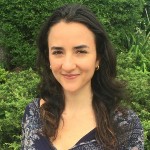 Gomez’s research aims to understand how pluripotent stem-cell derived cardiac muscle cells adapt to an injured heart after transplantation. The goal is to improve how these cells function and engraft, ultimately to be able to fully regenerate the heart’s muscular tissue after a heart attack, restoring its organ function.
“The Vanier will give me the freedom to explore new topics and collaborations that will allow me to expand my research and enrich my training,” says Gomez, who is working under the supervision of Dr. Michael Laflamme of Toronto General Hospital. “It is also a fantastic opportunity to enhance the visibility of our work, not only within academia, but also with the general public.”
Margaret Ho (BME PhD candidate)
 There is currently no clinical treatment that restores vision to those suffering from retinal degenerative diseases, such as retinitis pigmentosa and age-related macular degeneration. Ho’s research aims to transplant new photoreceptors, using a hydrogel delivery system, to enhance the survival of donor cells.
“The Vanier Scholarship has made me aware of how I was inspired and guided by my supervisors, mentors, and friends over the past few years,” says Ho, who is conducting her work under the supervision of Professor Molly Shoichet (ChemE, IBBME). “Without their support and wisdom, I would not be the person I am today. Winning the Vanier has motivated me to continue to work towards mentoring others who are embarking on a similar journey to my own.”
William Chu Kwan (BME PhD candidate)

Chu Kwan is exploring novel applications for Magnetic Resonance-guided High-Intensity Focused Ultrasound (MRgHIFU), an emerging tool for noninvasive and incisionless treatment for conditions such as musculoskeletal contractures, a permanent tightening of tissues.
“By using an MRI for safety monitoring, we can focus ultrasound waves onto a point in our bodies, while the MRgHIFU heats and ‘cuts’ through tissue without cutting through skin, nerves or blood vessels,” explains Chu Kwan, who researches in the lab of Dr. James Drake of the Hospital for Sick Children. “A patient who normally would require a surgical treatment for their contracture could benefit from this technology with less scars, infection, pain, anesthetics or opioids.”
The Vanier Scholarship will enable Chu Kwan to further his research on improving patient’s health and outcomes. “I’ll be able to dedicate more energy into my research and focus on bringing this technology from the bench to the bedside, where I can make a difference for patients and their families,” he says.
Peter Serles (MIE PhD candidate)
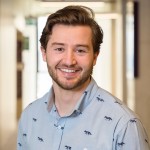
Serles’ research focuses on nano-3D printing and how it can be used to build structures, robotics and machines on the nanoscale. This relatively new technology allows for a much higher degree of complexity than has previously been possible.
Serles is conducting his project under the supervision of Professor Tobin Filleter (MIE). “He’s been an amazing mentor, always supporting me in all my extracurricular directions and obscure research ideas,” says Serles.
The Vanier Scholarship will open the opportunity for international collaborations, which will facilitate bringing new technologies back to Canada. As Eastern Canada does not yet have a nano-3D printer, Serles will also be able to gain the experience needed to support U of T Engineering’s acquisition of a nano-3D printer in the next few years.
Serles credits his father for inspiring him to become an engineer and is grateful for the support from his friends and family.
“Receiving a Vanier scholarship is a vote of confidence that I can do this and make it through my PhD,” he says. “As someone who’s struggled with imposter phenomenon and has tended to be hard on myself when things get tough, receiving Vanier is an external affirmation that I can face these challenges.”