
Five U of T Engineering graduate students have been recognized with Vanier Canada Graduate Scholarships, worth $150,000 each. The funding will support doctoral research addressing a diverse range of challenges, from treating retinal degenerative diseases to fighting climate change.
The Vanier Scholarships recognize PhD candidates at Canadian universities who demonstrate excellence in academics, research impact and leadership.
This year’s recipients are:
Jehad Abed (MSE PhD candidate)

Carbon-capture technology could play a vital role in fighting climate change — and put carbon dioxide (CO2) to use in the global market.
Under the supervision of Professor Ted Sargent (ECE), Abed aims to discover and use new materials to efficiently convert CO2 and water into chemical fuels and high-value feedstocks.
Abed says Vanier’s recognition provides him with a once-in-a-lifetime opportunity to focus entirely on the research that he is interested in, “and innovate without worrying about financial burdens or funding restrictions.”
“Winning Vanier means visibility and recognition, but most importantly appreciation,” he adds. “Countries, like Canada, that attract and incubate talents from across continents give me hope that there is a place for a multicultural and diverse research environment where all what matters is collaborative knowledge for the advancement of humanity.”
Juliana Gomez (BME PhD candidate)
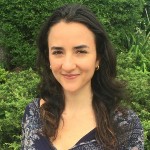 Gomez’s research aims to understand how pluripotent stem-cell derived cardiac muscle cells adapt to an injured heart after transplantation. The goal is to improve how these cells function and engraft, ultimately to be able to fully regenerate the heart’s muscular tissue after a heart attack, restoring its organ function.
“The Vanier will give me the freedom to explore new topics and collaborations that will allow me to expand my research and enrich my training,” says Gomez, who is working under the supervision of Dr. Michael Laflamme of Toronto General Hospital. “It is also a fantastic opportunity to enhance the visibility of our work, not only within academia, but also with the general public.”
Margaret Ho (BME PhD candidate)
 There is currently no clinical treatment that restores vision to those suffering from retinal degenerative diseases, such as retinitis pigmentosa and age-related macular degeneration. Ho’s research aims to transplant new photoreceptors, using a hydrogel delivery system, to enhance the survival of donor cells.
“The Vanier Scholarship has made me aware of how I was inspired and guided by my supervisors, mentors, and friends over the past few years,” says Ho, who is conducting her work under the supervision of Professor Molly Shoichet (ChemE, IBBME). “Without their support and wisdom, I would not be the person I am today. Winning the Vanier has motivated me to continue to work towards mentoring others who are embarking on a similar journey to my own.”
William Chu Kwan (BME PhD candidate)

Chu Kwan is exploring novel applications for Magnetic Resonance-guided High-Intensity Focused Ultrasound (MRgHIFU), an emerging tool for noninvasive and incisionless treatment for conditions such as musculoskeletal contractures, a permanent tightening of tissues.
“By using an MRI for safety monitoring, we can focus ultrasound waves onto a point in our bodies, while the MRgHIFU heats and ‘cuts’ through tissue without cutting through skin, nerves or blood vessels,” explains Chu Kwan, who researches in the lab of Dr. James Drake of the Hospital for Sick Children. “A patient who normally would require a surgical treatment for their contracture could benefit from this technology with less scars, infection, pain, anesthetics or opioids.”
The Vanier Scholarship will enable Chu Kwan to further his research on improving patient’s health and outcomes. “I’ll be able to dedicate more energy into my research and focus on bringing this technology from the bench to the bedside, where I can make a difference for patients and their families,” he says.
Peter Serles (MIE PhD candidate)
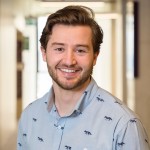
Serles’ research focuses on nano-3D printing and how it can be used to build structures, robotics and machines on the nanoscale. This relatively new technology allows for a much higher degree of complexity than has previously been possible.
Serles is conducting his project under the supervision of Professor Tobin Filleter (MIE). “He’s been an amazing mentor, always supporting me in all my extracurricular directions and obscure research ideas,” says Serles.
The Vanier Scholarship will open the opportunity for international collaborations, which will facilitate bringing new technologies back to Canada. As Eastern Canada does not yet have a nano-3D printer, Serles will also be able to gain the experience needed to support U of T Engineering’s acquisition of a nano-3D printer in the next few years.
Serles credits his father for inspiring him to become an engineer and is grateful for the support from his friends and family.
“Receiving a Vanier scholarship is a vote of confidence that I can do this and make it through my PhD,” he says. “As someone who’s struggled with imposter phenomenon and has tended to be hard on myself when things get tough, receiving Vanier is an external affirmation that I can face these challenges.”
The Edward S. Rogers Sr. Department of Electrical & Computer Engineering (ECE) is welcoming four new faculty members before the start of the 2020 fall academic term. This is the first in a series of introductions to ECE’s newest faculty members.
Professor John Simpson-Porco’s research is in the area of automatic control and he’s looking forward to collaborating with other researchers on everything from small-scale microgrids to management of smart buildings and water distribution systems. Writer Jessica MacInnis spoke with Professor Simpson-Porco to learn more about his research, why he chose ECE at U of T Engineering and his advice to new students.
Tell us about your research.
I work in the area of automatic control, which is an interdisciplinary topic at the boundary between engineering and applied math. About half of my work is on fundamental problems, such as how to generally analyze control systems and how to design controllers. The other half of my work is application-driven, and focuses on applying advanced control and optimization methods to problems in the energy sector. The broad goal of this application research is to improve efficiency and reliability of the power grid and to move towards a renewable-centric energy system; there are plenty of difficult control problems that need to be addressed for this to happen at scale.
What excites you about this research area?
Control is fascinating in that it approaches engineering design problems through the lens of rigorous mathematics; you have to clearly pose the problem you want to solve, develop a solution, and prove that your solution solves the problem you posed! In other words — no cheating allowed. My background is in physics, and I like to think of feedback — which is one of the key ideas in control — as a fundamental natural phenomena to be studied, like gravity. Viewed through this lens, control theory is the scientific study of feedback, and control engineering is the principled application of feedback to engineering problems. I think this duality helps keep both the scientist and the engineer in me excited.
Why did you choose ECE at U of T Engineering?
I joined U of T due to its outstanding research reputation in control. Members of the Systems Control Group have made foundational contributions to both control theory and control engineering over the years, and that spirit of discovery continues to this day and drives the research agenda. Being originally from Toronto, it’s also a privilege to come back to my hometown and contribute towards developing cutting edge technology and educating Canada’s top engineering students.
What advice can you share with the incoming class of 2T4?
Students this year are in a very unique situation, and — even more than usual — time management is going to be a major challenge for some students who are used to having more externally-imposed structure in their days. If you can make yourself a firm schedule with clearly blocked out time for study and work, and have someone around to help hold you accountable to that schedule, you will be in great shape.
What do you hope to accomplish, as an educator and as a researcher, in the next few years?
In terms of research, my group is currently developing control designs which optimize the operation of an engineering system in real-time by combining technical methods from control and operations research. We’re going to be applying these methods across a broad range of energy system problems over the coming years. The tightrope we are trying to walk is to develop methods that are backed by solid theory, but also simple and effective enough to be transferred for industrial use. As an educator, my goal is always to get students excited about control engineering, and to give them at least some understanding that control is a pervasive and universal technology applied across all modern engineering sectors.
As the COVID-19 pandemic rearranged the plans of students across U of T Engineering over the past few months, one question was on many minds: what can I do to help?
Now, dozens of students are taking action.
The U of T COVID-19 Student Engagement Awards were created to fund inspiring innovations designed to respond to the COVID-19 crisis to take flight. Across the University, more than 150 multidisciplinary teams have received up to $3,000 each to support development of their projects over the next three months.
A total of 47 U of T Engineering undergraduate and graduate students are leading or contributing to these teams. The Faculty has invested an additional $54,000 total to support the engineering projects, which address a wide range of issues, from hand hygiene to reduce the spread of the virus, to strategies to maintaining good mental health while in isolation.
“I feel very thrilled, grateful and inspired. As a team we are honored to have U of T’s support in our endeavours to make a difference,” says Lilian Kabelle (CivMin MEng candidate). Her team’s project envisions an “engineering think tank” which will bring together engineers of various disciplines to consider and counteract the impact and challenges of COVID-19 in East Africa.
Kabelle, who grew up in Kenya, believes this coordinated approach could identify and develop viable engineering solutions for issues that are complicating the fight against the virus.
“I have a burning desire to be a causative change agent for positive development in my home region, to whatever degree possible,” adds Kabelle, whose team also includes Marie Merci Ishimwe (ECE MEng candidate) and Ngone Lo (Faculty of Information).
Their team is currently building the think tank platform, gathering data to finalize the challenges to be tackled in the think tank, and confirming commitments from volunteer engineers to engage in the project.
The complete list of U of T Engineering projects includes:
-
- The future of protein design: a machine learning approach to COVID-19 outbreak — Tianyu Lu, Joseph Bellissimo, Hannah So, Rochelle Wang, Shea-sarah Garcia, Danielle Serra, Rose Talebi, Edward Shen, Xiaotong Wang (ChemE), Adriana Díaz Lozano Patiño (EngSci), Gamen Liu (ChemE)
-
- A proposal for the development of an App for self-reporting of COVID-19 associated symptoms — Sulaiman Jalloh (ChemE MEng candidate), Abhinav Mohan (MIE MASc candidate), Leticia Nndagang (MEng candidate), Kuda Masalila
-
- The Global Artistic Manifestations of COVID-19 — Ben Sprenger (MechE), Ally Fraser (MechE)
-
- Tackling Shortages of N95 Masks with a Simple, Effective, and Removable Desiccant Strip Design — Ziting (Judy) Xia (ChemE), Purushoth Thavendran (ChemE), Amro Aswad (ChemE), Jingyi (Jenny) Wei (MechE), Xiaoou (Bessie) Li (IndE)
-
- Assessing the Effectiveness of Videos for Exergaming Technology for use with Isolated Older Adults During COVID-19 Pandemic — Sharon Ferguson (MIE MASc candidate), Chelsea Ferguson (MechE), YouZhi Hu (MIE MASc candidate)
-
- Knowledge Without Borders — Songeun You (CompE), Daniel Lu (CompE)
-
- UnityOR: a digital assistant for the operating room — Ingrid Grozavu, Daniel Szulc (BME PhD candidate), Brandon Ho
-
- Environmental Impacts of Hand Hygiene Practices: Handwashing with Soap and Alcohol-Based Hand Rubbing — Daniel Tse (CivMin MEng CEM candidate), Pedro Torres-Basanta (CivMin MEngCEM candidate), Lisa MacTavish (CivMin MEngCEM candidate)
-
- Survey: Impact of COVID-19 on Graduate Students in Canada — Sivani Baskaran, Frank Telfer, Maegan Ong, Dawn Bannerman (ChemE PhD candidate), Caroline Pao, Samantha McWhither, Bryony McAllister, Isabella Lim, Vidhant Pal (BME PhD candidate), Farah Qaiser, Kali Iyer
-
- Agent-Based Modelling in Global Health: An Analysis of Various Social Distancing Policies using COBWEB — Adebisi Akande, Dina Bernstein (MechE), Leshi Yang, Muhammad Anas Ansar, Yi Yue Jiang, Yuzhou Pan
-
- COVID-19 Crisis Management: a 360 Perspective — Priyanjli Sharma, Michelle Nurse, Avani Bhardwaj, Emma Sass (CivMin)
-
- Assessing the Need for Virtual Medical Care in Canadian Communities Using Machine Learning Models and Predictive Analysis — Abdula Maher, Esmat Sahak (EngSci), Ahmed Kaimkhani
-
- Analysis of Economic Impact Caused by COVID-19 Pandemic and Comparisons to that Caused by Past Public Crises — Weiqing Wang, Zhiya Lou, Guanyao Liang, Jincheng Leng, Ziyi Wang, Jiaru Li (IndE), Xiaoli Yang
-
- Healing by the Arts — Nahyun Lee, Junhyeok Hong (ECE), Chaemin Kim
-
- Flatten the Negativity — Karishma Shah (ECE), Nimit Vediya
-
- Documenting the Post-COVID City — Jillian Sprenger, Katy Tiper (BME PhD candidate)
-
- COVID19Recovery — Leo Zhu (ChemE MASc candidate), Julia Lee, Grace Guo, Sissi Zhu, Juliana Lee
-
- Engineering Think Tank — Lilian Kabelle (CivMin MASc candidate), Marie Merci Ishimwe (ECE MEng candidate), Ngone Lo
-
- Easing the burden: A dashboard to track COVID-19 financial aid across the globe — Adam Lam, Mubtaseem Zaman (CompE)
-
- Together we Learn: Fostering an online learning community in an Engineering Science undergraduate course — Rubaina Khan, Nikita Dawe (PhD candidate)
-
- Projecting the supply and use of pristine and reprocessed N95 respirators in a hospital — Paul Chen (ChemE PhD candidate), Matthew Yau, Tommaso Alba, Krish Bilimoria, Shangmou (Samuel) Wu
-
- Home-based COVID-19 Self-care System — Ramtin Mojtahedi (BME PhD candidate), Saeed Shakib (CivMin PhD candidate)
-
- Studio Babble: Creative Engagement in the Age of COVID-19 — Gemma Robinson, Aisling Beers, Declan Roberts, Jay Potts, Savanna Blade (EngSci), Sheetza McGarry
-
- The COVID Action Hub — Denise Lee, Melanie Seabrook, Emma Seabrook, Shiyi Zhang (CompE)
-
- Mitigating stigmatization, ensuring food security and preventing the transmission of COVID-19 in Bangladesh and Canada — Tahsin Reza Tasnim Reza, Mahiya Nasrin, Nithila Sivakumar, Clara Chick, Thanoshan Ariyanayagam (CompE)
-
- Dear Uni to Be — Brandon Yu, Ahmedullah Shah, Alessia Priore, Theodora Girgis (EngSci)
-
- Equipment trade website business model and interface design — Tianyi Yu (CompE), Minjing Xu
-
- Get educated on the subject, stop with the misinformation — Rosa Yang, Yinghui Liu, Yihe Zhang, Tianyi Tang, Xinyu Zhou (MSE)
A study led by U of T Engineering alumna Kimberly Ren (EngSci 2T0) is the first to quantify predictors that could lead women towards, or away from, pursuing careers in machine learning (ML) and artificial intelligence (AI).
A 2018 report by the World Economic Forum found that women make up 22 percent of global AI professionals, with that proportion oscillating between 21 and 23 percent over a four-year trend.
“The talent gap isn’t closing,” says Ren, whose fourth-year thesis project was awarded the Best Paper Award at the American Society for Engineering Education Conference, Women in Engineering Division. She led the study under the supervision of Professor Alison Olechowski (MIE, ISTEP).
“What I hope this research does is find some reasoning behind this gap, so that we can increase the persistence of women in the field going forward.”
Ren surveyed 279 undergraduate and graduate students at U of T Engineering who were studying ML/AI — 38 percent identified as female, 61 percent identified as male. She then measured how variables, such as professional-role confidence and discrimination experiences, positively or negatively impacted their persistence in pursuing ML/AI or general engineering careers. Their findings revealed:
- Expertise confidence — a self-assessment of whether one feels they’ve learned what they need to be successful — is a significant positive predictor for both women and men;
- Career-fit confidence — when one feels they are a good fit for the career they are considering — is a significant positive predictor for women and men; and,
- Gender discrimination, from peers or teaching staff, was a significant negative predictor for only women students.
“These findings might sound quite logical, but it’s important to quantitatively show that biased experiences have a real impact on what careers women choose,” says Ren.
And although the project was designed to study the gender gap in students pursuing and persisting in AI/ML studies at U of T Engineering, their findings also revealed a severe lack of representation of Black and Indigenous students. “Of the 279 students surveyed, only 2 percent self-identified as Black, and 0 percent as Indigenous,” says Olechowski.
“This was shown to be the case in a sample size where 84 percent of students self-identified as a visible minority,” adds Ren. “So even when visible minorities are significantly represented, representation of Black and Indigenous students does not necessarily follow. There needs to be future work that focuses on the unique experiences and predictors of Black students that can elaborate further.”
Their work adds to an expanding list of research focused on biases within ML/AI. Fellow engineering science alumna Deborah Raji (EngSci 1T9) led a study last winter that revealed the baked-in racial and gender biases in facial-recognition services. Raji’s research, alongside that of computer scientist and digital activist Joy Buolamwini, has led to some accountability in the industry.
“ML/AI has the potential to significantly shape future technologies, which only underscores the need to increase the diversity of workers within the field,” says Ren. “If we don’t see a change, then biased teaching, inputs, algorithms, applications and decisions will lead to further discriminatory and negative social consequences.”
The paper also provides recommendations to eliminate gender discrimination in engineering education, including mandatory anti-discrimination training modules, as well as accessible and transparent reporting of discriminatory behaviour that would affect faculty/teaching staff promotion and progress reporting.
Olechowski is using the findings to further inform her approach as an educator. As a researcher, she is keen to supervise future students to further the work in this area.
“It’s great that we’re seeing a higher proportion of women studying engineering, but seeing this study makes me realize that we need to ensure that we’re also matching students with mentors in industry — exposing them to people who look like them and make them feel like they belong. I want to be intentional with the role models that I present to my class.”
University Professor Ted Sargent (ECE) has been named the University of Toronto’s vice-president, research and innovation, and strategic initiatives for a four-year term, effective July 1.
Sargent, an internationally renowned nanotechnology researcher, moves into the role after serving as U of T’s inaugural vice-president, international since 2016, overseeing an expansion of the university’s global footprint.
He will succeed Professor Vivek Goel at the helm of the university’s vast research enterprise after Goel indicated earlier this month that he was stepping down from the position to focus on the university’s pandemic response, as well as that of the wider community.
“The research of our scholars – and the translation of this work into societal impact – is of vital importance, even more now than ever before,” Sargent said, referring to the COVID-19 pandemic.
“This is true in the life sciences and just as true in the humanities, social sciences, and physical sciences, and in cross-cutting interdisciplinary fields including our professional disciplines.”
Sargent said he aims to build on the progress made by Goel and his team in areas such as promoting equity and diversity in research and innovation, and building partnerships with government, industry and NGOs.
“We want to ensure that all of U of T’s researchers see themselves and their remarkable work reflected and valued at U of T,” he said. “This is particularly true at a time when equity, diversity and community engagement represent critical topics facing society.
“Robust and respectful community partnerships will continue to be a crucial element of what we do.”
President Meric Gertler announced Sargent’s appointment on Thursday after it was approved by Governing Council. He reiterated that the COVID-19 pandemic required the expeditious appointment of a proven leader.
“Given the urgent external pressures and abbreviated timelines, an experienced senior leader would serve the university’s needs especially well at this time,” he said. “The individual whose name surfaced most consistently in my consultations was Professor Ted Sargent.”
Gertler praised Sargent’s work on U of T’s international strategic plan, which helped deepen global engagement, build partnerships with universities and the private sector, increase the number of students benefiting from global engagement in study and research, engage alumni across the globe and further enhance U of T’s international reputation.
As vice-president, international, Sargent helped U of T secure a number of key agreements to facilitate the flow of talent and ideas across borders. For example, U of T two years ago signed agreements with Mexico’s National Council of Science and Technology to bring graduate researchers to U of T.
Last year, 19,000 international students studied on U of T’s campuses – with international media reporting that U of T is now a premier destination for students from several countries, including France and India.
Sargent first joined U of T in 1998 as a faculty member in the Edward S. Rogers Sr. Department of Electrical & Computer Engineering. He holds a tier one Canada Research Chair in nanotechnology and was appointed a University Professor in 2015, the highest rank for faculty at the university. This year, he received the prestigious Killam Prize for Engineering.
His research unites expertise in chemistry, physics and engineering across eight experimental labs. His work is focused on advanced materials such as quantum dots, perovskite crystals and multi-metal catalysts. Applications include light sensing, solar energy harvesting and carbon capture and storage. His work has been cited more than 49,000 times, according to the Scopus database.
“In my research group, I have the privilege of working with brilliant students and post-docs from around the world,” Sargent said.
“Doing so only deepens curiosity even more with every day about how we can further deepen our understanding of the physical laws that govern our world; and how we can apply insights from basic science in order to make practical systems that enable us to act on big global challenges, such as the need to provide sustainable solutions for energy, and develop new technologies that bring us closer together.”
Sargent is founder and chief technology officer of InVisage Technologies, as well as a co-founder of QD Solar, which aims to produce high-performing and low-cost solar photovoltaic technology, and Xagenic, a molecular diagnostics company developing a range of infectious disease tests.
He is a fellow of the Royal Society of Canada, the American Association for the Advancement of Science and the Canadian Academy of Engineering.
In his new role, Sargent plans to continue to work with colleagues from across the university’s three campuses to expand the university’s impact globally, and to further deepen the focus on research and innovation.
“We want to celebrate the remarkable influence U of T’s great minds continue to have on their colleagues – on thinkers and doers – around the globe,” he said.
“We will continue to ensure that U of T’s remarkable resources set our researchers up for success.”
Four U of T Engineering professors have been inducted as Fellows of the Canadian Engineering Education Association (CEEA-ACEG).
The honour recognizes noteworthy service to engineering education, engineering leadership, or engineering design education. The U of T Engineering inductees were among 21 engineering education professionals from across Canada in the association’s inaugural cohort.
They are:
- Professor Greg Evans (ChemE, ISTEP)
- Professor Susan McCahan (MIE), Vice-Provost, Academic Programs and Vice-Provost, Innovations in Undergraduate Education
- Professor Lisa Romkey (ISTEP/EngSci)
- Professor Jason Foster (CivMin/EngSci)
“It is truly an honour to be included in this group of highly respected engineering educators,” says Romkey. “These individuals have carved out spaces in their own institutions for this critical work, and I am lucky to consider many of the Fellows close colleagues and mentors.”
Romkey’s research interests include teaching and assessment practices in engineering. For example, she has collaborated with McCahan on the development of competency-based rubrics and with Professor Alan Chong (ISTEP) on research into how undergraduate multidisciplinary research projects are assessed.
She also recently completed work on a multi-institutional project on teaching practices in engineering. Her current research uses theory in higher education to better understand the nature of Engineering Science as a discipline, which she hopes will lead to a stronger relationship between program goals, and teaching and learning practices in EngSci. Professor Romkey teaches courses on the social and environmental impact of technology and Engineering Education.
The disruptions caused by the COVID-19 pandemic have brought key issues in engineering education to the fore for both teachers and students.
“This challenge gives us an opportunity to be creative and to collaborate in new ways,” says Romkey. “It has encouraged important conversations about the purpose of assessment, how to create meaningful learning communities with our students, and how to support each other as instructors.”
This fall, Romkey will be co-teaching an engineering and society course with Professor Rob Irish (ISTEP).
“This is a course built around weekly seminars, which has made it challenging to move online,” she says. “However, we’ll be making good use of educational technology, including synchronous and asynchronous activities, to offer a meaningful discussion experience and broaden student participation.”
Romkey says that the move to remote learning necessitated a deep review of course concepts and activities with a goal of prioritizing what’s important. As Associate Chair, Curriculum, Teaching and Learning for Engineering Science, she’s encouraging all professors to go through a similar exercise.
“We’re supporting instructors in their own planning with an eye to the ‘whole picture’ for our students,” she says. “I’m also working with a group of colleagues from across the country on a CEEA-ACEG initiative called E-CORE (Engineering Collaboration for Online and Remote Education) which includes the development of resource guides and professional development opportunities. It is exciting to see colleagues from across the country come together to support engineering students, teaching assistants and instructors.”
Romkey hopes that as the ranks of CEEA-ACEG Fellows continue to grow in the coming years, they can provide a national community of practice to strengthen engineering education across all institutions.
“Whether you have an interest in research and scholarship in engineering education, or teach in engineering, CEEA-ACEG provides community, an opportunity to showcase innovative work, and professional development opportunities,” she says. “I would encourage our faculty, staff and students to explore what the organization has to offer.”