
Professor Milica Radisic (BME, ChemE) is one of six recipients nationwide of a 2025 Governor General’s Innovation Award. These national awards celebrate exceptional Canadians for their excellence in innovation, and their contributions in helping to shape the future and positively impact quality of life. Radisic is being honoured for her development of heart-on-a-chip technology for drug discovery and disease modelling.
Radisic is a Tier 1 Canada Research Chair in Organ-on-a-Chip Engineering and a senior scientist at the Toronto General Research Institute. She is a co-founder of the Centre for Research and Applications in Fluidic Technologies and a member of the Scientific Leadership team of the Acceleration Consortium. She has served on boards of directors for the Ontario Society of Professional Engineers and the Canadian Biomaterials Society, and she is a scientific officer on the Biomedical Engineering Panel for the Canadian Institutes of Health Research.
Radisic has co-founded two companies: TARA Biosystems — acquired by Valo Health — which uses the heart-on-a-chip platform for drug development and safety testing, and Quthero, which advances regenerative peptide materials.
Radisic’s research focuses on organ-on-a-chip engineering and the development of new biomaterials that promote healing. Most notably, she developed the Biowire heart-on-a-chip platform, which enables the formation of mature human heart tissue for toxicity testing, drug development and modelling of human genetic disease. Traditional drug testing relies on animal models, which do not capture human genetic diversity and sex specificity. Using electrical stimulation and microfabrication of elastomeric polymers, Radisic developed methods, such as the Biowire platform, to grow and mature contractile heart tissues from human stem cells. This has enabled more efficient drug discovery and testing. Radisic also used the platform to model heart disease in patients treated in several Canadian hospitals, uncovering the underlying genetic mechanisms leading to this condition.
Radisic is a fellow of eight prestigious scholarly academies, including the Royal Society of Canada, the Canadian Academy of Engineering, the U.S. National Academy of Inventors and the Tissue Engineering & Regenerative Medicine International Society. She has received around 50 national and international awards, including the Queen Elizabeth II Diamond Jubilee Medal, YWCA Woman of Distinction Award, Killam Fellowship, Steacie Prize, Humboldt Research Award and the NSERC John C. Polanyi Award.
“Milica Radisic’s heart-on-a-chip technology has been a game-changer in the field of tissue engineering, enabling major advances in the development and testing of pharmaceuticals, and creating new ways to model conditions such as heart disease,” says U of T Engineering Dean Christopher Yip.
“On behalf of the Faculty, I congratulate her on this prestigious and well-deserved honour.”
Three U of T engineers have been honoured by the Ontario Society of Professional Engineers (OSPE) with Ontario Professional Engineers Awards, recognizing engineers who have made exceptional contributions to the profession and to society.
Professor Emily Moore (ISTEP) has garnered the Management Medal, for innovative management practices contributing significantly to an engineering achievement. Alumnus Mike Branch (CompE 0T3) received the Engineering Excellence in Industry Medal, recognizing overall excellence in the practice of engineering in industry. Alumna Nancy Hill (CivE 8T1) has been awarded the Entrepreneurship Medal, for applying new technologies or innovative approaches that have enabled new companies to get started.
“These outstanding engineers have excelled as innovators, entrepreneurs and leaders in their organizations and in the engineering community,” says U of T Engineering Dean Christopher Yip. “On behalf of the faculty, I congratulate them on this well-deserved recognition.”
Moore has had an exceptional management career spanning nearly three decades and encompassing both industry and academia. After obtaining her PhD in Physical Chemistry from Oxford as a Rhodes Scholar, Moore joined the Xerox Research Centre of Canada, where she led the scale-up of new toner technology, bringing new technology and formulations into manufacturing, and authoring 21 U.S. patents. In 2008, Moore joined Hatch, a global engineering consultancy firm. During her time at Hatch, she oversaw the development of new technology, played a lead role in revitalizing their water business, and was a champion for EDI initiatives.
In 2018, she joined U of T as an associate professor and director of Troost ILead. In this role, she has developed new curricular and co-curricular programs, in addition to teaching and conducting research on engineering leadership. Moore is an active volunteer and a leader in her profession, serving on the boards of several professional and community organizations. As president of the Canadian Society for Chemical Engineering from 2011-2012 and a board member from 2005-2013, she was an important voice for industry in a largely academic group. Moore received the Society for Chemical Industry Canada’s Kalev Pugi Award (for industrial research) in 2016. That same year, she was named one of 100 Global Inspirational Women in Mining. Moore was elected a Fellow of the Canadian Academy of Engineering in 2020. She has also received five best paper awards for her publications on engineering leadership education.
Branch is Vice-President, Data and Analytics at Geotab, a global leader in connected transportation solutions, providing advanced analytics and AI to drive safer, more efficient, more sustainable transportation networks. In this role, he leads the development of data and AI products and strategy across more than 4.7 million connected vehicles and over 100 billion data points per day. Since joining Geotab in 2016, he has grown the data and AI team from five people to 160, and launched Altitude by Geotab,a mobility insights platform, and Geotab Ace, the first generative AI analytics agent for commercial fleets.
Previously, Branch was the CEO of Inovex, a software development company focused on servicing the healthcare industry and municipalities, which he founded in 2003. At Inovex, he developed the award-winning map visualization product Maps BI, which was later acquired by Geotab. Over the years, Branch has garnered several awards for professional leadership and volunteerism. In 2013, he received both the Engineers Canada Young Engineer Achievement Award and the Ontario Professional Engineers Young Engineer Medal. He received two silver International Business Awards and the Cloud Innovation World Cup Award for his work on Maps BI. Branch served on the Canadian Chamber of Commerce Future of AI Council and serves on the advisory boards for the Smart Freight Centre and The Ray. He was president of the U of T Engineering Alumni Association from 2011-2013, receiving an Arbor Award for his leadership and service.
An award-winning licensed engineer, lawyer, and patent and trademark agent, Hill co-founded an intellectual property law firm that has successfully obtained more than 800 originating patents with clients across Canada and internationally, generating thousands of patents worldwide and enabling the development and commercialization of breakthrough research and entrepreneurial innovations in several industries. Hill has also served as a transformative volunteer and leader in the engineering profession and the community, most notably as president of Engineers Canada and president of Professional Engineers Ontario (PEO). She served on the Research Management Committee of Auto 21, a federal centre of excellence in the automotive sector, and is a volunteer at U of T and Toronto Metropolitan University.
An advocate for educating engineers on their intellectual property rights, Hill has been an instructor and keynote speaker on this subject at universities and professional engineering organizations. She has also been a lifelong supporter of and role model for women in engineering. As the chair of PEO’s Women-in-Engineering Committee, she spearheaded the inclusion of harassment in the definition of professional misconduct in the Professional Engineers Act and led the development of a policy statement and guideline on Human Rights in Professional Practice. Hill has been named one of WXN’s Top 100 Most Powerful Women and inducted as a fellow in Engineers Canada and the Canadian Academy of Engineering, as well as a companion in the PEO Order of Honour.
Researchers at the University of Toronto’s Faculty of Applied Science & Engineering have created a way to use Google Maps Street View images to assess existing structures. With the aid of machine learning, the images available online can be used to generate data to help determine the age, height and size of existing structures.
The study was published in the Journal of Industrial Ecology.
“This is the first paper we know of where people took a picture that shows you the front of the building and then predicts things that you can’t see in the picture,” says Professor Shoshanna Saxe (CivMin), who led the research team through the Centre for the Sustainable Built Environment.
“My motivations were very focused on embodied carbon research use, but this will be useful for lots of different people. I’ve talked to researchers who are looking at understanding water usage for future planning, or resilience assessments.”
As Street View is prevalent nearly everywhere, the new method offers a cost-effective way to generate significant building data.
“We spent maybe $1,000 on photos to get data that would otherwise cost millions of dollars to obtain,” says Saxe.
“Nobody has millions of dollars to spend on just building dimensions, so this is the difference between being able to work on these problems and not. Having methods that can let us understand neighbourhoods and buildings at scale is really useful,” she says.
The team trained the AI to estimate building attributes based on external images of the structure, achieving 70% accuracy for age prediction and 80% accuracy for area prediction.
“Being able to assess the exteriors allows a sort of educated guess at the interiors and the kinds of uses the occupants put on local infrastructure,” says co-author Alex Olson (MIE MASc 2T0), a senior AI researcher at the Centre for Analytics and Artificial Intelligence Engineering (CARTE) at U of T.
“It gives a strong estimate of the resources used in building, maintaining and operating the buildings.”
Saxe expands, “This is information you can’t get from traditional methods of just looking at maps or plans — you need to see structures. One of the distinctions is we’re predicting what the internal square footage of the building is. And, although obviously that tracks with the size of the outside of the building, it’s actually harder to predict. And you also can’t see how old the building is from the outside.
“If you have experience, you can walk around and say, that building looks about this old to me, this building looks about that old to me and so on. But there’s all kinds of things about it that make it hard, including renovations. The front can be different from the back. And is the frontage brick, glass or is it concrete? Knowing the age of the building is important, as it tells you what materials were used and what embodied carbon there is. And, also, how it performs.”
The ability to see beyond the facades of buildings with AI could help planners better understand the resource needs of cities and prioritize future infrastructure in areas of greatest need.
“You want to understand where there’s underused resources or infrastructure in your city,” says Olson.
“It sounds like we should already have the data, but we really don’t. With this, while it doesn’t model the future, it does quite accurately describe what the current situation is and allows us to use the data for planning our resource uses and what we want to do in the future.”
Dimpho Radebe (IndE 1T5, ChemE PhD student) wanted to use her engineering degree to create positive change and impact everyday life. That’s when she found industrial engineering.
The field gave her a framework to consider the human side of engineering, such as systems, processes and psychological perspectives. But as Radebe moved through her undergraduate degree at the University of Toronto and into her career, she often found herself one of the few Black women in the room.
“For many of us who struggle with relating to traditional engineering culture, or just see ourselves differently as engineers, it can feel isolating,” says Radebe, a doctoral student in the Department of Chemical Engineering & Applied Chemistry in the Faculty of Applied Science & Engineering.
Questions about how engineers are trained, how they use their degrees and what defines engineering culture led Radebe back to U of T to pursue a PhD in engineering education.
As part of her studies, Radebe is currently completing the Collaborative Specialization in Engineering Education, an interdisciplinary initiative led by ISTEP, designed for graduate students pursuing research in engineering education. She has first-hand experience putting her research into practice in three undergraduate ISTEP courses — TEP324: Engineering and Social Justice, as an instructor, and TEP448: System Mapping and TEP445: Power of Story, as a teaching assistant.
Her research uses Black feminist autoethnography and critical race counter-storytelling to reflect on key moments in her engineering education and career from 2010 to 2024. She examines equity, diversity and inclusion efforts and explores issues related to the retention of Black women in engineering for educators and employers committed to decolonization and inclusion.
In recognition of her work, Radebe received the Outstanding Graduate Student Poster Award following her presentation Illuminating the Shadows of Engineering Education: A Black Queer Feminist Perspective, at the BRN Research Symposium. The award was made in collaboration by the Black Research Network and the U of T Black Graduate Students’ Association.

According a 2022 report from Engineers Canada, 25.2% of engineering undergraduate students in Canada self-identified as female, while 74.8% identified as male in 2021. A 2023 report from the same organization found that among practicing engineers, 86% identified as male and only 14% as female.
Canada’s narrative of multiculturalism — and the belief that racism isn’t as prevalent here — has led to less attention and research compared to the United States, Radebe says.
“I decided to begin with my own experience, given the limited data available, as a starting point for deeper exploration,” she says. “I wondered if personal insights could highlight the need for more research, especially from a Canadian perspective.”
Her work highlights not only exclusionary practices in engineering culture, but also the need for greater curricular flexibility and deeper discussions about navigating education, the profession and the recognition of various career pathways within it.
“My ultimate hope is that other engineering students who engage with this research feel validated in their own experiences and empowered to chart their own career trajectories,” says Radebe.
A new facility in The Edward S. Rogers Sr. Department of Electrical and Computer Engineering (ECE) offers cutting-edge equipment that will foster collaboration between undergraduates and researchers on long-term projects that explore advanced topics.
The new Keysight Electronics Laboratory was unveiled in a ceremony held Tuesday, April 29. The hands-on educational lab was made possible through a generous in-kind donation of advanced equipment from Keysight Technologies, which serves as the global innovation partner for high-growth industries.
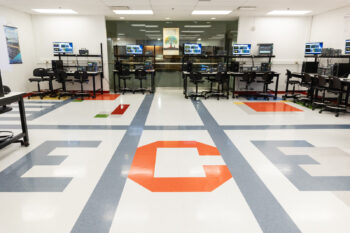
Keysight is known for collaborating with top partners across high-growth industries, including automotive, technology and leading engineering universities. Their solutions empower engineers to accelerate innovation and design and develop groundbreaking technologies with speed and reduced risk.
“As a proud alumna of the University of Toronto’s Electrical Engineering program, I am thrilled that Keysight is supporting the future generation of talented engineers with this donation of advanced instruments,” said Marie Hattar (ECE 9T0), CMO at Keysight Technologies.
“At Keysight, we are deeply committed to fostering innovation and believe this collaboration will empower U of T Engineering students to accelerate their learning, make groundbreaking discoveries and ultimately shape the future of technology.”
This versatile mixed hardware lab will be used for undergraduate courses at both the introductory and advanced levels. The new electrical engineering lab will feature Keysight-provided equipment such as:
- InfiniVision 1000 X-Series Oscilloscope with WaveGen
- Waveform generator
- Digital Multimeter
- Test Sequencing and Control Module
- True RMS 6000 count handheld DMM
As one of Canada’s largest electrical and computer engineering departments, ECE at U of T Engineering has the human and material resources to offer an exceptional research experience opportunity for students. Among ECE’s existing teaching labs are an innovative photonics lab, cutting-edge microwave lab and industry-grade energy systems lab.
The new Keysight Technologies equipment will also mean that individuals can be trained on specific hardware, opening up the possibility for external training and workshops. The addition of the new Keysight Electronics Laboratory will provide ECE students with the necessary resources to ensure this program remains competitive.
“I noticed that there was a gap in the practical education opportunities available; I wanted to ensure that we had an advanced facility for undergraduate students, providing the possibility of working on project-based labs, which could expand across many disciplines here at ECE, like analog and digital electronics, control systems, signal processing, embedded systems and communication systems,” says Afshin Poraria, Director of ECE Teaching Labs.
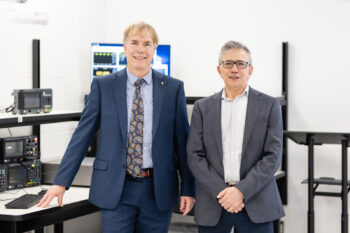
This unveiling of the Keysight Electronics Laboratory marks a milestone in the partnership between ECE at U of T Engineering and Keysight Technologies. Poraria says that this new concept has the potential to expand the current partnership further and bring in new partnerships as well.
“The partnership between Keysight and ECE at the University of Toronto Engineering reflects the incredible impact we can make when industry and education work together,” says Professor Deepa Kundur, Chair of ECE.
“By providing access to essential tools and hands-on learning experiences, we are opening new doors for our students — opportunities critical to their growth as the next generation of engineers and innovators.”
“This donation marks yet another milestone in our enduring partnership with the University of Toronto Engineering—a relationship that has ranged from cutting-edge research in photonic ICs to support for student clubs,” says Dr. Doug Baney, Corporate Director of Education at Keysight.
“By supplying modern industrial test equipment to the electronic teaching labs, we’re helping prepare students with the practical skills and experience they need to excel in their engineering careers.”
See all the photos from the unveiling event on our Flickr.
Professor Rachel Gregor joined the Department of Chemical Engineering & Applied Chemistry (ChemE) in March 2025. She leads the MicroChemEco Lab, which sits at the intersection of chemistry, microbiology and environmental science. Her research focuses on the vast chemical diversity of microbes and their role in shaping ecosystems and global biogeochemical cycles.
Originally from New York City, Gregor moved to Israel after high school and completed both her undergraduate and graduate degrees at Ben-Gurion University of the Negev. She majored in chemistry with a minor in literature, drawn equally to science and the humanities before ultimately choosing the path of chemistry. She completed her PhD in Professor Michael Meijler’s lab, where she explored chemical signaling in bacterial pathogens.
A pivotal moment in her research journey came during a two-month stint at the University of California San Diego in 2015, where she discovered a fascination with microbiome research and metabolomics. Back at Ben-Gurion, she collaborated on a unique project analyzing gut microbiomes from over 100 zoo animals. For her postdoctoral work, Gregor joined Professor Otto Cordero’s lab at MIT to study marine microbial communities and their role in the ocean’s carbon cycle.
We spoke with Gregor to learn more about her journey and what she’s most excited about in her new role.
What drew you to U of T?
At U of T, I feel like I can have my cake and eat it too — it’s a large, international institution with countless opportunities, but at the same time, I’ve found an incredibly supportive and collaborative community in the department and especially in BioZone. The communal nature of BioZone is truly special, and I’m still learning new things about U of T every day.
How did your interest in microbes take root?
If you love chemistry, you should love microbes — they’re brilliant synthetic chemists! I got drawn into the microbial world during my PhD, and my time at UC San Diego introduced me to marine microbiology. I’ll never forget attending a happy hour at the Scripps Institute of Oceanography — watching researchers come straight out of the ocean in wetsuits as the sun set over the Pacific. I thought, “This is it — this is the kind of scientific life I want.”
What are you hoping to accomplish through your research?
Our lab is trying to understand how the chemical diversity of bacteria influences ecosystems. Using high-throughput metabolomics, we map connections between natural products, microbes and the environment. One of our big-picture goals is to engineer microbial communities for applications in health, sustainability and industry. We’re also aiming to create an ecology-based drug discovery pipeline grounded in microbial interactions.
How does your work fit into the department’s broader research goals?
I see my work building on existing strengths in microbial communities, metabolomics and environmental chemistry. I’m excited to add new angles, especially in marine microbiology and drug discovery, and contribute to our collective goal of a more sustainable future.
What do you hope your work will contribute to global challenges?
I believe microbes hold the key to next-generation sustainable technologies and novel therapeutics. Specifically, I hope to help uncover the chemical drivers of microbially-mediated carbon sequestration in oceans and use ecological principles to guide natural product discovery. There’s so much untapped potential in understanding the chemistry of microbial life.
What’s your teaching philosophy?
I want students to understand how chemistry shapes society and our ecosystem. I’m especially passionate about making biology accessible to non-biologists, and chemistry to non-chemists. The future is interdisciplinary, and that’s how I aim to teach.
How will you bring your research into the classroom?
I’d love to offer undergrads hands-on research experiences. I’m inspired by initiatives like the Tiny Earth Project, which gives students the chance to discover antibiotics from local soil samples. Even if we’re not in the field, there’s a treasure trove of real-world data online — chemical, genomic and otherwise — for students to dive into.
What’s something people might not know about you?
I’ve set a personal goal for my first year in Toronto: to try every vegan restaurant in the city. I’m making progress, but the list is long!