
Zayne Thawer (EngSci 2T0+ PEY) never imagined the career path his Professional Experience Year Co-op Program (PEY Co-op) at Safran Landing Systems would open up.
“My internship was incredibly enlightening. It introduced me to the world of industry beyond academia,” he says.
“As a systems engineering and architecture intern, I worked with a team of engineers in Canada and France on the development and implementation of a Model-based Systems Engineering (MBSE) framework using the Systems Modeling Language (SysML). This modeling was derived from the NASA Systems Engineering Handbook and was done for the landing gear architecture and operation of a supersonic jet program.”
Today he is driven by a passion for creating a positive impact on society. As a spacecraft systems engineer at Planet Labs — a satellite imagery and earth data analytics company based in San Francisco — he is dedicated to advancing space sustainability. His work ensures that space remains a viable resource for future generations.
“One area of innovation that I’ve been able to work on is the art of maneuver automation. As space becomes an increasingly dense environment with lots of satellites, debris and objects of all kinds, we are making sure that we are operating in a safe and sustainable manner,” he says.
“Prior to my time at Safran, I did not understand what the field of systems engineering was, and now I work as a space systems engineer on a constellation of Earth-orbiting satellites.”
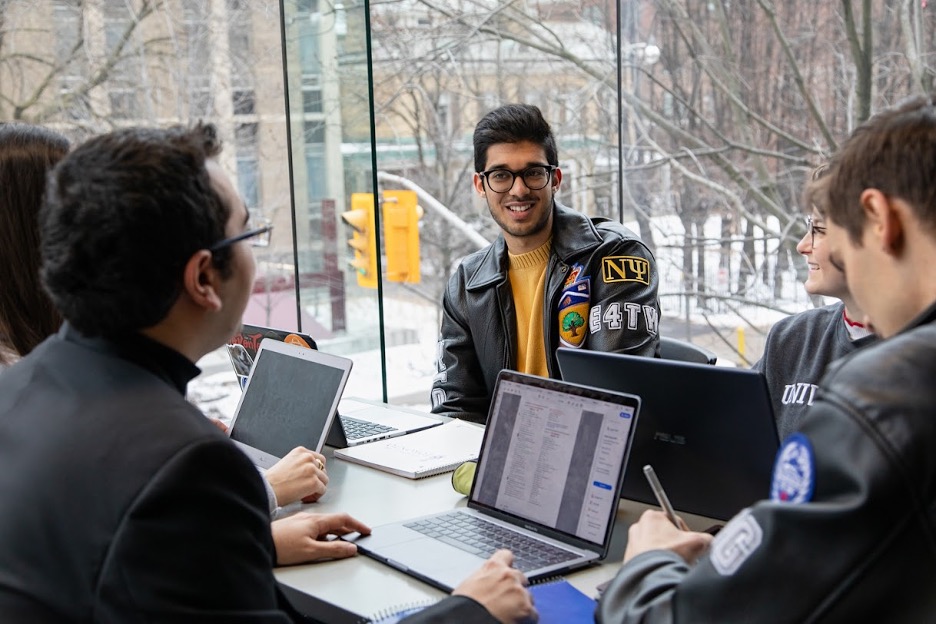
The PEY Co-op program, offered through the Engineering Career Centre, is a work-integrated learning initiative designed to help U of T Engineering undergraduate students gain paid, meaningful work experience aligned with their individual career goals. With up to 20 months of work experience, PEY Co-op students can engage in long-term projects from inception to completion; while earning a competitive salary and developing a robust professional network and valuable skills they can apply throughout their careers.
Thawer’s PEY Co-op experience gave him the opportunity to work on different projects that enabled him to gain new capabilities. During his time at Safran Landing Systems, Thawer tracked change management for the Bombardier Global 7500 aircraft program, through which he learned how to write and manage requirements, as well as capture validation and verification activities of a broad range of subsystems and components.
Two key skills he honed during his time at Safran Landing Systems were context switching and being a high-level systems thinker.
“The first project I did at Safran Landing Systems had a profound impact on my career trajectory, as it was the first time I was faced with an ambiguous, high-level problem that needed to be broken down into manageable pieces using critical thinking and intuition,” says Thawer.
“This systems-thinking approach to a challenge that did not have one correct answer was extremely rewarding to work on, since it forced me to think creatively about a deeply interconnected system and untangle the complexity,” he says.
“In my current role at Planet, working on the Mission Operations team, there’s always a million things going on at the same time and being able to jump from one project to the next is a skill that I started working on when I was at my PEY Co-op at Safran Landing Systems. It also was a big part of the Engineering Science curriculum.”
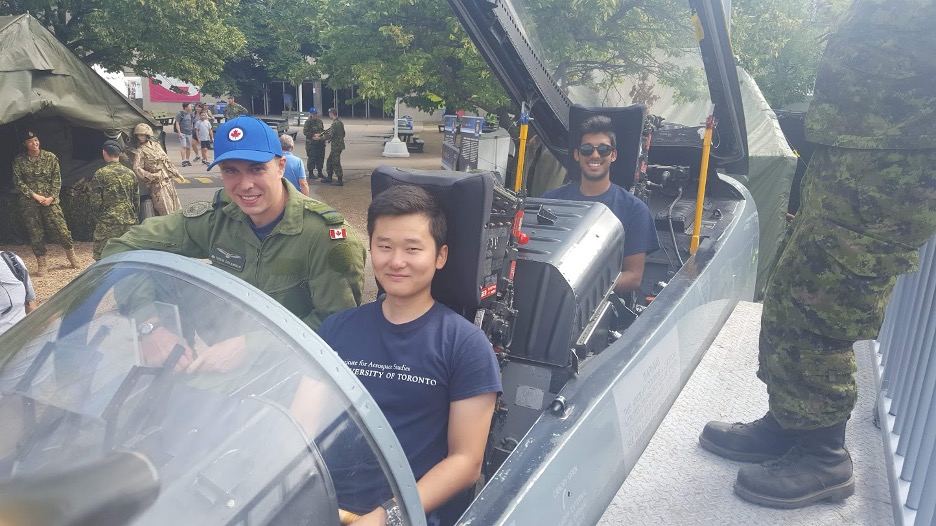
As an advocate for space sustainability, Thawer feels fortunate to contribute to systems that account for satellite manoeuvres and fleet management to reduce the risk of collisions in space.
“We have developed systems that proactively identify and mitigate collisions that may be imminent in the coming days,” he says. “I think space sustainability is going to become an increasing concern as we see the rise of the commercial space industry. It’s important that we all consider the impact that our actions are having on the future of the space environment.”
For students embarking on their PEY Co-op journey, Thawer’s advice is to step out of their comfort zones and embrace new opportunities.
“Without the PEY Co-op program’s on-the-job training to develop my skills in analyzing nebulous, multi-disciplinary engineering problems, I would not be on the path I currently tread. But every opportunity I could get to work with another team or project broadened my horizons,” he says.
Looking ahead, Thawer is eager to deepen his expertise in the space industry.
“I think there’s still so much more for me to learn about spacecraft design and operations. I’m looking forward to taking on new technical challenges and becoming a well-rounded engineer at Planet,” he says.
When Laura Thompson (ChemE 1T6), was in her fourth year at U of T Engineering, a simple skincare hack sparked her journey into the world of natural skincare.
“One of my friends introduced me to using coconut oil as a natural makeup remover,” says Thompson, co-founder of Three Ships. “I loved how well it worked, but I found the user experience of scooping it out of a jar and applying it to my face to be bulky and cumbersome.”
Thompson started to research more natural skincare alternatives but was frustrated with companies making questionable claims about being natural and clean — a practice sometimes referred to as greenwashing — as well as a general lack of clarity and transparency around these terms.
“Three Ships was born out of our own frustration,” says Thompson, who, along with her co-founder Connie Lo, invested $2,000 into the creation of the company. “We started by hand-making our products in our kitchen. Our intention was to create truly natural skincare products that are affordable and deliver exceptional results.”
Today, Three Ships no longer makes its products in the co-founders’ kitchen. The company works with three factories in the Greater Toronto Area — and one in South Korea for their innovative biodegradable eye masks — to deliver mostly made-in-Canada products.
“One of the big advantages is that we’re able to have boots on the ground and go and visit our contract manufacturers to ensure quality control,” says Thompson.
“That’s why all our products that we can make locally are made locally. It was a huge decision for us to even start making products in South Korea, but there were no contract manufacturers here that could make that type of technology.”
For Sofia Bonilla (ChemE PhD 1T7), establishing a Canadian company with made-in-Canada products has been a positive experience due to the support she has received, including from U of T Mississauga’s ICUBE — a social entrepreneurship accelerator for early-stage startups.
“It’s incredibly difficult to build a business, so I won’t sugar coat it, but there have been so many people wanting to help us and see us succeed,” she says.
Bonilla is the founder and CEO of ALT-PRO Advantage, makers of next generation pet foods that use environmentally friendly, nutrient-rich insect protein.
Before becoming an entrepreneur, Bonilla spent her career in academia. Born and raised in Colombia, she completed a degree in microbiology before moving to Australia to complete a master’s degree in environmental science.
She then completed her PhD in chemical engineering at U of T and pursued postdoctoral fellowships in Toronto and the Netherlands.
“My expertise is in protein. For many years, I was thinking about protein, learning about protein and over time I came to understand the importance of diversifying where we get our protein,” she says.
“Combining my biology background with engineering helped me develop an understanding of manufacturing products. I realized I could use my scientific training to create products that people could buy, helping them transition to environmentally friendly, nutritionally equivalent alternative protein sources.”
ALT-PRO started using insect protein in pet foods due to its commercial availability, as well as its proven safety, palatability and digestibility.
“We see a lot of opportunity in other alternative proteins, and we are even developing our own ingredients that we plan to incorporate in the future using microalgae. We have these cool, proprietary ingredients that will be a source of essential nutrients for pets but also has different applications in other feed and food products,” says Bonilla.
“The company started with just me, but we are now a team of six with research and development based in Halifax. We also have products in 84 stores across Canada.”
Both ALT-PRO Advantage and Three Ships are Certified B Corporations, a designation from nonprofit network B Lab, which indicates that a company meets the highest standards in social and environmental performance, public transparency and legal accountability.
Building a business in Canada has its challenges, says Thompson, noting that accessing capital has been one of Three Ships’ biggest hurdles, especially since many investors and large venture capitalist firms are based in the United States.
But the company is now at the stage where it has a lot of Canadian visibility, she says. Their next goal is to continue expanding and get their products into a major beauty retailer.
“My biggest advice for women in engineering who are interested in pursuing entrepreneurship is to learn how to sell,” she says. “As a founder, you are always selling something: the culture of your team to new employees, the future growth potential to investors and your products to your customers and retail buyers.
“I wish that more women would go into a sales role right out of school and learn those skills before launching their companies. Connie and I both had sales backgrounds before we started, and we learned so much from those experiences, which serve us in entrepreneurship.”
If Bonilla could give her past self one piece of advice, it would be to have more confidence in her vision early on.
“I’m learning to not undersell accomplishments,” she says. “My advice to women interested in entrepreneurship is to trust and surround yourself with people who believe in you and your vision. Don’t be afraid to be authentic and change the way things have been traditionally done.”
Even before he officially enrolled, Jimmy Lu (CivMin 1T0, MASc 1T3) knew that U of T Engineering was for him.
“The summer before my first year, I attended a reception for students who had received an offer of admission, but not necessarily accepted it yet,” he says.
“They had us doing all kinds of challenges, some of which were pretty silly. But they also required you to use math, science and creative thinking to solve problems, which is just what engineers do.”
“I liked that mix of being able to have fun, but also to do real things — it just felt right.”
Lu, who was born in Hong Kong but grew up in Toronto, quickly threw himself into all aspects of Skule™. One early highlight was during his second semester, when he won the Ultimate F!rosh competition, one of a series of Skule™ spirit events that take place during what is known as Godiva Week.
“One of the things about being named Ultimate F!rosh is that for the next year, any member of Skule™ can ask you to jump up and down, and you have to do it,” he says.
“People would yell it across campus, or in the hallways. It got to the point where if I heard those words, I just assumed people were talking to me.”
The experience did not tire him out; instead, Lu took on even more roles with the Engineering Society (EngSoc). By April of his first year, he was editing the F!rosh Handbook for incoming students.
In his third year, he was named Mr. Blue and Gold, while his close friend Jenn Eversley (CivMin 1T0, MEng 1T7) was named Lady Godiva. Together, these two characters led many of the spirit activities that take place during F!rosh Week and throughout the year.
Lu went on to serve as the EngSoc’s vice president of student life. In his final year, he was elected president of EngSoc, and helped organize the 2010 Canadian Engineering Competitions.
After finishing his undergraduate degree, Lu went on to complete an MASc under the supervision of Professor Bryan Karney (CivMin). It was during this time that he met his life partner, Lisa Ye, a fellow U of T student in the Faculty of Nursing. They have now been together for 14 years.
From there, Lu moved into a series of roles that leveraged his passion for fighting climate change, including positions at The Atmospheric Fund, an environmental NGO, and at Ontario’s Independent Electricity System Operator.
But in 2023, Lu faced a challenge unlike any he had ever dealt with before. After months of unusual symptoms, he was diagnosed in July with glioblastoma, an aggressive form of brain cancer.
“There was about a week between my diagnosis and the surgery to remove the tumour,” he says.
“During that week, all I thought about were my favourite memories, and many were from U of T Engineering. They involved the friends I made there and experiences I had. It felt like I had lived a very rich life.”
Lu says he received an overwhelming amount of support: from his partner, his family, his friends, and coworkers.
His friends from U of T Engineering — led by Eversley — rallied to support him after the operation during his recovery and additional treatments. The care and strength he received from being part of the Skule™ community moved him deeply.
During his treatment, Lu was also struck by the degree to which the tools being used, from MRI machines to surgical devices, were all created and refined by engineers.
By the end of the summer, he had made up his mind to find a way to give back to the U of T Engineering community.
“When I got the call from Jimmy, I remember feeling shocked and saddened that someone so young must face something so difficult,” says Sonia De Buglio (ChemE 9T4, MASc 9T8) Director, Alumni Relations at U of T Engineering.
“At the same time, I felt very touched that in his moment of difficulty, he should be thinking about how he can give back and do something meaningful.”
The call kicked off a series of discussions between Lu and the U of T Engineering Advancement team, which eventually led to the creation of what is now called the Jimmy Lu Jump Up and Down for Skule™ Award.
This new endowed award will benefit students in perpetuity and will be presented annually to recognize the work of EngSoc vice-presidents who embody Skule™ spirit.
“Other than the president, who receives a small stipend, all of the student leaders from EngSoc and the other clubs and teams are volunteers,” says Lu.
“I wanted to find a way to recognize the value of that work, and the ripple effects it continues to have long after graduation.”
Lu’s classmates, along with several former Engineering Society Presidents and VPs, have already contributed tens of thousands of dollars to the new award. In December, Lu himself offered to match donations, helping the endowment exceed $50,000.
The award is just one of more than 600 awards distributed by the faculty to students each year, which are funded by generous donations from U of T Engineering alumni and supporters.
While his health poses ongoing challenges, Lu and Ye continue to live life to the fullest. Even while Lu was undergoing radiation and chemotherapy, the couple continued to travel the world together, and in late 2024, they had their first child.
Lu says that he wants the legacy of his award to be rooted in care and consideration for others.
“Kindness is a very strong focus for me now, because of all the kindness I’ve received, and just because it’s what we all deserve as humans,” Lu says.
“I want for us all to live in a kinder society. I hope that by giving back to Skule™, I can help to make that happen.”
If you’d like to support the Jimmy Lu Jump Up & Down for Skule™ Award, please make your gift online. If you have questions, or would like to learn more about establishing your own student award, please contact Kristin Philpot at kristin.philpot@utoronto.ca
Thanks to a dedicated group of student leaders, Black-identifying members of U of T Engineering’s graduate student community now have more avenues for support and mentorship than ever before.
Though it officially formed in 2024, the genesis of U of T’s NSBE Graduate Student Chapter dates back to the spring of 2023. That’s when ECE PhD candidate Mai Ali travelled to Kansas City, Mo., to attend the Annual Convention of the National Society of Black Engineers (NSBE).
The yearly event brings together thousands of Black-identifying attendees to network among aspiring and professional engineers, pursue development opportunities and participate in competitions and career fairs.
“I was amazed by the community and the opportunities that were available, but I noticed that many events were geared towards undergraduate NSBE chapters,” says Ali, whose trip was sponsored by U of T Engineering’s office of the Vice-Dean, Graduate in collaboration with the Diversity, Inclusion and Professionalism office.
“I realized that Black graduate students need a place where we can meet, discuss our research and celebrate our achievements.”
When Ali returned to Toronto, she got to work establishing a graduate student chapter of NSBE at U of T with the support of the faculty.
She reached out to fellow Black engineering graduate students to gauge interest in forming the new group. The response was positive, and a call was made to form the executive committee, which first met in April 2024. The National Society of Black Engineers was founded in 1975 to promote and support the professional development and academic achievement of students pursing various engineering disciplines.
50 years later, there are more than 600 student chapters around the world with a mission to increase the number of culturally responsible Black engineers who can succeed professionally and positively impact their communities. U of T has been home to an undergraduate chapter of NSBE since 1999.
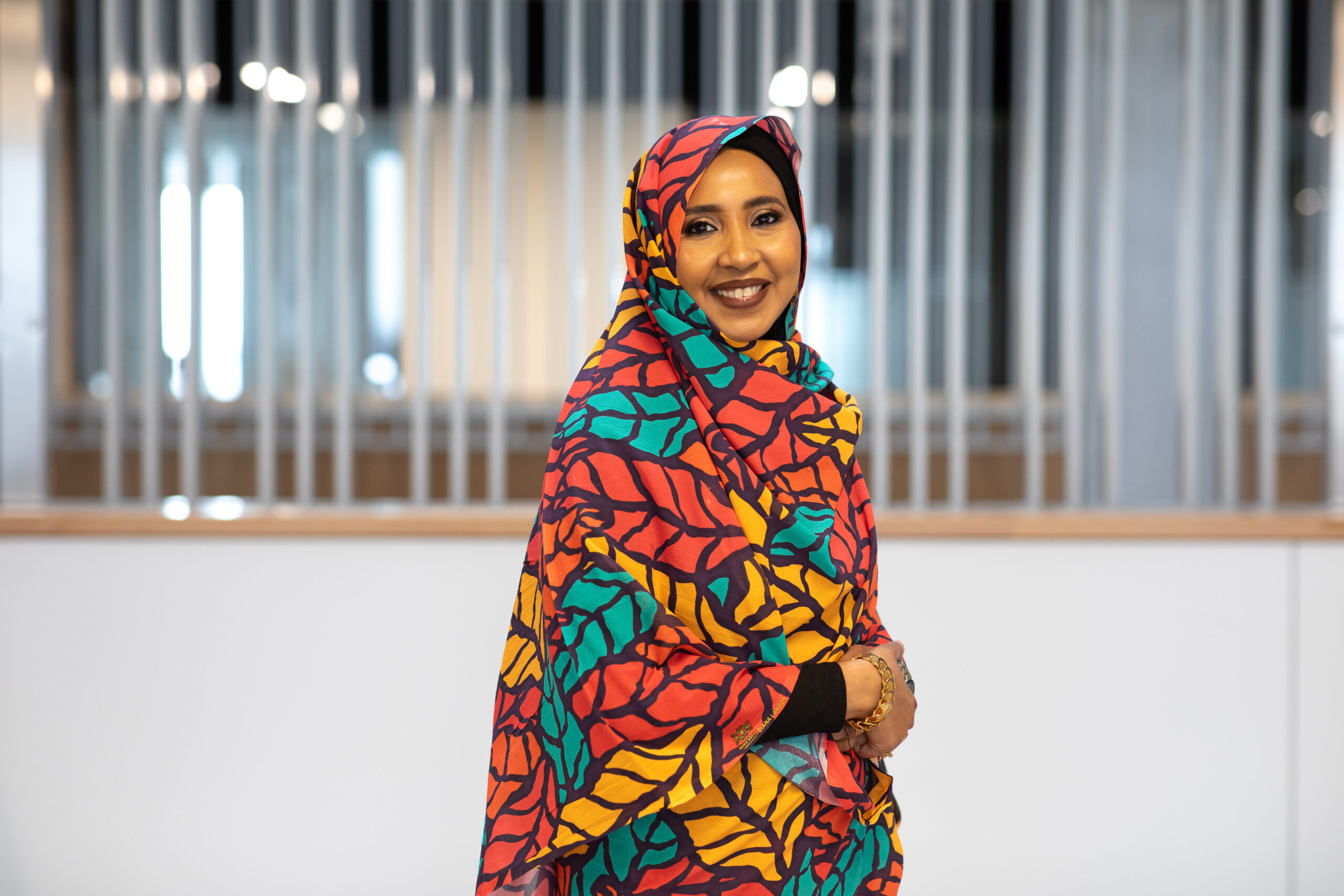
“One of our goals with the grad chapter is to increase the representation of Black students in engineering programs, whether it’s a graduate or undergrad program,” says Ali, who leads the chapter as president.
“We do this through high school outreach and undergraduate mentorship.”
“NSBE Grad is all about inclusivity,” says Caleb Okechukwu (MIE MEng student), the executive secretary of the organization. “We welcome the experiences of all individuals — not only Black students — whose ideologies align with our mission.”
NSBE Grad has worked with Engineering Outreach’s Blueprint program, BrainSTEM Alliance and has helped undergraduate students gain positive research experience through its Research Connect initiative.
The community is also a place for peers to socialize in a supportive environment where they can share their wins, challenges and their engineering expertise.
“This is a family of Black people that members can count on for support and advice for both academic and financial matters,” says Bethel Unwan (MIE MEng student), vice-president of NSBE Grad.
“I had a very hard time getting support and wouldn’t want anyone to go through the same.”
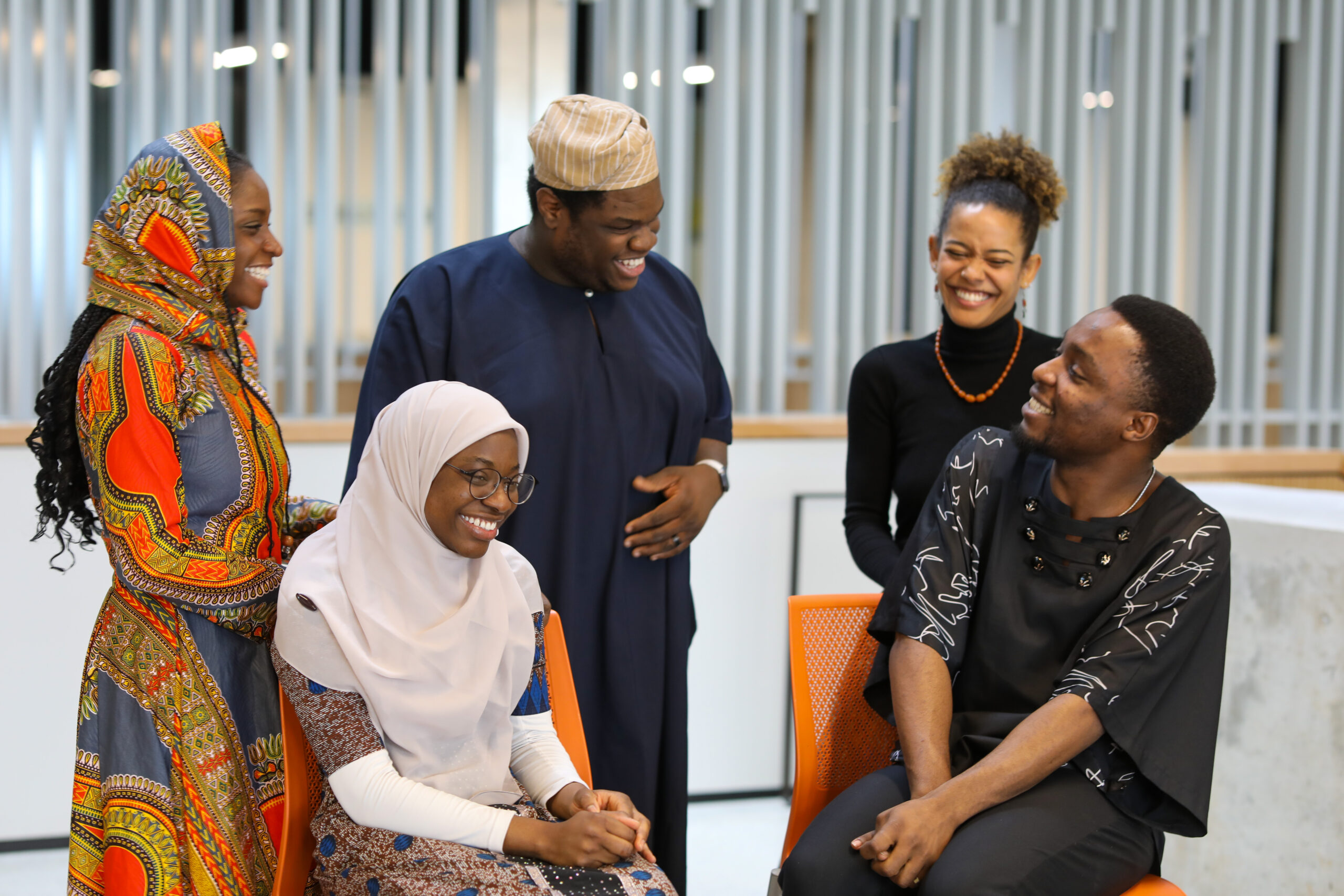
Ali says that as a Black researcher, she feels a heightened sense of responsibility.Her PhD research, supervised by Professor Deepa Kundur (ECE), focuses on using multi-task machine learning to predict mental health comorbidities in youth.
Traditional machine learning models directed towards mental health conditions often use single-task learning, which requires separate models for different tasks. This means conditions and symptoms such as depression, anxiety, sleep disruption or suicidal ideation are predicted in isolation rather than as multiple outputs at once.
“Mental health disorders are often comorbid, meaning that if you have any one of them, you may have a concentration of others,” says Ali. “If we are able to diagnose the full profile of the mental health disorders a person has, then interventions and treatment outcomes could be improved.”
“There is a lot of bias in machine learning models that are directed towards underrepresented communities, including Black youth,” she says. “More representation across all communities is necessary to both acknowledge and reduce this bias.
“But to increase representation, it’s important for Black undergraduate students and early-career researchers to have support from role models that understand their perspective in the profession. I have been fortunate to have that support in my academic career, especially now with my PhD supervisor, but I know others might not have that same experience.”
“Black undergraduate students who are interested in research should take advantage of NSERC Undergraduate Student Research Awards,” says Reke Ferdinand Avikpe (BME PhD candidate), treasurer of NSBE Grad.
“Don’t be afraid to reach out and engage with professors to find volunteer opportunities in their labs. I always encourage students to start early, from second and third year, and explore different lab opportunities until you find the research you enjoy most.”
In March, five members of NSBE Grad will be travelling to Chicago to participate in the 50th anniversary of NSBE at the 2025 annual convention.
“We are not only a new chapter but the only graduate student chapter in Canada, so it’s important for us to make a positive impression at the convention,” says Ali.
“So many people have been involved in getting our organization to this point, including all members of our executive committee; our advisor, Professor Philip Asare (ISTEP, EngSci); my PhD supervisor, Professor Kundur; and the faculty’s Vice Dean, Graduate office.”
Michelle Lai (Year 4 IndE) is the recipient of the 2025 Troost ILead Difference Maker Award, a $50,000 award recognizing outstanding impact, contributions to community and a strong vision for the future.
From a young age, Lai understood the important role educators play in children’s lives.
“When I came to Canada, I didn’t speak any English, and it was quite intimidating,” she says. “My teachers were a very welcoming presence in the classroom. Having them there made me feel a lot more comfortable, and it was the first time I felt how important a trusted adult is in an environment like that.”
While still in elementary school, Lai developed a passion for working with children.
“Every day at lunch, I would go to the kindergarten class to read to the children, chat with them, draw and sing together, and help out however I could. Over those two years, I saw them grow and start to build trust in me. It was the first time I realized I loved working with children,” she says.
Lai continued volunteering extensively throughout her high school years with community initiatives such as Key Club, where she eventually served as president of her school’s chapter.
“Seeing others’ passion for improving the community and realizing how much this work means to the people it impacts, I discovered my love for community leadership,” she says.
For Lai, pursuing industrial engineering was a way to bring her passions together.
“Volunteering with organizations like Canada Learning Code, the MINA Project, and other groups centred on providing young students with STEM learning resources, I realized I could combine my knowledge of engineering and my passion for youth education to do what I love all day. It was the best of both worlds,” Lai says.
“What links my experiences together is empathy. A large component of industrial engineering is human factors, which is all about understanding user experience and how to alleviate stress points. Similarly, when working with youth, you’re trying to create an environment that removes the friction preventing them from realizing their potential.”
Lai describes a formative experience she had teaching in the remote Indigenous community of Chisasibi in northern Quebec.
“When I stood in front of the classroom, things fully clicked and I knew that pursuing youth education was something that I had to do; it’s the only thing that will make me happy. Even as I worked my hardest every single day, I always felt so fulfilled and energized,” she says.
“A lot of the students never had a teacher who encourages them and tells them that they are capable. It was small gestures like coming in early to make sure that I could welcome them, baking treats and writing encouraging notes, or asking them what their favourite songs were, that really counted. I wanted them to see that someone was invested in their academic success.”
Currently, Lai is developing PeaceOfMind, a mobile application designed to provide preparatory resources to young children undergoing medical operations involving anesthesia. It was awarded first place at the 2023 HFES Mobile Health App Design Competition, an international contest hosted by the world’s largest scientific association for human factors and ergonomics professionals.
“During my research with the Safety, Equity, and Design (SED) Lab under Professor Myrtede Alfred, I came across the statistic that 60% of children facing operations with anesthesia struggle with pre-operative anxiety, which can have negative effects including prolonged recovery time,” she says.
“A lot of existing solutions are not very child friendly. Unlike adults, kids can’t read lengthy brochures or attend complicated briefings, so I wanted to make something that reaches them directly in a way that is accessible and familiar.”
Lai intends to continue leveraging her engineering and human factors background to create more opportunities for youth empowerment.
“Directly interacting with young learners and facilitating their growth, making a space where they can explore their curiosities and ask questions, that is important to me,” she says.
Lai’s advice to aspiring leaders and difference makers is to face imposing challenges head on.
“I never considered myself the smartest kid in class growing up, and I’m not a huge risk taker, but I was fortunate enough to have amazing mentors who encouraged me and pushed me outside of my comfort zone,” she says.
“Ask questions and trust in yourself to take on challenges — the more times you take that leap of faith, the more proof you have that you can go even further. Then when you’re ready, you can pass on what you learned as a mentor for others.”
U of T Engineering aims to build a community that reflects the societies we serve. On the International Day of Women and Girls in Science, we reflect on how equity, diversity and inclusion (EDI) can be integrated into the core activities of engineering research and education.
Last fall, U of T hosted the Canadian Society for Chemical Engineering (CSChE) 2024 conference. The conference included a unique session titled: Celebrating Minorities and Women Leaders in Science and Engineering: In Memoriam of Jane Phillips.
To learn more about how such sessions can serve as a model, U of T Engineering sat down for an interview with Professors Ariel Chan, Cathy Chin and Ning Yan (all ChemE) as well as Marisa Sterling, P.Eng., Assistant Dean & Director, Diversity, Inclusion and Professionalism at U of T Engineering. Yan was the chair of CSChE 2024, while Chan, Chin and Sterling organized the conference session.
Can you tell us about what inspired the session?
Chin: We were inspired by Professor Jane Phillips (ChemE), who passed away in the spring of 2024. She completed her BASc in our department in 1953; at that time women students were so rare that they didn’t even have female restrooms in engineering buildings.
After a time in industry, she re-joined U of T in 1963 and became one of the first female engineering professors in North America. She was really an icon for many women.
Yan: The goal of this session was to remember the challenges that pioneers like Jane faced, and also celebrate the progress that has been made so far. I think this is the first time that a session like this has been organized at CSChE, and Cathy, Ariel and Marisa did a fantastic job to put it together.
How was it different from a typical conference session?
Sterling: While anyone could attend, the session presenters were invited based on their demonstrated actions towards EDI.
We did research to identify people across the globe who were doing important work to remove barriers and build inclusion in engineering. And we also paid attention to how they identify, ensuring that we reached out to a wide range of people to showcase diversity.
I think the intentionality with which that was done made a real difference. When someone like Cathy or Ariel, who are role models for women in engineering, reaches out and says, ‘I noticed you, there’s something interesting about you,’ it opens up space for new conversations, and that was really important.
Chan: We had an overwhelming response from the people we reached out to. Some of the presenters were still completing their PhD, others were very senior professors or deans of their faculties. We had Black presenters, queer presenters and people from other underrepresented groups. We had speakers from Canada and from as far away as Thailand.
Some of the sessions focused on technical work, such as catalysis, or how to extract useful substances from industrial byproducts. Others focused on engineering education, how to develop critical thinking in students, or to enhance leadership qualities. So, we had many different topics, but EDI intersectionality informed all our choices.
Are there any that stood out to you as particularly memorable?
Chan: Professor Mary Wells, Dean of Engineering at the University of Waterloo, gave a great overview of how the representation of women in engineering has changed over the years. She used a lot of data on what students are enrolled in and what subjects they are taking, and talked about how we can leverage that information to create a balanced, diverse and supportive environment.
Sterling: Professor Jessie Ma from the University of Waterloo gave a talk about the future of electricity. What I heard in that session was a great synthesis of the technical developments in this field, but also what the implications and unintended consequences are for women and other groups that are marginalized within our society.
Chin: University Professor Molly Shoichet (ChemE, BME), from our own department, gave a presentation about intentional leadership, ensuring that we are giving people of all backgrounds an opportunity to prove themselves.
In general, I was fascinated with hearing about the full range of work being done by all these people with different experiences.
Yan: In addition to this session, there were many other activities at CSChE 2024 that addressed EDI considerations. For example, we had Transitioning from Academia to the Workforce: Navigating Opportunities and Challenges for Equity-Seeking Students, a fireside chat sponsored by DuPont and the Chemical Education Fund.
We also held the Black Research Network Award competition, with generous support from U of T’s Black Research Network. EDI was a major theme in the student program, and we encouraged symposium organizers to be more inclusive and avoid all-male panels when selecting invited speakers and session moderators.
What will stay with you going forward?
Sterling: I really felt that presenters were comfortable naming their identity — woman, Black, queer, etc. — publicly in a technical session, and communicating what it meant for them in the work they were doing. I think the way that the session was run provided some safety and trust that might not normally have been present.
Having that be front and centre is a big change from how these types of sessions normally run, and I hope it can be an example that other departments or technical societies can look to in terms of how to evolve their own activities.
Yan: My advice to people who want to do that is: start early. Get the relevant advocacy groups involved and keep implementing best practices to encourage participation.
Chan: After the session, several of the speakers told me that as the diversity of identities in engineering is increasing, they are having an easier time finding the support system that they need. That’s very important in their career development.
Chin: Changing the culture will take a lot of time. But from the years when Professor Jane Phillips began her career until now, you can see that we really have made progress.
It may take a few more generations, but the message we want to send with a session like this is that everyone can be leaders in building access and inclusion.