
This story is Part 4 of a seven-part series, U of T Engineering in the City, running throughout fall 2015.
Two years ago, U of T Engineering professor Mark Fox (MIE) spent 36 hours living on the street. He did it partly as a charity fundraiser, but mostly to get a better sense of how the homeless live and how social services are delivered. “It led me to ask the question: what are we doing as engineers to address the needs of people less fortunate than ourselves?” he says.
As a result of his experience, Fox co-founded the Centre for Social Services Engineering (CSSE) at U of T. Now more than a year old, the Centre applies industrial and systems engineering techniques — including mathematical analysis, big data and machine learning — to improve the delivery of goods and services to vulnerable populations in urban centres.
Fox, who was named U of T Distinguished Professor of Urban Systems Engineering earlier this year, has spent decades proposing how to make organizations more efficient. In his field of industrial engineering, innovations like supply chain management and just-in-time delivery are routinely used to help companies lower their costs and improve performance.
The same techniques that are used to analyze what goes on within a manufacturing corporation can be just as easily applied to other sectors. In the last 30 years, banks, hospitals and other organizations have increasingly hired industrial engineers to redesign their operations and make them more efficient and effective. According to Fox, there’s no reason why social services shouldn’t benefit as well.
How exactly does an engineer help meet social needs? Fox provides an example: “Imagine that you’re a recent immigrant to Toronto, and that you’re pregnant,” he says. In this scenario, as a new mother you’ll need a crib, but you have very little money and no social network to rely on. Meanwhile, a grandmother living in a more affluent neighbourhood has bought a crib for her grandchildren for when they visited, but they have outgrown it.
“The crib has been sitting in the basement for the last three years or so, and she doesn’t even remember it’s there,” explains Fox. The crib is sitting unused and the grandmother doesn’t know there is a need in her community. Furthermore, because she’s forgotten it, she hasn’t even thought to post it on an online classified site or donate it.
Fox’s idea is to use the same tools that marketers use to build profiles of their target audiences — analyzing purchases from anonymized credit card data or looking at household surveys — to build up a picture of what resources are available and where. The goal, he says, is “to be able to learn what the supply side has, and then figure out a way in which we can reach out. Such a system would identify people who have goods and services that people need but are unaware of.”
Fox also notes that in Ontario alone, there are 45,000 charities or non-governmental organizations that provide a wealth of services. ”Some may be furniture banks, some may provide transportation, some may just provide money,” he says. He envisions a kind of virtual NGO that would integrate all of these services and make them available through a single portal. Fox also hopes to integrate the social needs marketplace into existing programs like 211 Toronto, a hotline that helps Torontonians find social services.
Another CSSE project focuses on the representation and analysis of city indicators. It builds on the recently developed ISO 37120 standard of 100 indicators to measure city performance, led by Professor Patricia McCarney at U of T’s Global Cities Institute. The CSSE’s PolisGnosis project, named after the Greek words for “city” and “knowledge”, seeks to create a consistent and meaningful way of representing these indicators on the Semantic Web, and automate the diagnosis of a city’s performance.
As an example, Fox refers to the ratio of students to teachers, one of the ISO indicators. Many cities don’t yet provide the data from which their indicator was derived, and those that do could be using data inconsistent with the indicator’s definition. For example, they may count school board administrators as teachers, or use different dividing lines between primary and secondary school. By enabling consistent, meaningful analysis of such metrics, the PolisGnosis project aims to help lower-performing cities to make improvements by diagnosing the root cause of their under performance.
Fox believes there are lots of ways that engineering analysis can help make life better for those in need. While the CSSE is not the first attempt to use organizational management techniques to address these problems, Fox says it is the first time that it’s been raised to such a level within an engineering faculty.
“It’s not a question of why is it opportune now,” he says. “It could have been done 30 years ago. It’s really a question of why did it take so long.”
Learn more about the Centre for Social Services Engineering.
This story is Part 3 of a seven-part series, U of T Engineering in the City, running throughout fall 2015.
Every Tuesday through the late summer and early fall, a team of volunteers ascends to the roof of the Galbraith Building on U of T’s St. George Campus. They are there to pick corn, beans, squash, peppers, collard greens, Swiss chard, broccoli, tomatoes and more, typically gathering more than 20 kg of food each week. Some of the food is taken home for dinner, but most of it is donated to places like the Scott Mission and the University of Toronto Student Union Food and Clothing Bank.
For the last five years, the University of Toronto’s civil engineering department has been home to the Sky Garden, which this year notched up its most productive harvest to date, generating more than 225 kilograms of vegetables for the surrounding community.
The garden had its genesis in 2009, when alumna Heather Wray (CivE PhD 1T4) and her school mates Sarah Wilson (CivE MASc 1T1) and Kyla Smith (CivE MASc 1T2) decided to take their interest in urban gardening to the next level. “The department and university were very supportive of the project,” says Wray. Their first garden was essentially a bunch of nursery pots placed on the roof. “The initial goal was really just to see how much food we could grow on an urban rooftop,” says Wray.
As it turns out, the conditions were ideal. Some plants — like tomatoes and peppers — benefit from the extra heat and sunshine found on an exposed rooftop. Additionally, insect predators may find it harder to get to plants that are so far from ground level. The results from that first growing season were strong enough to win a grant from the City of Toronto’s Livegreen Toronto program, which funded a shift from pots to a semi-hydroponic system.
“We have about 100 trough-style containers with an insert that holds vermiculite and a thin layer of soil over a water reservoir,” says Matt Stata, a PhD student in Ecology and Evolutionary Biology who joined the team as an undergraduate in 2010. “All of the containers are connected to one another, so some if some plants use more water than others it will all balance out.” A drip irrigation system automatically adds fertilizer and adjusts for changes in temperature and sunlight.
Over the years, the team has grown practically any vegetable that the climate allows. One of Stata’s personal favourites is bhut jolokia, also known as the ghost pepper, which for a while held the record for the hottest variety of pepper in the world. “I like hot peppers, and some of the volunteers who were feeling brave wanted to try it out,” he says with a chuckle.

The Sky Garden also includes a beehive, which was set up by amateur apiarist Catherine Phillips-Smith (ChemE MASc 1T5). Colin Anderson, a communications and student programs coordinator with the Department of Civil Engineering, now looks after the bees. “Having pollinators like honeybees is essential to the health of the plant ecosystem of the garden,” says Anderson. “Without them, we couldn’t produce fruit or collect seeds from year to year.” That said, the volunteers do sometimes collect honey as the bees can spare it. Anderson says it’s not as scary as it sounds. “The colony we have right now is so gentle you usually don’t even need to smoke them before you open their hive box,” he says. “I’ve been beekeeping for a few years up there and still haven’t ever been stung by our hive.”
Today Stata and his colleague Ileea Larente are the Sky garden’s only two part-time employees, working about 10 hours a week each. Their time — along with costs for equipment, fertilizer, soil etc. — is paid through the Department of Civil Engineering, which in turn gets funding for the project from two pillar sponsors, TD Canada Trust and Manulife Financial. The rest of the work is done by a core team of about 8 volunteers.
In addition to providing a source of food and an outlet for the agricultural leaning of U of T students, the Sky Garden also serves as a model for other organizations that want to set up rooftop gardens of their own. “Heather and I set up a number of similar, smaller gardens,” says Stata. “We did one on a few private residences consisting of just a handful of containers, and another on a culinary school in Oakville.”
Wray, now working as an engineering consultant, is proud of how the Sky Garden has grown. “I’m really pleased that the department has taken over operation of the garden, with continued volunteer, work study, and sponsor support,” she says. “When we built the garden we were thinking more about environmental benefits associated with growing food, but the social benefits have been just as rewarding. Volunteers talk about how much they have learned in the garden or how fun or relaxing it is to be there.”
Stata agrees, but cites another benefit. “I just like being able to make dinner out of stuff that I grew and picked off the vine,” he says. “Just yesterday I picked a bucket of tomatoes and made a whole vat of pasta sauce. I really enjoy it!”

This story is Part 2 of a seven-part series, U of T Engineering in the City, running throughout fall 2015.
Just before leaving by bike to interview U of T transportation guru Eric Miller (CivE), I checked my smartphone for new email. Fifteen minutes later, as I walked into the Galbraith Building on the St. George campus, I checked it again, to remind myself of his office number. When I shared this story, Miller, a professor of civil engineering and director of the University of Toronto Transportation Research Institute, pointed out that my carrier’s cell phone system captured the time and location of both queries, and that this information could be put to good use.
While these data points didn’t reveal my mode of travel nor my path, a sophisticated transportation model might surmise that I cycled, using the locations and time elapsed.
This kind of raw information traditionally hasn’t found its way to transportation planners because it wasn’t accessible. Yet in the next several months, Miller and an impressive interdisciplinary team will launch iCity, a series of nine projects meant to tap into the vast troves of digital data that, when analyzed and combined with rider surveys, census tables and other demographic information, can be used to paint a much more granular and timely picture of how residents of the Greater Toronto area and Waterloo, Ont., move through their cities. The projects will focus on everything from public transit and parking management in the two cities to the development of more responsive technical platforms for crunching the numbers and “toolkits” to help municipal planners create “complete streets” designed to accommodate pedestrians of all ages and abilities and all types of vehicles.
But the goal of iCity, Miller stresses, isn’t merely descriptive; it’s also meant to be a diagnostic tool to help decision-makers and residents understand how their planning and transportation investment choices will affect their cities. “The data are your eyes and ears to see what’s going on in the real world,” explains Miller, whose team has conducted extensive ridership surveys in Greater Toronto that are used by government officials. He points out that the iCity projects will use far more real-time digital information to make the analysis more exact. “It’s a living lab concept.”
The University of Toronto initiative involves several institutional and private-sector partners, including the City of Toronto, Metrolinx, Waterloo Region and OCAD University, as well as IBM Canada. Besides readings from sensors that measure traffic flow, Miller says the investigators will be looking to gain access to a wide array of other travel-related digital sources, such as Presto card readings (such as when GO or TTC riders tap their cards to enter a transit vehicle), GPS data from fitness trackers and payments to municipal parking systems, including meters and a new smartphone app that informs drivers of space availability (and thus offer clues about how drivers respond to such information).
By combining these real-time sources with the Transportation Research Institute’s models, which project travel patterns using historical information gleaned from rider surveys, Miller says iCity will allow planning officials to do a better job demonstrating how different transportation projects — such as a new subway or LRT line, or building “complete streets” — will affect communities and the surrounding city. Miller will also draw on expertise from OCAD U to develop new techniques for visualizing and mapping travel patterns.
The overarching aim is to help cities make more informed choices about how they function and grow. Says Miller: “We have to get to the point of telling good stories to the bureaucrats and politicians that say, ‘this is how a proposed investment really works and this is why it is or isn’t a good idea.’”
A select group of high-achieving high school science students had the opportunity to spend their morning last Saturday with one of the world’s leading experts in biomedical engineering.
More than 70 top students from schools across the Toronto area gathered at the Faculty’s Young Women in Engineering Symposium (YWIES). The event began with a keynote address by Professor Molly Shoichet (IBBME, ChemE), who shared first-hand how she became a researcher, her cutting-edge work at the interface of engineering and medicine — and why she hopes they, too, will pursue a career in engineering.
“People ask me, ‘Why do you care if women go into science?’” said Shoichet, a University Professor and part of the University of Toronto’s groundbreaking Medicine by Design program. “The reason I care is that we are trying to solve some really big problems, and we cannot rely on just half the population to do that. That’s why it’s really important for women to come into this field — because women are going to bring a different approach, different creativity and different ideas.”
Now in its second year, YWIES is part of the Faculty’s strategy to recruit top female students to its undergraduate programs. In 2014–2015, nearly one-third of first-year U of T Engineering students were women, the highest proportion of any entering engineering class in Canada. The Faculty is building on this achievement through events such as YWIES, as well as Girls Leadership in Engineering Experience (GLEE), a weekend in the spring for female high school students who have been offered admission to U of T Engineering, and pre-university outreach programs such as Girls Jr. Deep.
“YWIES is a great opportunity to connect with top female science students,” said Michelle Beaton, associate director of the Engineering Student Recruitment & Retention Office. “Our hope is to inspire them and to make U of T Engineering their first choice.”

The grade 12 students spent a packed day participating in workshops on subjects ranging from sustainable energy to engineering design, learning about U of T Engineering programs, touring the Faculty and mingling over lunch with members of the University of Toronto chapter of Women in Science and Engineering (WISE).
They also had a chance to hear from undergraduate students and WISE members from all program areas about why they picked U of T Engineering, their experiences transitioning from high school to university and the limitless career possibilities an engineering degree offers.
Danielle Lewis from Sinclair Secondary School in Whitby, Ont., said hearing about Shoichet’s research into stem cells and spinal cord regeneration was a highlight of the day because it gave her a new perspective on biology, a subject she loves. “I think it was interesting that it’s classified as engineering because that’s not typically what I thought engineering is,” she said.
Amy Thachil, a student at Northern Secondary School in Toronto, said she is interested in engineering because it uses science to create something new. She said she attended YWIES because she “want[s] to really understand what it takes to be an engineer.”
Shoichet described life as “a team sport” and credited her family and strong mentors for encouraging and supporting her career. She also told the students to do what they love.
“I’m always about keeping as many doors open as possible,” Shoichet said. “I really do encourage you to pursue your passions and pursue what you’re good at.”
Engineering and biology professors at the University of Toronto have developed a new strategy for helping African farmers fight a parasitic plant that devastates crops.
Plants in the genus Striga, also known as witchweed, act as parasites of other plants, tapping into their root systems and hijacking them for their own purposes. Though their purple flowers are pretty to look at, a field full of Striga plants is in fact a nightmare for a farmer who wants to grow corn, sorghum, rice or other subsistence crops. The problem affects more than 100 million people across 25 countries in sub-Saharan Africa.
U of T chemical engineering professor Alexei Savchenko (ChemE), along with professor Peter McCourt in the Department of Cell and Systems Biology, have created a genetically engineered plant biosensor, a tool that will help them hunt for molecules that could prevent Striga infestations.
The duo has been studying the biochemical pathways used by Striga to attack other plants. “When crops start to germinate, they emit small chemicals into the soil,” says Savchenko. These hormones attract beneficial fungi that help the crop obtain nutrients. Unfortunately, Striga plants have also evolved to recognize these signals, and to speed up their own germination so that they are ready to pounce once the crop starts developing roots.
Savchenko and McCourt hope to outwit Striga by tricking its chemical senses. Their idea is to spray the ground with a chemical similar to the plant hormones that Striga is primed to detect. “You would spread this false signal and cause the Striga to germinate,” says Savchenko. “Then you would destroy the Striga and plant the crops in a clean field.”
But in order to determine what false signal to send, the scientists first needed to better understand how Striga detects the plant hormones. In research published today in the leading journal Science, the team identified 11 protein-based hormone receptors present within Striga. Savchenko and his team isolated these receptors and mapped their 3D structure using a technique called x-ray crystallography. This allowed McCourt’s group to identify which receptors are most sensitive to the hormones and thus the most important ones to focus on.
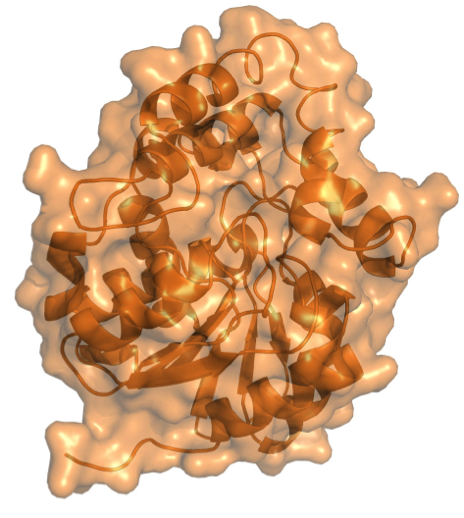
The next step was to clone and introduce the most sensitive receptor into Arabidopsis thaliana, a small plant commonly used as a model organism in biology studies. Unlike Striga, Arabidopsis is not a parasite, so it’s much easier to grow, yet the genetically engineered plant now reacts to crop hormones and their chemical cousins in the same way that Striga would. “It is a very good tool to identify chemicals that will have the same effect as the hormones that cause Striga to germinate,” says Savchenko.
McCourt and Savchenko are now screening a variety of chemicals in search of ones that would mimic the plant hormones. Their genetically engineered Arabidopsis could also be of great value to companies that produce agricultural products, who might be interested in screening their existing chemical libraries.
“We have shown that this receptor is very important for Striga’s parasitic life style, and by making it part of a plant biosensor we provided all the components that people can use [to find a solution],” says Savchenko. With luck, the scourge of witchweed will soon become a much more manageable problem.
Professor Warren Chan (IBBME) has received the inaugural Kabiller Young Investigator Award from the International Institute for Nanotechnology at Northwestern University.
“I am very honoured to receive this award,” said Chan. “I hope this recognition helps to inspire other young scientists in the field of nanotechnology.” The $10,000 award was presented Oct. 1, 2015 at the International Institute for Nanotechnology Symposium in Evanston, Illinois. It recognizes a young researcher who has made a recent groundbreaking discovery with the potential to make a lasting impact in the nanomedicine area.
Chan, who holds the Canada Research Chair in Bionanotechnology, is creating a roadmap for the design and application of nanotechnology to improving the diagnosis and treatment of disease. In particular, the award recognizes his major discoveries and advances in the field of nanomedicine, including the roles played by the size, shape, and surface chemistry of nanoparticles in determining their interactions with cells. Recently, his group created a rapid, point-of-care nanotechnology-based diagnostic system that can detect multiple diseases from a single drop of blood.
The point-of-care device is based on a combination of quantum dot barcoding technology — which picks out genetic markers for diseases — and techniques that allow the signals to be imaged and identified by a smartphone. The device costs less than $100 and can detect sequences from viruses like HIV or hepatitis B in less than one hour at 90 per cent accuracy. Not only will this device provide a better diagnosis but the information can guide a clinician in proper administration of a drug for treatment.
“Professor Chan’s research is a great example of the application of engineering to medicine in order to improve human health,” said Professor Ted Sargent (ECE), vice-dean, research at U of T Engineering. “He embodies our Faculty’s spirit of discovery, innovation and knowledge translation, and his work will have a positive impact both here in Canada and around the world.”