
It’s a sunny summer morning, and engineering student Karen Mukwedeya (Year 4 ChemE) is up to her ankles in water. As an instructor for this year’s Jr. DEEP outreach camp, she’s standing in a fountain outside the Bahen Centre helping a dozen girls and boys eagerly test model boats they designed and built themselves.
These campers are part of a growing cohort of children attending Jr. DEEP at U of T Engineering. Total participation this summer is reaching nearly 1,000 students, a 30 per cent increase from 2014. The program provides kids in grades three to eight with hands-on experience exploring science, technology and engineering.
“We were trying to get [our boat] to have a cotton candy kind of shape, but it turned out more like a teardrop,” said nine-year-old Cash Cayen. A small electric fan powers her model, imitating the giant fan boats that are used in Florida to navigate the everglades without damaging the underwater aquatic vegetation.
The Faculty offered Cash a scholarship to attend one of this year’s Jr. DEEP camps after she gathered more than 35,000 signatures this spring on a petition to allow her to attend a boys-only robotics camp back in her hometown of Timmins. Read more.
Cash and her fellow campers are taking a course called Natural Habitats: Protect the Earth, which focuses on environmental engineering. In addition to the fan boats, students built model greenhouses, which they got to compare with the real thing on a field trip to Toronto’s Allan Gardens Conservatory.
“It’s not like a classroom where it’s all talking and writing,” said Allison Xie, age nine. “Here you actually get to experience what engineering is.”
Eight-year-old Andrew Hua agreed. “It’s pretty cool to learn about all the different types of engineering and science,” he said. One of his favourite activities — and one of the most imaginative — involved designing an animal out of clay that would be adapted to a particular environment. Hua created a donkey with a jetpack powered by biofuels, while his friend Thomas Lavery, age nine, made a penguin adapted for desert life that included eyelashes modelled on those of camels.
Mukwedeya said campers arrive with varying levels of knowledge about what engineering is. “They may have a sense of engineering in general, but they may not have a sense of how it’s related to the course they’re in that week,” she explained. For many students, Jr. DEEP is also the first chance they get to meet an engineer in the flesh.
“Everyone — including me when I first heard about it — thinks that chemical engineering is just mixing chemicals together,” Mukwedeya said. “Here, students have a chance to ask people like us. ‘Well, what do you actually do?’”
Jr. DEEP’s mission is to inspire young minds. Modelled after the Faculty’s Da Vinci Engineering Enrichment Program (DEEP) Summer Academy for high school students, the program offers courses targeted for elementary school kids that cover topics from the fundamentals of computer programming to the biological, mechanical and physiological principles behind sports.
Not only is Jr. DEEP a wonderful experience for our campers, but it’s also an enriching one for the instructors, most of whom are current engineering students,” said Dawn Britton, associate director of outreach at U of T Engineering. “These students learn how to communicate the knowledge they’ve gained through their own studies to non-experts, and they gain valuable experience organizing and managing a complex project.”
“I really like it,” said Cash, as her tapered boat glided across the fountain. “I like trying to save the world.”
Ursula Franklin is one of several inspirational women in the Canadian materials, metallurgy and mining field being celebrated at a Women of Impact symposium on Wednesday, August 26. Hosted in Toronto by the Canadian Institute of Mining, Metallurgy and Petroleum, the event includes panels, presentations and working groups, and it is free for students. Register today.
University Professor Emerita Ursula Franklin is a world-renowned materials scientist, educator and activist. Franklin joined U of T Engineering in 1967 as the first female professor of metallurgy and materials science (now known as materials science and engineering). In 1984, she became the first woman to receive the title of University Professor, the highest academic rank at U of T. As a pioneer in her field and a prolific writer on the social impact of technology, Franklin has inspired countless young women and men both within and outside science and engineering fields. (Read her full bio below)
How did your family background influence your interest in science?
I had very good, very serious parents. My father had four sisters, all of whom led their own life in the terms of that time. My mother was an academic. There was no question I could do whatever I felt I was able to do and interested in. There were no barriers. There was a very strong emphasis on thoughts, ideas, intellectual life rather than material things. My family was political. I had a very appropriate upbringing to end up in science, but I could have done anything else as far as my family was concerned. I went into science largely because of other things that were foreclosed to me.
My mother was Jewish and so another thing for me, being born in 1921, was that I was a young child when the Nazis came to power and with them the Nuremburg Laws and all it entailed. So, going into politics, going into law, was out of the question. What attracted me to science at that time was that it appeared to be objective. I remember being at school and seeing physics experiments and seeing a cathode ray tube and the magnet and the beam being bent and I suddenly had this feeling of great joy that even they, those people in government who were after us, couldn’t make an electron beam bend in any other direction. So, science seemed to be the field where I could escape politics.
Where do you feel you have made the biggest impact in your field?
The question of my own impact is hard to answer. I think that my most important contribution was, in fact, being there: my ongoing presence, the fact that young women knew where to find me, that I was ready to be consulted, and that my own career evolved clearly and openly. I do not think that any single thing that I did was unique, but the trajectory of a consistent professional life gave a sense of reality and possibility to others.
What did it mean to you to be appointed the first woman University Professor at the University of Toronto?
I was very pleased about it. There is such a profound difference in being the first and being the only. If you are the only woman, people can treat you like an oddity; if you are the first, then it is quite different. When you enter as the first, you begin not to feel so much personal discrimination, that cold blast of air that comes, “Oh dear, there they come and they may know something and they may want a job and they may want to change things.” There’s a profound difference. So being the first woman University Professor, I was really happy because it meant there would be others.
The one great joy I felt in my academic life, seeing the promotion of women, is that they got younger and younger. These incredibly long waiting times before competent women could be promoted would become progressively shorter. To see young women who have a life ahead of them be in a position that they deserve, that they have the scope and the recognition and the responsibility that they could carry, that, is real achievement. The next ones can be younger, more joyful, have more productive lives ahead of them, after they have been given recognition and some elbowroom.
Have you felt a responsibility to be a role model and mentor?
I did very much feel a responsibility with regard to mentoring, to see that the younger women wouldn’t get hurt or bruised. Many of my friendships with other women came out of that wish to see that the young women don’t drop out. I have now a number of good friends who were senior women in various positions; we met and worked with each other almost entirely by trying to find jobs, accreditation, and opportunities for women students or women engineers who came with offshore qualifications or women who ended up in community colleges because they couldn’t get other jobs. We tried to keep an eye and be in some way an extra protective coat for the younger women who had to go through the difficulties of an engineering education or the workplace.
How can we best nurture female leaders?
By hitting the guys on the rump every once in a while. There’s nothing wrong with women. In one of my papers that I wrote for Monique Frize after her remarkable efforts on women in engineering, I said how leery I am of attempts to make women fit into the male world. I call that weightlifting for girls. I don’t want to adjust women to the rough, tumble rudeness that used to be the world of engineers. I want to change the world of engineers so that women, while being practicing engineers, can also safely and cheerfully be themselves.
I’m one for setting some standards in the workplace so that it makes it unnecessary for women to look for protection. Again, it’s not a private opinion, it’s a structure: the structure of the workplace that contains men, women, and minorities has to be safe. The safest have to look after the least safe. There’s no other way of doing things.
What can we do now to promote women in science and engineering?
If you want to make this a civilized environment for women, it has to be a civilized environment for all. Women will and may change from being the obvious minority. It may be somebody else who’s next, who will be discriminated against. It must be a civilized workplace in which all who are competent and qualified can work without fear and without embarrassment. I think there’s a lot that needs to be done but it’s at the side of the powerful, not the powerless. It’s the powerful’s obligation to be civilized.
I can only say the same thing again and again: there’s nothing wrong with women and there’s nothing wrong with feminism — to say that it is essential to build one’s relationships on collaboration and not on rejection. It’s unpopular but it’s the only thing that works. I have no magic formula for how to convince the powerful to see that except it’s them who get hurt, and it’s them whose lives are deprived because they believe that hurting is legitimate. What’s left for them? They’re feared.
About Ursula Franklin:
Ursula was born on September 16, 1921, in Munich, Germany. She was the only child in an academic German family. Her mother was Jewish and an art historian; her father came from an old German Lutheran family and he was an ethnographer. The biggest influences in her life, Ursula says, were her parents and the natural world. A close family friend of her parents was a physicist and she attributes much of her interest in math and science to his influence. Ursula graduated from an all-girls high school in 1939 and in the spring of 1940 began her undergraduate education in Berlin. Early on, she says, she became “fascinated by the very nature of structure and the relationship between structure and properties in materials.” Her great interest was crystallography. For the last eighteen months of the Second World War, Ursula was imprisoned in a Nazi work camp. Immediately after the collapse of Nazi Germany, she enrolled at the Technical University of Berlin to finish her studies, joining the department headed by Professor Hartmut Kallmann in December 1946.
Ursula obtained her doctorate in experimental physics in 1948. In 1949 she received the Lady Davis Fellowship and came to Canada as a post-doctoral fellow at the University of Toronto. She had hoped to be part of the effort to rebuild Germany, but after the Berlin blockade (one of the first major crises of the Cold War), she realized it would be impossible to build the sort of society she envisioned. The wives of the faculty at the University of Toronto were extraordinarily supportive and helped Ursula settle and improve her English. At the end of her post-doc, she took the first job offered to her and joined the Ontario Research Foundation as a senior scientist. She stayed there for fifteen years, working with practising engineers to solve problems in industry. During this time, she married Fred Franklin. Their children, Martin (born 1955) and Monica (born 1958) grew up with their parents working and being involved in public life.
In the early 1960s, Ursula’s research on strontium-90 in Canadian children’s baby teeth was instrumental in persuading all Cold War governments to cease atmospheric nuclear weapons testing. In 1967 Ursula was recruited to join what was then the Department of Metallurgy and Materials Science in the Faculty of Applied Science and Engineering at the University of Toronto — she was the first female professor in the department. The department was trying to push into the materials field and Ursula had developed her expertise in radiography and crystallography. There, she pioneered the field of archaeometry, applying modern materials science to the study and dating of archaeological materials, such as bronze, metals, and ceramics. Ursula was appointed full professor in 1973 and in 1984 was the first woman named University Professor at the University of Toronto, the institution’s highest honour.
Ursula has been dedicated to improving science policy. From 1974 to 1977 she was a member of the Science Council of Canada and chaired its committee on the implications of a conserver society. From 1978 to 1981 she was a member of NSERC. In 1989 Ursula delivered the Massey Lectures, which were subsequently published as The Real World of Technology. That same year, Franklin retired from the University of Toronto. She continues to work as a senior resident and fellow at Massey College. Most recently, she published two collections of her speeches and writings: The Ursula Franklin Reader: Pacifism as a Map (2006) and Ursula Franklin Speaks: Thoughts and Afterthoughts (2014).
Ursula holds more than forty honorary doctorates and has received numerous awards. In 1982 she was made an officer of the Order of Canada. That same year, she was also the first woman awarded the CIM Distinguished Lecturer Award. In 1993 she was elected to the Royal Society of Canada. In recognition of her humanitarian work, she received the United Nations Association’s Pearson Peace Medal in 2002.
Excerpted from Women of Impact in the Canadian Materials, Metallurgy and Mining Field by Anne Millar and Mary Wells. Reprinted with the permission of the Canadian Institute of Mining, Metallurgy and Petroleum (CIM). Copyright © 2015.
When these students attended their first live sledge hockey game, they were more interested in watching the players off the ice than on it.
Liam D’Souza, Angela Chen, Mazhar Jabakhanji, and Adithya Prashant (all EngSci Year 2) were only in their first year of Engineering Science at the University of Toronto when they came up with their idea for The Swivet.
The invention went on to win the Parasport and Active Living Award at this year’s Innovative Designs for Accessibility (IDeA) Student Competition.
You can see it their concept August 8 through 10 at the Accessibility Innovations Showcase at the MaRS Discovery District.
“It’s a swivelling cargo trailer that attaches to the back of a wheelchair and allows sledge hockey players to safely and independently carry their equipment,” says D’Souza.
The team developed The Swivet as part of Praxis I/II, a first-year design course in which they were asked to find a community in the GTA, and then find an opportunity where they could implement a design solution.
“We’re all hockey fans, so we went to an ice rink in Mississauga called Iceland. There was a sledge hockey game going on. We noticed that they were able to carry their equipment independently, but it wasn’t necessarily safely; the players in wheelchairs, specifically,” says D’Souza. “They had baggage all over them. We thought there could be a better, safer way for them to carry this equipment independently.”
D’Souza says that their design accommodates wheelchairs of varying sizes as it The Swivet only clamps to one handle, and that with a different type of attachment, it can also be used by wheelchairs without handles.
“It keeps all of their luggage at the back, doesn’t interrupt their field of view, and they can easily access it when they need to on demand,” he said. “With just a brisk turn of their wheelchair to the right after unlocking a hinge, the luggage will come up to the player’s side.”
Selected as one of ten finalists, the team went on to showcase their idea at the People in Motion Exhibition, where they took home the top Parasport and Active Living Award – a $1500 prize offered in recognition of the Parapan Am Games taking place in Ontario.
“We were really thrilled. We knew we’d put a lot of work into it. We felt like our work had paid off and we knew it was just the beginning of something good,” D’Souza says.
It was none other than the Honourable David Onley, U of T’s Special Ambassador for the Toronto 2015 Pan Am/Parapan Am Games, who presented the award. D’Souza recalls speaking with Onley just prior to the award ceremony.
“He was really encouraging. He told us we had a good idea. He’s really receptive to new designs and innovations, especially by young people,” D’Souza said.
D’Souza says the team members faced their fair share of challenges developing the Swivet.
“There were design challenges, and there were also times when we thought it just wouldn’t work, that no one would buy into it. That was one of the challenges –just that we really had to persevere.
“The university provided a lot of support. Not just technical support but also a lot of encouragement at times when it seemed that we really had nothing. They kept us going, especially our TA’s. Our professors, Jason Foster (EngSci) and Robert Irish (ECP, EngSci), were really helpful as well. They’re senior design professors at the Faculty of Applied Science and Engineering at U of T. They were of great help to us throughout the process.”
But what about the name?
“It’s two fold. Swivet combines two words, ‘swivel’ and ‘pivot’. The other part of the name is that it’s actually also a word which means ‘a panic’ or ‘a fluster’. It was a few weeks before our showcase. And you could say we were in a swivet to find a name. So we thought, why not?’”
The team is continuing to refine the Swivet’s design.
“We hope that one day we can bring a product to market,” D’Souza says. “We feel that we owe it at this point to the community and to others as well – to bring a general product, I want to specify that, not just a product for sledge hockey players. A product that can be used in multiple settings, to carry whatever you need to carry.”
D’Souza says that he has learned a lot from the experience and not just about design.
“The experience has taught me that if you design something really useful and you put a lot of effort into it, people will take notice. They will respect what you’ve done and help you.”
This story originally appeared on U of T News.
With the sun beaming down on its solar surface, Horizon looked poised to tear off its platform and hit the road.
The sleek new vehicle was unveiled today by the University of Toronto’s Blue Sky Solar Racing team. The eighth-generation, custom-built solar car boasts several design innovations, including adopting a catamaran-shaped aerobody, improved seams, lighter batteries and more sophisticated safety systems.
The team, composed of a multidisciplinary group of undergraduates from across U of T Engineering, has been working relentlessly over the past 18 months toward competing at the 2015 World Solar Challenge competition in Australia.
“This vehicle is the fruits of our collective labour,” said Zhe Gong (ElecE 1T4+PEY), the team’s managing director. “To us, Horizon represents the distance between what is currently the case and what could be in the future.”
For Horizon, the future is coming up fast: with just over a month until they ship out to competition, it’s crunch time. In the next few weeks they will install, calibrate and test the electrical systems, brakes, steering and cockpit, then hit the pavement for extensive road tests.
“We definitely have more obstacles ahead of us this time,” said Maria Xie (ElecE 1T6+PEY), one of the team’s electrical leads. “The competition is tougher, and a lot of the specs are much stricter. But we’re also better prepared.”
The World Solar Challenge will pit 42 teams from around the globe in a gruelling race to prove they’ve built the world’s most efficient electric car. Powered only by the sun’s rays, they will drive their custom vehicle 3,021 kilometres north-to-south across Australia, starting in Darwin and finishing in Adelaide.
The 2015 World Solar Challenge runs from October 18 to 25. The University of Toronto’s Blue Sky Solar Racing is the only Canadian team registered. The team recently launched an Indiegogo campaign to help cover the travel costs associated with participating in the race.
“I see the Blue Sky Solar Racing team as a great ambassador for the Faculty, showcasing the best of what we do here at UofT,” said Professor Thomas Coyle, vice-dean, undergraduate for the Faculty of Applied Science & Engineering. “It’s something that I think all of us in engineering recognize requires an incredible amount of work…this team is an inspiration to us all.”
For Jerry Song (MechE 1T7), the Blue Sky Solar Racing team was one of the draws to UofT Engineering. “I wanted to get involved in something meaningful,” he said. ” It’s been a really challenging and motivating experience. Right now there’s a lot of pressure on us, but we’re going to do the best we can.”
Blue Sky Solar Racing cracked the top 10 at the 2013 World Solar Challenge, with an eighth-place finish. In that race their vehicle, B-7, crossed the line in 45 hours and 38 minutes, achieving an average speed of 65.71 km/hour. Xie says that this year they’re hoping to hold onto the top 10, but it’s an ambitious target.
“For us the goal has always been to finish this car, go to the race, and finish the race,” said Gong. “But this story is not over—stay tuned for the end.”
Plane debris found on the French island of Réunion in the western Indian Ocean has renewed hopes experts can determine the fate of flight MH370 which disappeared en route from Kuala Lumpur, Malaysia, 500 days ago.
The recovered object, confirmed to be a moveable piece of a Boeing 777 wing (a flaperon), has arrived at a lab in Toulouse, France, where experts will examine it on August 5.
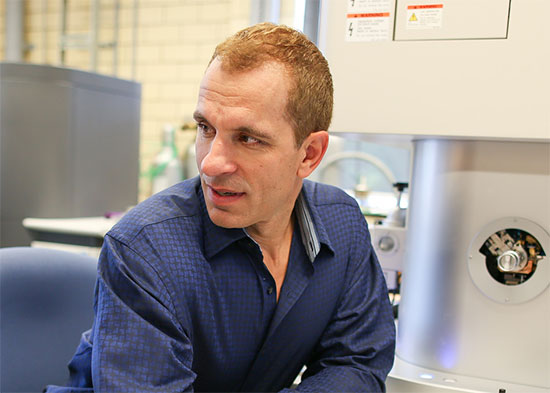
U of T News asked Doug Perovic (MSE), a renowned expert in forensic engineering, for his take on why the plane veered off course, what the recovered debris can reveal to investigators and what happens next.
What information will the experts be looking for to conclusively identify the recovered artefact as part of the missing flight MH37?
The first order of business is to examine the evidence for the manufacturer’s serial numbers. Initial photographs and video footage show that the primary identification plate has been lost, presumably due to degradation of the adhesive during exposure to seawater for an extended period of time. Fortunately, since all aircraft components are fully regulated and certified, there are several serial numbers stenciled to the various components of the artifact that will allow for identification. In addition, chemical analysis of the paint will be performed to match with Malaysia Airlines paint specifications. Photographs available to-date reveal the serial number ‘657BB’, which corresponds to a component part of a right-wing flaperon designed for a Boeing 777 aircraft. Experts will disassemble the flaperon to reveal all available serial numbers and then confirm if the artifact was part of the MH370 Boeing 777-2H6ER aircraft.
If it is established that the flaperon belonged to MH370, would that confirm that the flight ended its journey in the Indian Ocean?
Yes, and also eliminate theories of the plane crashing or landing in another part of the world. According to reports from Boeing, there are no other Boeing 777 aircraft that are unaccounted for in the Indian Ocean. If the flaperon was indeed part of MH370, the recovery of the artifact on the shores of Réunion Island off the coast of Madagascar is consistent with the flaperon entering the Indian Ocean either prior to or during the crash of the aircraft in the present search area location determined from satellite data analysis. It is interesting to note that a University of Western Australia computer modeling study of Indian Ocean currents/wind patterns (gyres) and weather systems since the date of MH 370’s disappearance 17 months ago, predicted that aircraft debris would reach Réunion Island in as little as 18 months.
What can the condition of the flaperon reveal to the investigators?
Physical examination of the complete intact structure coupled with electron microscopy analysis of fracture surfaces of the relevant subcomponents following disassembly will help determine if the mode of separation of the flaperon from the wing occurred: (i) in-air under normal flight conditions, or due to excessive speed or explosion (ii) by impact with water at steep angle with the flaperon fully stowed indicative of an aircraft deep dive scenario or (iii) by impact with water while the flaperon was fully extended indicative of a slow speed on-water ditching scenario. Examination of available photographs and video of the recovered flaperon reveal minimal compression damage of the leading edge and extensive damage of the rear trailing edge consistent with a separation of the flaperon from the wing in-air prior to impact with water. The serrated damage at the trailing edge of the flaperon is most likely a result of transonic flutter caused by excessive speeds of the aircraft as would be experienced in a dive scenario performed intentionally or following fuel run-out.
It should be noted that a US-FAA Airworthiness Directive was issued in 2005 concerning a safety deficiency associated with premature wear, fretting and fracture of Boeing Model 777 flaperon fasteners that “could lead to the flaperon becoming unrestrained and consequently departing from the airplane”. Detailed analysis of the fracture surfaces of the fastener locations from the recovered flaperon will reveal whether any defect(s) were a contributing factor to the detachment of the flaperon from the wing.
There has been much speculation about why the plane veered off course, including a preliminary assessment by U.S. intelligence agencies suggesting someone in the cockpit deliberately controlled the aircraft’s movements before it disappeared. What’s your take?
There is no disputing that MH370 made a deliberate U-turn from its scheduled flight path heading back over Malaysia shortly after the last contact made with air traffic control. The majority of media reports appear to associate ‘deliberate’ with an intentional act of murder/suicide by someone who could disable all of the communications systems and intentionally fly the aircraft into the ocean.
However, another plausible explanation is that the aircraft suffered a major mechanical/system failure rendering the communication systems inoperative. The plane could have been deliberately turned to seek assistance. It is important to note that the flight trajectory of MH370 following the first turn was directly on course back to the Malaysia Airlines maintenance facility.
It is also possible that the continued flight path of MH370 around land and over water was initially an attempt to keep a malfunctioning aircraft away from land to make a crash landing on water if/when necessary. Forensic investigation of further recovered physical evidence could distinguish between the two possible scenarios.
If it’s confirmed that the debris is from the missing plane, what happens next?
The extensive and co-ordinated search for more aircraft debris in the area around Réunion Island, Madagascar and the southern-east coast of Africa will continue in order to obtain further physical evidence for the accident reconstruction investigation. It will be important to carefully document location and time of debris discovery. Further computer modeling of gyres and weather systems can be performed to work backwards from a given debris location to help further refine the location of origin of the crash site.
Furthermore, forensic biological analysis of the growth history of barnacle shells and other arthropods attached to the recovered flaperon can be used to provide a roadmap and timeline of where and how long the flaperon travelled in the Indian Ocean. Ultimately, circumstantial evidence will likely not be sufficient to solve this great mystery. The answers lie at the bottom of the Indian Ocean, particularly with the flight data and cockpit voice recorder black boxes.
This story originally appeared on U of T News.
The University of Toronto Faculty of Applied Science & Engineering has joined more than 90 North American engineering schools that are leading a transformative movement to boost diversity in engineering — one of two Canadian engineering schools to do so.
In a letter shared today by the U.S. White House as part of its first-ever Demo Day, U of T and peer institutions committed to recruit more women and underrepresented minorities to their student and faculty populations, as well as foster a culture of inclusivity amongst the broader engineering profession.
“U of T Engineering is committed to encouraging and increasing diversity among our students, our faculty, our programs and the engineering profession,” said Dean Cristina Amon. “We are delighted to join engineering schools across North America in increasing our recruiting efforts for women and underrepresented groups. Diverse perspectives deepen the engineering creative process, driving innovation and bringing superior approaches to address critical global challenges and enrich our lives.”
U of T Engineering is a leader in Canada in fostering gender diversity in the profession. In 2014, women made up 30.6 per cent of the Faculty’s first-year engineering class – the highest proportion of any entering engineering class in Canada. (Learn more about women at U of T Engineering)
Released as part of the American Society for Engineering Education’s (ASEE) Year of Action in Diversity, the letter outlines four actions that each participating school has committed to implement. These include:
- Developing a diversity plan in collaboration with national and international organizations that articulates a vision for diversity and inclusiveness, describes a statement of priorities and goals, commits to equity, implicit bias and inclusion training across the school and provides a means of assessing the plan’s success.
- Committing to at least one kindergarten to grade 12 or community college pipeline activity, such as targeted recruitment or educational outreach activities, with explicit targeted goals and measures of accountability aimed at increasing the diversity and inclusiveness of the engineering student body in the institution.
- Developing strong partnerships between research-intensive engineering schools and non-PhD granting engineering schools serving populations underrepresented in engineering.
- Implementing proactive strategies to increase the representation of women and underrepresented minorities in amongst students and faculty members.
Earlier this year, the Faculty was the only Canadian engineering school to join a related U.S. initiative to establish special educational programs designed to prepare undergraduates to solve “Grand Challenges” — presented through a letter to U.S. President Barack Obama. (Read more)
Read the Diversity Letter on the White House website.