
University of Toronto Engineering Professor Craig Simmons (MIE, IBBME) has been appointed scientific director of the new Translational Biology and Engineering Program (TBEP), a unique interdisciplinary research initiative that will bring together leading experts in engineering and medicine to advance discoveries and accelerate new treatments for cardiovascular disease.
“Craig Simmons’ international reputation as a leading researcher in stem cell mechanobiology and tissue engineering, as well as his outstanding record in academic administration, make him an excellent choice for this key leadership role,” said U of T Engineering Dean Cristina Amon. “I am delighted Craig will be heading this visionary collaboration, which will leverage and advance our Faculty’s expertise and accelerate innovations in new therapies to improve the lives of cardiac patients.”
TBEP is a key component of the Ted Rogers Centre for Heart Research (TRCHR), which was created in November 2014 thanks to an unprecedented $130 million gift from the Rogers family and is uniting research expertise from the University of Toronto, the Hospital for Sick Children and the University Health Network to reduce heart failure. TBEP will house researchers from the Institute of Biomaterials and Biomedical Engineering (IBBME), the departments of Mechanical & Industrial Engineering (MIE), Physiology and Laboratory Medicine & Pathobiology, The Edward S. Rogers Sr. Department of Electrical & Computer Engineering (ECE), as well as the Faculty of Dentistry. The program will combine stem cell technologies with cellular and tissue engineering techniques, cell signalling, experimental platform development and clinical research in heart regeneration.
“The strength of TBEP comes from its interdisciplinary approach to research. Craig — who trained in mechanical and bioengineering — embodies this. He will bring both passion and foresight to this important role,” said Professor Trevor Young, Dean of the Faculty of Medicine and Vice Provost, Relations with Health Care Institutions.
Simmons, who is Canada Research Chair in Mechanobiology, said it is a great honour and opportunity to take on this new position.
“The Ted Rogers Centre for Heart Research will transform how heart disease is treated and advance Toronto’s position as a global leader in this field,” he said. “TBEP will contribute significantly to its mission by nurturing discoveries and innovations that can come only through close collaboration between engineers, scientists and clinicians.”
According to Simmons, the resources and collaborative opportunities at TBEP and across the TRCHR will yield novel insights into cardiovascular disease, lead to the development of new technologies, and ultimately bring better therapies to patients more quickly. Research at TBEP will focus on three key areas:
- discovery in cardiovascular development, disease initiation and repair;
- determination of molecular signatures or biomarkers for early detection and management of cardiovascular disease; and
- regeneration of cardiovascular tissues using molecules, cells and materials.
Simmons began his five-year term on July 1, 2015. The Faculty extends its sincere gratitude to Professor Peter Zandstra (IBBME), who completes his term as interim scientific director of TBEP. Under Zandstra’s leadership, TBEP has established a solid foundation on which Simmons will build in the coming years.
Other U of T Engineering faculty who are joining TBEP include Hai-Ling Margaret Cheng (ECE, IBBME), Rodrigo Fernandez-Gonzalez (IBBME) and Paul Santerre (IBBME, Dentistry). TBEP will occupy an entire floor of the MaRS Phase 2 building in Toronto’s Discovery District beginning in fall 2015.
More than 50 researchers and clinicians at the University of Toronto and its partner hospitals are participating in Medicine By Design, the new centre for regenerative medicine announced on July 28, 2015.
The centre, which builds on decades of U of T research dating back to the demonstration of the existence of stem cells by James Till and Ernest McCulloch, will design and manufacture cells, tissues and organs to treat degenerative disease.
Among its experts are Professor Peter Zandstra (IBBME), one of the key leaders, and Professor Molly Shoichet (IBBME, ChemE) of the Faculty of Applied Science & Engineering. Both Shoichet and Zandstra work with stem cells, which have the ability to become any type of cell in the human body, and could one day be used to repair or replace damaged tissues.
“The bar is very high, but if you’re going to dedicate yourself to something, you might as well shoot for the stars,” Shoichet says.
Writer Tyler Irving spoke with Shoichet and Zandstra about how Medicine by Design will change lives.
What do you focus on in your research group?
Shoichet: In regenerative medicine, we’ve done work in three areas of the central nervous system: the brain, the spinal cord and the retina. What we’re trying to do is overcome loss of function that accompanies a stroke, a spinal cord injury or loss of photoreceptor cells at the back of the eye.
Some drugs can slow down this loss of function, but they can’t stop it and they can’t reverse it. That’s the promise of regenerative medicine and stem cell transplantation.
One of the biggest challenges is that most of the cells that are transplanted into the nervous system die. We work with stem cell biologists to identify what are the best cells for transplantation. What we then do in our lab is to engineer scaffolds. Essentially, we figure out the best way to package those cells, to deliver them to the body so that they survive.
Zandstra: In our lab, we’re fundamentally interested in what controls stem cell fate. We model the gene regulatory networks that make stem cells special, and try to determine how we might manipulate those networks to get cells to do certain things on demand. For example, if we want a stem cell to become a blood cell or a heart cell, how do we make that happen in a very efficient manner? One of the applications of this information is that we can use it to grow large numbers of cells in bioreactors. We partner with the Centre for Commercialization of Regenerative Medicine to bring our technology to market.
Both of you are also working on growing human tissues in the lab. Why is that useful?
Zandstra: Clinical trials for a new therapy are very expensive: phase one might cost two to five million dollars and phase 2 and 3 might cost ten times that. Wouldn’t it be fantastic if we could mimic clinical trials in a controlled laboratory environment?
One of the things we do is try to develop tissue mimetics — small amounts of tissue grown from stem cells. We could use these to determine the safety and effectiveness of a new therapy in a much more cost-effective way, accelerating that process and reducing the costs of doing trials in patients.
Shoichet: In our lab we’ve been doing this with breast cancer cells. You might say, cancer is something we’re trying to get rid of, why would you want to grow it in the lab? You want to grow it so you can test new drugs and see if they work effectively, or test existing drugs to see which one will work best for a particular patient.
It’s already possible to screen potential drugs against particular cell types in the lab: this is called high-throughput screening. It has a lot of benefits, but it’s not perfect; there are lots of false positives and false negatives. We’re trying to develop a better tool by growing cells in a three-dimensional environment, closer to what they would experience inside the body. We call it high-content as opposed to high-throughput; it wouldn’t be as fast, but you would get a lot more useful information.
Imagine it’s 5, 10 or 25 years in the future. What might doctors be able to do as a result of your work that they can’t do now?
Zandstra: I think diagnosis will improve because we will have a much more powerful way of identifying the genetic, or even the environmental causes of disease by analyzing the molecular state of cells. It’s this idea of predictive and more personalized medicine. I also hope we will be able to implement solutions to particular genetic diseases.
As a specific example, take diabetes. One of the things that happens with this is your beta cells – your insulin-producing cells – get attacked by your own immune system, and eventually are destroyed. If we can generate beta cells from stem cells, maybe we’ll be able to replace the damaged cells in diabetic patients.
Shoichet: Ideally what we can do in the future is to be able to grow cancer cells from a particular patient in an environment that mimics how those cells would respond in a person. We would be able to close the gap between what works on cells in a dish versus what works in animal model versus what works in people. It would be a lot less expensive and time-consuming than using animal models, and you could understand disease progression.
From a patient perspective, the goal would be to deliver better care to an individual. We would have a better understanding of what their particular disease is and we’d be able to test different strategies to determine what will have a better effect for them.
What role does collaboration play in your work?
Shoichet: We couldn’t do anything without our collaborators. One of the most exciting things for us is working with the best, most internationally renowned researchers. They know what they key questions are in their fields, and we are then able to work with them to engineer a solution. None of us can do it on our own.
Zandstra: I’m so excited to be at this interface, not just between engineering and medicine, but also with mathematics, basic science and other fields. I think this exciting approach to problem-solving can really only take place at a university. Instead of having a problem be solved using a specific discipline, we look at the problem and ask: who can best contribute to the solution? We bring those people together as a team to try and do that.
What drives you to do this work?
Shoichet: I worked in industry before academia. I realized that when it comes to the really big problems, if we in academia don’t try to solve them, then nobody else will. In industry, you have to make money, whereas academics have a little bit more freedom to discover and invent.
The central nervous system is extremely complicated, but there is also the opportunity to do something really significant. The bar is very high, but if you’re going to dedicate yourself to something, you might as well shoot for the stars.
Zandstra: I think that stem cells are beautiful. They have so many options for what they can be, yet they’re rare, they’re difficult to work with and we don’t really understand how their decisions are made. So there’s the beauty of discovery.
The other thing is the opportunity. When we get answers to our questions, and can immediately think about translating that into developing new technologies which can be commercialized or developed into potential therapies that might benefit people – that’s a pretty neat space to work in.
These interviews have been condensed and edited.
The University of Toronto is set to cement its position as one of the world’s leading centres for the design and manufacture of cells, tissues and organs that can be used to treat degenerative disease, thanks to a $114-million grant from the federal government.
“Our government is investing in research and innovation to create jobs, strengthen the economy and improve the quality of life of Canadians,” said the Honourable Ed Holder, Minister of State (Science and Technology). “This legacy investment in Medicine by Design will harness Canada’s strengths in regenerative medicine to treat and cure serious injuries and diseases that impact every Canadian family while creating new opportunities for Canadian health-related businesses.”
The research grant, the largest in U of T’s history, is the first to be awarded under the Canada First Research Excellence Fund (CFREF), established by the federal government last year. Spread over seven years, the funding will allow U of T and its partners, which include the Hospital for Sick Children, the University Health Network and Mount Sinai Hospital, to deliver a new program called Medicine by Design.The initiative and the new funding build on years of support for U of T’s regenerative medicine researchers from federal granting councils, the Canada Foundation for Innovation and support from the Canada Research Chairs and Canada Excellence Research Chairs programs.
The mandate of Medicine by Design is to undertake transformative research and clinical translation in regenerative medicine, enhance capability in synthetic biology and computational biology and foster translation, commercialization and clinical impacts.
U of T President Meric Gertler thanked the government for its support of the university’s Medicine by Design initiative, and for its leadership in the advancement of globally competitive Canadian research and innovation. He also thanked and congratulated all those involved in the project at the university and its partner hospitals. “Our brilliant researchers and clinicians are doing cutting-edge work that is making Canada a world leader in regenerative medicine. I applaud them, and all those who helped prepare U of T’s successful application for this historic research award.”
“This program will allow us to take regenerative medicine to the next level,” said Peter Zandstra, a professor in U of T’s Institute for Biomaterials and Biomedical Engineering (IBBME), Canada Research Chair in Stem Cell Engineering and one of the researchers involved with the Medicine by Design project. “We’ll be able to design cells, tissues, and organs from the ground up, hopefully with benefit to patients and benefit to the Canadian economy.
“Stem cells offer avenues to treat — and perhaps cure — devastating and costly illnesses such as cardiovascular disease, diabetes, blindness, lung disease, neurodegenerative disorders, and diseases of the blood and musculoskeletal system,” he added. “Medicine by Design provides a framework to design the cells, the materials and, ultimately, the clinical strategy needed to reach this goal.”
Medicine by Design will allow Canada to lead the transformation of the global medical industry and become a major international supplier of regenerative medicine technologies — a market that is predicted to grow to $50 billion by 2019. The strategy is expected to generate several new startup companies and to attract established international companies to Canada, eager to take advantage of U of T’s expertise.
The program will have three divisions, Cells by Design (to create cells whose fate and function can be controlled to ensure safer and more effective therapies), Tissues by Design (to create complex tissues for use in research, drug discovery and replacing lost or damaged tissue in humans) and Organs by Design (create and repair organs outside the body and demonstrate how those organs can be successfully transplanted into human patients). The three divisions will be supported by technology platforms such as genomic engineering, immune engineering and a program to manufacture stem cells on demand.
Medicine by Design builds on a rich legacy of U of T contributions to regenerative medicine, beginning with the demonstration of the existence of stem cells by biophysicist James Till and hematologist Ernest McCullochin 1960. As Gertler noted, “Their breakthrough has led to an entirely new field of biomedical research; to the wonders of regenerative medicine; to a global industry responsible for many thousands of high-tech jobs, and ultimately, to better health and new hope for patients and their loved ones, across Canada and around the world.”
Till, who attended the CFERF grant announcement, said he is thrilled by Medicine by Design’s potential. “It’s marvellous that the Canada First Research Excellence Fund has chosen to assign a very high priority to regenerative medicine/stem cells. This announcement means that research on stem cells and on regenerative medicine in Canada will move to another level and it will be the University of Toronto that will provide leadership for that.”
U of T has a very long and impressive history of accomplishments, both in biomedical engineering and in stem cell biology, such as the discovery of cancer stem cells, the development of the first artificial endocrine pancreas, and combining living cells with synthetic polymers to create artificial organs and tissues. From 2009-2013, U of T researchers published more articles than any university in the world except Harvard in top scholarly journals for regenerative medicine and stem cells, biomedical engineering, and cell and tissue engineering.
More than 50 researchers and clinicians from U of T and its hospital partners are involved in the Medicine by Design program, as well as hundreds of graduate students and postdoctoral fellows. Additional researchers and graduate students will be recruited over the next few years. Medicine by Design’s inaugural international partners include Peking University, Technion Israel Institute of Technology, the UK Regenerative Medicine Program and Sweden’s Karolinska Institutet.
Additional CFREF grants will be announced shortly, noted Ted Hewitt, president, Social Sciences and Humanities Research Council of Canada and chair, Canada First Research Excellence Fund steering committee.
“The Canada First Research Excellence Fund has provided Canadian universities with an unparalleled opportunity to take their leading-edge research and make it the best in the world. This will set them on course to make the ground-breaking discoveries that will enhance prosperity and change the lives of Canadians and millions around the world forever,” Hewitt said.
This story originally appeared on U of T News.
Four U of T engineers have received Ontario Professional Engineers Awards in honour of their outstanding contributions to the engineering profession and their wider community. Awarded by the Ontario Society of Professional Engineers (OSPE) and Professional Engineers Ontario (PEO), recipients include:
- U of T Engineering Dean Cristina Amon has been chosen to receive the Gold Medal, Ontario’s most prestigious engineering honour, recognizing public service, technical excellence and outstanding professional leadership.
- Alumnus Michael Butt (CivE 6T3) has garnered the Management Medal for innovative management practices that have contributed significantly to the engineering profession.
- Alumna Claire Kennedy (ChemE 8T9) has received the Citizenship Award, recognizing engineers who have made significant contributions to society.
- Alumna Jeanette Southwood (ChemE 8T6, MASc 8T8) garnered an Engineering Excellence Medal, recognizing those who have contributed substantially to advancing the engineering profession.
 More about Dean Cristina Amon
Cristina Amon joined the Faculty in 2006 as Dean and Alumni Professor in Bioengineering. As Dean, she has been tireless in her efforts to advance U of T Engineering’s position as Canada’s top engineering school and among the best in the world. She has also dedicated herself to increasing diversity in engineering and ensuring that Canadian engineers are prepared to lead the world in addressing global challenges. Amon’s research pioneered the development of Computational Fluid Dynamics for formulating and solving thermal design problems subject to multidisciplinary competing constraints. She has delivered keynote lectures worldwide and contributed twelve book chapters, one textbook and over 350 refereed articles to the education and research literature. Amon has been inducted into the Canadian Academy of Engineering, Spanish Royal Academy, Royal Society of Canada and the U.S. National Academy of Engineering, and elected fellow of all the major professional societies in her field, including: AAAS, ASEE, ASME, CSME, EIC and IEEE.
“We are delighted that the Ontario Engineering Association has awarded its highest honour to Cristina Amon,” said U of T President Meric Gertler. “She is not only a pioneer in her own field – she is also leading the way in educating the engineers of tomorrow, as key drivers of innovation and prosperity. The University of Toronto community is immensely proud of her accomplishments.”
[youtube https://www.youtube.com/watch?v=sSn6hjQVgfc]
Learn more about Dean Amon’s research and leadership initiatives in this video from the Ontario Professional Engineers Awards.
More about Michael Butt
Michael Butt has enthusiastically committed over 50 years to the construction engineering industry. Butt started his career immediately after graduation as a site engineer with the Mitchell Construction Company in Toronto. After rising through the ranks at Mitchell, he left in 1979 to found Buttcon Limited, a 100 per cent employee-owned Canadian general contractor. Butt’s leadership and management skills, combined with his entrepreneurial spirit and his love of construction, have allowed him to grow Buttcon into a $150M-per-year company. Buttcon has successfully completed many high profile projects, including Novotel on the Esplanade, the Queen’s Park restoration and Casino Niagara. A leader in the industry, Butt has headed several industry associations and co-founded the Canadian Design Build Institute. He is a fellow of the Canadian Society for Civil Engineering and the Canadian Design Build Institute, and was inducted into the Engineering Hall of Distinction in 2011.
 More about Claire Kennedy
Claire Kennedy, currently at Bennett Jones LLP in Toronto, is recognized as one of Canada’s leading tax lawyers and transfer pricing advisors. A committed volunteer, she has provided pro bono legal counsel for charities such as Wildlife Preservation Canada and SunFarmer Canada. In 2012 she was appointed as a director of the Bank of Canada; she serves on the Bank’s Audit & Finance and Human Resources & Compensation Committees. Kennedy is a government appointee to U of T’s Governing Council and serves as chair of the Pension Committee. Her many volunteer roles with U of T Engineering include: member of the Dean’s Strategic Development Council and Campaign Cabinet Executive; member and past chair of the ChemE Advisory Board: and member and past president of the Engineering Alumni Association. In 2009 she founded BizSkule™, one of the Faculty’s most successful alumni outreach programs. Her service to U of T has been recognized with an Arbor Award and the Malcolm F. McGrath Alumni Achievement Award.
 More about Jeanette Southwood
Jeanette Southwood is a Principal leading the Canadian Urban Development & Infrastructure Sector and the Global Sustainable Cities teams at Golder Associates, a global, employee-owned engineering and environmental services firm. Over the past 25 years, Southwood has been a leader in her industry, her profession and her community. She has authored many papers, made numerous presentations, taught academic and professional courses, and been recognized with national, provincial and local honours. Through her professional and volunteer efforts, Southwood has sought to build a more sustainable and healthier environment. She has provided distinguished service to many organizations, including Professional Engineers Ontario, the Ontario Environment Industry Association, the Canadian Environmental Defence Fund and the University of Toronto. Southwood is a fellow of the Canadian Academy of Engineering and Engineers Canada, and a recipient of the Ontario Professional Engineers Young Engineer Award and the Ontario Volunteer Service Award, among many others.
“These awards recognize the exceptional contributions members of our U of T Engineering community are making to our profession and to society,” said Dean Amon. “I am grateful to OSPE and PEO for these honours, and to my fellow award recipients for their commitment to engineering excellence, extraordinary leadership and dedicated service.”
Evolution has altered the human genome over hundreds of thousands of years — and now humans can do it in a matter of months.
Faster than anyone expected, scientists have discovered how to read and write the DNA code in a living body, using hand-held genome sequencers and gene-editing systems. But knowing how to write is different from knowing what to write. To diagnose and treat genetic diseases, scientists must predict the biological consequences of both existing mutations and those they plan to introduce.
Deep Genomics, a startup company spun out of engineering-related research at the University of Toronto is on a mission to predict the consequences of genomic changes by developing new deep learning technologies.
“Our vision is to change the course of genomic medicine,” says Professor Brendan Frey (ECE), the company’s president and CEO, who is also a professor in The Edward S. Rogers Sr. Department of Electrical & Computer Engineering at the University of Toronto and a Senior Fellow of the Canadian Institute for Advanced Research. “We’re inventing a new generation of deep learning technologies that can tell us what will happen within a cell when DNA is altered by natural mutations, therapies or even by deliberate gene editing.”
Deep Genomics is the only company to combine more than a decade of world-leading expertise in both deep learning and genome biology. “Companies like Google, Facebook and DeepMind have used deep learning to hugely improve image search, speech recognition and text processing. We’re doing something very different. The mission of Deep Genomics is to save lives and improve health,” says Frey.
Deep Genomics is now releasing its first product, called SPIDEX, which provides information about how hundreds of millions of DNA mutations may alter splicing in the cell, a process that is crucial for normal development. Because errant splicing is behind many diseases and disorders, including cancers and autism spectrum disorder, SPIDEX has immediate and practical importance for genetic testing and pharmaceutical development. The science validating the SPIDEX tool was described in the January 9, 2015 issue of the journal Science.
“The genome contains a catalogue of genetic variation that is our DNA blueprint for health and disease,” says Stephen Scherer, director of The Centre for Applied Genomics at SickKids and the McLaughlin Centre at the University of Toronto, a CIFAR Senior Fellow, and an advisor to Deep Genomics. “Brendan has put together a fantastic team of experts in artificial intelligence and genome biology — if anybody can decode this blueprint and harness it to take us into a new era of genomic medicine, they can.”
Until now, geneticists have spent decades experimentally identifying and examining mutations within specific genes that can be clearly connected to disease, such as the BRCA-1 and BRCA-2 genes for breast cancer. However, the number of mutations that could lead to disease is vast and most have not been observed before, let alone studied.
These mystery mutations pose an enormous challenge for current genomic diagnosis. Labs send the mutations they’ve collected to Deep Genomics, and the company uses their proprietary deep learning system, which includes SPIDEX, to ‘read’ the genome and assess how likely the mutation is to cause a problem. It can also connect the dots between a variant of unknown significance and a variant that has been linked to disease. “Faced with a new mutation that’s never been seen before, our system can determine whether it impacts cellular biochemistry in the same way as some other highly dangerous mutation,” says Frey.
Deep Genomics is committed to supporting publicly funded efforts to improve human health. “Soon after our Science paper was published, medical researchers, diagnosticians and genome biologists asked us to create a database to support academic research,” says Frey. “The first thing we’re doing with the company is releasing this database — that’s very important to us.”
“Soon, you’ll be able to have your genome sequenced cheaply and easily with a device that plugs into your laptop. The technology already exists,” explains Frey. “When genomic data is easily accessible to everyone, the big questions are going to be about interpreting the data and providing people with smart options. That’s where we come in.”
Deep Genomics envisions a future where computers are trusted to predict the outcome of experiments and treatments, long before anyone picks up a test tube. To realize that vision, the company plans to grow its team of data scientists and computational biologists. Deep Genomics will continue to invent new deep learning technologies and work with diagnosticians and biologists to understand the many complex ways that cells interpret DNA, from transcription and splicing to polyadenylation and translation. Building a thorough understanding of these processes has massive implications for genetic testing, pharmaceutical research and development, personalized medicine and improving human longevity.
Paper or plastic? This seemingly mundane question captures one of our biggest sustainability challenges: although paper is renewable and biodegradable, for many uses non-degradable plastic still wins out due to its resilience and versatility. Now, thanks to a new grant from the European Research Council, Professor Emma Master (ChemE) is searching for ways to get the best of both worlds.
This week, Master was awarded €1.98 million ($2.8 million CAD) for a project known as BHIVE: Bio-derived High Value polymers through novel Enzyme function. Involving collaborators at Aalto University in Finland, the project aims to search for natural enzymes that could transform plant material — including forestry or agricultural waste — into a greener alternatives to non-degradable plastics.
“Nature creates many highly functional and valuable polymers, but so far we have done a relatively poor job at harnessing them,” says Master. “I think we can do much more once we understand how to fine-tune the chemistries of natural polymers for our purposes.”
In order to do this, she is examining the genes of organisms that break down wood for a living. That includes fungi that survive on rotting tree logs, but it also includes bacteria that live in the guts of moose and beaver, two animals that are well-known for their ability to at least partly digest woody fibres.
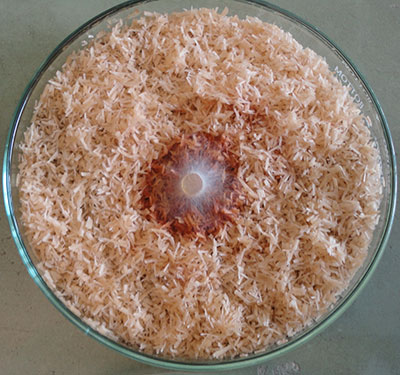
Master’s previous work used genomic screening to find out what proteins or enzymes those organisms use to break apart wood’s tough chemical structure. The idea was to use these enzymes to reduce wood to its basic chemical building blocks, then to use other methods to reconstruct these elements into useful materials, including plastics. With this new project, Master and her team are doing something more subtle.
“We’re actually quite interested in synthetic reactions, not only degradative reactions,” says Master. In other words, they’re no longer trying to break wood down entirely, but rather they’re looking for ways they might tweak the chemical structure of plant fibres to give them new properties.
For example, imagine if the team could identify an enzyme from a fungus that ‘opens up’ the chemical structure of cellulose, a natural polymer found in wood. This material might be more amenable to chemical treatment that could transform it into something that doesn’t fall apart when it gets wet, or that can be used to make an air-tight seal. Both of these are things that paper currently can’t do, but non-degradable plastics can.
“The motivation of all of this is to create a more comprehensive toolkit that allows us to sustainably produce high-value chemicals and polymers from plant sources,” says Master.
“Ensuring a sustainable future is a major focus of the world-class research we produce,” said Professor Ted Sargent (ECE), U of T Engineering’s vice-dean, research. “Professor Master’s work on the development of greener materials is a great example of how we collaborate with partners around the globe to solve the biggest engineering challenges of our time.”