
Professor Mark Fox (MIE) has been named a University of Toronto Distinguished Professor of Urban Systems Engineering, an honour that recognizes his exceptional career achievements and promise.
Awarded by the U of T Office of the Vice-President and Provost, Fox holds the title for a five-year term, beginning July 1, 2015. He is one of only 25 U of T faculty members and six Engineering professors that actively hold this distinction.
Fox is a pioneer in the theory and application of artificial intelligence in industrial systems. He is the director of the Enterprise Integration Laboratory (EIL) at U of T Engineering, a centre that investigates how organizations can build smarter cities locally and globally through the use of information and communications technologies. He is also director of the new Centre for Social Services Engineering, which applies engineering theories and techniques to the efficient and effective delivery of social services.
Fox focuses on developing ways of representing knowledge about cities, whether it be the services they provide or the infrastructure they maintain, in mathematical models. Known as ontologies, these models enable the development of smart cities.
In 1981, Fox’s research led to the creation of the field of “Constraint Directed Scheduling” within artificial intelligence, which is used in all modern scheduling systems today. He also spearheaded the application of artificial intelligence to project management, simulation and material design.
In 1984, he co-founded the software company Carnegie Group Inc., which specialized in intelligent systems for solving engineering, manufacturing and telecommunications problems. The firm provided logistics planning technology to the US Department of Defense. In 1992, he co-founded Novator Systems, a pioneer in the design and delivery of eCommerce software and services.
“I congratulate Professor Mark Fox on this well-deserved honour,” said Professor Ted Sargent, vice-dean of research at U of T Engineering. “It recognizes his remarkable achievements and leadership in his field over many years, and is yet another example of our Faculty’s commitment to excellence.”
Fox is a senior fellow in the University’s Global Cities Institute and a past holder of the NSERC Industrial Research Chair in Enterprise Integration. He is also a fellow of the Association for the Advancement of Artificial Intelligence and was a co-founder of the AAAI Special Interest Group in Manufacturing. Furthermore, he was elected a joint fellow of the Canadian Institute for Advanced Research (CIFAR) and PRECARN. He received the Engineering Institute of Canada’s Canadian Pacific Railway Medal in 2011.
Fox earned a BSc in computer science from the University of Toronto in 1975, and his PhD in computer science from Carnegie Mellon University in 1983. Prior to his return to Toronto, he was an associate professor of computer science and robotics at Carnegie Mellon. He was a founding member of the Carnegie Mellon’s Robotics Institute, founding director of the Robotics Institute Intelligent Systems Laboratory and founding director of the Center for Integrated Manufacturing Decision Systems of The Robotics Institute.
At a “U of T in Your Neighbourhood” lecture earlier this year, Fox spoke about how smart cities need citizens to take more control. Read more.
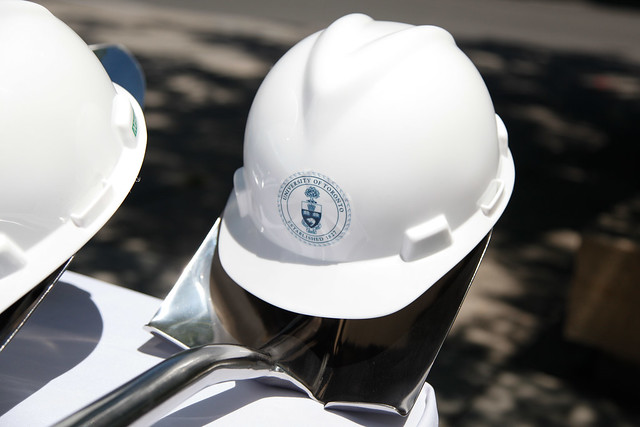
On June 24, U of T Engineering alumni, faculty, students and staff gathered to celebrate the groundbreaking of the Centre for Engineering Innovation & Entrepreneurship (CEIE).
Expected to open in 2017, the building will be the beginning of a new era for engineering research and education in the Faculty. It will strengthen opportunities for students, professors, alumni and industry partners to work together and accelerate transformative solutions to some of the world’s greatest challenges.
The groundbreaking festivities kicked off with senior University and student leaders revealing the many innovative aspects of the building that are designed to inspire collaboration, nurture entrepreneurship and cultivate the next generation of global engineering leaders.
“The Centre for Engineering Innovation & Entrepreneurship is a much-needed response to the sweeping changes in the engineering profession,” said Dean Cristina Amon. “It will be a vibrant hub that harnesses the boundless energy and creativity of our engineering community by fostering experiential learning and heightening opportunities for cross-disciplinary collaboration.”
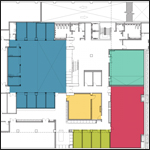
During the event, the Faculty unveiled a fly-through video illustrating the building’s many dynamic and flexible environments that will allow students to translate imagination into reality. These include Technology Enhanced Active Learning rooms, versatile student club areas, space for The Entrepreneurship Hatchery and facilities for prototyping, fabrication and visualization.
“By incorporating innovation in engineering education and smart building design, the CEIE will be one of the finest research and teaching environments of any engineering school in the world,” said Meric Gertler, president of the University of Toronto.
The celebrations also included more than 12 interactive exhibits showcasing the many multidisciplinary research labs and institutes that will call the CEIE home. Focusing on areas such as water, sustainable energy, robotics and mechatronics, engineering leadership, multidisciplinary design and global engineering, these hubs will bring together some of the most talented minds from across the Faculty, the University and beyond.
“Today, we take a collective and monumental step forward with the CEIE as we turn an idea into reality,” said George Myhal (IndE 7T8), an early pace-setting donor and chair of the Engineering Campaign Executive Committee. “The ambitious vision of the Faculty has come to fruition, a testament to the engagement, pride and affinity of our campaign donors, faculty, staff, students and friends. The CEIE will transform our Faculty and will be an important legacy for future generations of engineers.”
Learn more about the CEIE:
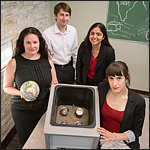




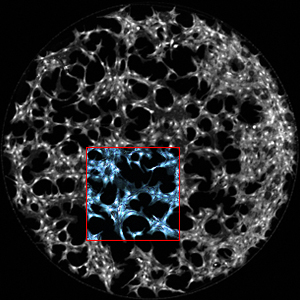
Biomedical engineers at the University of Toronto have invented a new device that more quickly and accurately visualizes the chemical messages that tell our cells how to multiply. The tool improves our understanding of how cancerous growth begins, and could identify new targets for cancer medications.
Throughout the human body, certain signalling chemicals — known as hormones — tell various cells when to grow, divide and proliferate. However, not all cells respond to these signals in the same manner. In rare instances, the internal chemical response of a cell can cause unregulated cell growth, leading to cancer.
To look into the responses of different cells, the U of T team harnessed the emerging power of digital microfluidics, which involves shuttling tiny drops of water around on a series of small electrodes that looks like a miniature checkerboard. Published today in Nature Communications, the paper explains how they were able to increase the speed at which chemical changes can be detected by a factor of 100.
“By applying the right sequence of voltages, we can create electric fields that attract and move around droplets containing any chemical solution,” says first author Alphonsus Ng (BioMedE PhD 1T4) who recently graduated with a PhD from the Institute of Biomaterials and Biomedical Engineering (IBBME) and Donnelly Centre, and is now a post-doctoral fellow in the lab of Professor Aaron Wheeler (IBBME, Chemistry).
Ng and his team’s method allows the scientists to deliver a quick-fire sequence of chemicals to small groups of cells stuck to the surface of the board.

For example, the first drop might contain a hormone that tells cells to grow faster. Within seconds, this hormone sets off a chain reaction called a “phosphorylation cascade,” modifying certain proteins within the cell in a specific sequence. To see these changes, scientists deliver a second drop containing formaldehyde, which freezes the all the proteins in place. They then deliver a third drop containing fluorescent antibodies that stick only to the proteins modified in the cascade. Looking at the antibodies in a microscope provides a snapshot of what has changed and what hasn’t.
By building up a series of snapshots at different time intervals, scientists can see how the cascade progresses. “It’s like a flipboard; each snapshot gives us a static image, but when you combine them all together, you can see movement or action,” says Dean Chamberlain, a post-doctoral researcher at IBBME, the Donnelly Centre and the Department of Chemistry.
Using sequences of chemicals to measure how cells respond to a hormone is nothing new. But until now, scientists were limited by how fast they could add each chemical in the sequence. Using an eye-dropper or a pipette to drop solutions into petri dishes is inherently cumbersome. “Even with robots, you just can’t pipette that fast,” says Chamberlain. “In general, a two-minute time scale is considered pretty good.” By contrast, the new microfluidic system can deliver drops only seconds apart
The team also made some interesting discoveries when they tested the technique on a type of breast cancer cells. “Roughly 10 per cent of the cells had a very rapid and strong response that we could detect up to five minutes before the rest of the population,” says Chamberlain. The team speculates that these “rapid responders” may be involved in the early stages of tumour generation, although more research is needed to confirm this.
While scientists have long suspected that some cancer cells respond to signals faster and more strongly than others, the new device offers a way to study such cells in unprecedented detail. “With the ability to probe these reactions with the same speed at which they occur, we’re better equipped to figure out the internal wiring of the cell,” says Ng. The team hopes to discover new cell types or proteins that could be targeted by drugs, eventually leading to new medicines to fight cancer.
A handheld device and “talking stickers” are a University of Toronto startup’s strategy to improve the vocabulary and communication skills of children in impoverished communities.
“We wanted to create something that was play-based,” said Aisha Bukhari (ElecE 0T8), a graduate of both U of T Engineering and the Rotman School of Management MBA program, who is also the co-founder of Attollo Social Enterprise, the team behind the innovative solution. “We wanted it to be affordable, scalable and loved by children.”
Worldwide, more than 100 million impoverished children under the age of six lack the opportunity to develop their cognitive skills fully, mainly due to a lack of adults talking, singing and reading to them. Attollo’s innovation is designed to address this deficit.
Attollo stickers feature illustrations of familiar objects and come with pre-programmed quick response (QR) codes that are activated by a simple, low-cost reader with playback and recording functions. Parents and caregivers can customize the stickers to talk, sing and read in any language. They are designed to be placed on any household item, transforming it into an educational toy.
Bukhari and the Attollo team, which is composed of Rotman MBA and Engineering alumnus Peter Cinat (CompE 0T2), as well as recent Rotman MBA graduates Jamie Austin and Lak Chinta, have been attracting international attention since last December, when they finished first in the U of T Hult Prize competition.
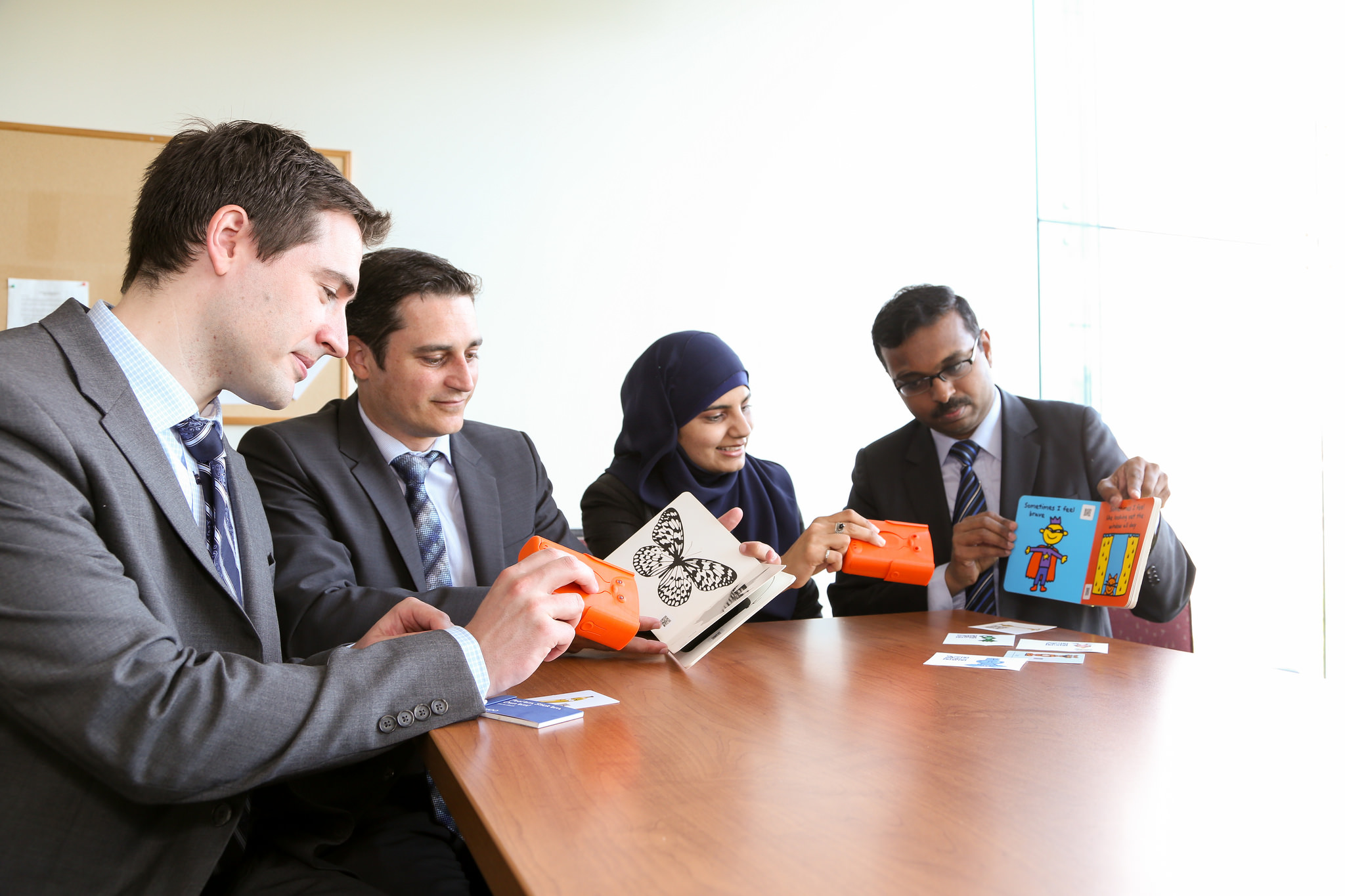
They then won the Hult regional rounds in Dubai in March, and are now preparing for the global final at the Clinton Global Initiative Annual Meeting in New York in September. There, they will compete against five other teams from universities in Europe, Asia and America.
The Hult Prize, which bills itself as the world’s largest student competition, awards $1 million USD in seed capital each year to the winning team. Designed to foster social entrepreneurship, the prize was named as one of the top five ideas changing the world by Bill Clinton and Time magazine.
This summer, the Attollo founders will travel to Hyderabad, India, and Mombasa, Kenya, to pilot their project. They will also spend time at an incubator at the Hult International Business School in Boston, where they will receive mentoring and strategic planning advice.
The team is working on two prototypes. Bukhari said one model is a minimum viable product (MVP) — a basic version of the device — that the team will use to pilot the concept in Hyderabad and Mombasa.
“We’re working with Autodesk Research Toronto on the MVP, with a focus on product design and form factor,” she said.
Attollo is also collaborating with electrical engineering professor David Johns (ECE). His company, Icewire Makerspace, is helping the group with electronics to develop a low-cost solution that is scalable.
“We were impressed by Attollo’s energy and desire to make an impact on early education worldwide,” Johns said. “Although they had an excellent business plan and worthwhile goals, they needed technical help. We want to give the Attollo team support so that they can make the best pitch they possibly can in September.”
The team has been receiving additional mentorship from Monica McGlynn-Stewart, a professor at the School of Early Childhood at George Brown College. McGlynn-Stewart has provided feedback on content and oversaw a local pilot in Toronto where children were exposed to talking stickers for the first time.
Product development was also undertaken by Matt Ratto at the Semaphore Lab at U of T — a research cluster on mobile and pervasive computing that focuses on accessibility and emerging digital technologies.
Bukhari said piloting the concept and fundraising are Attollo’s main priorities leading up to the Hult Prize final.
“We will iterate the solution and business model based on the field results,” she said.
Homepage banner photos courtesy of United Nations and Roberta Baker.
Professor Milos Popovic (IBBME) has been named the recipient of the University Health Network (UHN) 2014 Inventor of the Year Award for his creation of MyndMove, a non-invasive device that delivers electrical stimulation to paralyzed muscles producing movement in arms and hands.
Popovic, a professor at the U of T Institute of Biomaterials & Biomedical Engineering (IBBME) and senior scientist at the Toronto Rehabilitation Institute, is also the creative force behind a wheelchair sensory system designed to prevent pressure sores developed through a collaboration with SensiMAT Systems.
U of T News spoke to Popovic about the significance of the award and why MyndMove is a game changing intervention.
Congratulations on your win. What does this award mean to you?
MyndMove is the result of 15+ years of hard work of 60+ individuals. This award recognizes every single person who was part of this massive effort. Our team included engineers, medical doctors, therapists, business advisors, investors, lawyers, patients and, of course, the two institutions of U of T and TRI-UHN. They all played a critical role in enabling the development and commercialization of this technology.
Who was MyndMove designed for, what does it do and why is it important?
MyndMove is a non-invasive device designed to artificially activate the muscles of the arm and hand to produce controlled reaching and grasping movements in patients who are paralyzed due to stroke, spinal cord or traumatic brain injuries. The most exciting part is that if patients use this technology one hour a day for 40 days, following these 40 one-hour therapy sessions, they start recovering voluntary control of the arm and hand and are able to reach and grasp objects on their own.
How is MyndMove transforming the lives of stroke patients and their caregivers?
The best way to imagine the impact of MyndMove technology is to do the following. Put one hand in your pocket and then try to do the following tasks: open a water bottle and drink out of it, take a bank card out of your wallet and withdraw $20 from an ATM machine, put sun cream on your face, ears and neck, and brush your teeth. Then imagine that you have your hand in the pocket for the rest of your life. This is how many stroke patients feel today. Now imagine that you can take the hand out of the pocket. This is what MyndMove therapy is built to do.
In cases of people with spinal cord injuries both their arms may be affected and, in addition to that, they also have a mobility problem and need to use wheelchairs for ambulation.
Restoring the arm function in both these populations first restores the patient’s independence and dignity. This then reduces the need for attendant care, which reduces the burden of care for the patient’s family and society as a whole. In simple terms, MyndMove is a game-changing intervention.
How does MyndMove work?
The central nervous system is a distributed system. This means that many parts of the brain and spinal cord are involved in controlling reaching and grasping. When a part of the “controller” that is responsible for arm and hand movement is damaged due to stroke or trauma, the patient is not able any longer to move the arm or hand.
MyndMove therapy trains the parts of the brain and the spinal cord that were peripherally involved in arm and hand control but were not damaged following stroke or trauma, to learn how to control the affected arm and hand. During therapy patients are instructed to attempt to move their arm in a particular manner. As they are unable to do that voluntarily we use functional electrical stimulation therapy to assist them, repeating the task 10-15 or more times. We repeat the same process with as many reaching and grasping protocols as the patients require. Over time the patients’ brains start learning how to control the movement voluntarily and after 40 or more hours of therapy they are able to move the arm and hand themselves.
How did MyndMove go from being an idea to becoming a reality?
The first and most important step was to understand how the brain controls the movements of the hand and arm, and which muscles need to be activated at which time and how much to produce these movements we perform millions of times every day without thinking about it.
The next step was to determine how to program these muscle contraction sequences. While we were developing the above technology, we started doing randomized control trials with various patient populations. In the last phase of the technology development, I had a hunch that by changing the stimulation pulses we could make the stimulation less uncomfortable.
This is where professors Aleksandar Prodic and Peter Lehn from The Edward S. Rogers Sr. Department of Electrical & Computer Engineering (ECE) and our student Dr. Massimo Tarulli (ECE) showed exceptional design skills and created a circuitry that produced the pulses that would reduce the pain. By combining all these aspects of the technology into one device and by placing atop of it an easy to use interface, we created the MyndMove system.
What do stroke patients and their families need to know about accessing MyndMove therapy?
MyndMove is a Health Canada approved product, manufactured by the Toronto Rehabilitation Institute and University of Toronto’s startup company MyndTec Inc., and it is available in Canada. Patients need to contact Toronto Rehab’s Rocket Family Upper Extremity Clinic or MyndTec Inc. to find the closest clinic to their home that delivers the therapy.
Fifty-five researchers from U of T Engineering have received $12.7 million in research funding and scholarships awarded today by the Natural Sciences and Engineering Research Council of Canada (NSERC).
The awards comprise the 2015 competition results for NSERC’s Discovery Grants, Discovery Accelerator Supplements, Discovery Development Grants, Alexander Graham Bell Canada Graduate Scholarships, Postgraduate Scholarships, Postdoctoral Fellowships and Research Tools and Instruments Grants. In total, NSERC announced $340 million in funding for more than 70 institutions across Canada.
“These awards reflect the excellence of our research programs and the outstanding contributions of our professors to Canada and to the world,” said Professor Ted Sargent (ECE), U of T Engineering’s vice-dean, research. “They will enable leading-edge innovation and advances in many sectors, from biomedical devices to information technology and sustainable resource extraction.”
Of the 55 engineering professors included in the U of T investment, six received prestigious Discovery Accelerator Supplements. These awards are designed to maximize the impact of those researchers with programs that are highly rated in terms of originality and innovation, and who show strong potential to become international leaders.
The winners and their associated projects were:
- Professor Christopher Beck (MIE) – Artificial intelligence planning and mathematical programming
- Professor Timothy Chan (MIE) – Generalized inverse optimization with application to radiation therapy
- Professor Ben Liang (ECE) – Integrated communication and computation resource management for mobile cloud computing
- Professor Heather MacLean (CivE) – Development and application of novel life cycle-based framework: towards a sustainable aviation fuel strategy for Canada
- Professor Paul Milgram (MIE) – Augmented displays for teleoperation
- Professor David Sinton (MIE) – Nanofluidics for energy
With this recent announcement, the total amount of funding for research was $10.2 million. On the scholarship side, 34 engineering graduate students and post-doctoral fellows will share more than $2.5 million in support. Across the entire University of Toronto, the total amount of scholarship and research funding was $48.7 million.
“NSERC’s Discovery Grants Program is our flagship. It invests in the full range of science and engineering disciplines and thus builds the strong foundation that is a necessary prerequisite for innovation,” said B. Mario Pinto, president of NSERC. “We’re building on its success with our Discovery Development Grants, because we want to take advantage of the full diversity of insights and ideas across Canada. Complementing our support for discovery research, NSERC’s scholarships and fellowships invest in a new generation of talent and give these brilliant students and fellows the skills and experience to meet the challenges of the future.”
For the complete list of grant recipients and project descriptions, visit NSERC’s website.