
This story is Part 7 of an eight-part series, Engineering Experiential Learning, running throughout spring and summer 2015.
At the end of summer before their third year of classes, civil and mineral engineering students travel to the heart of cottage country to spend two weeks learning the art and science of land surveying.
Survey Camp, a 175-acre property on the northern shore of Gull Lake in Haliburton, Ont., has been a fixture in U of T Engineering’s field work education since 1919, when the University purchased the land.
“The country is broken and rolling and admirably suited for the various problems that arise in practical surveying,” states the 1930s camp manual.
Surveying is a core skill for these students, but “the main thing I learned at camp has more to do with life than with engineering: I learned that everybody has something valuable to offer,” says Marcia Lamont Scott (CivE 4T7), who graduated from civil engineering at U of T in 1947. “Survey Camp taught us a lot technically, but it also taught us so much about working together.”
“When you spend concentrated time sleeping, eating, learning and romancing with a group,” adds alumnus Gordon McRostie (CivE 4T4), “you develop a camaraderie that is uncommon among classes.”
While the fundamentals of surveying haven’t changed since the camp opened in 1920, the students have. In 1947 Lamont Scott was the first woman civil engineering grad in Ontario; in 2014, U of T Engineering celebrated 30.6 per cent female enrolment in the incoming class. Between now and 2020, Survey Camp aims to raise $1 million to upgrade its 95-year-old buildings and add new women’s facilities.
Ekaterina Tzekova (CivE 0T9, PhD 1T5) got to know her fiancé, Stephen Perkins (CivE 0T9), at Survey Camp; he proposed at the fire pit where their relationship kindled. While studying for her PhD, Tzekova returned to Gull Lake yearly as a teaching assistant to watch a new crop of campers make memories.
Beyond Survey Camp, all civil engineering students also travel to Gull Lake for a short field trip course prior to their second year of studies, visiting significant construction sites along the way.
“You wonder about the experiences of the students who came before you,” says Tzekova. “It’s neat how people of different generations have this place in common.”
This story originally appeared in the Summer 2015 issue of U of T Magazine.
On June 15, the Faculty celebrated nearly 1,300 graduating engineering students at Spring Convocation. These new Skule alumni gathered with proud parents, friends and the U of T Engineering community before taking the next step into their promising and dynamic futures.
“Soon you will discover that the world is changing faster than you think,” said this year’s honorary grad, Alfred Aho (EngPhys 6T3). “Your career as an engineer is really a career in lifelong learning.”
“U of T Engineering is the premier engineering school in Canada and one of the best in the world, and your exceptional preparation here will take you anywhere you want to go,” said Dean Cristina Amon to graduates. “I encourage you to take risks, knowing that great innovations and remarkable achievements come from hard work and determination. Your possibilities are boundless.”
See the day in action:
On June 15, the University of Toronto awarded alumnus and computing pioneer Alfred Aho (EngPhys 6T3) a Doctor of Science, honoris causa. Aho’s incredible accomplishments were recognized in U of T Engineering’s morning convocation ceremony.
Alfred Aho is a world-renowned computer scientist whose pattern-matching algorithms are run daily on computers around the world, and whose books on algorithms and compilers have been used as standard texts in virtually every computer science department. He is currently appointed the Lawrence Gussman Professor of Computer Science at Columbia University.
Aho attended North Toronto Collegiate Institute. An alumnus of the University of Toronto, Aho earned a BASc in Engineering Physics (now Engineering Science) in 1963. In his senior year, he was president of the Engineering Physics Club and earned his athletic letter as captain of the Engineering School squash team. After U of T, he attended Princeton University where in 1967 he received his PhD in electrical engineering/ computer science.
After Princeton, Aho joined the Computing Sciences Research Center at Bell Labs, the lab that created the Unix operating system and the C and C++ programming languages. He served as a member of technical staff, department head and director of this lab. In 1995 he joined the Department of Computer Science at Columbia University as chair of the department.
Aho is well known for his many papers and books on algorithms and data structures, programming languages, compilers and the foundations of computer science. He is the “A” in AWK, a widely used text-processing language, and he wrote the first versions of the popular Unix pattern-matching utilities egrep and fgrep. His current research interests include programming languages, compilers, algorithms and quantum computation.
Professor Aho has served as chair of the Computer Science and Engineering Section of the National Academy of Engineering, of the Association for Computing Machinery’s Special Interest Group on Algorithms and Computation Theory, and of the Advisory Committee for the National Science Foundation’s Computer and Information Science and Engineering Directorate.
Among his many accolades, Alfred Aho has won the IEEE John von Neumann Medal and has been elected to the U.S. National Academy of Engineering, the American Academy of Arts and Sciences and the Royal Society of Canada. He is a fellow of the American Association for the Advancement of Science, ACM, Bell Labs and IEEE. He received the Great Teacher Award from the Society of Columbia Graduates and has honorary doctorates from the Universities of Waterloo and Helsinki.
Read about 16 exceptional engineering students graduating this year in our “Grads to Watch” feature.
This week, U of T Engineering received $16.9 million from the Government of Ontario to advance 13 innovative research projects. Awarded through the Ontario Research Fund (ORF), three of the most significant grants build on the Faculty’s established research excellence in sustainable combustion for aircraft, city building and solar energy.
ORF – Research Excellence
Through the ORF Research Excellence stream, three professors received funding to accelerate research with key economic and societal benefits for Ontario.
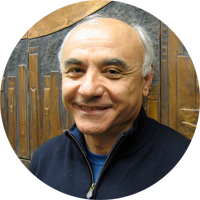 Professor Ömer Gülder of the University of Toronto Institute for Aerospace Studies (UTIAS) received $3.1 million to develop next-generation combustor technologies for aircraft. Gülder and his research team will be designing gas turbine engines that are more fuel-efficient, produce less carbon emissions and reduce maintenance requirements. The result would be a more sustainable way to travel the skies.
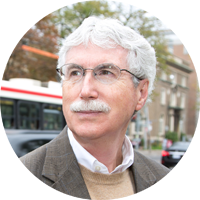 Professor Eric Miller (CivE) was awarded more than $2.9 million to create and implement iCity, a virtual lab for urban design that will develop and apply advanced data, analysis and visualization capabilities to find groundbreaking ways to improve urban transportation system performance. The system will help design efficient, sustainable cities for the well-being of individuals and society.
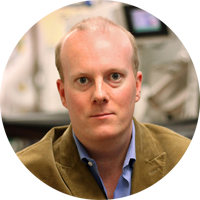 Professor Ted Sargent (ECE) was granted $2.9 million to create a new class of low-cost, highly efficient solar cells by combining existing technology with a novel and versatile material known as colloidal quantum dots. Solar power is the safest, cleanest and most abundant source of energy that society has at its disposal. Sargent and his team will partner with 10 companies to commercialize the technology and enhance the energy industry in Ontario.
ORF – Research Infrastructure
Ten U of T engineering professors received grants through the ORF Research Infrastructure stream intended to ensure Ontario’s research infrastructure remains competitive in attracting the world’s leading researchers. This funding follows significant investment in U of T Engineering infrastructure from the Canada Foundation for Innovation (CFI).
- Gisele Azimi (MSE, ChemE) – Extraction, Processing, and Recycling of Strategic Materials ($115,214)
- Amy Bilton (MIE) – Laboratory for Prototyping Energy and Water Systems ($100,000)
- Eric Diller (MIE) – Laboratory for Micro-Robotics Research ($100,000)
- George Eleftheriades (ECE) – CERES: Centre for Reconfigurable Electromagnetic Surfaces ($2.6 million)
- Amr Helmy (ECE) – Canadian Entangled Photon Source ($3.2 million)
- Hoi-Kwong Lo (ECE) – Smart Grid: Cyber-Physical Operation, Security and Quantum Technology ($762,660)
- Elodie Passeport (ChemE, CivE) – Stable Isotope Facility for Improved Understanding of the Fate and Removal of Emerging Contaminants in Water ($200,000)
- Joyce Poon (ECE) – Integrated Quantum Photonics for Secure Communications ($399,999)
- Angela Schoellig (UTIAS) – Indoor/Outdoor Testbed for Aerial and Ground Multi-Robot Research ($99,946)
- David Sinton (MIE) – From Fracture to fluids to combustion: Infrastructure to understand the implications of hydraulic ($250,000)
“We are grateful to the Ontario government for investing in so many of our professors for their world-leading work,” said Dean Cristina Amon. “This funding will accelerate the globally significant and transformational research for which U of T Engineering is known, and advance innovative solutions to pressing issues such as sustainable energy and urban transportation design.”
Researchers across the University of Toronto received more than $45 million for 38 different research projects, including six ORF Research Excellence grants. The Government of Ontario committed $209 million for institutions across the province.
(Photos: Dani Couture, Roberta Baker)
Three U of T Engineering professors have received Early Researcher Awards from the Government of Ontario. The ERAs provide as much as $140,000 for promising early-career scientists and engineers to build their teams.
“These awards recognize the important contributions three of our promising young professors are already making in their fields and will help them advance their ground-breaking research,” said Dean Cristina Amon. “I would like to extend my heart-felt congratulations to professors Donmez, Ekmekci and Fernandez-Gonzalez on this well-deserved honour.”
Learn more about the U of T Engineering professors who received ERAs:
 Improving driver safety
Professor Birsen Donmez (MIE) is an expert in human adaptation to technology and designing feedback to guide operator behaviour. Her project will compare different types of in-vehicle technologies, such as dashboard displays, smartphones, smart watches and Google Glass, with respect to driver distraction. She will also investigate their potential to improve safety by providing relevant driving-related information. For example, an eye-tracker could be used to let drivers know if their eyes have been off the road for a certain number of seconds. Her students will be trained for careers in traffic safety.
 Reducing bad vibrations
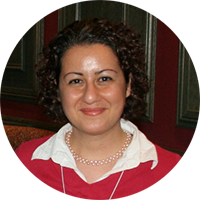
When fluid flows around a structure — whether it’s seawater around an offshore oil platform or wind around the landing gear of a plane — it often creates powerful vibrations that make a lot of noise and can even damage equipment. Professor Alis Ekmekci (UTIAS) will investigate ways to reduce these vibrations by adding bumps or other surface protrusions that disrupt fluid flow. The solutions will improve safety for workers and make for quieter landings.
 Tracking cells on the move
Within our bodies, cells coordinate their movements to build and repair tissues. However, cancer cells also do this in a process known as metastasis, in which cancerous tumours spread from their initial site to other parts of the body. Professor Rodrigo Fernandez-Gonzalez (IBBME) is creating new imaging techniques and models to understand how cells coordinate and regulate migration. By understanding the genes and chemical signals involved in migration, Fernandez-Gonzalez and his team hope to find new ways of fighting metastatic cancers which affect thousands of Ontarians each year.
“Our capacity to compete globally depends on how well we can harness our research, innovation and entrepreneurial strengths,” said Reza Moridi, Ontario’s Minister of Research and Innovation. “Through these investments, Ontario is mobilizing and preparing our researchers to succeed, compete and create the jobs of the future.”
In total, researchers across the University of Toronto received more than $2.6 million for 19 projects through the Early Researcher Awards, part of a recent $13-million announcement for ERAs across the province.
We’re delighted to celebrate 16 exceptional “Grads to Watch” — just a few of the talented and accomplished U of T engineers who will receive their degrees at Spring Convocation on June 15. Selected by their home departments, each of these remarkable future Skule alumni contributed to enhancing U of T Engineering’s vibrant community.
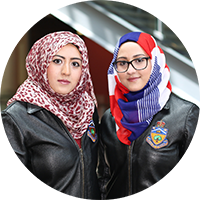
Dalal & Shatha Abuelaish (ElecE & CompE 1T4 + PEY)
Even while maintaining a full roster of courses and co-curricular activities at U of T, sisters Dalal and Shatha Abuelaish continued to unlock new opportunities for dozens of young Middle Eastern women. The Abuelaish duo are board members at Daughters for Life, a non-profit they founded with their father after three of their sisters were killed by tank fire during the Gaza War in 2009. Their organization provides scholarships that enable women to pursue formal education. Dalal and Shatha are graduating with undergraduate degrees in electrical and computer engineering, respectively. Both completed the popular Engineering Business minor, participated in the PEY internship program and served on the executive committee of the University’s Arab Students Association. When asked what’s next, Dalal says, “Engineering is a creative profession. I look forward to developing solutions to open-ended, real-world problems.”
“I would thank the ECE professors and ECE staff members who were always there to help me on my educational journey and gave me the freedom to explore more.” — Dalal Abuelaish
“I would like to thank my professors from the ECE department at U of T and my Capstone Project supervisor, Professor Graeme Norval (ChemE), who offered me a great support while working on my project in my final year.” — Shatha Abuelaish
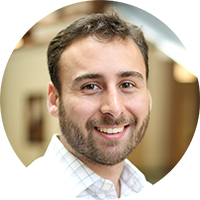
Henrique Coppini (MinE 1T4 + PEY)
Henrique Coppini describes his undergraduate experience at U of T Engineering as “a transformative journey.” He excelled academically, winning the prestigious Lassonde Scholarship in 2010 and 2014. He also co-captained the team that finished second at the Canadian Mining Games in 2015. Coppini says his degree was challenging, but he viewed those challenges as opportunities to grow, improve and learn more about himself. He has already take up an Engineer in Training position with De Beers, which will take him to diamond mines in the Northwest Territories. He plans to develop strong on-the-ground experience and obtain a Professional Engineering license before pursuing an MBA.
“I would like to thank the department of Civil Engineering, and the Mineral Engineering Student body as a whole. Everyone in the program provided a friendly environment that soon became my second family, and I could have never survived the late nights at the lab without it.” — Henrique Coppini
 Sandra Dedesko (CivE 1T3, MASc 1T5)
Civil engineering grad Sandra Dedesko is making buildings healthier, one breath at a time. Her master’s thesis explored how environmental conditions can affect the types of bacteria and other microbes found in a hospital, one of the sources of hospital-acquired infections. Dedesko used doorway beam-break sensors and CO2 detectors to track the movement of people in and out of patient rooms in order to gauge how this influenced the makeup of indoor microbial communities. Bridging many different research disciplines, Dedesko’s work demonstrates the impact civil engineers can have on human health. “The average North American will spend at least 90 per cent of their time indoors, and so what we are exposed to indoors is a prominent determinant of our health,” she says. In addition to her research, Dedesko also actively competed on U of T’s Varsity Tennis team.
“I have to thank the professors I worked with from the Canadian Centre for Building Excellence, which include my advisor, Professor Jeffrey Siegel, and also Professor Kim Pressnail (both CivE). Professor Pressnail has given me so many enriching opportunities over many years here at U of T and he was instrumental in my embarking on a MASc degree. And I cannot thank Professor Siegel enough for introducing me to this field of research, giving me the opportunity to work on so many interesting projects and being such an exceptional mentor and role model.” — Sandra Dedesko
 Yee Wei Foong (MSE 1T5)
Yee Wei Foong’s passion for research suggests that his bachelor’s degree in materials science and engineering is only the beginning. He has already published two scientific journal articles, and he won first prize in the Materials Engineering category of the University of Toronto Undergraduate Engineering Research Day (UnERD) two years in a row. Foong also found time to help organize a number of events, including the MSE Research Showcase and the Impact Speakers Series for the Institute for Leadership Education in Engineering (ILead). Foong plans to continue his studies at the graduate level in hopes of developing efficient, inexpensive materials that can help build a better world.
“I would like to thank my research supervisors, Professor Keryn Lian (MSE) and Matthew Genovese (MSE PhD Candidate), for their continuous guidance in my research, as well as Professor Doug Reeve for his leadership inspiration. I also want to express my gratitude to the Flexible Energy and Electronics Laboratory (FEEL), ILead, the MSE department and my friends and family for their support.” — Yee Wei Foong
 Hugo Gagnon (AeroE PhD 1T5)
Hugo Gagnon sums up his U of T experience with one word: opportunity. “Never before did I have the opportunity to perform research at such a high level, to interact with both pioneers and innovators of my field,” he says. Gagnon’s PhD thesis focused on unconventional aircraft configurations that could reduce aerodynamic drag. His computer models showed that designs with such unusual names as “box wing,” “blended wing-body,” and “braced wing” can produce up to 45 per cent less induced drag than a conventional aircraft. Upon graduation, Gagnon will head to Belgium to work with NUMECA, an international engineering firm solving problems in the aerospace, automotive, wind energy, oil and gas, and healthcare industries.
“I would like to thank my supervisor, Professor David Zingg (UTIAS), for believing in my capabilities and for providing me with a world-class learning environment. I would also like to thank the community of the Institute for Aerospace Studies for making my work feasible and my stay enjoyable.” — Hugo Gagnon
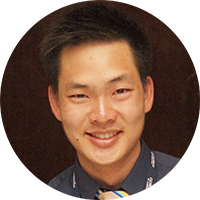 Gerry Ip (CivE 1T4+PEY)
Gerry Ip is this year’s top graduating student in civil engineering. He was also heavily involved in co-curricular activities such as Engineers Without Borders, the Hi-SKULE Committee and the organizing committee for the 2015 Canadian National Concrete Canoe Competition in Toronto. During his PEY placement, he organized the University of Toronto High School Design Competition, which helps high school students gain a better understanding of the role engineering plays in society. Upon graduation, Ip will be heading to the Massachusetts Institute of Technology (MIT) to pursue a Masters of Engineering in High Performance Structures. He aspires to become a Structural Engineer and participate in the design of complex and large-scale architectural landmarks, such as skyscrapers and airports.
“I would like to thank all of the close friends I’ve met here at U of T. Having a group of friends as mental support (and study buddies!) was an important part of making the experience much more enjoyable and manageable. “ — Gerry Ip
 Lea Janossy (IndE 1T4+PEY)
When Lea Janossy receives her bachelor’s diploma, she will officially become a fourth-generation engineering graduate. Both her grandmother and mother graduated from engineering in 1963 and 1991, respectively; her sister Hanna graduated last year. Janossy has managed to balance her studies with a long list of co-curricular activities, including the U of T Sailing team, the Engineering Co-ed Volleyball team and the Hart House Chamber Strings Orchestra. She was also co-president of Women in Science and Engineering (WISE) and completed exchanges to Switzerland, Hungary and France. Janossy is currently pursuing her master’s degree at U of T, using mathematical models to optimize logistics for large construction projects and other complex systems.
“I would like to thank Professor Christopher Beck (MIE) and my parents.” — Lea Janossy
 Sanaz Ketabi (MSE PhD 1T5)
PhD graduate Sanaz Ketabi is developing ways to store energy in ever-smaller spaces. Originally from Iran, Ketabi explores how we could replace liquid-based batteries and super-capacitors with solid-state materials. This enables batteries to be flexible and incredibly lightweight, while also preventing them from leaking. Supervised by Keryn Lian in the Department of Materials Science & Engineering, Ketabi’s research has a variety of applications from consumer electronics to large-scale power delivery that combines renewable energy sources with electrochemical storage. “At U of T, I had the chance to be exposed to many interesting areas of research and understand how we can think differently,” she says.
“I always had the support of Professor Keryn Lian and more important she was a great mentor for me to learn how to present my research work. The travel grants from the School of Graduate Studies were very helpful for me to attend conferences and present my work and get feedback from peers.” — Sanaz Ketabi
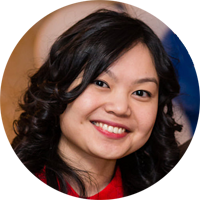 Meruyert Kobikova (ChemE 1T5)
To say chemical engineering grad Meruyert Kobikova knows about energy is putting things lightly. As an international undergraduate student, Kobikova was a summer intern at a major oil refinery in her home country of Kazakhstan, where she worked on many aspects of the refining process. The next summer, she researched glucose — a different type of fuel that powers our bodies — under the supervision of Professor Will Cluett (ChemE). In her final year, Kobikova also collaborated with Elementa Group and several classmates to design a plant that generates electricity from municipal solid waste, winning this year’s ChemE Engineering Plant Design Award.
“I am grateful for the amazing support of the faculty, especially Professor Graeme Norval (ChemE), for all the learning experiences, his invaluable guidance and faith. He is a truly inspiring person, who makes important connections between theory and real-world problems as well as giving lessons on engineers’ responsibility.” — Meruyert Kobikova
 Allan Kuan (EngSci 1T4 + PEY)
During his undergraduate studies, Allan Kuan found a space to pursue his twin passions for engineering and musical performance. He completed his PEY placement at Metrolinx, where he was part of the team overseeing the construction of the twin tunnels for the future Eglinton Crosstown LRT transit line. At the same time, he maintained an active performing schedule as a pianist, founding the Appassionata Music Group, which gives free concerts in local hospitals, community centers and senior care homes. This past spring, Kuan was honoured by his peers with the Spirit of EngSci Award. He is spending the summer giving musical performances before starting graduate studies at U of T in structural engineering in the fall.
“I’d like to thank the incredible EngSci community, a vibrant group made up of intelligent, ambitious, passionate and fun individuals. I would also like to thank my fellow engineering musicians as well as my classmates in the Infrastructure Option.” — Allan Kuan
 Thomas Lin (CompE 1T0 + PEY, ECE MASc 1T5)
Thomas Lin says he has “never been a theoretical type of guy.” The research he did as part of his master’s of applied science has a practical impact on people’s lives, helping them manage their information technology infrastructures — for example, servers and wireless access towers — from anywhere in the world. The software he developed for “cloud IT management” is now in use at seven Canadian universities and won him the best paper award at TRIDENTCOM 2014, a major telecoms conference. Lin, who is receiving his second degree from the University of Toronto, has decided to pursue a third: his PhD will focus on managing delivery of multimedia content, such as streaming videos.
“I’d like to thank my supervisor, Professor Alberto Leon-Garcia (ECE), for taking a chance and believing in me, as well as everyone in his group for helping me along the way.” —Thomas Lin
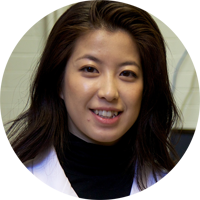 Lian Leng (MechE MASc 1T0, PhD 1T5)
Lian Leng’s PhD thesis made headlines across Canada. Working with colleagues in Professor Axel Guenther’s (MIE, IBBME) lab and at Sunnybrook Research Centre, Leng developed a 3D printer that can generate sheets of skin. Grown from a patient’s own stem cells, the tissue is ideal for creating skin grafts needed by burn victims. The device won a U of T Inventor of the Year award in 2013, as well as the James Dyson Award for Canada in 2014. Leng is currently a postdoctoral fellow at the Wyss Institute for Bio-inspired Engineering at Harvard University.
“My experience in Professor Guenther’s lab has really shaped me into the scientist I am today. There have been ups and downs and numerous challenges, which have made every success all the more rewarding. I couldn’t have learned in a better way about dedication and perseverance.” — Lian Leng
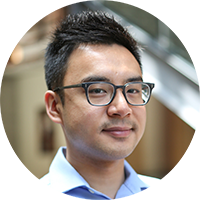 Alphonsus Ng (EngSci 0T8 + PEY, IBBME PhD 1T5)
Alphonsus Ng chose to pursue a PhD at U of T’s Institute of Biomaterials and Biomedical Engineering because “we have access to world-class facilities and experts of every discipline just around the corner.” Ng’s research focused on digital microfluidics, a way of using electric fields to manipulate tiny droplets of water for biological research. By miniaturizing laboratory processes onto microchips no bigger than the size of a credit card, Ng aims to make the diagnosing diseases faster and less dependent on expensive testing laboratories. Ng plans to continue this work after graduation, working as a post-doctoral fellow.
“I would like to thank my supervisor, Professor Aaron Wheeler (IBBME), for his guidance, unwavering support and endless patience. He created a unique environment that enabled me to pursue my own investigative path, foster deep collaborations and friendships, and grow as a researcher and an individual.” — Alphonsus Ng
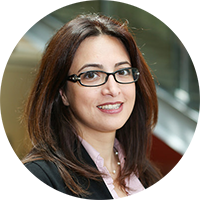 Solmaz Tabtabaei (ChemE PhD 1T5)
As biofuels increase in popularity, it becomes more profitable for farmers to grow energy-based crops instead of food, which causes global food prices to soar. Through her PhD in chemical engineering, Solmaz Tabtabaei has developed a new process that simultaneously produces biodiesel and food-grade protein isolates from mustard seeds. Her innovation could eliminate the need to choose between food and fuel, helping millions of people around the world. Tabtabaei brings her same innovative and optimistic approach into the engineering classrooms at U of T, where this year she organized the Canadian Institute of Food Science and Technology Competition to encourage students to collaborate on new food processing technologies. Tabtabaei won the 2013 Industrial Oil Products Division Student Award from the American Oil Chemists’ Society, and she will be continuing her research through a MITACS postdoctoral fellowship.
“I would like to express my special appreciation to my advisor Professor Levente Diosady (ChemE), who has been a tremendous mentor for me. I would like to thank him for encouraging my research and for allowing me to grow as a research scientist.” — Solmaz Tabtabaei
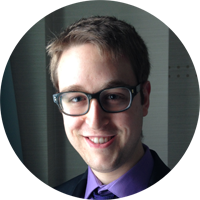 Ivan Zdravkovic (MinE 1T4 + PEY)
Two weeks after finishing his undergraduate degree in mineral engineering, Ivan Zdravkovic is already onto his next adventure: he’s enrolled at Vermont Law School, the top-rated environmental law program in the United States. “Leveraging both my degrees, I hope to show the value of the law to the mining industry and help the industry continue developing towards a better future,” he says. Zdravkovic was the first student to receive the Faculty’s new academic certificate in engineering leadership, facilitated by the Institute for Leadership Education in Engineering (ILead). He was also a production editor for the Faculty’s student newspaper, The Cannon, and worked for the Hart House Investment Fund as a senior analyst in metals and mining. Through the PEY internship program, Zdravkovic spent 14 months in Alberta working in both the field and office for Suncor Energy: “I felt that immersing myself in a realistic working experience for a longer period of time helped me develop skills I will need going forward to succeed.”
“I’d like to thank the entire civil and mineral engineering department. Everyone there has been immensely helpful in not only helping me follow and achieve my ambitions, but in ensuring that my time at U of T went by without any problems.” — Ivan Zdravkovic
With files from Liz Do.