

U of T electrical engineer David Zhitomirsky (ECE PhD 1T5) has won a Governor General’s Academic Gold Medal for 2015, one of just three awarded at the University of Toronto.
Zhitomirsky’s completed his PhD this semester under the supervision of Professor Ted Sargent in The Edward S. Rogers Sr. Department of Electrical & Computer Engineering. He studied energy transport properties and electronic doping in quantum colloidal dot films for optoelectronic devices. He is currently a postdoctoral fellow in the Grossman Group at the Massachusetts Institute of Technology.
“I wanted to continue working on energy materials, and I still do a bit of work with quantum dots along the same lines, but my main thrust is materials that can absorb sunlight and then they store the energy in different confirmations…we call them solar thermal fuels,” says Zhitomirsky.
Outside of the lab, Zhitomirsky plays classical guitar and piano, and takes on the occasional arts and crafts project.
Gold Academic Medals are awarded to students graduating with the highest academic average from a university graduate program. The medals were created in 1873 by Lord Dufferin, Canada’s third Governor General, to encourage academic excellence. They are some of the most prestigious awards Canadian students can receive. Bronze and silver medals recognize achievement at the high school and undergraduate levels, respectively. Zhitomirsky previously earned a Governor General’s Bronze Medal as a high school student.
“David Zhitomirsky is a world-class researcher, and I’m gratified to see his work recognized with this prestigious award,” says Professor Farid Najm, chair of ECE. “My sincere congratulations to David — I look forward to following his career at MIT and beyond.”
Governor General’s Academic Medals were presented at a ceremony on Wednesday, May 27, 2015 by the Dean of the School of Graduate Studies.
This story is Part 6 of an eight-part series, Engineering Experiential Learning, running throughout spring and summer 2015.
Next month, U of T Engineering will begin construction of the Centre for Engineering Innovation & Entrepreneurship (CEIE) — a vibrant new hub that will foster hands-on learning and multidisciplinary collaboration. With state-of-the-art facilities, the building will bring together students, faculty, alumni and industry partners to tackle some of the world’s greatest challenges.
With all of this creativity colliding in one place, it seems inevitable that ideas for new businesses — maybe even new industries — will be sparked. This is all part of the plan: embedded into the design of the CEIE are features that will nurture fledgling companies along their journey from concept to prototype to market.
Find out five ways the CEIE will cultivate tomorrow’s entrepreneurs:
1. The Entrepreneurship Hatchery

Since its inception in 2012, the Entrepreneurship Hatchery has provided teams of engineering students with space, equipment, mentoring, funding connections and all the other ingredients necessary to incubate new ventures. It also hosts collaborative events and competitions that further inspire ideation, networking and team-building across the Faculty and wider University.
With a new permanent home planned on the fifth floor of the CEIE, the Hatchery will continue encouraging students to develop new ideas and take action. This space will also include unique “hotelling suites”—fully equipped offices that can be used by alumni or other mentors to work with Hatchery teams on advancing their businesses.
2. Fabrication Facilities

Building prototypes and other physical models is often one of the most resource-intense challenges of getting a new business off the ground. The third floor of the CEIE will make this process easier, with a supervised rapid-prototyping room that includes a powerful multi-material/composite materials 3D printer — the first of its kind in Canada. This will allow students and faculty members to quickly fabricate 3D parts, models and renderings, watching their ideas literally take shape before their eyes.
The prototyping room is surrounded by design/meet rooms, allowing teams of students to move rapidly between model construction and planning the next stage of their venture.
3. Technology Enhanced Active Learning (TEAL) Rooms

With moveable desks and screens visible from every direction, TEAL rooms are specially designed learning spaces that can be rearranged at a moment’s notice into any required configuration. The CEIE will include 16 of these rooms, which will foster the creativity needed to generate new business ideas by facilitating multidisciplinary collaborations and incorporating experiential learning into all kinds of undergraduate courses.
The TEAL rooms will also be available to students outside of regular classroom hours; in fact the plans are for 24-hour access. This will enable entrepreneurially minded teams of students to hash out new ideas and plan strategies whenever inspiration strikes.
4. Collaborative Student Space

On the lower level of the CEIE, an extremely versatile space will be available for engineering students to collaborate on group projects and other activities associated with the Faculty’s more than 80 clubs and societies. Supported by a generous $1 million commitment from the Engineering Society, this space will also be available for social events and building end-of-year capstone projects.
These types of extracurricular, co-curricular and curricular activities not only develop crucial teamwork, leadership and communication competencies needed for entrepreneurship, but they also can enable technical breakthroughs. One example is the University of Toronto Supermileage team, which designed a car with an efficiency of 3,421 miles per gallon, winning this year’s Shell Eco-Marathon Americas in Detroit, Michigan.
The lower level will also include project rooms that can be used by nascent companies to host meetings or optimize product design, with an arena-like events area perfect for launching the products from tomorrow’s U of T Engineering startups.
5. Multidisciplinary research institutes and centres

The CEIE will also provide a new home for a number of the Faculty’s world-leading research institutes and centres, including those that are already accelerating innovation in areas such as water, sustainable energy, robotics and mechatronics, cyber security and global engineering. These areas bring together knowledge and experience from a wide variety of areas to conduct high-impact research and act as engines of engineering innovation.
One of these institutes, the U of T Institute for Multidisciplinary Design & Innovation (UT-IMDI) creates a unique project-based learning environment. Industry partners bring their technical challenges directly to multidisciplinary teams of students, who develop solutions either through the full-year Multidisciplinary Capstone Projects course or summer internships with partner companies. These experiential learning opportunities are already spawning spin-off companies, including Syncadian Inc.
Although alumnus Raffaello D’Andrea (EngSci 9T1) has been an engineering professor, entrepreneur and artist, he’s better known as the inventor of several types of autonomous robots — machines that can juggle, play soccer and also accomplish more practical tasks.
In the early 2000s, D’Andrea co-founded Kiva Systems, a company that designs and builds large robotic systems that autonomously move, sort and distribute goods in warehouses. In 2012, Amazon acquired the firm for $775 million and incorporated hundreds of these self-propelled robots to fill orders in their distribution facilities.
In March, D’Andrea was recognized for advancing the field of robotics with the 2015 Engelberger Award from the Robotic Industries Association — sometimes called the “Nobel Prize” of robotics.
U of T Engineering recently sat down with D’Andrea — now a professor at ETH Zurich — to learn more about his cutting-edge robots, his entrepreneurial path and how strong fundamentals from U of T Engineering helped set him up for success.
Researchers and entrepreneurs could be viewed as very different career paths — do you find it difficult to move between the two?
Of course they’re very different worlds, but the way that I interact with them is the same. I like to create things, and I’m just fortunate that the things that I create have value in academia, in business and from an art perspective.
In this TED talk, U of T Engineering alumnus Raffaello D’Andrea shows what some of his flying robots can do.
Did your need to create things manifest itself when you were an Engineering Science student at U of T?
What was really great about Engineering Science was that in addition to a deep understanding of fundamental math and physics, we also got to use that knowledge in various projects. The second year capstone design project really allowed us to use some of what we learned to do things we didn’t think we could do before we started our degrees.
I remember that my team chose to build a voice-controlled robotic crane. You have to remember this was in the 1980s, and hardware was definitely not as far along as it is now. We had to build our own single-board computer, as well as all the interfaces, the mechanical design, and of course the software. It was a great way to apply all we had learned to do something completely new.
Did you know at that time that you wanted to be an entrepreneur?
My main focus was doing well in school, but I had glimpses of entrepreneurship. For example, I worked at Bell Canada one summer. When I came back to school, I took one of the problems that I had encountered and tried to develop a product to improve the equalization of signals in telecommunications equipment.
I positioned it as a fourth-year design project, but I also reached out to various local industries that could possibly make use of it. Eventually, it became clear it would take more time than I had, but I certainly learned a lot from that experience.
Can you talk about how you came to found Kiva Systems?
In the late 1990s I was the chief architect and faculty advisor of the Cornell Robot Soccer Team; we competed in the international RoboCup competition, where groups from around the world would field teams of autonomous, soccer playing robots. People would ask me: “What is the practical use of this?” I responded that I didn’t really know. But what I did know is that we were doing something that had never been done before, and that the competition was pushing the whole field of robotics forward.
Years later, in 2003, I was approached by Mick Mountz, who had worked at home grocery delivery company Webvan that had gone bankrupt, in part because their distribution costs were too high.
He had this idea that mobile robots could solve this large problem in distribution, and he found videos online of our soccer-playing robots. He was very convincing about the business need, and I felt that the technology was just on the cusp of being able to do it. So, along with Peter Wurman, a computer scientist, we built a company based on self-directed robots that could move goods in warehouses to exactly where they were needed.
By the time we were purchased in 2012, we had roughly 300 folks working at Kiva. Everyone was really excited about creating something that was really the first of its kind in the world. That was very motivating.
Did you find running a startup to be a big change from being a professor?
Not really, because I ran the RoboCup team in a way that was not that dissimilar from a startup. We had a team of people and a clear objective: to field a team of robots in that year’s competition. We had tight deadlines, we had to build prototypes, and of course we had to compete and win against all these other teams. So there’s a lot of similarity between doing that and running a startup.
How did being an engineer shape the kind of entrepreneur you became?
Actually all three of us — Mick, Peter and I — had a background in engineering. In a way, it was the glue that held us together.
But more generally, I think engineers are just really good at problem solving. They are good at seeing things for the way they are, and figuring out the most efficient solution.
One thing I learned was the importance of planning, especially long-term planning. We knew that creating this completely new system wasn’t something we could accomplish in six months. It took several years to do that, so we had to keep focused on the big picture. I think that really helped keep everyone motivated.
What abilities do you think the engineers of the 21st century will need?
Problem-solving skills remain the most important attributes of an engineer. I also think that the ability to learn on your own is very important. With so much information available online, it’s not so much about the knowledge, but in knowing how to learn things for yourself.
I do think that entrepreneurship is an important part of that, and that all engineers should be exposed to it in one form or another. The labour force of the future is going to be very different from the labour force of the past. People not going to be in the same company their whole life; they will change jobs every few years. So it’s useful to have classes or clubs that promote and develop entrepreneurship.
I think what U of T is doing is great in terms of giving people more choice and more opportunities. But of course, it’s also important to be focused. I was extremely focused as an undergrad. I have no doubt that if you set goals for yourself, and you really work hard to achieve them, that opens up new paths in front of you. So whether it’s as an entrepreneur or a researcher, I think it’s important to pick something and just go for it.
What’s next for you?
I have a new startup company. We’re mostly working in stealth mode right now, but we’re called Verity Studios and we recently completed a collaboration with Cirque du Soleil. Just like my work in the past, what really excites me is creating something that hasn’t been done before.
This interview has been condensed and edited.
Could engineering improve your basketball jump shot, optimize your sleep schedule or help you make smarter investment decisions? These are just a few of the challenges that are motivating the next generation of entrepreneurs in U of T Engineering.
The Faculty is creating more student startups than ever — due in part to the growth of incubators such as the Faculty’s Entrepreneurship Hatchery and extensive experiential learning opportunities that equip engineering students with critical competencies to solve pressing problems.
In addition to working within U of T Engineering, The Hatchery is also part of a cross-campus network of entrepreneurial resources coordinated by the Banting & Best Centre for Innovation & Entrepreneurship, including local incubators, courses and other activities.
Here are five of the latest U of T Engineering student startups to watch:
PowerWring
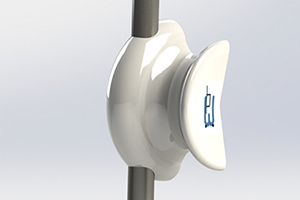
The average caretaker wrings out a mop more than 100 times a day. This process typically involves squeezing the mop through a mop-wringer, a device that requires bending over and applying about 15 pounds of force by hand. So it’s no surprise that back sprains and strains are common.
For Jeremy Wang and his teammates Shuyi Wu, Ryan Williams and Noah Yang (all Year 3 EngSci), the solution was elegantly simple: use the long handle of the mop itself as a lever to multiply the force of the wringer. The team’s measurements showed that this simple innovation cut the required force in half or even more if they use two hands.
“It really eliminated this redundancy of having two levers,” says Wang. “It was kind of a Eureka moment.”
The team developed the PowerWring, a simple device that allows a mop handle to clip on to a wringer handle. The solution, which was developed as part of the course ESC 102 Praxis Engineering Design, was so good the team decided to take it to the next level.
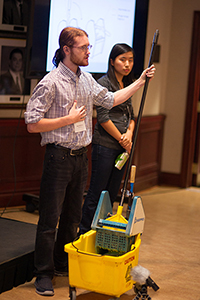
The team approached the Hatchery and was selected to be part of the 2014 cohort. Throughout the summer, it developed a business plan and refined its design. It also began working with law firm Bereskin & Parr LLP on a patent.
“Any time we wanted feedback on something, [the Hatchery team] gave it almost immediately,” says Wang. “They were with us for all our meetings with the lawyers, and they kept us motivated.”
By September 2014, their company, dubbed PowerWring, had been granted a provisional patent. Last month, the team received word its application for a full patent was officially under review at the U.S. Patent Office — a first for the Hatchery. It may take a year or more for the patent to be granted, but the team is already undertaking beta testing and collecting feedback on its design from working caretakers.
“For us, it means having the comfort to actually go out and turn this into a real, impactful product, knowing that we’d be able to receive the due credit,” says Wang. “That’s a big step forward.”
Onyx Motion
With a background in biomedical engineering and an engineer’s desire to build new things, Marissa Wu (EngSci 1T3) was primed to get into the entrepreneurship game. Yet the seeds of her company Onyx Motion were likely sown much earlier.
“I grew up playing basketball,” she says. “My dad got me into it, it was how we bonded, so I’m sure that was important.”
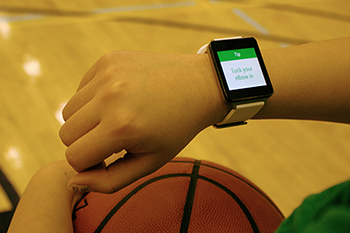
Today, Wu has developed a digital coaching app that analyzes an athlete’s sporting form using the data from the accelerometer in a smart watch. Wu used her extensive training in biomechanical modelling of the human body to determine how to translate accelerometer data into actual movements.
Called Swish, the app records motion data associated with a particular movement, such as a free throw. It then uses machine learning to provide feedback on how best to adjust the technique for maximum success. Wu anticipates that Swish users will one day be able to download the data of major sports stars to compare with their own.

Wu was part of The Next 36, an entrepreneurial leadership program run by a not-for-profit charity dedicated to fast-tracking the development of Canada’s most talented young innovators. She also received support from the University of Toronto Early-Stage Technology (UTEST) program.
Wu says her co-curricular activities, particularly her leadership role in the University of Toronto Engineering Competition, prepared her to become her own CEO. “I discovered that I loved running a team and creating my own path,” she says. “I liked the fact that there’s no right answer.”
Momentum is building for Onyx Motion. The team recently appeared on Next Gen Den, an online companion to CBC’s Dragons’ Den. Wu expects a test version of the app will be available for download within months.
“We built it pretty much from scratch, so there isn’t a lot to compare it with,” she says. “We’re excited to learn from the experience of people using it, and to move forward with making it that much better.”
Syncadian
It’s hard to be at your best when you don’t get enough sleep, but for military personnel or airline pilots, fatigue is a serious safety issue.
Defence Research and Development Canada (DRDC) the research arm of the Canadian military, has studied the problem for more than a decade. Two years ago, DRDC approached a team of undergraduate engineers in APS 490 Multidisciplinary Capstone Course with a simple question: could they use this extensive body of research to develop an app that would allow military personnel to better manage their sleep cycles and avoid fatigue?
The team, which included Hanna Janossy (IndE 1T3 + PEY, MEng Candidate), successfully produced an app that helps users mitigate the effects of jetlag. Based on DRDC’s research into fatigue science, the app gave users advice about when to sleep, nap, seek and avoid light, and take melatonin. But there was a feeling around the table that more could be done. “Our contact at DRDC was very entrepreneurially-minded,” says Janossy. “Right from the beginning, he encouraged us to turn it into something commercial.”
He couldn’t have asked for a more receptive audience. “My father is an inventor, and I grew up going to trade shows all around the world,” says Janossy. “I’ve always wanted to be an entrepreneur.”

In 2014, Janossy co-founded Syncadian Inc. with Ryan Love, a post-doctoral fellow in computer science at U of T and at DRDC. “What we want to develop is a small device that can test for melatonin and other hormones associated with sleep from samples from saliva,” she says. “Ideally it would be able to plug into a smartphone and interface with our app.” The team is currently receiving support from the University of Toronto Early-Stage Technology (UTEST) program.
Janossy, who is working on the company part-time while she pursues a Master of Engineering degree, says that her desire to start her own business is part of what attracted to U of T Engineering in the first place. “It seemed to have a stronger overall entrepreneurial ecosystem than some of the other schools I looked at,” she says.
In addition to the problem solving and critical thinking skills she developed in engineering, Janossy credits her experience as director of Women in Science and Engineering (WISE) for preparing her to be a CEO. “I made all the mistakes of the beginner manager,” she says. “What I learned was that when people are given responsibility and ownership over the problem, they’re much more likely to perform. That still influences my thinking today.”
Read more about Syncadian in U of T Magazine.
Magniware
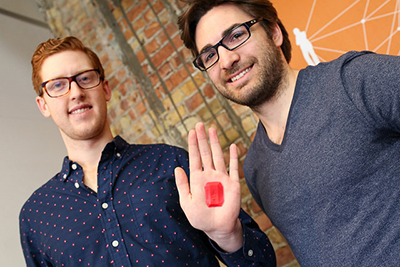
It looks almost like a child’s toy: a small rectangle of a jelly-like substance that sticks strongly to skin, but not hair, making it easy to remove. Its designers hope this tiny device will mean big changes in how we monitor our health, ushering in a new era of “life optimization.”
The Magni — named for a Norse god, the son of Thor — is the flagship product of Magniware, a Toronto-based startup with strong roots at U of T Engineering. It’s designed to sit on the surface of skin and collect detailed physiological data that can help its wearer monitor and improve their physical and mental health.
Developed by co-founders Engineering PhD student Miles Montgomery (IBBME PhD Candidate) and fellow U of T student Alex Mosa in 2014, the Magni is a savvy mix of novel chemistry, nano-scale design and electrical and computer engineering.
The Magni’s sensors can pick up tiny electrical changes on the skin in the same way that an electrocardiogram (ECG) would, allowing direct monitoring of the heartbeat. It also contains accelerometers to measure movement as well as temperature sensors, providing a comprehensive picture of the wearer’s health and well-being.
The data is transmitted via Bluetooth to a smartphone, where sophisticated algorithms turn it into qualitative advice. For example, the Magni might notice you getting jittery before a big meeting and recommend some breathing exercises.
“I came to U of T because I wanted to be the first person to do something,” says Montgomery. “This is a completely new technology.”
For Mosa and Montgomery, what mattered most was putting together the perfect multidisciplinary team. “We knew we needed an eclectic mix of chemical engineering, materials science, robotics, circuit design, basic algorithms and a deep understanding of biology, physiology,” says Mosa.
Today, the team includes Robert Brooks (MIE PhD Candidate), Michael Zhang (ECE 1T3 + PEY), Aniruddha Borah (ECE 1T2 + PEY), Firas Kamal Eddine (ECE 1T2 + PEY) and Rotman MBA candidate Anthony Mouchantaf. Many of the members met through graduate-level courses at U of T that were open to students from different disciplines.
Now ready for testing, the Magni is being used on high-performance athletes who need detailed feedback on their training schedules. It’s also being tested by rehabilitation researchers, who will soon use it to analyze their patients’ gaits.
“Not only will this testing help validate our technology, but it could provide help to someone who really needs it,” says Montgomery. “That’s why I wanted to do a PhD in bioengineering.”
Nvest
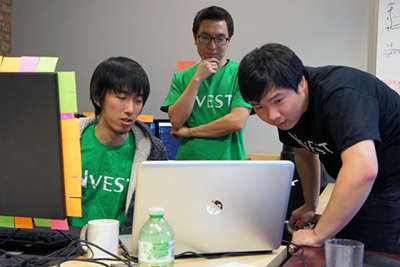
If you were hiring a new employee, you would always check their references first. So why wouldn’t you do the same for those who provide investment advice? That’s the idea behind Nvest, a social network that allows users to trade stock tips and transparently track their success.
Jackie Yan (ECE 1T5), the company’s co-founder and chief technical officer, bills Nvest as the “LinkedIn of stock recommendations.” “It’s built to track everybody’s advice, and allows you to judge based on their past performance whether you can trust their advice or not,” he says.
Free of charge and currently boasting more than 1,600 users, Nvest is based at UTEST and has been featured in recent articles in The Globe and Mail and Techvibes.
Taking a page from the Facebook — which in its early stages was available only to university students — Nvest is targeting the U of T community to find its early adopters. “Sixty to 70 per cent of our active users are U of T students, but we have some from South America, India and all over the world,” says Yan.
Yan credits his undergraduate education for his strong programming abilities, but says multidisciplinary courses like ESC 101 Praxis I helped him think like a designer.
“It was planning and going through all the steps to make sure you’re ready before you actually start building,” he says. Outside the classroom, Yan was involved in the You’re Next Career Network and Nspire, both of which provided him with connections and motivation to go out and build his business.
“Around U of T, there’s a very good ecosystem of people promoting entrepreneurship and innovation,” he says. “Every student can get a lot out of it.”
These five startups aren’t the only ones to watch. Learn more about other startups that have emerged from U of T Engineering in recent years:
Cast ConneX — Steel castings that strengthen new and old buildings for earthquake resistance
FuelWear — Intelligent, heated base layer clothing
Hydron — Refuelling for fuel cell vehicles
Nanoleaf — Energy-efficient LED light bulbs compatible with current sockets
Nymi — Electrocardiogram (ECG) sensor that uses heartbeat as a unique ID to secure passwords or online transactions
OTI Lumionics — Organic light emitting diodes (OLEDs) for lighting and smartphone displays
teaBot — Custom cups of tea from a programmable robot
Three promising new technologies from U of T engineers are one step closer to market thanks to the latest round of Heffernan Commercialization Fellowships. Researchers are awarded $17,000 per year, with the possibility of a one-year renewal.
This year’s recipients include an alumnus from IBBME and EngSci who is creating a smaller, less expensive machine to keep lungs alive before they are transplanted; two ECE PhD students who have invented an implantable chip that can stop brain seizures and a MechE PhD graduate who developed a device that tests computer circuits using nanoprobing.
First established in 1997 by entrepreneur and Engineering alumnus Gerald Heffernan (MMS 4T3), the commercialization fellowships continue to enable graduate students turn their research into viable businesses. In 2014, Heffernan renewed the program as part of a $5 million gift to the Faculty that also provided support for the upcoming Centre for Engineering Innovation & Entrepreneurship (CEIE).
Learn more about three of this year’s Heffernan Commercialization Fellowships:
Keeping lungs alive without the whole operating room

While watching a lung transplant at Toronto General Hospital five years ago, Geoff Frost (EngSci 0T9 + PEY, IBBME MHSc 1T2) noticed that technologies used to keep lungs alive outside of the body were cumbersome and took up a lot of valuable hospital space.
“It takes up an entire operating room,” he says. “In Canada, that represents thousands of dollars an hour.” This includes not only the cost of the machine, but the extensive training that technicians require to use it. A smaller, simpler system could be installed in more places and used more often, thereby increasing the number of lungs that can be transplanted.
Frost pitched the idea to his graduate supervisor, Thomas Waddell, head of thoracic surgery at University Health Network. Shortly thereafter, the two co-founded XOR Laboratories Toronto Inc. to transform their idea into practice. Frost first worked on the project part-time while pursuing a medical degree at McMaster University, and in 2014 he decided to dedicate himself to it full-time.
With the support of the Heffernan Commercialization Fellowship, Frost is developing a prototype EVLP machine that performs as well as the industry standard, but is the size of a dishwasher versus an entire room. Moreover, he’s designing the device to be mobile, which could allow it to play a role in organ storage. “We think there might be some benefit to getting the lung on a perfusion circuit earlier, as opposed to storing organs on ice, which is the current practice,” he says.
Still, the bigger benefit is in simply being able to expand the use of EVLP by making it simpler and less expensive. Frost hopes to complete his prototype EVLP device within two years.
Stopping seizures before they start
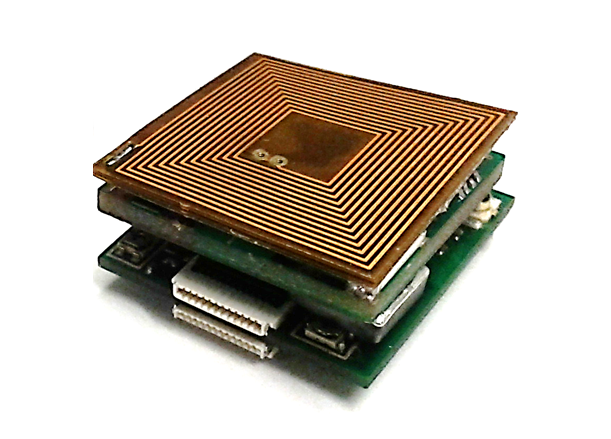
circuits to both read the signs of an impending seizure and
provide electrical stimulation to stop it (Photo: Hossein Kassiri).
More than 100,000 Canadians and millions more worldwide suffer from uncontrolled seizures due to epilepsy. Some have found relief with devices implanted under the skin that electrically stimulate the vagus nerve. However, without a reliable way of predicting when the seizures will happen, these devices are designed to fire automatically at regular intervals, meaning they sometimes miss seizures.
Hossein Kassiri and Nima Soltani (both ECE PhD Candidates) have a solution. Their device — an implantable chip connected directly to the brain via an electrode — integrates components that both stimulate nerves and read and interpret their signals. Aided by a sophisticated decision-making algorithm, the device can detect the earliest possible signs of a seizure and provide appropriate stimulation, often before the user is even aware of what’s happening.
Kassiri and Soltani are using the fellowship to produce prototypes and fill requests for the devices from research labs worldwide. They expect the tests to confirm the safety and effectiveness of the implants, which in turn will help secure the regulatory approval needed to start manufacturing the product on a commercial scale.
Testing nanoscale devices
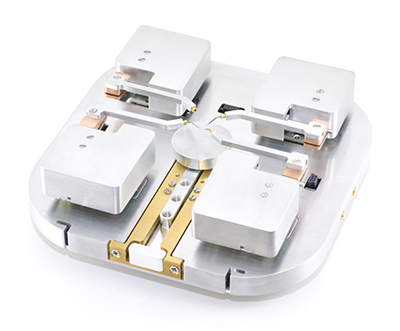
A computer chip contains billions of nano-sized integrated circuits; a flaw in any one of them could spell doom for the entire chip. The only way to ensure quality control is ‘nanoprobing’, which involves using tiny robotic arms to make direct measurements on each circuit. U of T mechanical engineer Brandon Chen (MechE PhD 1T3) has developed an advanced manipulator system that could greatly speed up this task.
Working in the lab of Professor Yu Sun (MIE), Chen developed sophisticated control algorithms that can automate the movements of the robotic manipulators, eliminating the dependency on the skills of a human operator.
“Our technology has demonstrated at least ten times increase in nanoprobing speed compared to the state-of-the-art systems used in the industry,” he says.
Already attracting the attention of the leading semiconductor manufacturers, Chen’s company, Toronto Nano Instrumentation Inc., has purchase orders in the queue. He will be using the Heffernan Commercialization Fellowship to fund some final improvements, safety certification and prepare demonstration products for future customers. Chen expects an official product launch later this year.
This gallery is Part 5 of an eight-part series, Engineering Experiential Learning, running throughout spring and summer 2015.
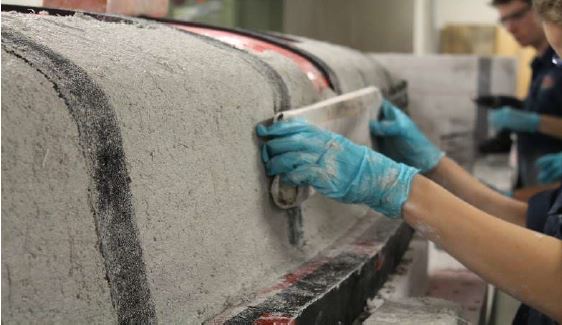
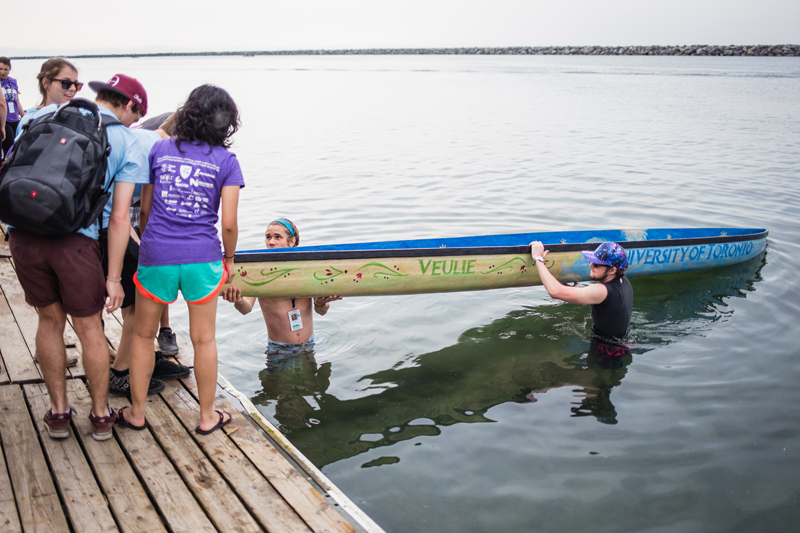
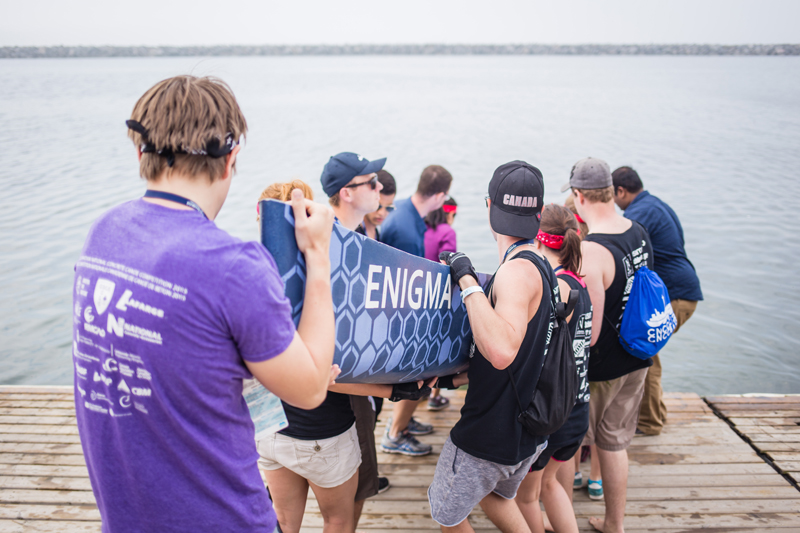
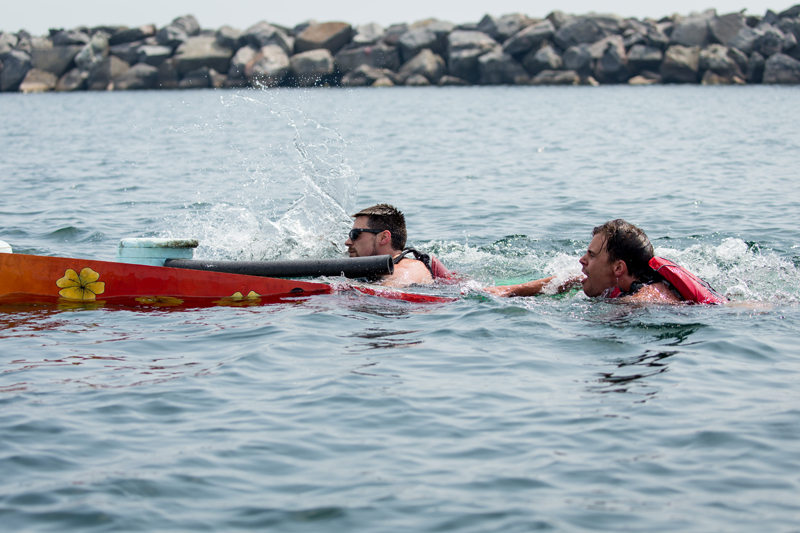
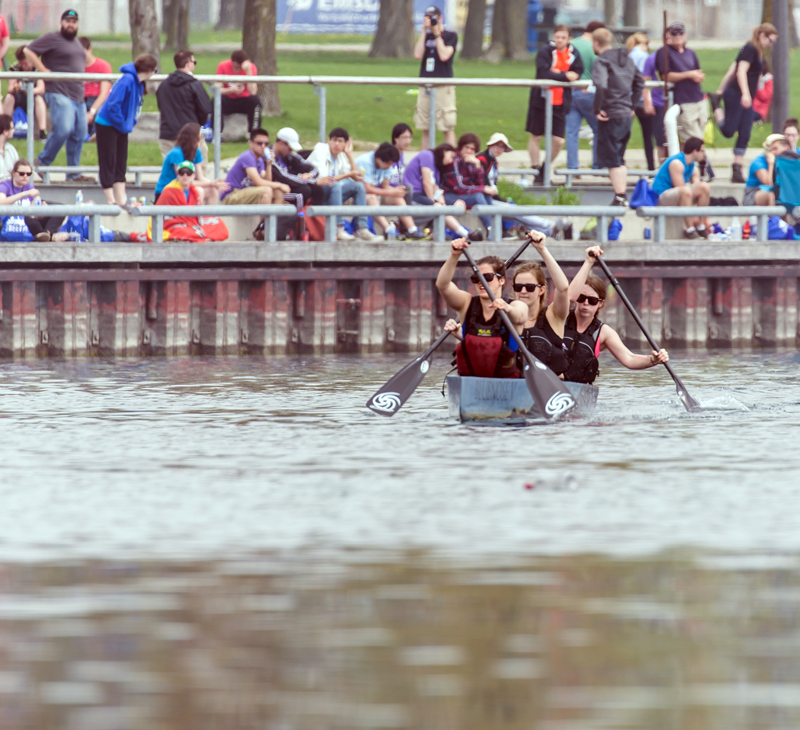
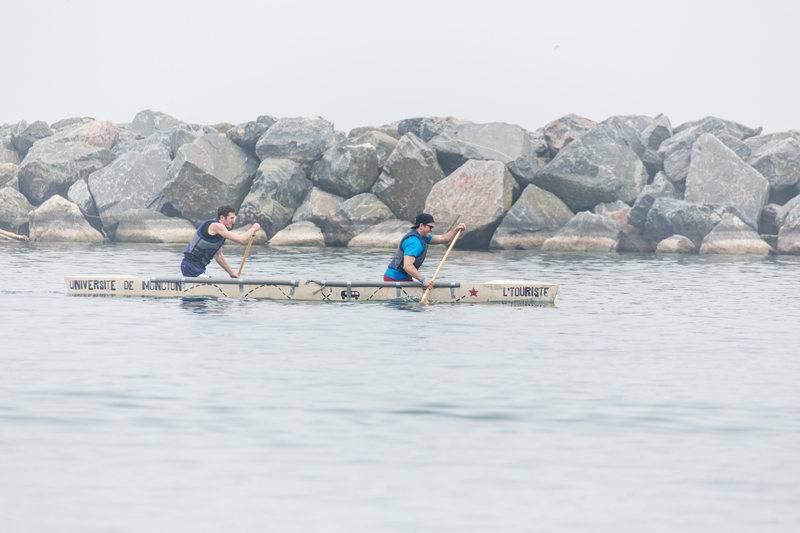
On May 10, more than 250 engineering students from 12 universities across Canada converged in Toronto to make the unfloatable float. They raced canoes made of concrete — boats they designed and built themselves — for the 2015 Canadian National Concrete Canoe Competition (CNCCC).
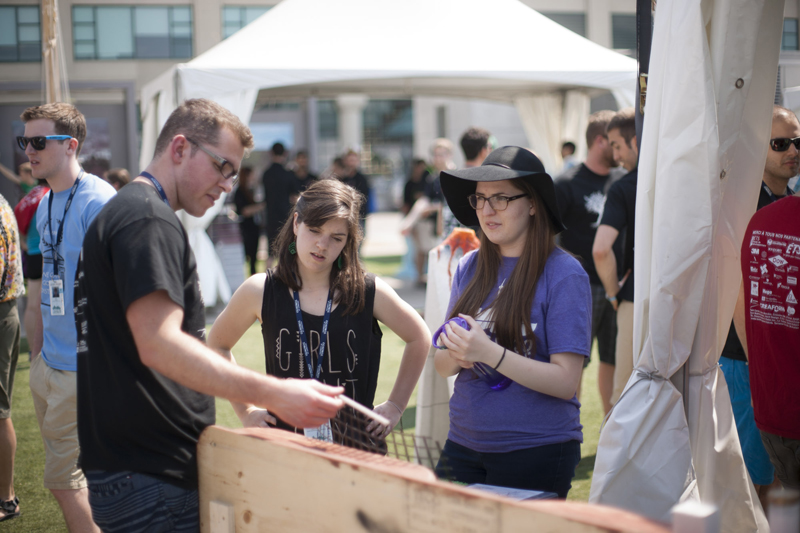
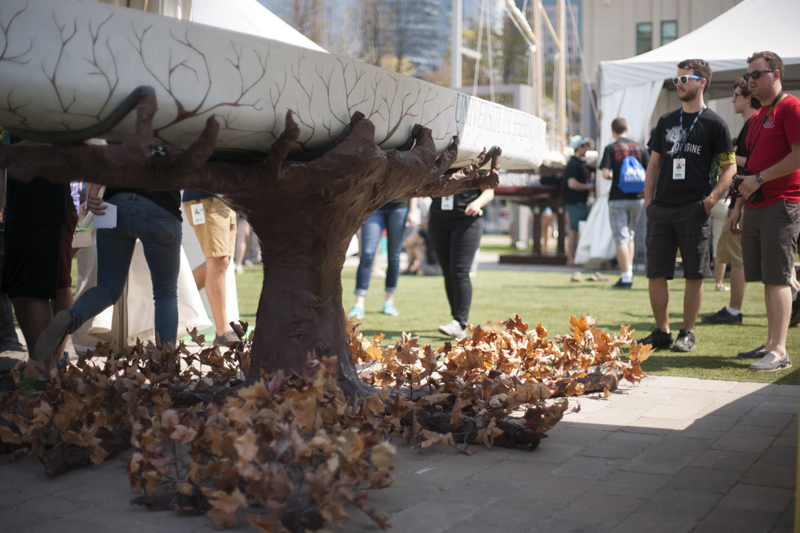
Hosted by U of T Engineering, the competition involved students from a diverse range of engineering disciplines, including civil, mechanical, industrial and materials science. These teams spent the last year constructing their own canoes, with the CNCCC serving as a showcase of their technical, creative and collaborative abilities.
See the canoes in action:

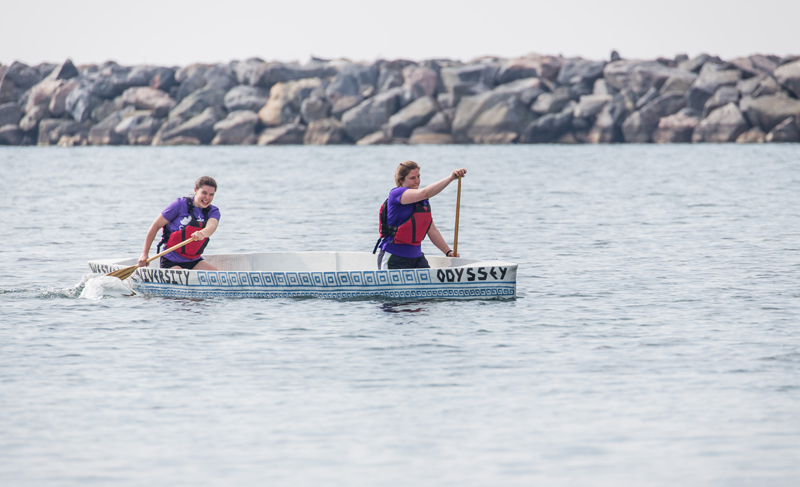






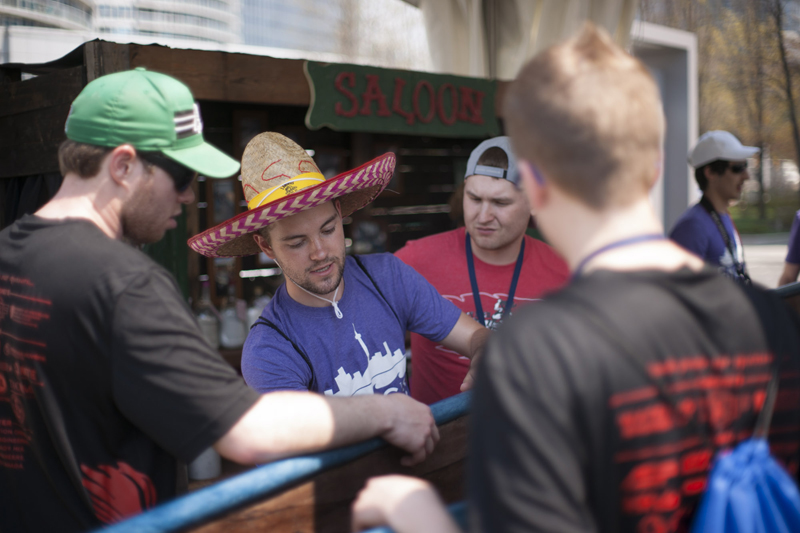
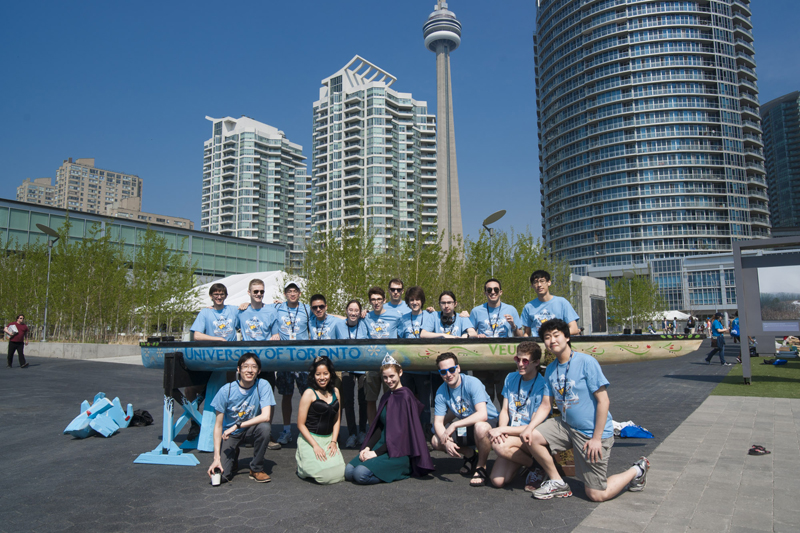
“The CNCCC not only provides teams an opportunity to share a year’s worth of hard work with the public, but it offers a great chance for us to showcase the city and its multiculturalism with students from across the country,” said U of T civil engineering graduate Nigel Fung (CivE 1T5 + PEY), the commissioner of this year’s competition.
Global News, CTV News, CBC Radio, CP24 and Fairchild TV joined for the action.