
This story is Part 4 of an eight-part series, Engineering Experiential Learning, running throughout spring and summer 2015.
Whether it’s informative YouTube videos, educational apps or massively open online courses (MOOCs), digital technology is opening up new opportunities for how instructors can teach. However, keeping up with this proliferation of new tools can be daunting—but it doesn’t have to be.
On Friday, May 1, U of T Engineering is hosting EdTech Workshop 2015: Ideas to Action. Geared toward post-secondary educators, the one-day event is an opportunity for instructors to learn best practices for innovative teaching and learning from some of U of T’s leaders in educational technology.
Free of charge to members of the U of T community, EdTech will focus on three streams: online teaching, tablet teaching and inverted teaching. For each stream, the morning will consist of engaging ‘how-to’ sessions, followed by an afternoon of case studies.
This year’s EdTech is led by U of T Engineering staff members Allison Van Beek, instructional technology specialist, and Estelle Oliva-Fisher, assistant director, student experience & teaching development. The workshop was founded in 2011 by the late Harpreet Dhariwal to encourage knowledge sharing across U of T campus about new learning technologies.
“I have been coming to the EdTech Workshop for several years and find it is inspirational and a source of useful knowledge and contacts for my own courses and curricular development,” said Melody Neumann, a senior lecturer in the Faculty of Arts & Science.
Here are six innovative teaching methods you could leader at EdTech this year:
1. How to film a video in your office—green screen and all!
Scott Ramsay (MSE), recipient of this year’s early career teaching award at U of T Engineering, will demonstrate how to compete with the cuddly cats of YouTube. His presentation—a short educational video on the creation of short educational videos—will cover five different and effective video formats. “This presentation promises to be unlike anything you have seen in an academic conference,” said Ramsay. “Don’t miss it!”
2. Make the most of MyMedia
The latest technology advances have people increasingly worried about their online presence being accessed by unwanted audiences. MyMedia has proved a viable solution for instructors to share content with the U of T community. Application programmer Andy Wagner will demonstrate how to get the best use of MyMedia for instructors who wish to upload and share material strictly among the community.
3. How to own the camera
Senior lecturer Lisa Romkey (EngSci) will take the stage with another senior lecturer, Alan Chong (ECP), to help instructors take control of their on-screen presence and help others to do the same. This interactive presentation will also include participants trying their hand at presenting and receiving real-time feedback from the experts. “Given the increasing role played by videos in our teaching and learning, this is a very important professional development opportunity for our faculty and staff,” said Romkey.
4. How to get your audience involved
With Echo360’s Active Learning Platform, senior lecturer Michelle French made a class of over 900 seem a lot smaller. “Students used their electronic devices to take notes, engage in clicker-type activities and type in questions and answers for the lecturer and each other during class time,” she said. French will describe her experience with the software and the student feedback received in her presentation, as well as provide guidance for instructors who want to incorporate technology enhanced active learning into their own programs.
5. Don’t exclude anyone
The Canadian Association of the Deaf recognises 3.15 million hard of hearing Canadians and the CNIB estimates over half a million live with significant vision loss. Making education material accessible is a critical task for effective teaching. In this workshop, instructors will learn to optimise their tech piece to reach the largest possible audience, while ensuring those with different abilities will experience the same level of learning quality.
6. Does EdTech teaching work?
As an institutional researcher at OpenUToronto and data manager for EdX and Coursera MOOCs at UofT, Stian Håklev is well versed in the world of analytics. Instructors will learn to use these tools to measure the effectiveness of a given mode of delivery and learn how best to to a given audience. In analytics we have a guide that allows us to continue improving our teaching.
Registration for EdTech Workshop 2015: Ideas to Action closes on Wednesday, April 29th.
U of T Engineering has awarded 11 faculty and staff for their continued pursuit of excellence. Recipients were recognized for their leadership, citizenship and innovation at the “Celebrating Engineering Excellence” reception this week—an annual event to honour all those who’ve won awards in the Faculty over the past year.
“It is my privilege to bring everyone together to celebrate another year of extraordinary achievements at U of T Engineering and to thank all of you for contributing to our shared success” said Dean Cristina Amon. “On behalf of the Faculty, I offer warm congratulations to the outstanding recipients of this year’s staff, teaching and research awards.”
This year’s winners:
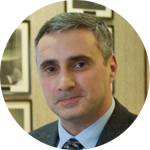
Joe Baptista (MIE)
Influential Leader Award
This award is for a staff member who demonstrates exemplary support for the U of T Engineering’s endeavours and has made significant sustained contributions to the Faculty.
Joe joined MIE in 2003 as building services officer, and was promoted to director of operations in 2011. During his 12 years with MIE, Joe has made several significant contributions to the physical assets of the department, exemplifying dedication and leadership. One of his major achievements was proposing and overseeing the consolidation of MIE’s administrative facilities, which had previously been split between two different buildings. This was an enormous undertaking, requiring not only outstanding organizational skills and technical expertise, but a great deal of tact and diplomacy. Joe’s excellent interpersonal skills and dedication to the Faculty earned him the MIE Employee of the Year Award in 2008 and the Agnes Kaneko Citizenship Award in 2010.
 Jason Foster (EngSci)
Faculty Teaching Award
This award is for a teacher who demonstrates outstanding classroom instruction, develops and uses innovative teaching methods, and goes above and beyond to ensure the best possible learning experience for students.
Since joining EngSci in 2005, Jason has developed and taught a number of mandatory capstone and cornerstone design courses and played an important role in developing other capstone design courses across the Faculty. In 2010, he worked closely with the vice-dean, undergraduate to establish the Engineering Design Education Group as a means of promoting increased collaboration among the Faculty’s design instructors. Regarded as an expert in design education, Jason has been active in initiatives related to design education outside the Faculty in partnership with organizations such as OISE and the Toronto District School Board. His research on engineering education has been presented at conferences for the Canadian Engineering Education Association and the American Society for Engineering Education.
 Kelly Hayward (ECE)
Harpreet Dhariwal Emerging Leader Award
This award, which was renamed last year in honour of the late Harpreet Dhariwal, recognizes a staff member who demonstrates potential to assume a more senior leadership role.
Kelly joined ECE as program manager for ECTI in 2008, and was appointed operations manager in 2012. In this role, she is responsible for the management and oversight of nearly one third of all the Faculty’s space. In addition to responding to emergencies such as water leaks and heating failure, Kelly has shown great leadership in pulling stakeholders together to find ways to maximize limited resources. Her outstanding communications skills and commitment to the Faculty’s mission have inspired her fellow staff members to contribute at the highest level. Kelly is a volunteer member of several committees and has served as co-chair of ECE’s Joint Health and Safety Committee. She is also the department’s green ambassador, working to make ECE and the Faculty more sustainable.
 Belinda Li (ECE)
Agnes Kaneko Citizenship Award
Named in memory of a valued staff member, this award recognizes staff who have served with distinction and made contributions to the Faculty’s mission above and beyond their job description.
Belinda is the administrative coordinator for the Energy Group in ECE. Her positive attitude and consistent willingness to go beyond her expected duties and lend a hand have made her indispensable to the faculty and students she supports, as well as her administrative colleagues. Belinda is always seeking out new opportunities to learn more, contribute more and improve administrative efficiency and student experience. She takes great pride in her work and genuinely cares about our students; she invited some of the graduate students in her group who could not make it home for Thanksgiving to her home for dinner.This is just one example of the dedication and consideration for others that makes Belinda such an exemplary Faculty citizen.
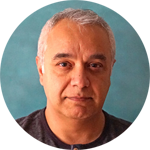 Mike Mehramiz (ECE)
Quality of Student Experience Award
This award recognizes a staff member who has made significant contributions to the quality of student experience in the Faculty.
Mike has served as manager of the Design Centre Lab in ECE since 2002. In this role, he provides crucial support and guidance to students throughout the creation of their final year design project, as well as other design assignments. Mike continually seeks to improve the experience of students in his lab through innovative technological, ergonomic and operational enhancements. He recently completed an overhaul of the lab, which doubled its capacity and created a more user-friendly space in just a few months. The students he serves consider him a mentor, and often seek his advice on technical problems outside the scope of the lab. Mike received a U of T Excellence Through Innovation Award in 2012 for his role in developing and running a series of tutorials to teach ECE students electronic lab skills.
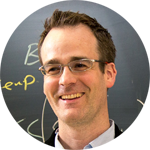 Scott Ramsay (MSE)
Early Career Teaching Award
This award recognizes a faculty member who has demonstrated excellence in teaching during their early career.
Scott is the course coordinator for ‘Introduction to Materials Science,’ a first-year course taken by about half of our undergraduates. He not only completely overhauled and enhanced this course, but also developed initiatives to improve the first-year experience in all large, introductory courses. Improvements included implementing portable tabletop labs which don’t require laboratory space, and short online videos explaining key course concepts. Scott is currently spearheading a project to create multimedia reusable learning objects related to materials science, which can be used across multiple courses and departments. He is also developing the open online course ‘Introductory Chemistry from a Materials Perspective,’ which will be offered next year. In 2012, Scott received the Wighton Fellowship, a national award recognizing excellence in laboratory teaching.
 Jonathan Rose (ECE)
Sustained Excellence in Teaching Award
This award recognizes a faculty member who has demonstrated excellence in teaching over a sustained period of time.
Jonathan’s commitment to student success has made him an extremely popular educator and sought-after supervisor. He is known for his emphasis on teaching design and his innovation in laboratory and design courses. Jonathan developed a unique design course for graduate students called ‘Creative Applications for Mobile Devices.’ This groundbreaking course has yielded roughly 75 new mobile apps in disciplines ranging from music to medicine. Jonathan is also passionate about entrepreneurship, serving as chair of The Entrepreneurship Hatchery’s Advisory Board. A four-time recipient of ECE’s teaching award, he has also been recognized with the Faculty Teaching Award in 2012 and the U of T Faculty Award in 2014.
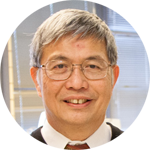 Honghi Tran (ChemE)
Research Leader Award
Established in 2013, the Research Leader Award recognizes leadership in interdisciplinary and multiple investigator initiatives that have enhanced the Faculty’s research profile within the broader community.
Honghi is the Frank Dottori Professor of Pulp & Paper Engineering and director of the U of T Pulp & Paper Centre. Over the past 25 years, he has led and coordinated 10 research consortia reaching across borders and disciplines to advance the global pulp and paper industry. These consortia have undertaken projects involving more than 30 faculty members and 200 students from across the University, as well as 50 industrial partners from around the world. Honghi’s own research has also had an exceptional impact on the industry. For example, the sootblower nozzle he designed to remove deposits in boilers is now used in more than 95 per cent of recovery boilers worldwide, saving the industry an estimated $100M per year. His many research awards include the John S.Bates Gold Medal from the Pulp and Paper Technical Association of Canada.
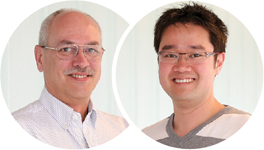 Darlene Gorzo, Jaro Prostupa and Joe Wong (all ECE)
Innovation Award
This award recognizes staff members who have developed an innovative new method, technology or system.
Darlene, Jaro and Joe are being honored for their development of ECE’s Graduate Research Information Database (GRID). GRID was developed to address the University’s requirement for an annual meeting between all PhD students and their supervisory committees. With roughly 260 PhD candidates in ECE, scheduling these meetings demanded significant departmental resources. GRID solves this problem by providing a web-based virtual meeting space where students can submit a summary of their accomplishments and future plans, and supervisors can review this information and provide feedback. Administrative staff can also use GRID to collect and store other data related to the student’s progress, such as completion of course requirements. GRID has significantly streamlined a previously cumbersome process, resulting in considerable benefits to students, faculty and staff.
See a Flickr gallery from the “Celebrating Engineering Excellence” reception.
University of Toronto engineers and a pediatric surgeon have joined forces to discover how physical forces like pressure and tension affect the development of limbs in embryos—research that could someday be used to help prevent birth defects.
The team, including U of T bioengineer Rodrigo Fernandez-Gonzalez from the Institute of Biomaterials & Biomedical Engineering (IBBME), U of T mechanical engineer Yu Sun (MIE) and SickKids Hospital’s Dr. Sevan Hopyan, used live imaging and computer models to study the links between mechanical forces, changes in cell shape and cell movement in embryos.
Their study—published this week in Nature Cell Biology—used cutting-edge techniques to gain valuable insight into the fundamental processes of arm and leg development.
Mapping-out the growth of ‘proto-limbs’
An embryo starts out shaped like a ball, then grows to create complex shapes like limbs. In early embryonic development, cells divide into three layers:
- the ectoderm, which forms the nervous system, skin and sensory organs;
- the mesoderm, which produces the skeleton, muscles and most of the major organs, and;
- the endoderm, which turns into the body’s respiratory tract and elimination systems.
In the study, the team looked at cell behaviours in the ectoderm that promote limb development. They used unique tools, including micro-chiseling ablating lasers, atomic force microscopes and layer-by-layer computer models, to explore the early stages of limbs in unprecedented detail.
They discovered that as cells divide and develop, the way they communicate with each other and the pressure resulting from movements of the three cell layers can impact how well limb buds—the early stages of what become arms or legs—are formed.
“We found amazing evidence on how mechanical forces regulate the remodeling of cells in the ectoderm layer and how the stress field changes when the ectoderm changes its shape as it develops,” says Professor Sun.
Prior to this work, scientists and engineers didn’t have the tools and techniques to understand changes of shapes on a tissue scale and on small groups of cells.
Thanks to their findings, the researchers know that two major cell layers, the ectoderm and mesoderm, speak to each other both mechanically and biochemically, that is, through molecules shuttling back and forth. This communication is linked to changes in the embryo.
Engineering insights from the world of the cell
“The idea that two tissues are mechanically interacting and that such interaction affects cellular behaviour is really exciting to see,” says Fernandez-Gonzalez.
To measure mechanical forces, the authors used techniques borrowed from the world of manufacturing and engineering, including the use of a laser to cut interfaces between cells.
“If you hold a rubber band between your hands and I cut it while it’s loose, nothing happens,” says Fernandez-Gonzalez. “But if you stretch the rubber band, your hands snap back when I cut it. That’s essentially what happens with cell boundaries,” he explains.
“We know some of the genes that are important in the structure of the embryo for development to proceed, but we didn’t know how those pathways were linked with movement in the cells,” says Hopyan.
A path to preventing limb defects
While their study was done on a highly fundamental level, the team says it will allow them and others to take important further steps like measuring forces in and between cells.
The study also paves the way for the possibility of creating better simulations of cell remodeling and the early development of limbs.
“This research could someday be used in potential medical applications to prevent limb deformations,” says Hopyan.
The work is one of the first times a research team has applied biophysical methods to the study of cell and tissue mechanics in live mammals.
Possible long-term outcomes in this research field could result in a drug that could alter mechanical stress on cells in embryos, repairing what would otherwise have become a deformed limb.
A trio of recently published studies from a team of University of Toronto engineers has found that air pollution could be spreading up to three times farther than thought—contributing to varying levels of air quality across cities.
Past research on air pollution from vehicle tailpipes has shown poor air quality anywhere between 100 to 250 metres of major roadways.
But in a paper published in the recent edition of the journal Atmospheric Pollution Research, U of T chemical engineer Greg Evans (ChemE) and his partners at Environment Canada have found that concentrations of pollutants from traffic are still double at a distance of 280 metres downwind from highway 400 north of Toronto.
One in three Canadians, and half of all Torontonians, lives within 250 meters of at least one major roadway. These roads, says Evans, range from 10-lane highways to most four-lane streets with steady traffic.
“We used to think that living near a major road meant that you lived near a lot of air pollution,” says Evans. “But what we’re finding is that it’s not that simple, someone living right on a major road in the suburbs may not be exposed to as much pollution as someone living downtown on a side street near many major roads.”
In the same study, Evans demonstrated that for somebody living near multiple roads, they could be exposed to up to ten times more pollutants than if they didn’t live near any major roads.
“It used to be that we measured air quality on a regional or city scale,” says Evans. “But now we’re starting to understand that we need to measure air quality on a more micro scale, especially around major roadways.”
According to Health Canada, poor air quality from traffic pollution is associated with a number of health issues, such as asthma in children and other respiratory diseases, heart disease, cancer, and increased rates of premature death in adults. The Canadian Medical Association attributes 21,000 premature deaths each year in Canada to air pollution. A separate study published last month also linked traffic pollution to delayed cognitive development in children.
Lab in a truck
Throughout 2014, the research team travelled the streets of Toronto measuring vehicle emissions from a mobile lab that resembles a Canada Post mail truck.
“One of the aspects of our work that’s unique is that we’re using real-time instruments to make measurements in seconds,” says Evans. “You have to do the measurements right there, right away, or the exhaust will be gone.”
The team’s findings suggest that people living or spending time near major roadways could be exposed to elevated levels of a dangerous chemical brew of ultrafine particles, volatile organic compounds, black carbon and other pollutants.
“The ultrafine particles are particularly troubling,” says Evans. “Because they are over 1000 times smaller than the width of a human hair, they have a greater ability to penetrate deeper within the lung and travel in the body.”
On a typical summer day in Toronto, Evans’ instruments measure approximately 20,000 ultrafine particles in each cubic centimetre of air. This means that for every average breath, Torontonians are inhaling 10 million of these nano-sized particles. These numbers increases to 30,000 and 15 million in the winter, when there is more stagnant air and less evaporation of the compounds.
25% of cars causing 90% of pollution
A second paper by Evans and colleagues, published in the March 2015 edition of the journal Atmospheric Measurement Techniques, suggests that a small number of older or “badly tuned” cars and trucks produce the majority of vehicle pollution.
The study made on-the-spot measurements of 100,000 vehicles as they drove past air-sampling probes of the main laboratory on College Street, one of Toronto’s many major roadways.
Evans and team found that one-quarter of the vehicles on the road produced:
- 95% of black carbon (or “soot”),
- 93% of carbon monoxide,
- and 76% of volatile organic compounds such as benzene, toluene, ethylbenzene, and xylenes, some of which are known-carcinogens.
“The most surprising thing we found was how broad the range of emissions was,” says Evans. “As we looked at the exhaust coming out of individual vehicles, we saw so many variations. How you drive, hard acceleration, age of the vehicle\e, how the car is maintained—these are things we can influence that can all have an effect on pollution.”
A vehicle emissions map of Toronto
A third paper, due out in the June 2015 edition of the journal Atmospheric Environment, looks at variations in traffic pollution throughout Toronto, evaluating how exposure to largely unexplored, unregulated ultrafine particles varies across the city. (View the map here.)
Evans is currently working with Environment Canada, the Ontario Ministry of the Environment and Climate Change and Metro Vancouver to design, test and install new air quality measurement stations around the cities of Toronto and Vancouver. These stations will support enhanced monitoring of the air quality health index during this summer’s Pan Am games in Toronto. More broadly, this research will provide a basis for future near road air quality monitoring in cities across Canada so as to get a more accurate portrayal of the exposure of Canadians to traffic pollution.
Evans and team hope that their research may someday lead to policy changes that could help better target the small number of vehicles that pollute the most, as well as to better decide where to build schools, hospitals, daycares, seniors residences and other structures to protect people who are especially vulnerable to air pollution.
Sixteen U of T Engineering students were celebrated at the 2015 Gordon Cressy Student Leadership Awards on Thursday, April 16. A ceremony to honour the recipients was held at Convocation Hall.
The prestigious award was established in 1994 and is named after Gordon Cressy, former U of T vice-president of development and university relations. It recognizes students who have made outstanding extra-curricular contributions to their college, faculty or school, or to the university as a whole.
“We are tremendously proud of our Cressy Award winners for their leadership and contributions to our Engineering community,” said Dean Cristina Amon. “We strive for excellence in the student experience and these students help us realize that goal through their leadership in co- and extra-curricular activities. Their engagement beyond the classroom enriches experiential learning for all students. With their broad perspectives, talent and potential, they are well-positioned to be the global engineering leaders of the future.”
Full list of winners from U of T Engineering:
 Amanda Aleong (Year 4 EngSci)
Over the course of her undergraduate degree, Amanda transitioned from a quiet student into an open and strong leader. As the Engineering Society’s orientation chair, her positive attitude and calm approach to challenges resulted in a positive experience for both leaders and first-year students involved in Orientation Week. Amanda also served as the elected chair of the Engineering Science Club, and contributed to student outreach for science and engineering programs, the promotion and availability of first-aid on campus and leadership programs for engineering students.
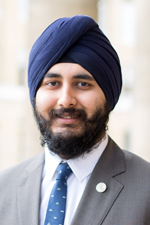 Praneet Bagga (Year 4 ChemE + PEY)
Praneet felt inspired by the U of T Engineering community from his very first day on campus. Over the course of the last four years, he participated in countless clubs and student societies while maintaining a Dean’s Honour List standing. Praneet’s proudest contributions are connecting students and industry as chair for Canadian Society for Chemical Engineering’s U of T chapter and mentoring students to reach their utmost potential for the Institute for Leadership Education in Engineering’s (ILead) cross-faculty functional group.
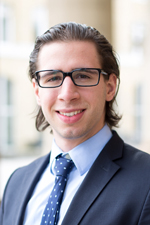 Ivan Damnjanovic (Year 4 CivE + PEY)
Ivan is one of civil engineering’s top leaders. As a volunteer consultant with not-for-profit group Local Food Plus, Ivan helped secure the $150,000 funding required to launch a pilot program in support of food security. As the director of business development with the NSPIRE Innovation Network, he collaborated with industry professionals to grow the 2015 National Business and Technology Conference. He also founded and grew the Canadian Society for Civil Engineering at U of T into Canada’s largest student chapter with over 200 members.
 Nicole D’Mello (Year 4 CivE + PEY)
Nicole has a long list of impressive leadership accomplishments from her years at U of T Engineering. She made it a priority to enrich the student experience through social events, and her enthusiasm for life and learning—both inside and outside of the classroom—was inspiring to many. She was director of both the Cannonball and Gradball formals, and the hospitality director for the Canadian National Concrete Canoe Competition. She was also a fourth-year civil engineering class representative for the Engineering Society and the co-founder of the Indian Engineering Students’ Association.
 Marissa Goldsmith (Year 4 IndE + PEY)
During her time at U of T Engineering, Marissa proved to be an asset to many clubs and sports teams. She was the captain of the U of T Engineering Iron Dragons and played a vital role in the success and motivation of the dragon boat team. Marissa also provided new opportunities and encouraged her engineering peers to get involved through her role as president of the U of T Engineering Athletics Association. As the high school outreach director for Women in Science & Engineering (WISE), she showed determination and commitment to youth outreach through the successful re-launch of the WISE High School Outreach program.
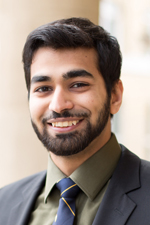 Ishan Gupta (Year 4 ChemE + PEY)
Ishan served the engineering community through various roles during his time at U of T Engineering. He served as vice president of student life for the Engineering Society where he successfully lobbied for a student club space in the forthcoming Centre for Engineering Innovation & Entrepreneurship. He founded the Skule Kup, a yearlong interdisciplinary student competition. And as class representative and chair of the Undergraduate Chemical Engineering Council, Ishan organized numerous events and oversaw the development of an online forum for improved access to academic services.
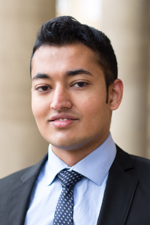 Piyush Gupta (Year 4 CompE + PEY)
Piyush was actively involved on campus and enthusiastic about enhancing the student experience. He served as co-president of University of Toronto Business Association (UTBA) and was an executive member of clubs such as the Institute of Electrical and Electronics Engineers (IEEE) and the University of Toronto Engineering Kompetition (UTEK). Piyush is certified by Leaders of Tomorrow for his leadership and team skills and has received three Duke of Edinburgh awards. He has always been passionate about community involvement outside of his studies, including canvassing for Youth Without Shelter to raise funds for homeless youth.
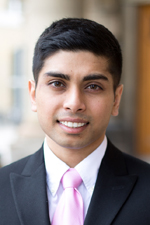 Mehran Hydary (Year 4 ElecE + PEY)
Mehran went above and beyond as a student leader at U of T Engineering. He balanced extracurricular and academic responsibilities while making lasting impression on students, staff and faculty. One of his many accomplishments was firmly establishing himself as the role as vice-president of finance for EngSoc, where he led the implementation of a centralized student initiative fund. As VP of finance, he also managed the EngSoc operating budget, which includes 20 directorships, eight discipline clubs and Orientation Week.
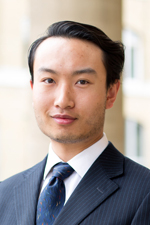 Eric Ma (BiomedE 1T3, MASc 1T5 Candidate)
Eric was highly motivated and driven to inspire change in the student community at U of T Engineering. As the president of the Biomedical Engineering Students Association (BESA), Eric expanded the executive committee to increase BESA events portfolio by nearly 35 per cent. He also held the position of business and operations director and CFO of the Blue Sky Solar Racing Team. He raised and managed a fund portfolio of over $500,000, and played an instrumental role in reorganizing the team structure to increase capacity by 300 per cent.
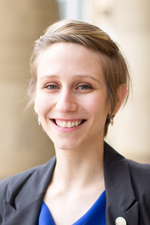 Cassandra Rosen (Year 4 EngSci + PEY)
Cassandra has been influential in many campus activities at the University. She was a member of Engineers Without Borders, serving as vice president for two years, where she arranged awareness campaigns for foreign aid and met with members of parliament. She was also a founding member of the new club Engineers to Policy. In addition to these main activities, Cassandra has been an ambassador for the Division of Engineering Science, WISE and participated on behalf of Canada in the International Collegiate Design and Innovation Challenge in China.
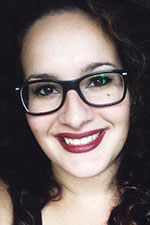 Amanda Santos (Year 4 MechE)
Amanda is an exceptional leader and a true example to her peers. In 2012, she founded the University of Toronto Ironsports Club, which developed out of the transformative impact strength sports had on her own life. In just three years, the club expanded to more than 300 members. Amanda designed and delivered budgeting and financial management workshops twice per semester for student groups and organizations through ULead. She was also the business leader on U of T’s Formula SAE Racing team.
 Kimberly Shen (Year 4 CompE)
Kimberly has been an influential figure to many students during her four years at U of T Engineering. One of her many accomplishments included creating Skule’s Got Talent, a show that encourages the pursuit of hobbies and extracurricular involvement within the engineering community, and a chance for engineers to showcase their talents beyond the classroom. As EngSoc’s archivist, Kimberly expanded and updated the physical and online archives to preserve the rich history of Skule™ for the enjoyment of current and future engineering students.
 Ananya Tandon-Verma (Year 4 IndE + PEY)
Ananya has excelled as a leader and as an engineering student. As president of the Nspire Innovation Network, she managed 80 executives across 15 campuses. As chair of Canada’s National Business and Technology Conference, she led a team to deliver 20 hours of programming for 450 young professionals. She has also served as chapter president for the Institute of Industrial Engineers, director of corporate relations for Social Spark and VP professional events for WISE.
 Gordon Tang (Year 4 IndE + PEY)
Gordon is a dedicated leader who has contributed extensively to career development for the U of T community. Under Gordon’s leadership as president, the You’re Next Career Network—a student-run organization that connects students with employers—organized the Startup Career Expo, Canada’s largest fair for startup careers. He was also vice-president external of EngSoc. In addition to serving students, Gordon has also created multiple opportunities for alumni to engage and stay connected with the university.
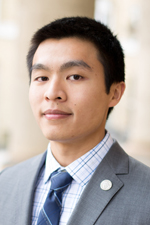 Vinson Truong (Year 4 MSE + PEY)
Vinson’s volunteer contributions to U of T Engineering have enhanced his fellow students’ experience both inside and outside the classroom. His dedication to improving student life resulted in his election as the EngSoc MSE class rep for three consecutive terms, and vice-chair (and then chair) of MSE Club in his senior years, where he led his team to receive EngSoc’s Discipline Club of the Year in 2013. In his third year, he chaired the six-student MSE Academic Task Force, aiding the Department in restructuring the curriculum to enhance student learning.
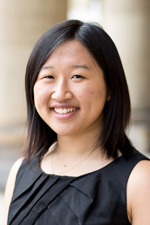 Alice Ye (Year 4 EngSci + PEY)
Since day one, Alice has demonstrated an initiative and tireless energy. She has held positions as co-president of the Galbraith Society, chair of the Engineering Science Education Conference and director of special events for the Canadian Undergraduate Technology Conference. Alice also mentored first-year engineering students as a Peer Assisted Study Session leader and volunteered as a consultant for the Volunteer Consulting Group.
For high-resolution images of this year’s Cressy winners, please visit our Flickr gallery.
This month, 20 top researchers from across Canada get the opportunity to polish their communication and leadership skills at the University of Toronto’s 2015 Science Leadership Program (SLP)—an intensive two-day experience that equips participants with the tools to promote the importance of their research to the public, the media and government decision-makers.
Directed by University Professor Molly Shoichet (ChemE, IBBME), Senior Advisor to the President on Science & Engineering Engagement, the program welcomes invited scientists from research-intensive institutions—including the universities of Calgary, Waterloo, McGill, Ottawa, Manitoba, York, as well as U of T—to take part in a series of hands-on training sessions, discussion panels and interactive opportunities. Now in its third year, the program is sponsored by Science & Engineering Engagement at U of T and the Connaught Fund.
“The program is designed to give professors, in a diversity of science and engineering fields, the opportunity to hone their leadership and communication skills,” says Shoichet, a recipient of this year’s prestigious L’Oréal-UNESCO for Women in Science Award. “We are bringing in experts from around the world to lead several interactive workshops, while at the same time we’re giving professors the chance to test their skills on expert communicators.”
The program, from April 22-24, is intense. Participants will take part in practical training sessions on outreach, leadership and communications. Nancy Houfek, formerly from the American Repertory Theatre at Harvard University, will teach participants how to best use their voice and body. A session by The Barefoot Company will teach them how to articulate ideas most effectively and how to lead a research team of different personalities.
Ivan Semeniuk, a veteran science reporter at the Globe and Mail, will deliver a highly engaging “Science Communications Primer” that examines what makes scientists and journalists the same, yet different, in their quest for truth. His talk will be followed by a panel discussion with leading communicators on effective story-telling and how to keep the message on point when speaking to the public, media and government.
Beginning in 2013, the Science Leadership Program began is part of U of T’s Science and Engineering Engagement program, an initiative that aims to raise awareness of U of T’s teaching and research strength in science and engineering.
The SLP is the only one of its kind in Canada and among a handful throughout North America. Each year, U of T selects 20 applicants to take part in the program who are typically professors in the early- or mid-stage of their careers in science, engineering, social science or medicine.
An impressive roster of participants in the 2015 program
One of this year’s participants, Professor Naomi Matsuura from the U of T Faculty of Medicine, is widely recognized as an expert in cancer nanotechnology. Also cross-appointed to the Department of Materials Science & Engineering, her research explores how medical imaging radiation and new materials can interact and be used to detect and treat cancer.
As a scientist, Matsuura confesses that she has had challenges in trying to explain her complex research to lay people while staying true to its scientific authenticity. But a key motivation for applying to the SLP is her realization that scientists need to help the public understand why research matters, especially in light of recent government cuts to the funding of basic research.
“I applied to this program to learn how to better communicate the expected advances that will arise from publicly-funded research such as my own, so that the general public, who will be the ultimate beneficiaries of our research, will come to appreciate and, hopefully lobby for, continued high-level basic research initiatives in Canada,” she says.
Professor David Cramb, head of the Department of Chemistry at the University of Calgary, is a much sought-after lecturer on the study of nanoscience. His research involves using fluorescence and molecular-scale imaging technology to assess the therapeutic potential of nanoparticles and track toxicological risk factors in avian and aquatic species.
Cramb says he applied to the SLP to gain more experience in talking about science policy with the media, politicians and the general public. He is most excited about “meeting like-minded people who are passionate about telling the great stories of canadian science.”
Professor Edmond Young (MIE), who joined U of T’s Department of Mechanical & Industrial Engineering in January 2013, had heard great things about the program from his colleagues who had taken part in previous years, and he wanted to experience it himself.
“I’m hoping to broaden my horizons beyond the scientific work, and become better at seeing the bigger picture,” says Young, whose award-winning research focuses on creating engineered models that mimic the cell and tissue microenvironments of the body. “It’s very important to engage the public and keep them informed about all the exciting research work that’s being done, and how it can impact their daily lives.”
Shoichet is encouraging all of the invitees to come with “an open mind and soak up as much of the program” as they can.
“This program is designed to enhance our skills, develop our thinking and ultimately give us the tools to be more effective in research and its communication,” she says. “There is a fantastic group coming this year—I’m looking forward to getting to know them all.”
Participants in the 2015 Science Leadership Program include:
- Morgan Barense, Associate Professor, Psychology & Baycrest RRI; CRC, University of Toronto
- Xudong Cao, Professor; Assistant Director, Chemical & Biological Engineering, University of Ottawa
- David Cramb, Professor; Head of Chemistry, University of Calgary
- Annemieke Farenhorst, Professor, Soil Science; Prairie NSERC Chair for Women in Science & Engineering, University of Manitoba
- Guy Faulkner, Professor, Kinesiology & Physical Education, University of Toronto
- Michel Fich, Professor, Physics & Astronomy, University of Waterloo
- Tara Gomes, Scientist; Assistant Professor, Pharmacy, St. Michaels’ Hospital; University of Toronto
- Jane Heffernan, Associate Professor, Mathematics & Statistics; York Research Chair, York University
- Naomi Matsuura, Assistant Professor, Medical Imaging/Materials Science & Engineering, University of Toronto
- Mandy Meriano, Senior Lecturer, Environmental Science, University of Toronto Scarborough
- Joshua Milstein, Assistant Professor, Chemical & Physical Sciences, University of Toronto Mississauga
- Stella Ng, Director, Research & Scientist, Centre for Faculty Development, Medicine, University of Toronto
- Navindra Persaud, Lecturer, Family & Community Medicine, University of Toronto
- Mary Pugh, Associate Professor, Mathematics, University of Toronto
- Nathaniel Quitoriano, Assistant Professor, Materials Engineering , McGill University
- Tom Schweizer, Director, Neuroscience Research Program; Assistant Professor, Institute of Biomaterials and Biomedical Engineering and Neurosurgery, St. Michaels’ Hospital; University of Toronto
- Adam Steinberg, Assistant Professor, Institute for Aerospace Studies, University of Toronto
- Franco Taverna, Senior Lecturer, Human Biology Program, University of Toronto
- Derek Wilson, Associate Professor, Chemistry, York University
- Edmond Young, Associate Professor, Mechanical & Industrial Engineering, University of Toronto