
When it comes to tackling complex environmental challenges and fostering a culture of sustainability, these U of T Engineering students are generating more than just energy: they are cultivating passion, promoting change and stimulating new ideas.
“Sustainability is a mindset,” said Engineering student Parisa Najafi (MSE 1T6). “It is a way of tackling problems that values efficiency and reduces waste.”
Najafi and fellow students, Deep Prasad (IndE 1T8) and Ashrith Domun (ChemE 1T6) are leading sustainable initiatives through entrepreneurship, industry challenges and education.
Parisa Najafi (MSE 1T6): Generating passion
 Two trees stand in an ice storm: one bends, the other breaks.
While in her first year, third-year materials science and engineering student Parisa Najafi was tasked with discovering why ice affects similar trees differently. She was thrilled. Examining the microscopic structures of birch and quaking aspen fascinated her, and helped her spur a passion for the natural world that has informed her education ever since.
“Nature makes the best classroom,” she said. “It’s hands-on, it’s dynamic, and its designs are usually more elegant and efficient than our own. Lucky for us, nature hasn’t patented anything yet.”
Inspired by her environment, Najafi pursued a collaborative opportunity as a research associate with nanOntario, an outreach program aimed at teaching high school students about bio-inspired technologies. Supported by the Ontario Research Fund For Research Excellence and led by Professor Uwe Erb (MSE), the program brought nature into the classroom as both a teaching tool and an inspiration for students.
“Participating in nanOntario gave me a deep appreciation for nature,” she said. “As a society, we hear a lot about sustainability and climate change. Green energy is one of the hottest fields right now. We have the responsibility as engineers to think critically about these issues because we have the skills to innovate and drive positive change.”
Ashrith Domun (ChemE 1T6): Generating change
 When Ashrith Domun thinks about sustainability, he understands it is a long and bumpy road, but one we will have to travel.
“There is an urgent need to show people that sustainability is important,” said Domun, whose sustainable startup Hydron aims to demonstrate that hydrogen fuel cell buses are now a viable option for fleets, such as the shuttle bus service between U of T’s Mississauga and St. George campuses.
“There are many critics and skeptics of climate change, and we have to motivate them to understand the evidence, and to persuade them that sustainable practices can be beneficial, not only to the environment, but to our economy, too.”
Domun and his co-founders started Hydron through U of T’s Entrepreneurship Hatchery. Their green business model serves as a way to show the public that there are many benefits to fostering sustainable practices on a large scale, including reduced cost and potential for job creation.
“In order to incentivize and promote the adoption of sustainable practices, we have to consider the long term impacts of our decisions,” said Domun.
Hydrogen fuel cells are already in use in some passenger vehicles, including models from Honda, Hyundai and Volkswagen, who choose the technology for its long range, quick refueling and reduced tailpipe emissions. However, incorporating electric technologies into heavy commercial transportation poses unique challenges.
“Ultimately, Hydron works as a business model because the technology already exists. Integrating the right technologies to complement each other and fit customer need is key to widespread adoption and, thus, to substantial environmental benefits.”
Deep Prasad (IndE 1T8): Generating ideas
 You may already recognize Deep Prasad’s name. A top-ten finalist in the Next Einstein Competition and recently named Post City’s Top 20 Under 20, his novel ideas for energy conservation and generation are gaining momentum and garnering public attention.
His latest project involves interpreting household utility data to inform improvements to current policy for North American energy usage.
“Technology, as I see it, has two very powerful ways it can affect sustainability,” said Prasad. “The first is by providing data which changes the way we understand our actions and drives us toward positive change. The second is by actually improving the ways we consume energy.”
Prasad is exploring both of these opportunities, leveraging big data to interpret and influence human energy consumption, while also developing technologies that enable smarter use and storage of electricity.
“It shouldn’t take a natural disaster or a drought for us to see how important sustainable practices are. We can use data and statistics to interpret our trajectory and influence policy before we get to that point.”
As Prasad continues to develop novel green technologies, he believes that many of our energy problems could be solved through minor changes to our daily consumption habits.
“In general, we waste far more than we should. From the amount of water used in the average North American shower, to the energy wasted when no one is home, there is a lot of room for improvement. It is important that we change our behaviour instead of just relying on technology to improve efficiency.”
From the plastic keys of your keyboard to the jet fuel that powers your flight home for the holidays, engineers are finding methods to make everyday life more affordable and more sustainable.
“It is vital to closely examine the processes and infrastructure of our daily lives and ensure that they are efficient and sustainable,” said Professor Bryan Karney (CivE), associate dean, cross-disciplinary programs, and academic director, Sustainability Office. “Education is one major part of that. We need to teach young people about how these processes work together to contribute to climate change.”
Karney is one of many engineering professors at the University of Toronto who are making strides toward sustainability in research, teaching and lifestyle.
Learn more about Karney and three other professors who are engineering a greener future:
Bryan Karney (CivE) — Systems of sustainability
 When it comes to sustainability, Professor Bryan Karney (CivE) believes that enough small changes, and a few big ones, can make an enormous difference.
“For as long as I can remember, I’ve been fascinated by things that work well,” said Karney. “I sought to learn the mechanisms behind what makes some things last for centuries.”
Karney is an expert in the field of water resource and energy systems, with specialization in infrastructure renewal and the design and analysis of water distribution. He has published hundreds of research papers and consulted on several projects in the city of Toronto, including the hydraulic review of Pearson International Airport jet fuel distribution system.
Karney’s passion for sustainability is perhaps most evident in his innovative and award-winning approach to teaching.
“Students are delightfully interested in sustainability and making a difference,” Karney said. “We need to harness that enthusiasm and give them a sense of perspective and responsibility.”
In 2013, he created a free Massive Open Online Course (MOOC) titled, Our Energetic Earth, which explored the interconnectedness of the forces of nature. As associate dean, cross-disciplinary programs in the Division of Environmental Engineering & Energy Systems, Karney has spearheaded the development of a number of courses and minors related to sustainability, including the Environmental Engineering Minor.
“The thrust of my work is involved in water and energy, but that includes many components, from policy and infrastructure, to how the University can become more sustainable,” said Karney.
“I think about systems telescopically: I examine the ways in which small changes and mechanisms can have a big impact on other systems. On a personal level, that means making lifestyle choices both small and large, from recycling and riding the subway, to influencing policy and education.”
Omer Gulder (UTIAS) — Clean combustion takes flight
 Next time you think about booking a flight, think about Professor Omer Gulder (UTIAS).
He and his colleagues at the University of Toronto Institute for Aerospace studies are currently developing novel bio-based fuels that could reduce the carbon and soot emissions of air travel by up to fifty per cent.
“There are many road blocks to developing viable alternative fuels for aircraft,” said Gulder. “They not only need to be cost effective, but they also have to work with existing engine technologies.”
Gulder is testing several methods of mixing and processing biofuels so that they mimic conventional jet fuel, while maximizing efficiency and minimizing emissions.
“I am inspired by the complexity of environmental challenges,” said Gulder, who has been researching alternative fuels for transportation since the 1970s. “There is no one fix-all solution, we all have to do our part. Educating people on the importance of sustainability is vital, and something this Faculty takes very seriously.”
Jennifer Drake (CivE) — A green roof for the perfect storm
 In the spring of 2009, the city of Toronto instituted the Green Roof Bylaw, requiring that all new commercial, industrial, residential and institutional buildings with a gross floor area greater than 2,000 square metres include a green roof system.
“During a storm, green roofs absorb and filter water, reducing strain on the sewage system and restoring some natural stages of the rain cycle, like evaporation and transpiration,” said Professor Jennifer Drake (CivE), who specializes in low-impact storm water management. “Toronto is a leader in this aspect of storm water management, but green roofs are just one part in a large, integrated system system.”
Drake’s approach to low impact development involves distributed management, meaning that urban run-off is handled through various stages, including permeable pavements and bio retention systems, as well as green roofs.
“Toronto has a lot of legacy infrastructure. The traditional approach to water management is an end-of-pipe system, meaning that all run-off and storm water is managed at the end of the pipeline,” said Drake. “This is very different to how water is managed in nature, and it’s costly both for the economy and the environment.”
Green roofs not only enable more sustainable management of storm water, they also help moderate temperature, filter the air and offer unique architectural opportunities.
“Locally and internationally, there is a shift towards integrated water management,” said Drake. “This is vital to our natural and urban environments. We’re moving away from one-size-fits-all solutions when developing infrastructure, and starting to think holistically about our cities and systems.”
Professor Emma Master (ChemE) — Unleashing the treasure trove of plant biopolymers
 From computers to catheters, plastic derived from petrochemicals is a ubiquitous material that has enabled some of the century’s most important technologies—all while contributing to our carbon footprint, depleting natural resources and building up as waste in the environment.
“Recycling is essential, but it is not a long-term solution,” said Professor Emma Master (ChemE), a key researcher with U of T’s BioZone, a Centre for Applied Bioengineering Research that is led by Professor Elizabeth Edwards (ChemE) and funded by the Canada Foundation for Innovation.
Master and her colleagues at BioZone aim to develop alternatives to petroleum-based materials like plastic that are both sustainable and environmentally friendly—and they are looking to nature for help.
“Plant biomass is a renewable, naturally occurring source of diverse and valuable materials,” explained Master. “When we tailor them with enzymes, which are proteins that naturally take part in building up and breaking down biomass, we can synthesize a variety of new materials, including ones with plastic-like properties.”
Ultimately, Master and her colleagues hope to develop alternatives to petroleum-based plastics —a move that would have extraordinary environmental benefits.
“Plastic is versatile, durable and useful; it is no coincidence that it features so prominently in our world,” said Master. “However, it is clear that our well-being now depends on learning how to harness the unique chemistry that lies above ground, in renewable plant resources. And that’s precisely what we aim to do.”
Women now account for 30.6 per cent of first-year students in U of T Engineering programs: a record for the Faculty and a number that surpasses all other Ontario universities. It is the only engineering school in Ontario with female first-year enrolment of more than 30 per cent. National figures are expected later this year from Engineers Canada.
“U of T Engineering is a rich environment for talented, bright women to become engineering leaders,” said Dean Cristina Amon. “Diverse perspectives are the foundation of our culture of excellence in research, education, service and innovation. This achievement is encouraging as we continue our proactive efforts to foster diversity within the Faculty, among universities and across the engineering profession.”
Today, one quarter (25.8 per cent) of U of T Engineering’s undergraduate population is female, compared to a province-wide average of 19.7 per cent. Across Canada and the United States last year, those averages were 18.9 per cent and 19.9 per cent respectively. The Faculty’s targeted recruitment efforts have been successful, with female undergraduate enrolment up from 21.3 per cent just six years ago, alongside rising entrance grade averages for first-year students that reached a record 92.4 per cent this year.
“It’s exhilarating to be part of such a diverse and talented student community,” said Teresa Nguyen (CivE 1T4 + PEY), a fourth-year civil engineering student and president of the Faculty’s Engineering Society (which elected its first female president in 1975). “At U of T Engineering, it doesn’t matter what your background is—it’s about the ideas, expertise and reasoning you bring to the table.”
“My experience at U of T Engineering has been even better than I expected,” said Molly Gorman (ChemE 1T8), a first-year chemical engineering student who’s eyed U of T since before she started high school. “It’s incredible being a part of Canada’s best engineering school—and living in a city filled with so many opportunities!”
As a leader in engineering education and research, U of T Engineering continues to attract world-class faculty. The complement of female faculty members has more than doubled in the past eight years, from 21 in 2006 to 44 in 2014. Seventeen per cent of faculty members are women, which is three points higher than the Ontario average (14 per cent) and four points higher than the Canadian average (13 per cent).
These numbers are expected to grow in the years ahead, as early-career faculty members move up in the academic ranks. More than a quarter (27.8 per cent) of U of T Engineering’s associate professors (early-career, tenure-stream faculty members) are now women, compared to an Ontario average of 15 per cent and a national average of 15.7 per cent.
In the 2014–15 academic year, women accounted for three of the four new faculty members hired at U of T Engineering. In addition, all three of the Faculty’s 2014 Canada Research Chairs are women; read more about U of T Engineering’s newest professors and Canada Research Chairs.
“Engineering has changed significantly from when I began at U of T several decades ago,” said Professor Susan McCahan (MIE), U of T’s new vice-provost, innovations in undergraduate education, who was the University’s first female faculty member in mechanical engineering. “It is increasingly recognized as a vibrant and innovative profession: one that encourages broad perspectives and collaboration to drive positive changes that improve our world.”
Inspiring a new generation of female engineers
“Amidst the increasing numbers of women entering Engineering programs, there is more work to be done in attracting women to the diverse and rewarding field of engineering,” said Dean Amon. “We have re-imagined engineering education by introducing program innovations, new resources for students and outreach activities to continue to attract an even more diverse range of applicants, including women.”
As of 2013, women accounted for just 11.7 per cent of all professional engineers in Canada. Growing numbers of female engineering students signal a promising future for gender balance in the profession.
U of T Engineering offers many outreach programs that aim to inspire girls and young women. In 2015, more than 560 female participants and 20 female instructors will take part in the following programs:
 Girls’ Jr. DEEP Saturdays
For girls in grades 3–8
Girls’ Jr. DEEP Saturdays offer a hands-on science and engineering program that encourages girls to explore science, engineering and technology in a fun, confidence-building environment. All of the Girls’ Jr. DEEP Saturday sessions are led by female undergraduate U of T Engineering students. The next session runs January 31. (Read more.)
 U of T Girl Guide Badge Day
For Girl Guides in the Greater Toronto Area, ages 9–11
Leaders from across the GTA bring their Girl Guide units to campus for the day in the hopes of earning an Engineering or Physics badge. Female undergraduate engineering students lead the hands-on activities. The 2015 Badge Day will take place on May 6.
 Go ENG Girl
For Ontario girls in grades 7–10 and their parents
This popular annual event provides an opportunity for girls and their parents to learn about the wonderful world of engineering from female professionals, academics and students. Participants engage in fun, hands-on projects, and speak with people currently working in engineering. U of T holds this event in collaboration with the Ontario Network of Women in Engineering (ONWIE). Go ENG Girl takes place each October. (Read more.)
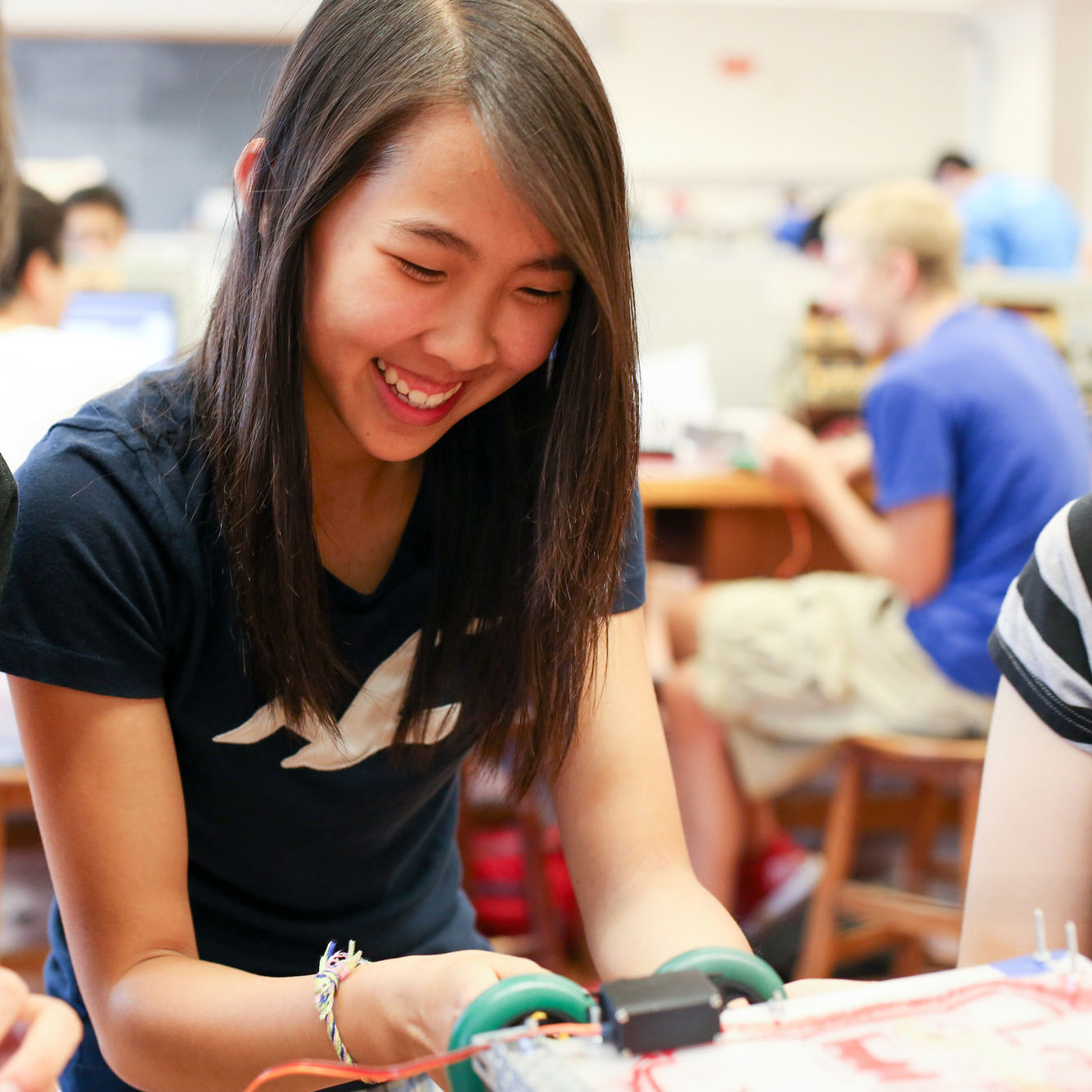 Go CODE Girl
For Ontario girls in grades 9–11
Offered in collaboration with ONWIE, Go CODE Girl will provide an exciting opportunity for girls to learn about the world of coding and software development, and career opportunities in the fields of computing and engineering. The inaugural event will take place on February 21. (Read more.)
 Girls’ Leadership in Engineering Experience (GLEE) Weekend
For female high-school students who’ve been offered admission to Engineering
The annual GLEE weekend offers female Engineering applicants an opportunity to learn more about the Faculty and the student experience by spending time with female U of T Engineering students, professors and alumnae who share a desire to improve lives through engineering. The GLEE weekend will take place in late May.
 Young Women in Engineering Symposium
For top grade 12 female science students
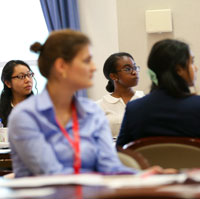
Last October, 84 of Ontario’s top Grade 12 female science students came to U of T for a full day of hands-on engineering workshops, an alumni panel, a “Mythbusters” student panel, a design team and student organization showcase, and lab tours. Participants had the opportunity to meet current U of T Engineering students, faculty and alumni. The symposium is expected to become an annual event, and future dates will be announced. (Read more.)
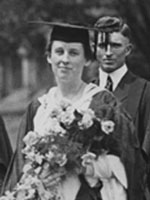
Timeline for Women in Engineering at U of T
U of T Engineering has a long history of remarkable women. A few highlights:
1920: First female architect in Canada graduates from U of T Engineering
1927: First woman to graduate with an engineering degree from U of T
1958: First woman joins the Faculty’s permanent academic staff
See a timeline of the history of women in engineering at U of T.
Note: The Ontario School of Practical Science, established in 1873 by order of Provincial Parliament, became the Faculty of Applied Science and Engineering at the University of Toronto in 1906.
1912: First female graduate from U of T Engineering
Hildegarde E. Scott becomes the first woman to graduate from the Faculty of Applied Science and Engineering, earning a bachelor of applied science degree in analytical and applied chemistry.
 1920: First female architect in Canada graduates from U of T Engineering
Esther Marjorie Hill receives an a bachelor of applied science degree in architecture (a discipline at that time linked to engineering) from the Faculty of Applied Science and Engineering, and becomes the first female Architect in Canada. Hill was one of only six women to have been admitted to engineering programs at the University between 1906, when the Faculty was founded, and 1923.
 1927: First woman to graduate with an engineering degree from U of T
Elsie Gregory MacGill (1905-1980) is the first woman to graduate from U of T with an engineering degree, and the first Canadian woman to earn a degree in electrical engineering. MacGill’s mother, Helen Gregory, was one of two women to graduate from Trinity College in 1886 and would become a judge and advocate of women’s suffrage. Nicknamed “Queen of the Hurricanes,” MacGill was the world’s first female aircraft designer, and during the Second World War she did much to make Canada a powerhouse of aeronautical industry. In 1938, she became the first woman elected to corporate membership in the Engineering Institute of Canada.
 1947: First woman graduates with civil engineering degree
Marcia Lamont Scott is the first female graduate of the Department of Civil Engineering.
1952: First women graduates with mechanical engineering degree
Lois DeGroot and Madeline Hoare are the first female graduates of the Department of Mechanical Engineering. DeGroot would later become a director of Atomic Energy of Canada and of the Scarborough Hospital.
1958: First woman joins the Faculty’s permanent academic staff
Marion Bassett joins the Faculty’s Department of Applied Physics as a lecturer in illumination; she later joined the Department of Electrical Engineering (now The Edward S. Rogers Sr. Department of Electrical & Computer Engineering). She received tenure in 1973 and retired in 1994.
1964: First woman joins the Department of Chemical Engineering & Applied Chemistry
Mary Jane Phillips becomes a lecturer in catalysis, receiving tenure in 1977 and retiring from the department in 1997.
 1967: First woman joins the Department of Metallurgy and Materials Science (now Materials Science and Engineering)
Ursula Franklin joins the Faculty, a pioneer in the field of archaeometry, which applies modern materials analysis to archaeology. As a child in Germany during the Second World War, Franklin had survived a forced-labour camp, and later became a tireless champion of pacifism and peace as well as for the rights of girls and women. She received a Governor General’s Award in Commemoration of the Person’s Case (1929) for advancing the equality of girls and women in Canada. In 2011, Ursula was honoured for her lifelong work in public service with an honorary doctorate from Ryerson University and in 2015 she was named among 17 women who changed the face of physics.
 1973: First woman joins the Department of Civil Engineering
Eva Kuhn becomes an assistant professor in Civil Engineering, teaching mechanics and graphics, and remains in the department until her retirement in 2013.
1975: First woman appointed president of the student Engineering Society
Marta Escedi is elected the first female president of the Faculty’s student body, the Engineering Society. She went on to become a lifelong University volunteer, and in the late 1980s served as the first female president of the Engineering Alumni Association.
 1984: First female University Professor appointed at U of T
Ursula Franklin (see: 1967) becomes the first woman at U of T to be named University Professor, the University’s highest honour.
 1992: First woman joins the Department of Mechanical Engineering (now Mechanical & Industrial Engineering)
Susan McCahan becomes the first female professor in the Department of Mechanical Engineering. Her engineering research focused on the thermodynamics of hydrocarbons, particularly in flashing spray and rapidly evaporating systems, and later shifted to engineering education. In 2014 she was appointed Vice-Provost, Innovations in Undergraduate Education at the University of Toronto.
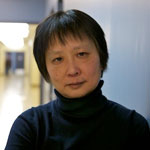 2000: First woman named Division chair
Yu-Ling Cheng, a professor in the Department of Chemical Engineering & Applied Chemistry, becomes the first female chair of this division. Her research interests include global engineering, appropriate technologies, global health, and sanitation for the developing world.
 2006: University welcomes Cristina Amon, the Faculty’s first female dean
Cristina Amon becomes the first female dean of the Faculty of Applied Science & Engineering, as well as Alumni Professor of Bioengineering in the Department of Mechanical & Industrial Engineering. She is a pioneer in the development of Computational Fluid Dynamics. Her research focuses on nanoscale thermal transport in semiconductors, energy systems and bioengineered devices.
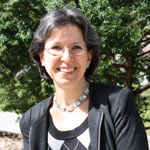 2006: First woman appointed as a Faculty vice-dean
Brenda McCabe, a professor in the Department of Civil Engineering, is named Vice-Dean, Graduate. Her areas of expertise include construction in operating facilities, performance benchmarking, and risk modeling and analysis. In 2015, McCabe was honoured with the Joan E. Foley Quality of Student Experience Award.
2007: First woman is named speaker of Faculty Council
Yu-Ling Cheng (see: 2000) becomes the first female speaker of Faculty Council.
2008: First woman appointed as a department chair
Brenda McCabe (see: 2006) becomes the first female chair of the Department of Civil Engineering.
 2009: First woman appointed as chair of Department of Mechanical & Industrial Engineering
Jean Zu becomes Mechanical and Industrial Engineering’s first female chair. Prof. Zu’s research interests are mechanical vibrations, dynamic analysis, design and mechatronics of various mechanical systems, and vibration-based energy harvesting.
 2014–15: U of T Engineering celebrates record number of female first-year students
Women account for 30.6 per cent of first-year students in U of T Engineering programs: a record for the Faculty and a number that surpasses all other Ontario universities.
Learn more about women in engineering at the University of Toronto.
Professors Deepa Kundur, Baochun Li (both ECE) and Yu Sun (MIE) joined an impressive roster of internationally renowned scientists this month when they were officially named Fellows of the Institute of Electrical & Electronics Engineers (IEEE).
The three professors join 25 faculty members who currently hold the grade of IEEE Fellow.
The grade of Fellow is conferred to those members “whose extraordinary accomplishments in any of the IEEE fields of interests are deemed fitting of the prestigious grade elevation,” according to IEEE’s website.
Professor Deepa Kundur (ECE)
 Professor Kundur was elevated with the citation “for contributions to signal processing techniques for multimedia and cyber security.”
Professor Kundur’s research focuses on identifying potential weaknesses in cyber-enabled systems, such as smart energy meters.
“My research career has been multidisciplinary,” said Professor Kundur. “It was rewarding to have a citation that reflects that breadth.”
She said that achieving the rank of IEEE Fellow is a meaningful moment in her career, because it provides an judged by peers, as well as future research directions.
Professor Baochun Li (ECE)
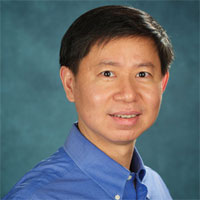 Professor Li was elevated with the citation “for contributions to application-layer network protocols and network coding.”
In 2007, Li proposed a protocol for using network coding to help improve performance, stability and latency of live peer-to-peer streaming—an alternative to the more traditional server-streaming model. When Li made his proposal, network coding was a relatively new technology with roots in information theory, and it hadn’t been directly employed with applications before.
Professor Li’s papers have been cited more than 13,000 times according to Google Scholar.
Professor Yu Sun (MIE, IBBME)
 Professor Yu Sun was elevated with the citation “for contributions to micro-nano robotics and device technologies for biomedical, clinical, and precision instrumentation disciplines” through the IEEE Robotics and Automation Society (RAS).
Professor Sun’s Advanced Micro and NanoSystems Lab designs and constructs devices and robotic systems for operation at micrometer and nanometer scales. They use these innovative tools to manipulate and characterize cells, molecules, and nanomaterials. They have translated some of their devices and systems to biology labs, hospitals and precision instrumentation industry.
IEEE is the world’s largest professional association for the advancement of technology and humanity. Its Board of Directors selects fewer than one-tenth of one per cent of its total voting members as Fellows each year, the highest grade of membership available.
University of Toronto Professor Alex Mihailidis from the Institute for Biomaterials & Biomedical Engineering (IBBME) has been appointed joint scientific director for Canada’s first national research network in technology and aging.
Launched in December, AGE-WELL (Aging Gracefully across Environments using Technology to Support Wellness, Engagement and Long Life) was created to advance new technologies that improve the well-being of seniors, helping them live independently and safely at home.
The fledgling research network has already received $36.6 million* through the federal government’s Networks of Centres of Excellence program, announced earlier this week during a visit from Minister of State for Seniors Alice Wong.
“AGE-WELL aims to help older Canadians maintain their independence, health and quality of life through practical and affordable technologies that increase their safety and security, support their independent living, and enhance their social participation,” said Mihailidis.
Both Mihailidis and Simon Fraser University Professor Andrew Sixsmith are AGE-WELL’s joint scientific directors. Mihailidis is the Barbara G. Stymiest Chair in Rehabilitation Technology at the Toronto Rehabilitation Institute – University Health Network (TRI-UHN) and University of Toronto. Sixsmith is director of SFU’s Gerontology Research Centre and deputy director of the University’s Interdisciplinary Research in the Mathematical and Computational Sciences centre.
With a background in mechanical and biomedical engineering, Mihailidis has been leading research in the field of pervasive computing and intelligent systems in health for the past 15 years. He has focused on intelligent home systems for elder care, technology for children with autism and adaptive tools for nurses and clinical applications.
Before starting at AGE-WELL, Mihailidis coordinated the Clinical Engineering Master of Health Science at IBBME—a tri-faculty initiative between the U of T Faculty of Applied Science & Engineering and the faculties of Medicine and Dentistry.
Through his new endeavour, Mihailidis and his colleagues will harness advanced information and communications technologies, sensor networks and robotics for seniors and their caregivers. In addition to addressing the ethical, policy and regulatory issues associated with new technologies, AGE-WELL researchers will also tackle early stage funding, entrepreneurship training and other commercialization challenges.
Hosted by the TRI-UHN in Toronto, AGE-WELL brings together 26 universities and more than 70 industry and not-for-profit organizations to establish a hub of research and innovation in technology and aging.
“It is an opportunity like we have never had in Canada,” said Mihailidis, “a chance to bring together all of the relevant researchers and stakeholders in the technology and aging community.”
*$36.6 million over five years