
Somewhere across a massive water system, a toxic bloom of algae is polluting drinking water. But what’s the fastest way to find it? To U of T Engineering professor Angela Schoellig (UTIAS), the answer is flying drones—an entire swarm designed to zigzag across landscapes and spot environmental hazards.
Schoellig and her pioneering drone development is one of six U of T Engineering research projects that just received, in total, $1,015,159 from the Canada Foundation for Innovation (CFI).
Through CFI’s John R. Evans Leaders Fund, the investment is intended to provide some of the world’s best and brightest scientists and engineers with cutting-edge research infrastructure.
At U of T Engineering, the funding enables groundbreaking research in sustainable energy, secure communications, health care and more. Recipients include:

Joyce Poon (ECE)
Project: Integrated Quantum Photonics for Secure Communications
Funding*: $399,999

Elodie Passeport (ChemE, CivE)
Project: Stable isotope facility for improved understanding of the fate and removal of emerging contaminants in water
Funding*: $200,000
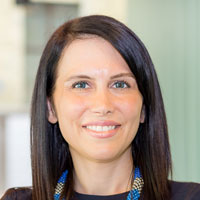
Gisele Azimi (MSE, ChemE)
Project: Extraction, Processing, and Recycling of Strategic Materials
Funding*: $115,214
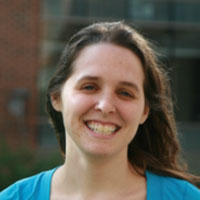
Amy Bilton (MIE)
Project: Laboratory for Prototyping Energy and Water Systems
Funding*: $100,000
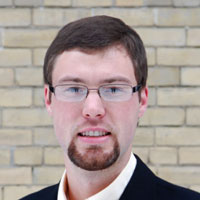
Eric Diller (MIE)
Project: Laboratory for Micro-Robotics Research
Funding*: $100,000
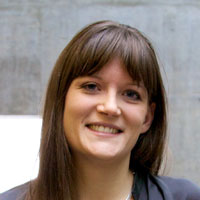
Angela Schoellig (UTIAS)
Project: Indoor/Outdoor Testbed for Aerial and Ground Multi-Robot Research
Funding*: $99,946
Researchers across the University of Toronto received a total of $1,873,485 for eleven different projects. (Read more about other U of T projects.)
“It is wonderful that so many of our researchers will benefit from the support of the Canada Foundation for Innovation through the John R. Evans Leaders Fund,” said Dr. Peter Lewis, interim vice-president of Research and Innovation at U of T. “We can’t wait to learn about the discoveries that will surely arise from the recipients’ research.”
* Maximum CFI contribution

Originally published in the 2014 issue of ANNUM Magazine.
It wakes up next to you, sits by to you at lunch, hits the gym with you after work. Face it—your smartphone is your best friend. But how good is it at keeping your secrets?
Almost two billion people have a computer in their pockets right now. And we use these smartphones for everything: not just talking and texting, but handling our finances, booking travel, mapping our next run and tracking our medications. We’ve taken our lives in our hands—literally.
All this personal information goes pouring into our devices through the apps we install, and floats magically into some hazily defined realm called ‘the cloud’. But what if a little intel gets stolen along the way? Are we sure our apps aren’t spying on us?
Anecdotal evidence, such as the flap about the Facebook Messenger app collecting audio and video recordings without the user’s permission, indicates our phones may be used against us more often than we realise.
“For the average user, the main threat to them is going to be getting fooled into installing some application thinking it’s useful, but it’s doing stuff that they didn’t anticipate,” said computer engineering professor David Lie (ECE), Canada Research Chair in Secure and Reliable Computer Systems. “A lot of people are worried about this, but no one can answer concretely whether it’s happening.”
Professor Lie’s research group has just launched a project with TELUS to find out for sure. He and his students work on software to improve data security and privacy, both on your device and in the cloud. There’s an important distinction to be made between security and privacy, says Professor Lie. Security is like locking a safe—protecting all information from disclosure absolutely, and making sure that information can’t be accessed without authorization. Privacy is a more complex problem, especially given the ubiquity of smartphones: we want to share everything, but only in specific ways, with specific people, at specific times. “The real problem is that people want to share their information, but have no way of understanding what will happen if they do,” says Professor Lie.
Perhaps the worst data to give away is your biometric information—your fingerprints, retina scans or the unique signature of your heartbeat. Professor Dimitrios Hatzinakos (ECE) is a leader in the field of medical biometrics and chair of the Identity, Privacy and Security Institute at the University of Toronto, a collaboration between The Edward S. Rogers Sr. Department of Electrical & Computer Engineering and the Faculty of Information. His team searches for new biometrics in the many electrical signals emitted by the human body—unique waves radiating from your brain, bouncing off your eardrum, and given off every time your heart beats.
His former PhD student Foteini Agrafioti (ElecE MASc 0T9, PhD 1T1) teamed up with ECE alumnus Karl Martin (ElecE 0T1, MASc 0T3, PhD 1T0) to found Bionym, a startup company based on their research on biometrics and security. Bionym recently released the world’s first wearable authentication system, called Nymi, to much acclaim. Nymi is a bracelet embedded with an electrocardiogram (ECG) sensor that recognizes the unique and unchanging electronic signal of your heart and uses it to identify you to all your registered devices to log you in, eliminating the need for passwords and PINs. Bionym has top-notch security, but if your unencrypted ECG were ever compromised, it’s not as easy to fix as resetting your password.
“You have a finite amount of biometric data,” said Professor Stark Draper (ECE). “You only have 10 fingers, as opposed to an unlimited number of passwords or credit card numbers.”
That’s why Professor Draper and master’s student Adina Goldberg (ECE MASc 1T6) are trying to find the optimal balance between privacy and security in linked biometric systems. Imagine that your apartment complex, gym and office all use biometric data to authenticate your identity. If all three systems store the same information and an imposter hacks your gym account, they’ll also be able to get into your apartment building and office, but they won’t gain new information about you if they do. That’s bad security, but relatively good privacy. Conversely, if each account stores a unique piece of biometric data, it’s harder to gain access to all three, but each time the imposter hacks a new account they gain more of your sensitive data.
“We’ve seen a trade-off between the two,” said Professor Draper. “Tighter security is of interest to the institution that doesn’t want to get broken into, but the individual might think it’s more important to keep more of their biometrics private and it’s OK if someone breaks into the gym. The system designer gets to pick a point on that curve.”
This tension between the individual and the institution was cast in a new light last year, when whistleblower Edward Snowden alerted the world to the U.S. National Security Agency’s habit of mining personal data directly off servers run by Google, Facebook, Microsoft and others.
“I think for a lot of people in the field, the Snowden leaks came as no surprise,” said Professor Lie. “When I first started doing this cloud stuff, I got a lot of pushback—the logic was, ‘Why would the cloud provider attack their own customers? It doesn’t make business sense.’ Now we can see that they’re not attacking their customers directly, but the data is still vulnerable.” One of Professor Lie’s projects aims to solve the problem of gaining logs from a multi-tenant server—allowing users to see exactly how their information is being accessed, without violating the privacy of all the other users on the same service.
If you don’t have the savvy to interpret server logs but are keen to protect your privacy, taking a critical look at your apps is a good place to start. Professor Lie, for his part, installed a program on his smartphone to prevent applications from talking to the network unless he explicitly gives them permission—not a solution he recommends for everyone. If he does give permission, he reads the privacy policy first. “But sometimes it’s just an exercise in futility,” he admitted. “Most of them are pretty impenetrable, or vague about what they do with the information they collect.”
So sleep, eat, jog and bank on your smartphone with caution—with friends like these, who needs enemies?
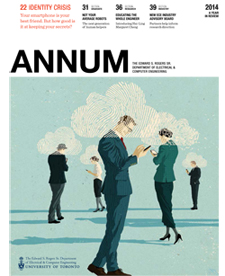 ANNUM Magazine is an annual publication from The Edward S. Rogers Sr. Department of Electrical & Computer Engineering.
Originally published in the Winter 2015 issue of U of T Magazine.
Ashrith Domun (ChemE 1T5), a third-year chemical engineering student, was learning about business plans in an entrepreneurship course when he stumbled across what he reckoned was a good market opportunity: business incentives meant to kickstart the sluggish hydrogen fuel cell industry.
“It seemed like a green light all the way,” he said.
This past March, he pitched his roommate, Stefan Attig, a fourth-year student in environmental studies, on joining forces to apply for a spot at The Entrepreneurship Hatchery, a three-year-old business accelerator run by the Faculty of Applied Science and Engineering. An engineering science student, Tian Tian (EngSci 1T5), approached Domun and Attig about joining the team and the three put in a pitch. Several months later, they’re working on a plan to operate buses equipped with hydrogen fuel cells. They’re testing the commercial viability of their plan with a proposal for the shuttle bus service between U of T’s Mississauga and St. George campuses.
The Hatchery serves students in the earliest stage of the entrepreneurship “ecosystem” at U of T, offering undergraduate teams that include at least one engineer an opportunity to launch startups, based on a strong idea that solves customers’ problems. Each team is assigned a private-sector mentor and receives help with registering patents and creating a business plan. UTSC has launched a similar earlystage innovation centre, known as The Hub, and, in February, U of T Mississauga will open its own version, I-Cube.
Joseph Orozco, who co-founded the Hatchery, says the program has attracted multidisciplinary teams working on wearable technology, medical applications and software. A few have gone on to commercialize their products. One Hatchery start-up, FuelWear, which makes thermal garments that heat up when you’re feeling cool, has raised $80,000 on a crowdfunding website.
Basic startup advice and feedback are key components of the Hatchery’s program, whose students likely have no business experience. Domun said meetings with other hydrogen entrepreneurs gave his team a feel for the gaps in the Canadian market, validated their assumptions about the industry and provided contacts with potential equipment suppliers. At the Hatchery’s “demo day,” Domun’s team, called Hydron, presented its plan to other students and mentors.
The feedback they got throughout the Hatchery process prompted Hydron’s partners to reorient their game plan. The original idea was to build a hydrogen refuelling infrastructure for the province, but they learned that the sector is dogged by a chicken-and-egg problem: refuelling infrastructure only generates a return if there are vehicles, but no one purchases vehicles because there’s no refuelling infrastructure. With their revised market strategy—running corporate vehicle fleets using fuel cells—they also learned the importance of a compelling sales pitch.
“The Hatchery makes you do things that you don’t think are important,” said Domun. “They forced us to focus on communications a lot.”
The holidays are upon us, and as savvy shoppers search for gift ideas with a personal touch, wearable gadgets from U of T Engineering-developed companies are pret-a-porter for the fashionable tech lover on your list.
A motion-sensing glove for gamers? Check. Wristbands that let you make secure mobile payments? Check. This season, startups from U of T Engineering alumni are offering accessories to help improve your basketball game, smartwatch typing and more.
Below are just a few of the best wearable tech gifts from companies growing in the U of T Engineering community.
The Nymi from Bionym
This sleek, biometric wristband enables users to seamlessly unlock devices, remember passwords and—in a pilot with RBC in early 2015—even make  mobile payments. And it does so securely, by recognizing your heart’s unique signature.
“We’re at the forefront of a revolution in identity-based interactions with devices and services,” said Karl Martin (ElecE 0T1, MASc 0T3, PhD 1T0), CEO of Bionym. “Our momentum continues to grow with the support of our investors and strategic partners.”
The company, which he co-founded with fellow alumnus Foteini Agrafioti (ElecE MASc 0T9, PhD 1T1), recently announced a round of $14 million in investment. A spin-off of their engineering research and developed through several university entrepreneurship supports, Bionym is now making headlines in the Washington Post, Mashable, Daily Mail and NBC.
You can reserve the Nymi for an introductory price of $79 on pre-orders before December 31. And ‘Nymi Band Discovery Kits,’ are also available, perfect for developers keen to create applications for a much buzzed-about piece of tech soon to hit the market.
Learn more about Bionym and Nymi.
Minuum from Whirlscape
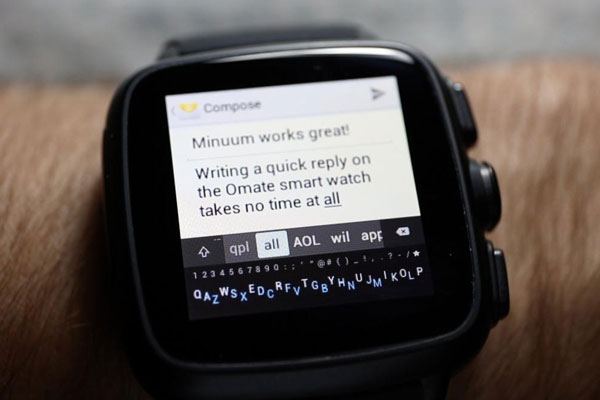 It may not be a piece of wearable tech itself but this software makes smartwatches even smarter.
Minuum’s tiny, highly predictive keyboard offers accurate typing even when users miss every letter.
The company, developed by alumni Will Walmsley (MASc MIE 1T2) and Xavier Snelgrove (EngSci 1T1)with help from U of T accelerators UTEST and Creative Destruction Lab, blasted past its IndieGoGo goal by 873 per cent and has been producing minuscule keyboards for sloppy typers on a variety of devices ever since.
“While we hoped others would appreciate our project, we didn’t anticipate the level of support, enthusiasm and excitement that Minuum would generate around the world,” said Walmsley, CEO of Whirlscape.
The Minuum is available for devices running on iOS and Android and the company says it’s “the first keyboard to enable typing on Android Wear devices, including the LG G Watch and the Samsung Gear Live,” among other smartwatches.
Minuum for iOS and Android costs $3.99. Consider it a virtual stocking stuffer.
SWISH by Onyx Motion
 This free Android-wear smartphone app is made for basketball enthusiasts looking to track and improve their shot. SWISH records the shot and offers tips on focus, technique and more, with information sourced from real coaches.
Engineering alumni Jason Schuback (ECE 1T4), Vivek Kesarwani (EngSci 1T4), Marissa Wu (EngSci 1T3) and Kelvin Xu (EngSci 1T4) co-founded Onyx Motion as part of The Next 36, the entrepreneurship development program co-founded by Ajay Agrawal, Peter Munk Professor of Entrepreneurship and academic director at U of T’s Creative Destruction Lab. Onyx Motion has just been named one of the newest UTEST companies. The free app is available for download in the Google Play store.
Learn more about Onyx Motion and SWISH.
ExoGlove from BreqLabs
The smart glove from U of T’s BreqLabs is poised to get gamers more immersed in their virtual worlds – and serve as a wearable mouse for users with mobility challenges such as hand tremors.
Engineering alumnus Martin Labrecque (CompE MASc 0T5, PhD 1T1) is developing the product with support from U of T’s Impact Centre and the Heffernan Commercialization Fellowship. In the video below, he demonstrates the ExoGlove in tandem with the Occulus Rift virtual reality headset and discusses other possible applications.
Learn more about BreqLabs and ExoGlove.
[youtube https://www.youtube.com/watch?v=X3NFciucp0Y]
In the decade since the genome was sequenced in 2003, scientists, engineers and doctors have struggled to answer an all-consuming question: Which DNA mutations cause disease?
A new computational technique developed at the University of Toronto may now be able to tell us.
A Canadian research team led by engineering and medicine professor Brendan Frey (ECE) has developed the first method for ‘ranking’ genetic mutations based on how living cells ‘read’ DNA, revealing how likely any given alteration is to cause disease. They used their method to discover unexpected genetic determinants of autism, hereditary cancers and spinal muscular atrophy, a leading genetic cause of infant mortality.
Their findings appear in today’s issue of the Science, a leading journal.
Think of the human genome as a mysterious text, made up of three billion letters. “Over the past decade, a huge amount of effort has been invested into searching for mutations in the genome that cause disease, without a rational approach to understanding why they cause disease,” said Frey. “This is because scientists didn’t have the means to understand the text of the genome and how mutations in it can change the meaning of that text.” Biologist Eric Lander of the Massachusetts Institute of Technology captured this puzzle in his famous quote: “Genome. Bought the book. Hard to read.”
What was Frey’s approach? We know that certain sections of the text, called exons, describe the proteins that are the building blocks of all living cells. What wasn’t appreciated until recently is that other sections, called introns, contain instructions for how to cut and paste exons together, determining which proteins will be produced. This ‘splicing’ process is a crucial step in the cell’s process of converting DNA into proteins, and its disruption is known to contribute to many diseases.
Most research into the genetic roots of disease has focused on mutations within exons, but increasingly scientists are finding that diseases can’t be explained by these mutations. Frey’s team took a completely different approach, examining changes to text that provides instructions for splicing, most of which is in introns.
-
Read more in WIRED Magazine, Scientific American and the Globe and Mail.
Frey’s team used a new technology called ‘deep learning’ to teach a computer system to scan a piece of DNA, read the genetic instructions that specify how to splice together sections that code for proteins, and determine which proteins will be produced.
Unlike other machine learning methods, deep learning can make sense of incredibly complex relationships, such as those found in living systems in biology and medicine. “The success of our project relied crucially on using the latest deep learning methods to analyze the most advanced experimental biology data,” said Frey, whose team included members from University of Toronto’s Faculty of Applied Science & Engineering, Faculty of Medicine and the Terrence Donnelly Centre for Cellular and Biomolecular Research, as well as Microsoft Research and the Cold Spring Harbor Laboratory. “My collaborators and our graduate students and postdoctoral fellows are world-leading experts in these areas.”
Once they had taught their system how to read the text of the genome, Frey’s team used it to search for mutations that cause splicing to go wrong. They found that their method correctly predicted 94 percent of the genetic culprits behind well-studied diseases such as spinal muscular atrophy and colorectal cancer, but more importantly, made accurate predictions for mutations that had never been seen before.
They then launched a huge effort to tackle a condition with complex genetic underpinnings: autism spectrum disorder. “With autism there are only a few dozen genes definitely known to be involved and these account for a small proportion of individuals with this condition,” said Frey.
In collaboration with Dr. Stephen Scherer, senior scientist and director of The Centre for Applied Genomics at SickKids and the University of Toronto McLaughlin Centre, Frey’s team compared mutations discovered in the whole genome sequences of children with autism, but not in controls. Following the traditional approach of studying protein-coding regions, they found no differences. However, when they used their deep learning system to rank mutations according to how much they change splicing, surprising patterns appeared.
“When we ranked mutations using our method, striking patterns emerged, revealing 39 novel genes having a potential role in autism susceptibility,” Frey said.
And autism is just the beginning—this mutation indexing method is ready to be applied to any number of diseases, and even non-disease traits that differ between individuals.
Dr. Juan Valcárcel Juárez, a researcher with the Center for Genomic Regulation in Barcelona, Spain, who was not involved in this research, says: “In a way it is like having a language translator: it allows you to understand another language, even if full command of that language will require that you also study the underlying grammar. The work provides important information for personalized medicine, clearly a key component of future therapies.”
U of T Engineering alumnus Michael Gray (CivE PhD 1T2) has a dream for the ideal city, and it’s built to the highest safety and aesthetic standards.
Now, he is setting those standards with Toronto-based startup Cast ConneX—a successful spin-off of graduate research performed under professors Jeffrey Packer and Constantin Christopoulos (both CivE)—co-founded with fellow alumnus Carlos de Oliveira (CivE MASc 0T6). Their company grew and benefited in part from support for de Oliveira’s research funded by the Heffernan Commercialization Fellowship, which is aimed at enabling graduate students to transfer their research into successful businesses. [Learn more about the Heffernan Commercialization Fellowships].
Cast ConneX designs steel castings that strengthen new and old buildings for earthquake resistance. In summer, 2013, the company began construction on two of its first major projects using the technology developed in Gray’s doctoral research: the Audain Art Museum in Whistler BC, and a retrofit for the St. Aubin High School in Baie-Saint-Paul, Quebec—the site of one of the worst recorded earthquakes in Canadian history.
They have also started several major projects in the United States, including the TransBay Center in San Francisco, CA and a new retractable roof for the Arthur Ashe Stadium in Flushing, New York.
Grounded in research, the dynamic startup constructs and retrofits for earthquake resistance, and their designs enable unique and novel structures. The company is setting its sights on new standards for design and safety.
Resisting seismic forces
“My PhD research at U of T was in developing a ‘Scorpion’, which is a high performance earthquake device that can also solve architectural problems,” said Gray.
Steel castings like the Scorpion are made by pouring liquid steel into molds, then letting it cool into a solid.
The most recent iteration of the Scorpion resembles a small ladder with fingers between the rungs [see cover image]. The connectors are installed at the end of a diagonal brace member that spans from one story to another. Those fingers transmit the brace load via bolts through their ends. If an earthquake strikes, the fingers are deformed in flexure, absorbing earthquake energy so that the building doesn’t have to.
[youtube https://www.youtube.com/watch?v=TAXpwimvbjA&w=560&h=315]
“What we do is unique because casting has been used for mechanical applications for a long time, but we’re among the first to use it in structural engineering. It’s attractive because of its potential for free form geometries, meaning you can construct non-traditional designs and unlikely angles,” said Gray.
Buildings are normally constructed using weld fabrication: support beams are cut from large, mass-produced steel plates and then welded together, which restricts the potential for interesting geometries and unique designs. This fabrication process creates challenges when designing for the devastating effects of earthquakes.
Weld fabrication can also be challenging in remote areas where tools and expertise are not readily available. In 2010, after a devastating earthquake struck Haiti and displaced approximately 1.5 million people, Cast ConneX donated their steel castings to enable the construction of an earthquake resistant school in Port-au-Prince, the country’s capital. The project was part of an industry-wide coalition to prepare the island nation for future natural disasters.
Architectural applications
In addition to earthquake resistance, Cast ConneX’s innovative steel castings enable unprecedented architectural designs. Structures like the Queen Richmond Centre (QRC) at Richmond and Peter Streets in Toronto, with its distinct Xs adding

architectural intrigue as well structural support.
“The architect came to us with designs, and we figured out how to make them work,” said Gray. “The connection joints that make the Xs at the QRC so distinctive also makes them virtually impossible under the restrictions of traditional construction techniques.”
In projects like the Queen Richmond Centre when custom castings are needed, Cast ConneX leverages their engineering expertise to help architects translate their designs to foundries—factories that produce metal castings. This casting technology opens the doors for shifts in the architecture of new buildings, creating opportunities for never before seen structures.
“Designers come to us with an idea, and we make it a reality,” said Gray.
Safety by design
In the future, Gray’s perfect city is built to the highest standards of safety and aesthetics.
“Safety is paramount,” said Gray. “In my ideal world, we’d have more motivation to push buildings to higher performance levels. Right now, all of our buildings are built to ‘code.’ We need to move beyond code minimum; we need to elevate our standards. And not just for safety, for design, too.”
Gray believes better management of our built environment is possible with intentional design and higher safety standards.
“Investing in our cities and structures is important, and it will pay off.”