
For Aaron Persad (EngSci 0T6, MechE MASc 1T1, PhD 1T4) ‘reach for the stars’ is far more than a clichéd phrase on a graduation card.
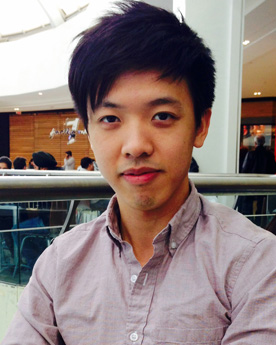
“It may sound a bit wild, but I’m training as a commercial astronaut,” said Persad, who graduated on November 18 with a PhD in mechanical engineering—one of 386 engineering students who walked across the stage at Convocation Hall this month.
But when you account for all the diverse and disruptive things Persad has built, taught, experimented with and discovered since his days as an undergraduate in engineering science at the University of Toronto, wrapping up his PhD to become a commercial astronaut seems like a natural step.
Persad’s undergraduate thesis explored shuttle launch vibrations on stem cells, and he interned with the Canadian Space Agency’s flight research laboratory. This meant assisting with experiments performed in free fall among other projects. Professor Emeritus Charles A. Ward (MIE) then took Persad on for PhD work looking into the nature of evaporation with implications for liquid use in space—resulting in some provocative conclusions.
“At one conference in Naples, Italy, I remember scientists from half of the room were arguing with the other half about what I had just presented,” he said.
Between pushing forward the science in his field, gaining hands-on research with astronauts and finding a job that will have him floating at the edge of space, Persad also made time to found a company teaching robotics to six-year-olds and win an award for innovations in teaching that were later published in a scholarly journal.
“Our entire robotics education business is built on the idea that kids can learn complex ideas with one-on-one mentoring,” he said, adding this approach allows his company to teach university-level curriculum to grade-school kids.
Below, Persad explains how U of T Engineering supported his interest in discovery and why he’s working to inspire the next generation of engineers.
Why leave research on the ground behind you?
Being weightless is an incredible feeling. During my undergrad professional experience year (PEY) with the Canadian Space Agency, part of my job required me to fly in the Falcon-20 aircraft operated by the National Research Council out of Ottawa and I had the opportunity to experience weightlessness. It felt fantastic. I remember my legs had the tendency to float up toward my chest; I had to consciously keep them down. The training I do now with Astronauts for Hire, at the NASTAR Centre, is a very different experience: they simulate a Virgin Galactic space ship launch using a human centrifuge. You are exposed to forces up to six times that of Earth’s gravity. Imagine six of your clones standing on your chest!
Tell us a bit about the research that earned your PhD.
My research applies quantum mechanical principles to the evaporation of liquids. Some interesting (and controversial) discoveries were made in my PhD work and my experimental results could not be explained with conventional theories. Presenting this work at conferences made for lively discussions during the question periods.
What are you doing after graduation?
I’ve already completed suborbital training at the NASTAR Centre in Pennsylvania with Astronauts for Hire, the same facility Virgin Galactic uses to train their flight crew—and training will continue into next year.
I’ll also be working with Integrated Spaceflight Services, where I’ll manage the integration of experiments funded by NASA into a zero-g aircraft. The aircraft provides a near-weightless environment where everything inside will float for intervals of 20 seconds. It’s basically the same feeling that astronauts experience in the International Space Station, only for a much shorter duration.
As co-founder of TMS Robotics and Academics, I’ll continue to teach kids how to build and program robots.
And I’ve also been working with my supervisor, Professor Charles Ward, and Dr. Bjarni Tryggvason on an experiment scheduled for launch to the International Space Station with SpaceX in December.
What motivates you?
There is so much to discover in the world. My PhD work investigated the evaporation of water and other liquids. It may seem common knowledge that water evaporates, but it was amazing to discover that no one really knows how. Think of all the processes that rely on evaporation, such as weather forecasting, searching for water vapour on distant planets, or making efficient heat sinks for a tablet computer. Imagine how much more accurate storm forecasting could be, or how much more efficient electronics devices can be if we understood evaporation at a quantum mechanical level. My PhD work suggests that these improvements are within our grasp, and I was the lucky one reaching out to it.
How did U of T help you get to where you are?
I’ve had amazing support from faculty, friends and family at U of T. My cousin is graduating the same day as I am.
It was through my PEY supervisor, Dr. Marcus Dejmek at the Canadian Space Agency, that I met my PhD supervisor. Professor Ward has a great deal of experience in space sciences (having flown experiments on rockets and the Space Shuttle) and I knew I wanted to work with him. His willingness to let me try new and risky ideas led to some unique discoveries and made my PhD work so much more exciting to work on.
I was also hired by the mechanical and industrial engineering department to teach a capstone robotics course and this proved to be valuable experience in launching my own robotics education company, TMS Robotics and Academics.
It was through travel grants from the School of Graduate Studies and MIE that I was able to attend conferences and present my work. I met many experts from space agencies worldwide, including NASA. It was through networking at these conferences and showcasing the quality of my research with Professor Ward that I was ultimately selected as a commercial astronaut candidate. The MIE department has been very supportive of my work, and I was pleased to have been nominated by them for teaching awards.
See this month’s other graduating students in our Convocation Fall 2014 photo gallery.
Alumni, students, faculty and friends from around the world continue to rally behind U of T Engineering’s ambitious $200-million Boundless campaign goal, pushing the Faculty past the halfway mark and helping to achieve its most successful fundraising year yet.
U of T Engineering raised nearly $22 million dollars in 2013–14, with a record number of contributions by major donors (gifts of $25,000 and up). At the core of the campaign is the Centre for Engineering Innovation & Entrepreneurship (CEIE), a vibrant new hub for faculty, students, alumni and industry partners that is expected to break ground in the spring.
“Philanthropic support from our alumni and friends fuels our vision and inspires us to reach higher and further in our goals,” said Dean Cristina Amon. “I am deeply grateful for the remarkable commitment from our alumni, faculty, staff and students—it is because of their efforts that the CEIE is becoming a reality.”
This achievement was publicly acknowledged earlier this month at Celebrating Boundless Impact, a panel discussion on entrepreneurism, moderated by President Meric Gertler, to celebrate the University surpassing the $1.5-billion mark of its $2-billion campaign goal.
Held in the new Goldring Centre for High Performance Sport, the panel featured faculty members and alumni from U of T Engineering, including Professor Stewart Aitchison (ECE), James Dou (ECE PhD Candidate) and alumnus Karl Martin (EngSci 0T1, ECE MASc 0T3, PhD 1T0), as well as Professor Ajay Agrawal (Rotman School of Management), alumnus Darren Anderson and Professor M. Cynthia Goh (Department of Chemistry).
“As an engineering graduate and donor to the Centre for Engineering Innovation & Entrepreneurship, I was fascinated by the panel discussion with alumni, faculty and student entrepreneurs,” said event co-host George Myhal (IndE 7T8). “Clearly the University is extending the boundaries of knowledge, while also serving as a crucible for creativity. This is why reaching our historic goal of $2 billion is not only possible but essential.”
U of T Engineering gift highlights
The Faculty attracted several major gifts this past year to support innovative research, education and entrepreneurial activities:
Gerald Heffernan – $5 million
Half of Gerald Heffernan’s (MMS 4T3) $5-million gift will fund Heffernan Commercialization Fellowships, which enable U of T graduate students to commercialize research outcomes and spark new technology companies. The other half will provide space for The Entrepreneurship Hatchery at its new home in the CEIE building.
Lee & Margaret Lau – $2.5 million
Lee (ECE 7T7, MASc 8T2) and Margaret Lau’s $2.5-million gift will fund a unique, cutting-edge auditorium in the new CEIE building that aims to enable change to pedagogical practices and improve how the next generation of engineers will learn and create.
Bill & Kathleen Troost – $2 million
Bill (ChemE 6T7) and his wife Kathleen donated $2 million to support the Department of Chemical Engineering & Applied Chemistry’s Unit Ops Lab, and the Faculty established new scholarships through the J. Edgar McAllister Foundation-Troost Family Award for Engineering. In 2012, Bill and Kathleen also made a $2-million gift towards a new space for the Institute for Leadership Education in Engineering (ILead) in the CEIE.
Paul Cadario – $1 million
Paul Cadario’s (CivE 7T3) generous $1-million commitment to strengthen the Centre for Global Engineering (CGEN) is a critical contribution to the education of generations of global engineers. His gift will support the creation of the new home for CGEN in the CEIE building.
The University of Toronto Engineering Undergraduate Society – $1 million
The Engineering Society (EngSoc) supported the Faculty’s vision with a collective commitment of $1 million to fund student club spaces in the new CEIE building. Every undergraduate in Faculty is a member of EngSoc.
Francis Shen – $1 million
This past summer, Francis Shen (UTIAS MASc 8T3) donated $1 million to the University of Toronto Institute for Aerospace Studies to develop an entrepreneurship incubator, enabling future engineers with the competencies and opportunities he’s learned over decades in business.
On November 18, amidst proud parents, friends and the Engineering community, 20 undergraduate and 366 graduate students made their way across the stage at Convocation Hall to receive their engineering degrees.
See the day in action:
Before cities can construct a new school, highway overpass or even an airport tower, they need the expertise of structural engineers—that’s where William (Jun) Luo (CivE 1T2, MASc 1T4) and his passion for concrete come in.
Luo graduated this month with a master’s in civil engineering—one of 386 engineering students who received a degree this fall.
Working with supervisor Professor Frank Vecchio (CivE), his graduate research focused on understanding and experimentally verifying the seismic behaviour of high-performance, steel fibre-reinforced concrete.
“The experimental data from this [research] will be important, as available literature in this area is limited,” said Luo, who also completed his civil engineering undergrad degree at U of T.
Luo’s desire to become a structural engineer was cemented in Professor Vechio’s third-year course on reinforced concrete design, where Luo later became a teaching assistant.
He credit’s U of T’s new Structural Testing Laboratory as a crucial reason he chose to complete his MASc at U of T Engineering: “The [lab] is widely recognized as one of the best such facilities in North America. It provided me with the tools, machines and technology necessary for producing high-quality experimental data.”
Now a structural engineer-in-training (EIT) at an engineering startup firm in Central Alberta, Luo is working on designs and 3D modelling of dozens of commercial, industrial and residential buildings across Alberta.
“I find my work meaningful knowing that the structures I helped to design will be around and safe for many generations to come,” he said. “It’s a great feeling to stroll through the highway and see these buildings standing and occupied.”
See this month’s other graduating students in our Convocation Fall 2014 photo gallery.
With files from Jelena Damjanovic.
Engineering a surface that is so slippery even geckos can’t stick to it may sound like a fun science fair project.
But new surface-coating technology developed by materials science and engineering professor Ben Hatton (MSE), together with colleagues at Harvard University’s Wyss Institute, does just that—and its slick properties have the potential to save lives.
Published recently in Nature Biotechnology, Hatton’s innovative design prevents blood from clotting on medical devices such as catheters, dialysis equipment and heart-lung machines, which is a common problem and can be dangerous.
Blood clotting is an important process in your body where platelets and proteins in the blood aggregate to seal a wound. However, blood also clots on foreign objects in the body, like catheter tubing, and this clotting can cause blockage of flow or blood clots flowing elsewhere in the body.
To counteract these negatives, doctors and nurses often give patients blood thinners, but these medications can be difficult for those who are elderly, sick or severely wounded.
The new coating developed by Professor Hatton and his colleagues could eliminate the need for blood thinners by matching perfluorcarbons—a liquid that is chemically similar to Teflon—to a uniquely engineered surface. The result is an ultra-low adhesion, slippery material that repels blood, stopping the clotting process before it even starts.
“Making an inert surface for blood contact is really a huge benefit for a wide range of medical procedures—we really just want blood to ignore that surface and not clot,” said Professor Hatton in a recent CBC Radio Quirks & Quarks interview. (Listen here)
To demonstrate this, the research team tested the coating on over 20 different medical surfaces and with in vivo tests. The results were promising: much less blood clot formation for the eight hour duration of the experiments, without the use of blood thinners.
In addition to blood, Hatton’s technology has also shown to have profound antimicrobial applications—if liquids can’t stick to it, it turns out bacteria have a hard time as well.
“Most antimicrobial materials function by releasing a chemical that kills bacteria on contact,” said Hatton, explaining that some bacteria become resistant to these products.
“Our approach is different in that the surface of the material is just too slippery for bacteria to adhere to, so no chemical release may be needed.”
Aside from blood and bacteria, the Harvard research team also brought a gecko into the lab to test the coating’s slippery potential. The gecko— a creature whose footpads are known for their ability to scale smooth walls and stick to almost any material—was also unable to get a grip, sliding off when tilted.
“I think this is going to make everybody’s life a whole lot easier in the medical community and for patients as well,” said Professor Hatton. “Everyone but geckos, that is.”
Originally published in the autumn 2014 issue of U of T Magazine.
Things move quickly in Professor Steven Thorpe’s fourth-year engineering design course. At one desk, students are building a model fuel cell. At another, they are conducting research online while jotting down formulae and diagrams.
But with a physical space that isn’t conducive to collaborative learning, Thorpe’s hands-on assignments don’t work as well as they could. “I liken my role to the conductor of an orchestra with many moving parts,” said Thorpe. “The pace is dynamic, but the physical environment is not.”
Creating new spaces amenable to active learning (in contrast to traditional lecture-centric classrooms) is part of a recent pedagogical shift in engineering education. The aim, said Thorpe, is to encourage intentional thinking about the activities in the tutorials, rather than relying on passive note-taking which often results in poor information retention. “Ultimately it means a whole new way to teach and learn,” he said.
The new Centre for Engineering Innovation & Entrepreneurship (CEIE) at the Faculty of Applied Science and Engineering is U of T’s response to the sweeping changes taking place in engineering teaching and learning. The building will include dynamic and flexible environments that break down artificial barriers between teacher and student, fostering collaboration and encouraging active learning and accelerated innovation.
The centre will feature six Technology Enhanced Active Learning (TEAL) rooms, including one funded by a donation from members of the Faculty’s Singapore Malaysia alumni group.
“TEAL rooms will be critical to supporting the design work that has become integral to engineering courses,” said Thorpe. The rooms feature movable chairs and counter-height group tables serviced by multiple screens that allow for a variety of configurations and easy movement. State-of-the-art screens will surround the room so that they are accessible to every student.
Donor profile: Singapore Malaysia Alumni Group
As a graduate student at U of T Engineering in the 1960s, C.K. Chang (MechE MEng 6T8) studied fluid dynamics and other subjects in a typical classroom, with the lecturer at the front of the room, talking to students sitting in rows. When Dean Cristina Amon shared plans for the CEIE during a visit to Singapore, Chang was impressed—especially by the innovative TEAL rooms.
“I am sure I speak for others of my generation when I say I wish we could have studied in such classrooms,” said Chang. “The design is perfectly suited for engineering design work and for the important collaboration that takes place in the classroom.”
Chang, an active leader with the Faculty’s Singapore Malaysia alumni group, mobilized a diverse group of alumni from academe, government and corporate sectors in the region to raise funds for a TEAL room in the new building. They beat their goal by 20 per cent and the room will be named the Singapore Malaysia Alumni Room in their honour.
“We see the TEAL rooms as almost a lab unto themselves where teaching happens and new ideas are generated, debated, prioritized and executed by students,” said Chang. “This is how it happens in the modern working world, so why not train students to develop these skills from the outset.”