
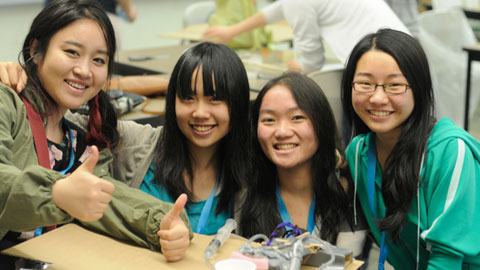
When Angela Hu (TrackOne 1T8) was a little girl, she would often wonder what was happening on the inside of machines. Fueled by this curiosity, she went on to pursue math and science courses, achieving high grades that led her to U of T Engineering.
On the weekend of May 24-25, Hu travelled from Charlottetown, Prince Edward Island to the University of Toronto to join 95 other female students at the Girls Leadership in Engineering Experience, also known as GLEE.
Now in its third year, GLEE is hosted by the Faculty of Applied Science & Engineering to welcome female high school students to the engineering community. Currently, approximately one-quarter of the Faculty’s undergraduate students are female.
Over the course of the 30-hour event, attendees were immersed in the dynamic and passionate environment at U of T Engineering. They had the opportunity to meet future classmates, attend a career panel, take part in hands-on engineering workshops and stay overnight at Victoria College residence.
“GLEE has been awesome so far, especially the workshop where we were designing an artificial arm,” said Hu, who recently accepted her offer to TrackOne. “The group successfully did it and we were all so happy about this.”
Participants also attended a semi-formal dinner hosted by Dean Cristina Amon, who welcomed the aspiring engineers with a story about her very first failed experiment:
“When I was a young girl living in Uruguay, I was fascinated by how things worked. I thought there were people inside our radio singing and talking – so one day when my parents were away, I opened it and found there were no little people, but vacuum tubes and capacitors and other old-fashioned electronics. We might call this my first failed experiment!
“While most adults told me to stop disassembling devices, there was one teacher who encouraged me to tinker with things and take them apart. I feel so lucky that she started me on this journey that has taken me around the world, working with brilliant colleagues and amazing students like you.”
During dinner, Professor Angela Schoellig from the University of Toronto Institute for Aerospace Studies (UTIAS) gave a keynote address, sharing her research on robotics, controls and machine learning. She also demonstrated one of her flying robots.
Schoellig stressed the importance of focusing on subjects that inspire curiosity and fascination, rather than following the expectations of others. “About ten years ago, I was sitting where you are now,” she said. “And I had no idea what I was going to take. The only thing I really knew was that I loved math and the sciences. I learned about a program that would teach me to use math and the engineering sciences to solve real world problems, so I followed my instincts and enrolled. I never would have expected that, one day, I would be here, showing you flying robots. It’s impossible to predict the future, so the best thing you can do is to choose something that you are really passionate about.”
Another incoming student Tatiana Joseph (MechE 1T8), also a strong believer in letting your interests guide you to a career, laughed about her special relationship with math and science. “Me and physics, we go out together,” said Joseph, a Montréal resident whose trip to GLEE brought her to Toronto for the first time. “I’m someone who wants to create things – things that can be useful to other people – and I found that engineering would allow me to do that. There are so many possibilities, it’s exciting.”

Professor En-hui Yang asked information theorists from across the world to doubt absolutely everything — except, of course, their decision to study information theory (IT).
Yang spoke at the IEEE North American School for Information Theory (NASIT’14), hosted this month by the University of Toronto. The conference brought together 100 graduate students from across North America and abroad to spur learning and dialogue about IT – a field that combines applied mathematics, electrical engineering and computer science to examine how humans handle and transmit information.
“Information theory is very beautiful, and we also know that IT has a profound impact on practice,” said Yang, who proposed we use a “method of doubt” to advance IT research in areas like source coding.
NASIT’14 was organized in collaboration with Professors Stark Draper and Ashish Khisti (both ECE), as well as others in Ontario and Quebec. Researchers and graduate students convened in the Bahen Centre for Information Technology for the four-day conference.
Students promoted their work in “30-second madness” exercises before a poster session each day—each presenter had only half a minute to introduce themselves, the central concepts and highlights of their work, and encourage attendees to stop by their poster.
The conference featured six tutorial-style lectures from world leaders in the field, including Professor Robert Calderbank of Duke University, Professor Andrea Goldsmith of Stanford University, Professor Alon Orlitsky of UCSD, Professor Henry Pfister of Texas A&M, Professor Yang from the University of Waterloo and ECE’s own Professor Brendan Frey.
Unravelling the human genome’s three-billion-letter code
Professor Frey spoke about unravelling some of the mysteries of the human genome’s three-billion-letter code. His group is taking a statistical approach to predicting alternative splicing patterns in different cells—the process by which the DNA code is reassembled into protein-making instructions in the form of messenger RNA.
“It turns out there are a lot of deviations that cause diseases in the process of splicing,” said Frey. “We think we have a regulatory model that will predict changes…so now we’re looking at many different diseases,” including neural muscular atrophy and autism spectrum disorder.
On the third day of the conference, the academic focus was complemented with career-oriented events. Professor Robin Sacks, the director of research at U of T’s Institute for Leadership Education in Engineering (ILead), led a dynamic workshop that encouraged students and faculty to reflect on and discuss what leadership is, to identify the leadership skills they already have, and to recognize those they need to acquire to be successful in their careers.
There was also an academic- and industrial-themed panel titled “The Road Ahead” where six panellists shared their own career paths and hard-earned wisdom. Panellists included Calderbank and Goldsmith, as well as Professor Laura Balzano of the University of Michigan, Petros Boufounos of Mitsubishi Electric Research Laboratories (MERL), and two U of T Engineering ECE alumni: Behrouz Khoshnevis of the Royal Bank of Canada and Adam Tenenbaum of Telus.
“Our intent was to provide the students a deep, informal and fun learning experience that covered central topics of information theory – multimedia compression, wireless and error-correction coding,” said Draper. “And also to demonstrate how information theoretic thinking has impact on other fields, such as genomics, large-dimensional statistics and signal processing.
NASIT is an annual event sponsored by the IEEE Information Theory Society. This was the seventh school, and was the first to be held in Canada. The location of NASIT’15 will be announced this coming July.

Professor Frank Vecchio and alumnus Bin Wu.
Márta Ecsedi (CivE 7T6) knows a little something about being first. During her undergraduate degree at U of T Engineering, she was the first woman to lead the Engineering Society. Later, she served as the first woman president of the Engineering Alumni Association. She was also the founding chair of two different professional engineering advisory committees, the first chair of Women in Motion and a co-founder of the Go ENG Girl program.
This month, Ecsedi joins three other U of T engineers in receiving Ontario Professional Engineers Awards for engineering excellence and community service:
- Professor Natalie Enright Jerger (ECE) has received the Young Engineer Award for her cutting-edge research in computer architecture.
- Professor Frank Vecchio (CivE) has been awarded the Research and Development Medal for his extensive work in developing and understanding longer-lasting concrete.
- Alumna Márta Ecsedi (CivE 7T6) received the Citizenship Award in recognition of her invaluable contributions to women in engineering.
- Alumnus Bin Wu (ElecE MASc 8T9, PhD 9T3) garnered an Engineering Excellence Medal for his advances in more efficient motor technologies.
Given by the Ontario Society of Professional Engineers (OSPE) and Professional Engineers Ontario (PEO), these awards have recognized outstanding engineers across Ontario for over 65 years. Eleven awards in total will be given out this year.
“These prestigious awards recognize the significant contributions made by our faculty and alumni to engineering in Ontario, through both their accomplishments and their service to the profession,” said Dean Cristina Amon. “I am grateful to OSPE and PEO for recognizing these outstanding engineers and I congratulate the recipients on this richly-deserved recognition.”
About Natalie Enright Jerger:
Natalie Enright Jerger has made outstanding contributions to research in computer architecture in the critical areas of interconnection networks and parallel architectures. She is widely recognized as a leading expert in the area of on-chip networks, identifying high-impact problems and finding effective solutions for them. A dedicated educator, Enright Jerger has redesigned the Faculty’s undergraduate fourth-year computer architecture course and introduced a graduate course about on-chip networks. She is co-author of a widely used textbook, On-Chip Networks. Enright Jerger is program chair for the 2014 International Symposium on High Performance Computer Architecture – the youngest program chair in the conference’s history. She is a passionate advocate for increased gender diversity in STEM, dedicating a great deal of time and effort to the cause.
About Frank Vecchio:
Professor Frank Vecchio is a pioneer in the modeling and analysis of reinforced concrete and its response under extreme loads, such as blast, earthquake, impact and thermal effects. His foundational work in this area led to the development of the Modified Compression Field Theory (MCFT), a groundbreaking conceptual model for describing and understanding the behaviour of reinforced concrete under general load conditions. This model forms the basis for shear concrete design codes in Canada, the U.S. and Europe. Vecchio has developed a suite of analysis programs (known as VecTor) for reinforced concrete structures, based on the MCFT, which are used worldwide by students, researchers and practising engineers. He works extensively with government and industry to analyse crucial infrastructure such as offshore platforms, bridges and nuclear containment structures.
About Márta Ecsedi:
Márta Ecsedi has always been a passionate volunteer within the engineering profession and the community. At U of T, she was the first woman president of the Engineering Society and the first woman president of the Engineering Alumni Association, and has also served as president of the U of T Alumni Association. Ecsedi left the telecommunications industry to serve as director of alumni relations for U of T Engineering from 2001 to 2006, and held the post of advisor to the dean on women’s issues during this time. The founding chair of both the PEO Women in Engineering Advisory Committee and the PEO Equity and Diversity Committee, she has been a leader in developing and implementing programs and policies to create equal opportunities for women in engineering. Ecsedi was the first chair of Women in Motion and one of the founders of the Go ENG Girl program.
About Bin Wu:
Bin Wu has made substantial contributions in developing medium-voltage (MV) drive technology, particularly in the creation of the world’s first transformerless MV drive – used to control and make more efficient electric motors. Over the past 20 years, many of his designs and innovations have had a lasting impact on MV drive technology, and he is currently working on developing the next generation MV drive. His work has resulted in 20 patents and an extensive publication record, including the book High Power Converters and AC Drives, which has been translated into Chinese and Persian. In addition to his significant technical contributions, Wu has provided exceptional service to his professional community, serving in leadership positions on technical committees and as an organizer for major international conferences and symposiums.
The Ontario Professional Engineers Awards recipients will be honoured at a gala at the International Centre in Mississauga on November 22, 2014. See the full list of 2014 winners.
“In politics, there’s Hilary. In music, there’s Beyonce. In research? Indira,” said President Meric Gertler this week at spring convocation, explaining that some women only need one name to be recognized.
On June 18, the University of Toronto awarded Indira Samarasekera, president and vice-chancellor of the University of Alberta, a Doctor of Laws, honoris causa. Samarasekera’s incredible accomplishments were recognized in Engineering’s afternoon convocation ceremony.
Appointed to her current position in 2005, some of Samarasekera’s most notable achievements include the development of a renewed vision and mission in Dare to Discover, the establishment of numerous international partnerships, and the initiation of construction of several major capital projects on University of Alberta campus, which together, total in excess of $1 billion.
“Let me make this simple for you: be excellent,” said Samarasekera, as she encouraged students at the U of T convocation ceremony. “Taking risk is so fundamental to achieving excellence. Without it, you cannot push boundaries.” (Watch Samarasekera’s inspirational speech).
Over a professional career spanning three decades, Samarasekera has distinguished herself as one of Canada’s leading metallurgical engineers. As a Fulbright-Hays Scholar, she earned a master of science from the University of California in 1976, and in 1980, she was granted a doctorate of metallurgical engineering from the University of British Columbia.
A sought-after speaker, Samarasekera has addressed local, national and international audiences on various issues in post-secondary education and research, and has served as moderator, presenter and facilitator at several World Economic Forums. She also sits on several national and international boards, such as Scotiabank and the Canada-wide Science, Technology and Innovation Council (STIC), and served a term as chair of the World Universities Network (WUN).
In 2002, Samarasekera was awarded the Order of Canada in recognition of her outstanding contributions to steel process engineering. In 2014, she was named a Foreign Associate of the National Academy of Engineering. She is also a Fellow of the Royal Society of Canada, the Canadian Academy of Engineering, the Canadian Institute of Mining, Metallurgy and Petroleum (CIMM) and an honorary member of AIME (American Institute of Mining, Metallurgical and Petroleum Engineers).
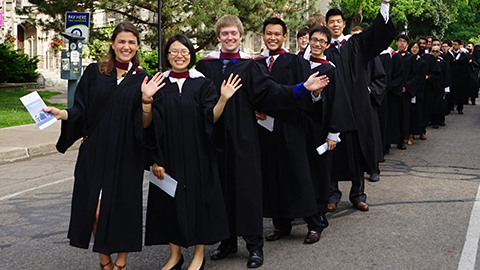
Convocation Hall (Photo: Mireille Khreich).
“That unmistakable vibe that people put on pamphlets? It really is happening here [at U of T],” said PhD graduate Alex Albanese (PhD BME 1T4).
Albanese, a budding expert in tissue engineering, was one of 844 graduating students from U of T Engineering who cheered, laughed – and even cried – their way across the stage for spring convocation on June 18.
In the company of proud parents, friends and the Engineering community, 614 undergraduate and 230 graduate students packed into historic Convocation Hall before taking the next step in their vibrant and dynamic futures.
“As you leave campus this month, please know that you are not leaving our community behind,” said Dean Cristina Amon. “You are joining a new part of it – as an alumna or alumnus of U of T Engineering. You follow in the footsteps of over 40,000 Skule alumni who continue to make a difference around the world.”
In the morning ceremony, one of two for the Faculty, Professor Jonathan Rose (ECE) addressed the audience, reminding students that their unique position as engineers enables them to transform ideas into reality.
In the afternoon, honorary graduand Indira Samarasekera, president and vice-chancellor of the University of Alberta and world-renowned researcher, held the audience’s attention with stories of her own remarkable career, and the importance of pursuing excellence in everything you do. (Learn more)
“Let me make this simple for you: be excellent,” said Samarasekera. “Taking risk is so fundamental to achieving excellence. Without it, you cannot push boundaries.”
This year’s many graduates have diverse and fascinating careers ahead of them, within the engineering disciplines and beyond. Below are are a few of the remarkable students who graduated at yesterday’s convocation ceremony.
You can also view photos of spring convocation in our Flickr gallery.
Grads to Watch
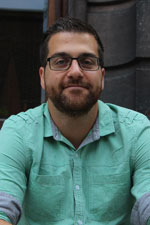 Alex Albanese (PhD BME 1T4)
Alex Albanese just finished his PhD in the cutting-edge field of nanoparticles, and will soon start a postdoctoral position at MIT’s Koch Institute studying tissue engineering in the liver and responsive nanomaterials. During his time at U of T, Albanese spearheaded Focal Point, a podcast interview series on the topic of biomedical engineering. He advises fellow students to, “take a global view of your skills and train them beyond research. It’s important to see the bigger picture, to know how to write and to communicate.”
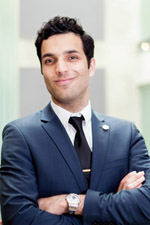 Afshin Ameri (EngSci 1T4)
After four years in the Engineering Science program, Afshin Ameri is heading to medical school at Johns Hopkins University, where he can continue helping others as he did during his time at U of T. Ameri was co-president of Students Fighting Cancer (SFC), organizing the first SFC International Food Festival to raise $4,000 for SickKids Foundation and Movember Canada. He co-founded the U of T Business Association (UTBA) and served as a panel member of the U of T Tribunal Board.
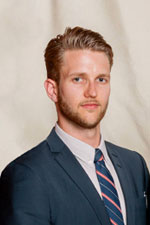 Bernard Moulins (MEng CivE 1T3)
During his master of engineering, Bernard Moulins started a charity action called Building Community that encouraged students to play creatively with children at a local mental health institute. Currently working in the renewable energy sector at ENERCON Canada, he hopes to continue strengthened community ties in the time ahead. “I believed my peers had the interest and capacity to reach out and give back to other members of our larger Toronto community,” he said. “All that was missing was the means to do so.
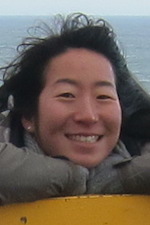 Mary Qiu (IndE 1T3 + PEY)
This fall, Mary Qiu starts a masters of science in public health at Johns Hopkins University, where she hopes to pursue policy work and program development that improves access to healthcare around the world. While at U of T, she competed on the Varsity Blues Nordic ski team, volunteered in eastern Africa with a student-run NGO and spent a year in New Zealand on exchange, which she said, “not only taught me invaluable lessons, both from an academic and life perspective, but has helped to steer me in the direction that I am going in now.”
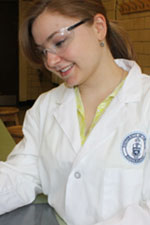 Larissa Rodo (ChemE 1T3 + PEY)
During her undergraduate degree in chemical engineering, Larissa Rodo developed an innovative self-assessment toolkit that improves safety in university labs, winning second prize in the 2014 Minerva Canada James Ham Safe Design Engineering Student Award contest. She was also an active student leader, most recently as chair of the U of T chapter of the Canadian Society for Chemical Engineering. Rodo is set to join Celestica, a electronics manufacturing company where she completed her PEY placement.
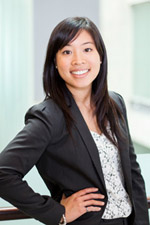 Amanda Wai (MSE 1T3 + PEY)
Amanda Wai served as president of the U of T Volunteer Consulting Group, co-president of the U of T Consulting Association, director for women’s sports on the Engineering Athletic Association and was also a member of Leaders of Tomorrow. After graduation, Wai is heading to the Hungarian Academy of Sciences to conduct research facilitated by IAESTE. She fondly recalls her iron ring as, “a symbol of my duty to society as an engineer, but also a reminder of all the good friends that I have made throughout my time at the university.”
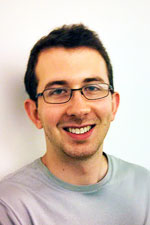 Jason Yakimovich (ECE 1T3 + PEY)
Working for Amazon.com – a job many only dream of – is Jason Yakimovich’s back-up plan. Following his undergraduate degree, Yakimovich is delaying his prestigious job offer to pursue a startup idea through the Entrepreneurship Hatchery. The company is called FuelWear, and they make smart clothing for skiers and snowboarders. The startup is his second, following a file sharing software divvyi. After his third year at U of T, Yakimovich also pursued a PEY placement at AMD Inc. in California.
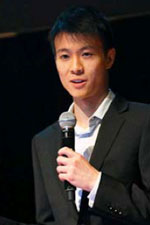 Jonathan Yam (EngSci 1T3 + PEY)
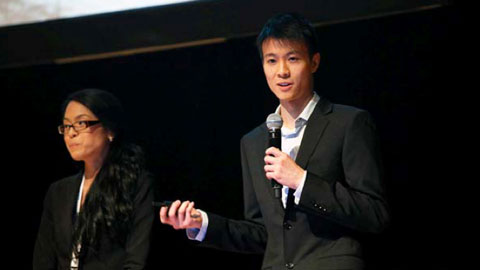
During his time in Engineering, Jonathan Yam co-founded FIXO, a startup that uses smartphones to help landlords and tenants communicate more effectively. Following graduation, he will be managing business operations for the company, which is expanding and currently incubated by the Next 36 Entrepreneurship Program. Yam has also received numerous awards for his academics and leadership, as well as won several design and commerce competitions. No matter what comes next, Yam said, “I will always be looking for a challenge and will make an impact in everything I do.”
Plugged drains, cold showers and other joys of urban dwelling are a constant frustration for rental tenants who rely on property managers to resolve their home issues.
And the broken telephone goes both ways: superintendents and property managers, too, face a tall task when they need to communicate a message to dozens—or hundreds—of apartment-dwellers.
An easy answer may lie with a new startup, called FIXO, co-founded by graduating engineer Jonathan Yam (EngSci 1T3 + PEY). Yam and his co-founders are honing the FIXO concept through the prestigious Next 36 startup development program, headed by U of T’s Peter Munk Professor of Entrepreneurship, Ajay Agrawal. It’s just one of the many entrepreneurship supports available to aspiring startup founders at U of T.
The app launched in January, and since then the FIXO team won first place in the newcomer category of the National Business and Technology Conference’s entrepreneurship competition. They have also been featured in industry blog TechVibes and are deploying pilots with a number of property management companies.
FIXO co-founder and graduating U of T engineer Yam explains below how the app could make for hotter showers, happier buildings and a solid beginning for a career in entrepreneurship.
What does your startup do?
FIXO is a mobile communication platform that enables tenants and their property manager to communicate more effectively and easily than ever. Tenants can submit repair requests with a picture through the app in literally seconds, and the property manager can relay updates with the click of a button. Property managers can send all their tenants building notices in real time, keeping them informed of important updates such as emergencies and shutdowns.
Messaging and tenant feedback functions are also incorporated. FIXO’s organized communication system archives requests by property and unit, so there is no need to shuffle through an overflowing inbox where communication is scattered. FIXO saves a property manager a significant amount of time.
How did you arrive at the concept for your startup?
My co-founders and I have first-hand experience of communication inefficiencies in a rental context; Armin and I live in a condo and Chantelle knows a number of individuals in the real-estate industry.
We’ve interviewed tenants and property managers to ‘zero in’ on ways to improve resident communication and we’ve received positive, insightful feedback on FIXO. One condo resident said that FIXO’s instant notifications would have been vastly helpful during an incidence in which glass had shattered over parts of the building, and a warning could have been issued immediately through the app.
We strive to make further headway and are currently incubated under The Next 36, which, in addition to having provided our first funding dollars, is helping us grow through dedicated mentorship.
How will your startup change the lives of our readers?
Our aim is to create a powerful communication platform for the entire property management industry, starting with residential property management. As technology shapes society by making information more accessible, FIXO aims to provide property managers and tenants with the most effective means of relaying information through the unique mobile solution.
Forty million people in North America rent properties – that’s 40 million residents whose property-related communication experiences we can improve. After launching throughout North America, we envision taking FIXO global. One of our long-term avenues will be to expand to tackle other segments of the industry, such as commercial property management.
What motivates you?
I constantly seek opportunities to challenge myself while making a meaningful impact in some way, and so far building a venture from scratch with my team fulfills that and more. The dynamics of a startup where nothing is certain and calculated risks must be taken is stimulating. At FIXO, we have a strong team drawing on complementary skills, and it is very rewarding to grow with my two co-founders and work to see our product on paper come to life.
How did U of T’s environment or community help you develop your concept?
At U of T in Engineering, I am always surrounded by bright, ambitious individuals. There is a culture of aiming high, and with some of my friends having created startups, I was inspired to join the Next 36 to realize a startup too. The rigorous and analytical nature of engineering courses has certainly helped me analyze business problems foreign to me and devise strategies to solve them.
What’s next for your startup?
Our app is currently available in the iTunes Store and Play Store, with new updates and functionality added on an ongoing basis. We have also developed a web-based platform to incorporate tenants who don’t have smartphones, thus enabling us to tackle a more age-mixed demographic and launch to property management companies who own multiple condos, apartments, and properties. We are actively seeking to launch more pilots with property management companies who are forward-thinking and ready to bring efficiency to communication with FIXO.