
Plugged drains, cold showers and other joys of urban dwelling are a constant frustration for rental tenants who rely on property managers to resolve their home issues.
And the broken telephone goes both ways: superintendents and property managers, too, face a tall task when they need to communicate a message to dozens—or hundreds—of apartment-dwellers.
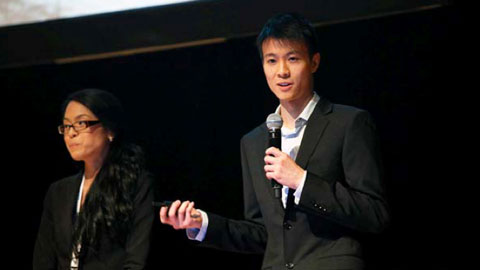
An easy answer may lie with a new startup, called FIXO, co-founded by graduating engineer Jonathan Yam (EngSci 1T3 + PEY). Yam and his co-founders are honing the FIXO concept through the prestigious Next 36 startup development program, headed by U of T’s Peter Munk Professor of Entrepreneurship, Ajay Agrawal. It’s just one of the many entrepreneurship supports available to aspiring startup founders at U of T.
The app launched in January, and since then the FIXO team won first place in the newcomer category of the National Business and Technology Conference’s entrepreneurship competition. They have also been featured in industry blog TechVibes and are deploying pilots with a number of property management companies.
FIXO co-founder and graduating U of T engineer Yam explains below how the app could make for hotter showers, happier buildings and a solid beginning for a career in entrepreneurship.
What does your startup do?
FIXO is a mobile communication platform that enables tenants and their property manager to communicate more effectively and easily than ever. Tenants can submit repair requests with a picture through the app in literally seconds, and the property manager can relay updates with the click of a button. Property managers can send all their tenants building notices in real time, keeping them informed of important updates such as emergencies and shutdowns.
Messaging and tenant feedback functions are also incorporated. FIXO’s organized communication system archives requests by property and unit, so there is no need to shuffle through an overflowing inbox where communication is scattered. FIXO saves a property manager a significant amount of time.
How did you arrive at the concept for your startup?
My co-founders and I have first-hand experience of communication inefficiencies in a rental context; Armin and I live in a condo and Chantelle knows a number of individuals in the real-estate industry.
We’ve interviewed tenants and property managers to ‘zero in’ on ways to improve resident communication and we’ve received positive, insightful feedback on FIXO. One condo resident said that FIXO’s instant notifications would have been vastly helpful during an incidence in which glass had shattered over parts of the building, and a warning could have been issued immediately through the app.
We strive to make further headway and are currently incubated under The Next 36, which, in addition to having provided our first funding dollars, is helping us grow through dedicated mentorship.
How will your startup change the lives of our readers?
Our aim is to create a powerful communication platform for the entire property management industry, starting with residential property management. As technology shapes society by making information more accessible, FIXO aims to provide property managers and tenants with the most effective means of relaying information through the unique mobile solution.
Forty million people in North America rent properties – that’s 40 million residents whose property-related communication experiences we can improve. After launching throughout North America, we envision taking FIXO global. One of our long-term avenues will be to expand to tackle other segments of the industry, such as commercial property management.
What motivates you?
I constantly seek opportunities to challenge myself while making a meaningful impact in some way, and so far building a venture from scratch with my team fulfills that and more. The dynamics of a startup where nothing is certain and calculated risks must be taken is stimulating. At FIXO, we have a strong team drawing on complementary skills, and it is very rewarding to grow with my two co-founders and work to see our product on paper come to life.
How did U of T’s environment or community help you develop your concept?
At U of T in Engineering, I am always surrounded by bright, ambitious individuals. There is a culture of aiming high, and with some of my friends having created startups, I was inspired to join the Next 36 to realize a startup too. The rigorous and analytical nature of engineering courses has certainly helped me analyze business problems foreign to me and devise strategies to solve them.
What’s next for your startup?
Our app is currently available in the iTunes Store and Play Store, with new updates and functionality added on an ongoing basis. We have also developed a web-based platform to incorporate tenants who don’t have smartphones, thus enabling us to tackle a more age-mixed demographic and launch to property management companies who own multiple condos, apartments, and properties. We are actively seeking to launch more pilots with property management companies who are forward-thinking and ready to bring efficiency to communication with FIXO.
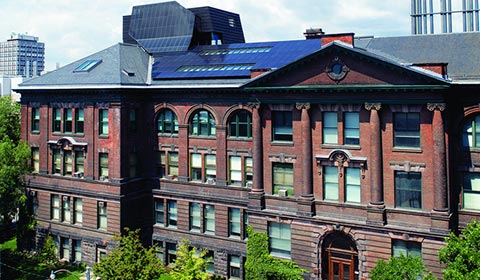
Tucked away in one of the University of Toronto’s oldest and most historic buildings, there’s an attic. This attic isn’t a place to store your grandmother’s old photo albums or records, it’s home to the Goldcorp Mining Innovation Suite – an eco-friendly design space for mineral and civil engineering students that was recognized this month with a Canadian Green Building Award.
Located within the Lassonde Mining Building in U of T Engineering, the previously unused attic underwent renovations in 2010 that incorporated advanced sustainability and energy efficiency methods. Architects and engineers worked with the century-old structure of the existing building to integrate the addition, which accommodates 100 undergraduate engineering and 24 graduate students.
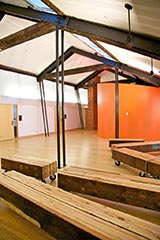 “We have transformed a previously unused space into a central hub for our students, while still maintaining the integrity of the original building,” said Professor Brent Sleep, chair of the civil engineering department. “The outcome is the perfect mix between old and new.”
The Canadian Green Building Awards, in partnership with Sustainable Architecture & Building (SABMag) and ecoHouse, recognized the building for its excellence in eco-conscious design and execution.
Highlights of the Goldcorp Mining Innovation Suite – made possible through significant support from Pierre Lassonde and Goldcorp – include:
- automated “smart blinds” that control temperature fluctuations that come from direct sunlight, known as solar gain – a particular challenge of historic buildings made from stone and brick
- thermal buffer zones, some which act as passive solar chimneys, helping to naturally vent warmer air from the space without HVAC systems
- skylights that allow for natural daylight through the space using specialized light-diffusing material that eliminates glare and promotes uniform light distribution
Read more about the renovation in SAB Magazine.

Knee pain – it’s familiar to runners, skiers, and almost anyone over a certain age. Yet doctors often urge patients to postpone knee replacement surgery as long as possible because the artificial joint may not last long.
Now, a collaborative research project that began at the University of Toronto’s Institute of Biomaterials & Biomedical Engineering (IBBME) is using a new “biological 3-D printing” process to move researchers one step closer to revolutionizing the treatment and care of those suffering from osteoarthritis, joint diseases or injuries through the use of biological joint replacements.
Approximately 60 per cent of people older than 50 suffer from some degree of arthritis, where cartilage – the material of the body that cushions the joints – erodes, damaging the bone and causing pain and mobility issues. Yet current replacement materials – metal, ceramic and plastic – offer only short-term solutions to long-term care.
“In 20 to 30 years these materials will ultimately fail,” explains Dr. Rita Kandel, chief of pathology at Mount Sinai, and a professor in the Department of Laboratory Medicine & Pathobiology and the Institute of Biomaterials & Biomedical Engineering, as well as director of the Collaborative Program in Musculoskeletal Science at the University of Toronto.
“The current materials used can’t withstand the prolonged application of forces. Wear and fatigue can set in, resulting in failure through aggravated allergic responses or outright fracture. Synthetic implant materials can’t heal if there’s a fracture.”
Bob Pilliar, professor emeritus in the Faculty of Dentistry and IBBME, was one of three researchers – along with Kandel and Professor Marc Grynpas – who set out in the 1990s to discover a biological material to replace joints.
Pilliar and his team developed a structure made from calcium polyphosphate – consisting of calcium and phosphate, the same mineral components found in human bone – that, when manufactured in a particular way, provides a porous, biodegradable bone substitute that can also serve as a “template” for new bone formation to a desired form.
Human bone grows into and through the porous calcium polyphosphate – anchoring it in place in the area in need of repair – while allowing bone to develop and biologically bond to maturing cartilage cells layered on top. Over time, the calcium polyphosphate template degrades, safely and naturally flushing out of the body, leaving behind a newly generated natural joint structure.
But discovering a bone template was only the first major hurdle; the second was to create cartilage in quantities sufficient to cover large surfaces in need of repair.
Cartilage is an incredibly difficult part of the body to repair. “Once the cartilage is damaged, that’s it – the body does not have the ability to create more or repair it,” explains David Lee, a PhD candidate in Kandel’s lab involved in the tissue engineering aspects of the project.
Thus far, tissue engineering strategies for repairing damaged cartilage have proven elusive, since cells extracted from the tissue and grown to numbers large enough to work with tend to lose their cartilage characteristics. So the team developed a strategy that draws on other types of cells, such as stem cells extracted from bone marrow. These cells are grown in large numbers and reprogrammed into immature cartilage cells, which are then layered and grown on and into the top part of the porous calcium polyphosphate construct.
So far the team has proven that the biological resurfacing has been successful for repair and regeneration of small cartilage defect areas. “Now we’re looking to see if a larger joint replacement can survive,” explains Pilliar of their latest study: a large femoral knee replacement.
Since the researchers’ early days, the project has morphed into a multi-disciplinary collaboration between numerous universities, namely Waterloo, Guelph, McMaster and Queen’s.
The bone substitutes are manufactured at Waterloo University, for instance, where biological 3D printing technology is being utilized to make each joint template “to measure”. Meanwhile, a collaborator at Queen’s University is developing a new surgical guidance system that will help surgeons make cuts that precisely match the individual’s intended replacement bone and cartilage during surgery.
While Kandel estimates that clinical trials are up to five years away, this new, biological joint technology represents the ultimate promise of personalized medicine – a means for the body’s own materials to grow back whole joints.
You know that feeling when you manage to hit every green light on your drive home – as if you were experiencing some unbelievable stroke of luck?
Imagine if every trip could feel like that, enabled by traffic lights that change colour based on intelligence input, rather than pre-programmed timers.
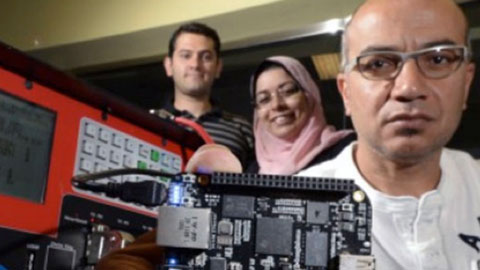
That’s what Professor Baher Abdulhai (CivE) and post-doctoral researcher Samah El-Tantawy (CivE) aim to do with their invention – called MARLIN – which recently won them the title of “Inventors of the Year” from the University of Toronto. One of four groups selected, Abdulhai and El-Tantawy were recognized for their innovative design that improves the flow of traffic and reduces maintenance and infrastructure operating costs.
MARLIN is based on artificial intelligence and game theory, using machine learning to help traffic lights optimize the most efficient timing of traffic lights through an intersection. Professor Abdulhai works in U of T’s civil engineering department, where he supervised El- Tantawy, now a post-doctoral fellow, for her PhD.
At the celebration event, President Meric Gertler said, “We are on an extraordinary trajectory,” calling the University of Toronto’s success with start-up companies one if its “best-kept secrets.”
U of T Engineering’s Zahra Murji spoke with Abdulhai about his congestion-fighting research and what might be coming next:
How does it feel to have won Inventor of the Year?
I’m proud to be part of an innovation powerhouse here at U of T, where I am surrounded by outstanding colleagues and stellar students. To receive such recognition is indeed humbling, and I thank U of T sincerely for this honour. I am also proud to have worked with Samah El-Tantawy, my former student and now colleague. She brought home several international awards from IEEE and INFORMS in 2013. I’m happy to share this award with her and express my deepest gratitude for her contributions.
Can you briefly describe your research?
My research focuses on traffic control through Intelligent Transportation Systems. We aim to produce control software using artificial intelligence and game theory to control traffic operations with lights and freeway ramp meters. The overall objectives are to reduce motorist delays so that drivers stop less at red lights, saving gas, frustration and the environment.
MARLIN, the award winner, is software that fits on a computer the size of an iPhone. With input from cameras watching approaching traffic, MARLIN decides on a second-by-second basis which direction to serve. Agility in responding to traffic variations is the key to saving time.
What do you believe is the biggest impact of your research?
MARLIN saves motorists, municipalities and tax payers precious time and money. Based on value of time saved alone, MARLIN would pay for itself in less than a month. In addition, instead of spending millions of dollars on expanding an intersection to reduce congestion, we use smart technology at a fraction of the cost, saving time, money and space.
What are the next steps for your research?
Samah and I are working hard, supported by U of T’s own Connaught Fund, to test MARLIN in the field. We have partnered with PEEK Traffic, a leader in this domain in North America. We hope to partner with willing host municipalities to achieve our first deployment this year, right here at home. Stay tuned for more information.
Schedule and Events
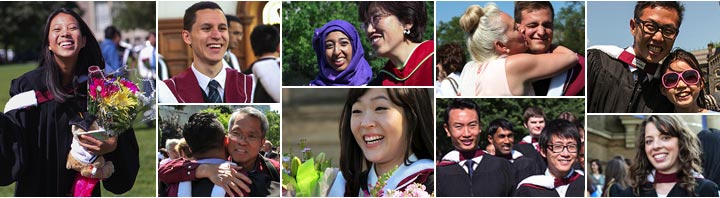
Convocation day for the Faculty of Applied Science & Engineering is Wednesday June 18, 2014. There is a morning ceremony and an afternoon ceremony. See the Office of Convocation website for further details.
Message from the Dean
Message from the Dean: Congratulations Skule Graduates of Spring 2014
Useful Campus Information
Limited parking on campus St. George Campus Map
Watch the Ceremonies Live Online
Can’t attend the ceremonies in person? Watch the live web feed from Convocation Hall.
Photos
Social Media Participation
Use the hashtags #UofTGrad14 and #skule to join us on Twitter or Instagram. Watch @uoftengineering on Convocation Day for your chance to find our photographers and win a T-shirt!
Views of Convocation
Celebrate convocation by experiencing videos and images from past years’ events.

Sarah Casson wasn’t yet in middle school when she discovered a love of robots. Her interest was sparked in 2010 when her mother and other parents in Long Island, New York started up a Saturday morning robotics class at the 10-year-old’s public school.
Four years and a regional FIRST Lego League (FLL) prize later, Casson and her team traveled to the University of Toronto to test their skills and ingenuity at Canada’s first-ever FLL International Open from June 4 to 7.
The competition – hosted by U of T and FIRST Robotics Canada – brought together 1,200 competitors, coaches and family members from around the world. It was the exciting finale of FLL’s 2013-14 season, themed Nature’s Fury, with 72 teams of participants ranging in age from nine to 16 working to master natural disasters with their Lego robots.
Participants from as far away as India, Singapore and Brazil were tasked with three challenges. First, they shared innovative research projects for predicting, preventing or protecting people from disastrous storms, quakes and tidal waves. Then competitors tested their robots’ mettle as they completed missions, such as crossing a flooded waterway to deliver emergency supplies. The third component, called “core values”, had participants completing a teamwork challenge in just five minutes, testing their ability to work collaboratively on the fly.
FIRST, which stands for “inspiration and recognition of science and technology”, is a non-profit organization that aims to inspire students to pursue careers in STEM: science, technology, engineering and math. That mission made the international open a perfect fit for the University of Toronto.
“We were excited to welcome students from all over the world to engage with the University of Toronto and the city itself, and to expose them to the amazing things our own students are doing,” said Micah Stickel, chair of first year in the Faculty of Applied Science & Engineering.
Engineering students from the Faculty’s outreach office wowed FLL participants with a spin in a solar car and hands-on activities that had them investigating polymers, exploring the power of hydraulics and creating a “spy” circuit with batteries, wires and switches.
The event took place in several locations on campus, with competition at Varsity Arena and in a purpose-built tent on Trinity Field, judging at OISE, and the closing ceremonies, fittingly, at Convocation Hall.
“We were absolutely delighted to welcome these brilliant, budding engineers from around the world to the University of Toronto – and we would be very happy to welcome them back in the near future, as U of T students!” said President Meric Gertler. “Ever since we were selected to host the FLL International Open, the university has invested considerable time and resources to help ensure the event was a big success, and it’s been wonderful to hear so many stories bearing that out. Congratulations to all the winners, participants and organizers!”
Dave Ellis, director of FIRST LEGO League in Ontario and one of the key organizers of the event, said the multiculturalism in Toronto and at U of T made venue selection easy. “Toronto was the clear winner for this first-in-Canada international event. And capping it off at Convocation Hall, where thousands of U of T graduates marked the culmination of their experience here, was so fitting. The energy in the room was amazing; everyone came together to cheer on the winners and celebrate their successes.”
Casson’s team took second place in the research project category. While she didn’t take home the top prize, she stands to be part of a future wave of engineering undergrads passionate about making an impact. “I didn’t really know much about robotics until I got involved with the Lego team. It’s really cool.”
Stickel said while he expected to see some impressive robots at the event, he was astounded by the creativity and collaboration of the competitors. “That they came together to solve the same problem in such different ways was really incredible. These young people took their knowledge of math and science and worked as a team to find some outstanding solutions to the challenge they were given. They are exactly the kind of people we need in engineering.”
See their creativity in action: