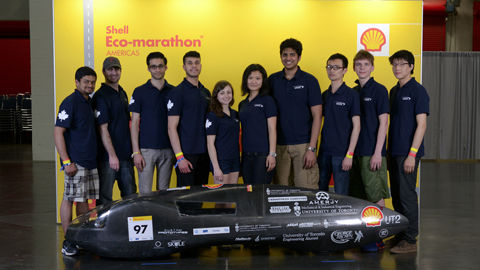
It may have hydrogen fuel cells, a solar panel and three lithium-ion batteries, but a new electric vehicle from students at U of T won’t be found on the highway – it’ll be working on the farm.
A group of engineering students has proposed a new type of sustainable soybean harvester, recently winning first place in a unique graduate design course on campus. The machine produces zero emissions while powering its driving, threshing, storage and cleaning phases.
The idea was born in MSE558: Nanomaterials in Alternate Energy Systems, a course that brought together students from various engineering disciplines, including exchange students from Brazil’s Science without Borders program. It took participants outside their comfort zones of engineering problem-solving, and added business skills development such as market analysis, branding and education.
Now in its tenth year, the course taught by MSE professor Steve Thorpe is modeled after the National Hydrogen Association Design Contest and puts students through the whirlwind experience of launching a start-up.
It was the “Dragon’s Den” of engineering – not only did Engineering students Shahed Mirmohammadi (ECE 1T4+PEY), Jonathan Hoo (MSE 1T0, MEng 1T6), Renan Gomes (Science Without Borders – Brazil) and Ricardo Barnasky (SwB – Brazil) have to invent the potentially world-changing combine, but they had to sell a team of judges on its business viability, safety and practicality.
The sheer scope of the challenge and the chance to apply new nanomaterials to a real product appealed to Gomes. Like Barnasky, he is a Brazilian exchange student studying at U of T through the Science Without Borders program.
“Nano is never easy – it’s always complicated, but that’s the future,” said Gomes. “Our job as engineers is to learn how to solve problems using these new technologies.”
PURE – Powerful, Unique, Reliable and Efficient
All four team members shared excitement about the vision of greener farming with international impact, and their first task was to define their corporate identity. They dubbed their new company PURE, for Powerful, Unique, Reliable and Efficient.
Hoo, the team’s technical lead, conducted extensive research into load profiles of the current state-of-the-art machines, including phoning competitors, who wanted to sell him a combine, and Ontario’s Ministry of Agriculture & Food. The team even phoned the Brazilian government to inquire about a similar project there.
“Was it like detective work? No, it was like espionage,” said Hoo. “The harvester, you don’t just drive it – you have to cut the crops and process them and store them in a tank and empty them. Our load profile was pretty complex.”
Mirmohammadi said: “I learned so much about hydrogen fuelling, fuel cells, hydrogen storage and the issues with it, the cost of actually doing something like this. It’s doable, but it’s very expensive at this time.”
Pitching time
Similar to the television show Dragon’s Den, Team PURE presented their ideas to a panel of judges – including Professor Thorpe, Amy Jiang of BP and Alex Ayers of Pratt & Whitney. For Barnasky and Gomes, it was the first professional presentation they had ever delivered in English.
“These people are sharp, they know their stuff — if you screw up, they’re going to pick up on it,” said Hoo.
After handling a 20-minute question period with the judges, the team emerged victorious, winning an engraved plaque and $180 in prize money.
The second-place team designed a food truck serving First Nations cuisine to Bay Street bankers without using an atom of fossil fuels. The third-place team invented a zero-emissions personal-delivery drone.
Holistic solutions
“The whole point of this is to come up with a holistic solution,” said Thorpe. “We teach tools for screening new ideas quickly and performing failure analysis… keeping them in the box is challenging!”
Mirmohammadi said the course opened the team’s eyes to the incredible complexity of creating a product like this.
“If you were in a firm and you had all these different departments you work with, you can’t ever come up with one option thinking, ‘It’s technically feasible, let’s do it!’ Well, did you take into consideration that this is going to kill 100,000 fish? Or you’re going to have to spend billions of dollars trying to get the infrastructure to even build this thing. That’s definitely something that we’ve never done before.”
Despite the trial, would they enter this Dragon’s Den again?
Absolutely.

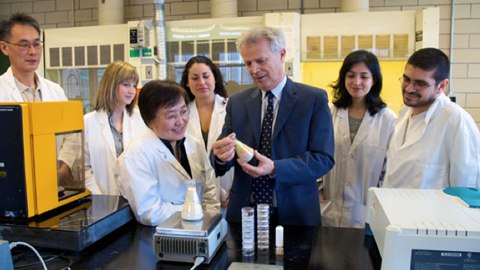
A U.S. entrepreneur has been garnering headlines around the world for a product called “palcohol”, a powdered alcohol that can be turned into a cocktail by adding water.
The University of Toronto’s Dominic Ali sat down with food engineer and Professor Emeritus Levente Diosady (ChemE), to learn the basics of how alcohol and other beverages might be produced and sold in the future.
For the past three months, Diosady has been developing iron-fortified tea to prevent iron deficiencies around the world – an idea that could be as important to public health as adding iodine to table salt to prevent thyroid problems.
Is powdered alcohol really possible?
Yes. Alcohol can be encapsulated – as in brandy-filled chocolates – or in miniature, as in the flavour buds in instant puddings.
As the details of the technology for powdered alcohol is not revealed in the [inventor’s] video, I have to rely on my basic knowledge of similar products. In any case, it is clear that alcohol – which is a liquid at normal temperatures – has to be “contained” in either microcapsules or inside an absorbent, both of which add to the volume of the product. Also, it must be edible and not add to the flavour or colour of the product.
How could it be created?
One of two approaches is possible: the alcohol is absorbed in a solid or, more likely, it is microencapsulated. In both cases, you need to contain it in a material that dissolves in water.
Considering “instant” refreshments such as Kool-Aid drink crystals have been around for decades, why hasn’t this been attempted before?
The trick is to find an encapsulant that dissolves in water, but is not dissolved by alcohol. It also needs to be neutral in taste and, of course, safe for human consumption.
What are some of products that you’ve found to be revolutionary from a food engineering perspective?
The most pervasive over the past 25 years has been aseptic packaging – this is the technology for the small juice boxes, soups and milk that do not need refrigeration. Microencapsulation for flavours and bioactive ingredients is another broadly-used technology. For example, live cells are encapsulated and added to yogurt to promote digestive health. Many ready-to-eat products rely on novel packaging and preservation technologies – think of microwaveable frozen entrees, such as Lean Cuisine or Café Steamers, which can be taken from the freezer and zapped to provide a complete meal.
Alcohol is used in different industries apart from drinking, such as a fuel, for example. What are some potential ways powdered alcohol could revolutionize different industries?
In most industrial situations, shipping large quantities of liquid is actually simpler and cheaper than shipping a powder. There may be an advantage in reduced flammability, but this depends on what the alcohol is coated/absorbed with. And reconstituted “palcohol” is too dilute to be used as fuel.
I can see powdered alcohols in windshield washer fluids, but that is a very low-value product, and I don’t see a huge saving in shipping the concentrate, rather than the finished product.
The idea of using powdered alcohol in an emergency medical situation faces the difficulty of finding safe water to reconstitute the alcohol. In most disasters, clean water is harder to find than medical alcohol.
I am sure there will be clever entrepreneurs who will find niche markets for products made with powdered alcohol. I expect that these will come in the food and beverage sectors. Clearly, powdered alcohol is a clever product, and should get a lot of sales from its novelty, much more than from its practicality.
So would you try “palcohol”?
I would try it, for fun. My poison is wine or cognac, neither of which is likely to be powdered.
Read more about Diosady’s recent food engineering research on iron-fortified tea.
A Canadian pioneer in nuclear chemistry with an inspiring love for science and engineering, Professor Emeritus Robert E. Jervis (ChemE) passed away May 21 on his 87th birthday.
Professor Jervis was born in Toronto and raised during the depression years. He obtained an undergraduate degree in math, physics and chemistry in 1949, an M.A. in 1950 and a PhD in physical chemistry in 1952, all from the University of Toronto. He subsequently worked at the Chalk River nuclear research facility, where he used applied nuclear chemistry to develop novel methods of trace element analysis in the environment.
Jervis joined U of T’s Department of Chemical Engineering and Applied Chemistry in 1958, where he continued his research in applied analytical and environmental chemistry for the next five decades. His research focused on the peaceful use of nuclear energy in industry, life sciences and forensic sciences. His work on human exposure to heavy metals garnered him significant national and international recognition.
Jervis also pioneered the use of trace elements to identify sources of pollution, and to assess the environmental impact of fossil fuel combustion. He similarly developed this technique in forensics, where he used trace elements in hair as bioindicators of exposure to environmental pollutants. This method was used to study arsenic levels in gold miners, mercury in aboriginal people and lead in urban children.
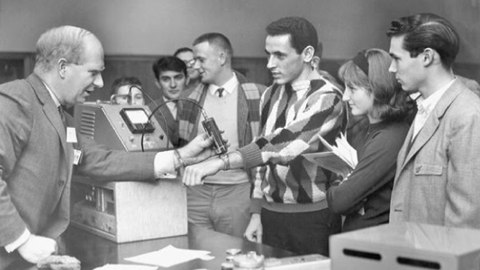
Professor Robert Jervis (left) with students at Chemical Engineering Open
House, 1964 (Photo: Heritage University of Toronto).
Jervis’ work took him around the world lecturing and consulting with scientists and scientific bodies, and as a visiting professor at the University of Tokyo, University of Cambridge and University of Kuala Lumpur. He published over 250 scientific papers.
He also received numerous awards and honours throughout his career, including: the Lewis Medal, Canada’s highest nuclear scientific award; the international Hevesy Medal, for radioanalytical chemistry; the American Nuclear Society’s Emmon Medal; and, the inaugural Russian Academy of Science’s Ressovsky Medal. He was a fellow of the Royal Society of Canada, the Canadian Nuclear Society, the Canadian Society for Chemistry and an honorary fellow of the Atomic Energy Society of Japan and the Indian Academy of Sciences.
Jervis’ deepest professional satisfaction came from inspiring first-year students to love the field of science. As a testament to the impact he had in the classroom, in 1992 a group of his former students established the R.E. Jervis Award, which recognizes a graduate student each year for outstanding work in nuclear engineering, with support from the Canadian Nuclear Society.

When Michael Branch (CompE 0T3) founded Inovex over ten years ago, the fledgling software company only had one staff member: him. Now, under Branch’s skilled leadership, Inovex has grown to become a successful company that offers tangible solutions to clients in the environmental and healthcare fields.
Branch was one of three members of the U of T Engineering community that recently garnered Engineers Canada awards for their achievements in the engineering field:
- Alumnus Michael Branch (CompE 0T3) received the Young Engineer Achievement Award, presented to a professional engineer under 35 for outstanding contributions in engineering.
- Industrial Engineering student Hanna Janossy (IndE 1T3 + PEY) garnered the Gold Medal Student Award, for an undergraduate engineering student for leadership, contributions to society and volunteerism.
- Professor Michael Sefton (ChemE, IBBME) received the Gold Medal Award, the organization’s highest honour for distinction in engineering.
“These three extraordinary members of our community exemplify the outstanding contributions that U of T engineers are making at all stages of their careers, as well as the variety and breadth of those contributions” said Dean Cristina Amon. “I congratulate them on these prestigious awards and on their many accomplishments.”
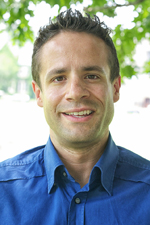 About Michael Branch:
Michael Branch is founder, president and CEO of Inovex, a company that architects and develops web and mobile software applications for [AB1] customers ranging from medical clinics to municipalities to oil and gas companies. Inovex recently launched Maps BI, which provides visual insight into an organization’s geo-spatial data. In 2013 it earned two International Business Awards, for Best New Software Product and Best Software Design. A committed volunteer within and outside the engineering community, Branch is currently president of the University of Toronto Engineering Alumni Association. He also serves as a board member of Streetwise Actors and as a member of the Haltech Regional Innovation Centre. In 2010 Branch received an Arbor Award from the University of Toronto in recognition of his service. In 2013 he was recognized with the Ontario Professional Engineers Young Engineer Medal.
[youtube https://www.youtube.com/watch?v=lY3MHBjeJpI]
 About Hanna Janossy:
Hanna Janossy is passionate about creating change by empowering students to become leaders in their communities. This principle led her to revitalize the Women in Science and Engineering Association (WISE), hiring 20 new executives, launching three new programs and raising more than $20,000 during her term as president. She also laid the foundation for the annual flagship conference for WISE which draws engineering students from across Canada. Janossy has led several organizations, including the MIE Mentorship program (which grew substantially during her term as co-chair) and the WISE Hi-Skule and Mining Hi-Skule outreach programs. Beyond U of T, Janossy has volunteered with several non-profit organizations and works extensively with young people with disabilities. In 2012, she received the Canadian Engineering Memorial Foundation Vale Undergraduate Engineering Scholarship, recognizing female engineering students who have made extraordinary contributions to the engineering community.
[youtube https://www.youtube.com/watch?v=hHfe0G0w5GU]
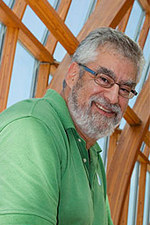 About Michael Sefton:
An international leader in the areas of biomedical engineering, biomaterials and regenerative medicine, Professor Michael Sefton led the way in recognizing the importance of combining living cells with synthetic polymers to create artificial organs and tissues – a field now known as tissue engineering. He was also among the first to demonstrate the significant synergy between chemical engineering principles and biomedical engineering. Sefton has successfully commercialized his research as co-founder of Rimon Therapeutics Ltd. and has spearheaded several university-industry partnerships, such as the Toronto Tissue Engineering Initiative. A leader in his professional community, he served as president of the U.S. Society for Biomaterials from 2005-2006. From 1999-2005, Sefton was director of IBBME, spearheading its development into one of the best institutes of its kind in North America. His many honours include the Ontario Professional Engineers Gold Medal, Killam Prize in Engineering and Fellowship in the Royal Society of Canada.
[youtube https://www.youtube.com/watch?v=mviiP3idMtI]
The Engineers Canada Awards recipients were honoured at the Engineers Canada Awards Gala in St. John, NB on May 24, 2014.

extends human capabilities and the possibilities that we have. ” – UTIAS
researcher Angela Schoellig (Photo: Roberta Baker).
A helicopter drone zooms along the shores of Boston’s Charles River, carefully flying back and forth to photograph algae growth for nearby researchers. And who’s at the controls? Nobody – thanks to autonomous algorithms developed by Angela Schoellig, an assistant professor at the University of Toronto Institute for Aerospace Studies (UTIAS).
Next month, Schoellig – an expert in robotic controls – shares her latest research for science communicators from across the country at the upcoming Canadian Science Writers Association annual meeting at U of T.
In her research, Schoellig applies mathematics to engineering systems to develop the algorithms that systems need to regulate themselves and move autonomously.
“These algorithms are used in such items as a car that drives autonomously or in a home air-conditioner that regulates the temperature in the house,” said Schoellig. In addition to monitoring ecosystems in Boston, her algorithms are also used in the unmanned aerial vehicles that many farmers employ to monitor plant health and soil moisture.
Shoellig’s current work looks broadly at robotics, trying to understand how robots can learn from experience, collaborate and share information. It builds on her PhD research at ETH Zurich – the Swiss Federal Institute of Technology – where she applied new controls to aerial vehicles to help them fly autonomously.
“Robots work really well in controlled environments where you can give them all the information that they need to work efficiently and effectively ahead of time,” Schoellig said.
It’s trickier, however, in environments that are unknown or include people. Since humans aren’t predictable, the robots must learn to react to unexpected events.
“If one robot has learned about the environment, I want to know if that information is useful to transfer and understand how a robot could share that with its peers,” she said. “Learning is a complex task and it might take 1,000 trials. If the robot could share its experience, other robots could learn 1,000 times faster.”
Using algorithms that she has worked on, Shoellig can teach multiple flying robots to interact with each other in new ways – even having them learn a complex dance to the Pirates of the Caribbean theme song:
[youtube https://www.youtube.com/watch?v=NPvGxIBt3Hs]
“What I really like about robotics is that you can make a machine that extends human capabilities and the possibilities that we have,” she said. “They can give us a view on things that we would never have otherwise.”
Angela Schoellig will take part in the CSWA’s ‘Better Living Through Technology Panel’ on Friday, June 6 at 8:30 a.m. Read the entire CSWA Annual Meeting program.
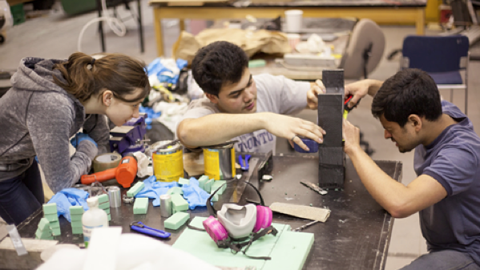
Our design was like nothing they’d ever seen before.” – Jonathan
Hamway, co-captain, U of T Supermileage (Photo: Roberta Baker).
How much do you think it costs to drive from Toronto to Vancouver in the U of T Supermileage Team’s new eco-car? Hint: it’s less than a medium latte from your favourite coffee shop.
Unveiled at the international Shell Eco-marathon this month, the tiny car from U of T engineering students is capable of traveling 1,152 kilometres on a single litre of fuel. For a cross-country trip, that’s $4.70.
In this year’s competition, Supermileage won two design awards and placed second overall, thanks to an engine they redesigned from scratch. Taking place in Houston, TX, the packed weekend saw students compete from across Canada, the United States, Mexico, Brazil, Chile and Guatemala.
U of T Engineering’s Sydney Goodfellow spoke with Supermileage co-captain Jonathan Hamway (MechE 1T3 + PEY) about his experiences in this year’s competition, and why he thinks next year’s team is poised to break the record for the world’s most fuel-efficient car.
Your team measured nearly double the mileage of your car last year. Are these the results you expected?
Initially, we predicted the engine would reach around 1,700 kilometres per litre, but we didn’t have time to tune it, and our clutch was causing a lot of friction, so we actually ran a lot faster than we should have considering those set-backs.
All we really wanted was to finish a race so that we could qualify for the awards. When we saw we were in first place for most of the weekend, it was just icing on the cake. We knew there was so much more that we could have achieved.
In addition to placing in second, you also won a Technical Innovation Award and the Pennzoil Tribology Award. Can you share what these awards mean?
The Technical Innovation Award is based specifically on engine design. The award [recognized] how we were able to incorporate different technologies that haven’t been put together in a small engine before.
The Pennzoil Tribology Award was about using tribology principles, like wear and friction, and how we were able to optimize those in our engine for ultimate efficiency. [The judges] based the award on the principles we used for material selection, like lubricants, and how we put everything together to improve overall efficiency.
What was the atmosphere like at this year’s competition?
We changed the competition completely. We were the only team with a completely custom-built engine. When the judges saw our engine, their jaws were locked open. Our design was like nothing they’d ever seen before. We definitely inspired people, and that was the best part of the competition to me.
Next year, we’re going to see a lot of teams trying what we tried. We didn’t hide anything; we told them how we designed it, built it and anything they wanted to know. It’s up to them to actually do it, knowing how much work it is.
Fuel efficiency is a relevant topic around the world today. What impact do you think your innovations could have?
This competition is essentially about pushing the absolute limits of what you can do when you only look at fuel efficiency… the principles we used are very applicable. Small engines in scooters, for example, have a lot of room for improvement and could use some of our principles.
You already see some of our designs in cars, too, like whole or partial engine deactivation in hybrids, causing the engine to switch off when you get up to speed. Our engine was actually off for most of the race.
In terms of the actual geometries we chose – the coatings, how we mixed the fuel and created turbulence in the chamber – those are proprietary to us and haven’t been explored too much [by other small engine manufacturers], but I think they definitely should be.
This is why soon we will be displaying the engine at several other design showcases that are more investor-based. That’s where we’ll be talking about transforming and applying our design for other engine-powered vehicles and machines.
You’ve claimed that next year’s team will break the record for the world’s most fuel-efficient vehicle – how?
For next year’s competition, we are planning to spend more time tuning the engine and making the car’s body lighter and more aerodynamic.
It’s not about breaking the record – that is the easy part.
Our biggest challenge will be transferring knowledge, as a lot of our team members are graduating and leaving the team. Next year is about bringing in new talent and teaching them everything.