
Whether it’s the latest smartphone, the flashiest vehicle or the next gravity-defying structure, behind every piece of new technology, there are makers. These makers – often engineers – form new ideas that they build, test and perfect long before we see them in the marketplace.
At U of T, we rigorously encourage the maker within our engineering students. In hands-on, collaborative and multidisciplinary courses, students learn how to transform their ideas and classroom knowledge into designs that tackle challenges proposed by industry or other real-world clients.
By enabling the next generation of makers, we can continue engineering’s legacy of driving economic development, spurring innovation and offering solutions to some of the world’s greatest challenges.
Learn about some of this year’s hands-on student opportunities:
 Multidisciplinary Capstone Projects (MCPs) course in partnership with industry
This year, U of T Engineering launched our first Multidisciplinary Capstone Projects in collaboration with industry partners such as Bombardier, Defence Research and Development Canada, Magna and others. Teams of students – each from a different department – worked together on new solutions, such as software that helps pilots manage jetlag or new caterpillar tracks for an amphibious vehicle. See some their projects.
 MIE cross-cultural capstone design projects
Select undergraduates in mechanical and industrial engineering collaborated with students at Peking University in Beijing, China, for their capstone course. This involved teams of students from both countries working on client-based projects that brought together different global perspectives to create solutions to practical problems. There are two in-person meetings, in China and in Toronto, and the remaining interactions were virtual. Projects were sponsored by industries that have operations both in Canada and China, such as Siemens, Bombardier International and Litens Automotive. Read more about the MIE Design, Research & Innovation Showcase.
 MSE leads multidisciplinary projects in sustainability
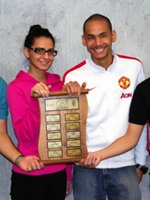
Engineering students teamed up across continents and departments for this year’s Nanotechnology in Alternative Energy Systems course. Groups were challenged to design technologically sustainable solutions for an existing product or market – moving beyond the realm of engineering to combine environmental science, safety, economics and marketing. Competing head-to-head, this year’s winning team created a zero emission combine harvester to make agriculture more sustainable, and included students from MSE, ECE and two international students from Science without Borders – Brazil. This year celebrated the tenth anniversary of the course. Read more.
 ECE Engineering Design Fair
Across U of T Engineering, the capstone design courses are the culmination of engineering students’ undergraduate experience, where they synthesize the knowledge and competencies developed in courses throughout their studies and apply them to an open-ended design problem. Capstone projects from The Edward S. Rogers Sr. Department of Electrical & Computer Engineering were on display this month in the Bahen Centre. Read more about the ECE Engineering Design Fair.
 Praxis II
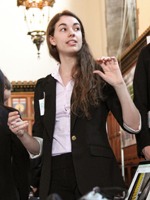
First-year engineering students in the Engineering Science program designed solutions to eight of Toronto’s persistent challenges. From newly-designed Toronto Islands docks to swirly mops and freezable freezers, students collaborated with communities across the GTA to find new ways of improving the city. Read more.
 Interdisciplinary Approach to Global Challenges Course
This year, the Centre for Global Engineering (CGEN) brought together graduate students from across U of T to develop interdisciplinary solutions to global challenges. This year’s project focused on childhood malnutrition in Bangladesh. Students developed integrated solutions by combining expertise from U of T Engineering, the Dalla Lana School of Public Health, the Rotman School of Management and the Munk School of Global Affairs.

Today’s assignment: design an outdoor, heated smoking area for a local women’s shelter. Do you take on the project, knowing it propagates a harmful, deadly habit?
It’s dilemmas like this that engineers face in the real world, but not necessarily in a post-secondary curriculum. That’s why Professor Doug Reeve (ILead) and his team are assembling a new collection of case studies for students on ethical issues – one of three projects recently funded through the Engineering Instructional Innovation Program (EIIP) for next year.
The two other innovative projects starting next year include a redesign of core classes in the department of electrical and computer engineering by Professor Stark Draper (ECE), and putting together a resource kit to help professors incorporate teamwork in the classroom from Professor Greg Evans (ChemE).
The EIIP was launched in March 2013 with funding for five inaugural projects, ranging from digital course enhancements to lab renovations. The program is intended to address challenges like limited laboratory space and development of technical and other competencies, while introducing more interactive instruction and digital tools into the classroom.
“Last year’s most successful EIIPs are already on the verge of a wide impact and have already seen a great deal of dissemination,” said Professor Susan McCahan, vice-dean, undergraduate.
U of T Engineering’s Sydney Goodfellow spoke with each EIIP project lead to find out more about their ideas and potential impacts.
Ethics – Professor Doug Reeve (ILead)
How would you describe your project?
Our project is about decision-making by engineers that goes beyond technical, specifically with [issues like] ethics and equity. We will generate case studies from the field, where engineers have come up against difficult situations like ethics judgment or dealing with equity issues. Those case studies will give engineering students insight into issues they have to face and tools to deal with those issues. We will compile these case studies into a textbook for ongoing learning, and to deepen appreciation of these subjects.
What impact do you expect your project to have?
This project will help students develop and trust their intuition and think critically because the answers to these problems are not definite. Trusting your intuition is important, and it is vital for engineering students to see that the world is much more complex and challenging than it may appear in a controlled classroom environment.
The book itself will be useful as a resource for students to get a sense of more complex issues. Often case studies in engineering are about huge disasters, ones that have hit the news. Junior engineers don’t have to confront those kinds of situations, but they do confront other kinds of dilemmas, so we want to equip them to handle these things more readily.
Team Work – Professor Greg Evans (ChemE)

How would you describe your project?
We are putting together a resource kit to support instruction of team effectiveness in all types of courses. The kit will encourage instructors to introduce more team-based activities into their courses, and to use teams to teach both the technical and relational aspects of engineering.
What impact do you expect your project to have?
We’re hoping that the kit will encourage and support the incorporation of this form of learning in a wide variety of courses. Teamwork is often used in design classes, but we hope that, given the right resources, instructors will introduce and experiment with teamwork in more courses. For students, we will provide them with more tools, like videos they can access online, that we hope will help them see the value in learning to be effective team players.
We’ve been studying team-effectiveness learning for a while, approaching it from the student perspective. Through this project we will approach it from the instructor’s perspective, giving them the resources they need to help students learn how to be more effective at working in a team.
ECE Learning Objects – Professor Stark Draper (ECE)

How would you describe your project?
Working together with team members Professor Raymond Kwong (ECE) and lab manager Bruno Korst (ECE), our project will focus on revising the department’s core second year class that introduces students to basic ideas of signals, systems, and information processing. In this class students gain their first exposure to the concepts and technologies that underlie the information revolution; including digital communications, control systems, signal processing, medical imaging, and big data.
The course is the lead in to a broad swath of upper level courses in ECE. It’s very important, but is also quite challenging as the course is mathematically advanced and abstract. Our curriculum renovation aims at three things: to introduce labs and in-class demonstrations that motivate students and better connect course material to familiar technologies; to bring an updated approach to course pedagogy; and to leverage new learning techniques, such as online materials and an “inverted” classroom format.
What impact do you expect your project to have?
We aim to have students exit the course with a deeper appreciation of how the concepts developed in this course underlie many important technologies. We also want to get more students excited about pursuing careers in these areas of technology. The project will be an exciting opportunity to rethink the way we deliver this core material. We would like to convey course concepts in a more comprehensive way and better tie in to the curriculum at large, so students can see how central the material covered in this course is when one takes a holistic view of the curriculum. We also hope our experience may provide ideas for other instructional innovation in the ECE Department.

In an early morning tutorial, students are racing to complete a daily challenge. But instead of working alone in a computer lab or in extended rows of lecture seating, they’re collaborating at six small tables, surrounded by the latest learning technology.
Welcome to a Technology-Enhanced Active Learning (TEAL) room – one of several new hands-on learning spaces for U of T students at the forthcoming Centre for Engineering Innovation & Entrepreneurship (CEIE).
The CEIE features prominently in the future landscape of the U of T’s downtown campus and showcases innovative and intentional designs that will help facilitate the next generation of learning in the Faculty. They include:
Light fabrication facilities
The new light fabrication facilities in the CEIE will allow students to turn their ideas into working prototypes. Large, open-concept rooms hold mechanical and electrical resources as well as 3D printers. The workspaces are conveniently located near collaborative TEAL and design rooms, so that students can quickly move between the planning and production stages of their projects.
With supervision and resources available long after the classroom doors have closed for the day, the facilities are designed to be accessible, and will be used by students for class projects as well as clubs, co-curricular activities, and much more.
“Our students really need a creative construction space in order to go beyond the boundaries of the coursework and into the realm of really creative design,” said Professor Susan McCahan, vice dean, undergraduate. “The light fabrication facilities provide just such a space.”
TEAL rooms
“There’s a whole slew of research that suggests that collaborative problem-solving and directed interaction between students is much more effective as a learning pedagogy than traditional lecturing,” said McCahan.
That’s why plans include up to six TEAL rooms in the CEIE. The new spaces will provide an environment that’s conducive to a more active approach to learning, and one that overcomes the challenges with traditional lecture-centric classroom design.
Designed specifically for collaborative, hands-on learning, these rooms are slated to include:
- counter-height tables that allow professors to engage eye-to-eye with students;
- grouped tables to foster collaborative learning
- state-of-the-art screens around the room that are accessible to every student; and,
- power sources for students to run tablets or laptops at their table.
McCahan hopes that these new learning spaces will help professors to, “think more intentionally about the activities that are going on in the tutorials,” and, ultimately, “to teach differently.”
A centre for collaboration
According to Steve Miszuk, the Faculty’s director of planning and infrastructure, the CEIE is designed to facilitate collaboration throughout the entire building. Student spaces are concentrated, so individuals and teams can quickly act on new ideas – brainstorming them in the design/meet rooms, creating them in the fabrication facilities and then receiving mentorship to commercialize them in the Entrepreneurship Hatchery.
For many of the Faculty’s interdisciplinary research labs and institutes, offices and workspaces are planned around ‘nerve centres’, or open areas designed to facilitate interaction and dialogue.
“[The CEIE] is a chance to create a building that is entirely centred on engineering, and on the theme of collaborative learning,” said Miszuk. He noted that the building will even have a 468-seat lecture hall that can be transformed from a traditional theatre to a collaborative environment for students to debate and discuss ideas in teams.
“I think that the theme throughout the entire building is the power of collaboration in learning, creating and innovating,” said Professor McCahan. “Whether you’re talking about the collaborative lecture space, the Entrepreneurship Hatchery, or myriad other spaces, when you put people together into teams, the whole can be greater than the sum.”
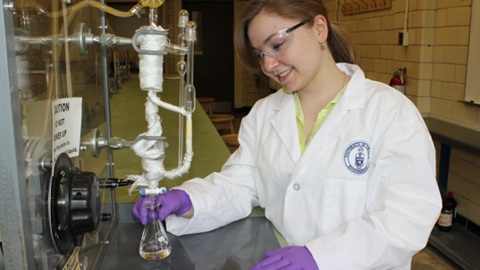
Safety first! It’s a common refrain in research labs around the world, yet accidents stubbornly continue to happen – sometimes with deadly consequences. That’s why fourth-year engineering student Larissa Rodo (ChemE 1T3 + PEY) designed a new tool that helps academic researchers overcome the human tendency to underestimate risk.
With a focus on fostering safety-conscious work cultures, Rodo’s tool recently won her second prize in the 2014 Minerva Canada James Ham Safe Design Engineering Student Awards contest – an award named after James Ham, a former electrical engineering chair, U of T Engineering dean and U of T president.
Rodo’s project started by examining over 85 accidents in North American university labs, where she found that many bad decisions (that in hindsight look like preventable mistakes) don’t seem all that risky at the time.
“Why would you think that’s a good idea? What are the chances of that going wrong? These are questions that came up again and again as I was reading the accident reports,” said Rodo.
The psychology of lab safety culture in any work environment is a tricky business. Human beings are notoriously bad at judging how risky an action is. It requires diligent oversight to prevent the mantra of “it won’t happen to me” from ruling the day.
“Everyone knows there’s a risk but not necessarily the magnitude. For me, it’s getting beyond the paperwork and getting people to care,” said Rodo.
To help strengthen safety leadership in universities and colleges, she adapted the high standards of safety culture that exist in industry to academic settings. She developed a set of self-assessment tools, similar to a checklist, with a series of guided questions that are tracked.
These exercises in self-assessment build awareness for laboratory safety culture from a managerial standpoint, and they use historical accounts of accidents to reinforce the need for safety culture in universities. They also help administrators monitor safety in their labs and establish benchmarks and goals for training, reporting and communicating.
Rodo first brought her idea to chemical engineering Associate Chair Graeme Norval (ChemE), who encouraged her to pursue her research through an independent studies credit.
“While safety, in general, is managed well in many departments, there were previously no tools that department chairs could use to measure the safety performance of their own departments,” said Norval.
The 2014 Minerva Canada James Ham Safe Design Engineering Student Awards challenge engineering undergraduates from universities and colleges across Canada to make an original contribution toward integrating safety into engineering design.
The $1,500 prize was presented at the WSPS Partners in Prevention Health and Safety Conference on April 30 in Mississauga, Ontario, Canada.
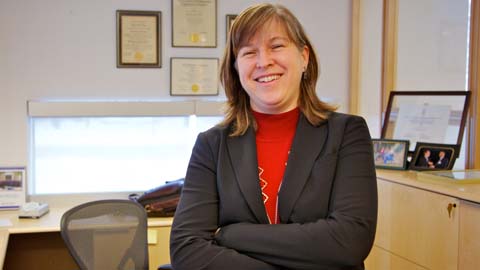
Vice-Dean, Undergraduate Susan McCahan and MIE Chair Jean Zu have been recognized by the American Society for Engineering Education (ASEE) for their contributions to engineering education. Professor McCahan is the 2014 recipient of the ASEE Sharon Keillor Award for Women in Engineering Education, which honours a female educator who has an outstanding record in teaching engineering. Professor Zu has won the 2014 ASEE Donald E. Marlowe Award for Distinguished Education Administration, given to an administrator who makes significant ongoing contributions to education for engineering. Susan McCahan is a gifted educator who has shown a continuing commitment to improving students’ learning experience. In 2002, she spearheaded the development and implementation of the Faculty’s flagship course, “Engineering Strategies and Practice”. In 2006 she was appointed first-year chair, and oversaw the development of programs that significantly improved student retention. Serving as vice-dean, undergraduate since 2011, McCahan created two graduate level courses in the area of teaching and learning, and has been key in developing the Faculty’s new graduate program in engineering education. She has received several honours for her teaching and educational initiatives, including the U of T President’s Teaching Award, the 3M National Teaching Fellowship, the Alan Blizzard Award, the Engineers Canada Medal of Distinction in Engineering Education and the OCUFA Teaching Award.
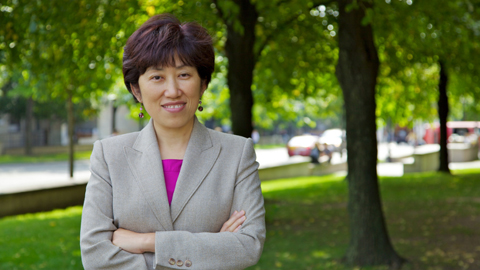
Distinguished Education Administration (Photo: Mark Balson).
Jean Zu has served as chair of the department of mechanical and industrial engineering since 2009. In this role, she has introduced a new focus on design, spearheading the creation of capstone design courses and multinational industry-sponsored capstone projects, as well as the Institute for Multidisciplinary Design. She has also promoted and supported student clubs and co-curricular activities, and encouraged student involvement in the development of departmental policies. At the graduate level, the industrial partnerships, international exchanges and leading-edge research centres she has initiated have led to increased research and educational opportunities for the Faculty’s students. Professor Zu is a Fellow of the Engineering Institute of Canada, the Canadian Academy of Engineering and the American Association for the Advancement of Science. She is currently president of the Engineering Institute of Canada. “These two outstanding educators have had a transformative impact on student learning and student experience,” said Dean Cristina Amon. “Their recognition by this prestigious society is a testament to that impact, and to the exceptional calibre and dedication of our professors and administrative leaders.” Professors McCahan and Zu will be honoured at the 2014 ASEE Annual Conference and Exposition’s Awards Ceremony, on June 16, 2014 in Indianapolis, Indiana.
On a cold winter morning, waiting for the ferry on Toronto Islands can be a miserable experience. With no heated shelter, few benches and little protection from the elements, many of the 750 island residents are left shivering outdoors.
To tackle this issue, first-year engineering students at U of T found new ways to design the docks. Their ideas – along with solutions for seven other challenges across the GTA – were showcased at a packed public event this month.
From swirly mops to freezable freezers, the one-day event was the finale of Praxis II, a unique hands-on course from the Engineering Science program that encourages students to collaborate with communities throughout the GTA.
“The term ‘praxis’ refers to the process of integrating ideas and actions, which is central to engineering design,” said Professor Jason Foster (EngSci), one of the course organizers. “In their first year, students already learn how to transform their ideas and classroom knowledge into designs that address real-world challenges.”
“Before we even started thinking about our solution, we visited the Islands and talked directly with residents,” said student Sara Maltese (EngSci 1T7), who shared her team’s ideas with CBC Radio. “We then designed an inexpensive fabric structure for shade, and a separate structure with button-activated heat.”