
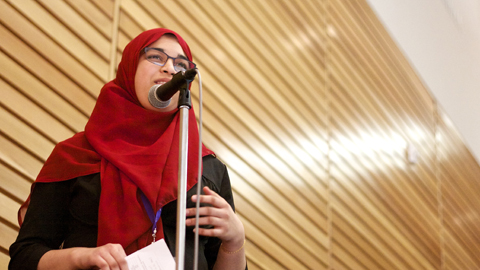
“If you’re not failing enough, are you challenging yourself enough?”
These were wise words shared by Kathy Lee, President & CEO of GE Capital Canada, as she opened this year’s Women in Science & Engineering (WISE) National Conference.
On March 22 – 23, WISE brought together over 200 students, young alumni and empowered women to celebrate careers in science and engineering. The conference inspired participants through over a dozen workshops, keynote speakers and panel discussions focusing on the theme: ‘Experience: A measure of tomorrow.’
Organized by WISE’s U of T Chapter, this year’s conference also included two case competitions in business technology and social entrepreneurship, each with $1000 cash prizes.
“WISE is an impressive initiative that enriches and inspires women from all backgrounds,” said Dean Cristina Amon, who spoke at the event’s closing ceremony. “This conference helps women to realize their boundless potential and opportunity – not only for a future in science and engineering, but also in their ability to inspire others.”
“The goal of this year’s conference was to present the importance of experience. Experience is not always the new things that happen, it’s what you did with the situation you were given,” said Chakameh Shafii (MechE 1T2, MASc 1T4), President of WISE’s U of T Chapter. “Thank you to the many sponsors, delegates and the WISE team for making this event a huge success.”
Find a snapshot of the weekend’s activities in the curated Twitter stream below.
Dean Cristina Amon, along with fellow Professors Aimy Bazylak (MIE), Tobin Filleter (MIE) and Craig Simmons (IBBME, MIE), have been honoured by the Canadian Society for Mechanical Engineering (CSME). Professor Filleter is the 2014 recipient of the I. W. Smith Award, for outstanding achievement in creative mechanical engineering within 10 years of graduation. Professors Bazylak and Simmons were elected CSME Fellows, for excellence in mechanical engineering and significant contributions to the profession. Dean Amon received the Robert W. Angus Medal, for outstanding contributions to the management and practice of mechanical engineering.
About Professor Tobin Filleter
Professor Filleter held a postdoctoral fellowship at Northwestern University before joining MIE in 2012. He is a leader in the emerging field of nanomechanics, with applications to nanostructures in a variety of mechanical engineering disciplines. Professor Filleter’s work relating to metallic nanowires, carbon nanotube fibers and ultrathin films has already received international attention. His results relating to carbon nanotube fibers have demonstrated an increase in the strength-to-weight ratio of an order of magnitude; this has significant implications for the reinforcement of composite materials. Professor Filleter has authored more than 20 papers in top international journals and his work has been cited over 570 times.
About Professor Aimy Bazylak
Professor Bazylak has established herself as an expert in polymer electrolyte membrane (PEM) fuel cells. In 2007, her pioneering research uncovered the irreversible damage that the PEM fuel cell gas diffusion layer may endure during device assembly. In 2012 Professor Bazylak received the Ontario Ministry of Research and Innovation Early Researcher Award. In 2013 she was awarded a prestigious NSERC Discovery Accelerator Supplement. She is the associate director of the University of Toronto Institute for Sustainable Energy and associate director of a NSERC Collaborative Research and Training Experience (CREATE) program focused on developing clean energy solutions for remote communities in northern Canada.
About Professor Craig Simmons
Professor Simmons is the Canada Research Chair in Mechanobiology. His research applies mechanical engineering principles to biological applications, with a view to establishing the role that mechanical forces play in regulating biological functions. He was the first to establish the relationship between blood flow forces on heart valve leaflets and the development of heart disease. Professor Simmons is currently the director of the NSERC CREATE program in Microfluidic Applications and Training in Cardiovascular Health (MATCH), as well as the Associate Director, Research for the Institute for Biomaterials & Biomedical Engineering (IBBME). He received the 2009 Early Career Teaching Award and the 2010 McCharles Prize for Early Career Research Distinction from the Faculty. In 2012 he garnered the University of Toronto McLean Award.
About Dean Cristina Amon
Dean Amon is Alumni Chair Professor of Bioengineering in MIE and Dean of the Faculty of Applied Science and Engineering. Her research pioneered computational fluid dynamics techniques for simulation-based thermal design of electronics subject to competing constraints. This led to the creation of multi-stage concurrent thermal design methodology, which has significantly reduced the time required for thermal design of portable electronics. Dean Amon has also been a tireless advocate for increased diversity in the engineering profession, and has spearheaded efforts to increase the Faculty’s diversity and address gender disparity. She has garnered dozens of prestigious awards and fellowships for her leadership, education and research achievements.
“The continued success of our faculty in receiving these prestigious awards is a testament to the calibre of our leadership and research accomplishments,” said Dean Amon. “I am grateful to the CSME for this recognition and to my fellow award recipients for their exceptional contributions to the Faculty and to the field.”
CSME award recipients will be honoured at the Congress Banquet on Tuesday, June 3, 2014, as part of the 2014 CSME International Congress, hosted by the University of Toronto.
Whether it refers to the environment, a start-up business or somebody’s wallet, the term sustainability has become a buzzword of the 21st century.
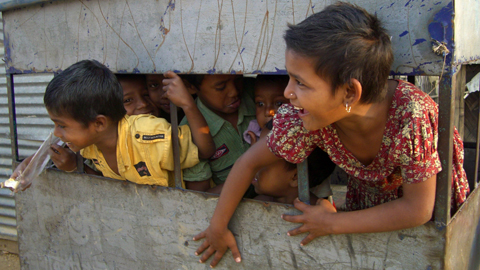
But in areas like Dhaka, Bangladesh – where a quarter of the population lives below the poverty line and half of children are malnourished – if parents cannot feed their families, economic sustainability is far from reality.
U of T’s Centre for Global Engineering (CGEN) recently brought together graduate students from across campus to tackle this issue. Combining expertise in science, business, engineering and health, they explored integrated solutions for fighting childhood hunger in urban developing regions.
In the ‘Interdisciplinary Approach to Global Challenges’ course, every aspect of Dhaka was scrutinized. Students examined the city’s cultural, business and political frameworks, while evaluating the success of recent technical approaches.
“I believe health concerns all around the world can be resolved if we work across the disciplines,” said Professor Arun Chockalingam, associate director for scientific programs in the Institute for Global Health Equity & Innovation at the Dalla Lana School of Public Health. “This course has demonstrated the benefits of linking creative minds from different areas.”
A solution for breastfeeding
One group proposed Mother’s Milk, a new method of ensuring that working mothers can provide their infants with the immense health benefits of breast milk.
Women in Dhaka earn a living primarily through full-time work in the city’s garment industry, which limits their ability to breastfeed. By partnering with garment industry clinics, the students’ proposal aims to provide lactating women with the opportunity to express milk twice a day using a multi-user breast pump.
The team – which included Marta Blackwell, from the Munk School of Global Affairs; Micaela Collins, from the Dalla Lana School of Public Health; Scott Genin (ChemE PhD 1T5), from Engineering; and Puja Madhok, from the Rotman School of Management – also designed a sand-based heating device that can pasteurize the milk, allowing it to be stored longer without refrigeration. This reduces mothers’ reliance on formula and leads to fewer episodes of childhood illness.
Mother’s Milk could further benefit Dhaka’s economy by boosting the well-being of mothers, increasing earning power and reducing absenteeism and turnover at factories.
“Technological innovations have a very important role to play in global development, but they need to be created with context in mind,” said Professor Yu-Ling Cheng, director of CGEN. “We need engineers, social and political scientists, and business leaders to work together.
“An integrated solution that incorporates the entire value chain – from idea generation in the lab, to creating a business model and influencing user adoption – would have a better chance of being implemented than if we solely focused on technology.”
Established in 2009, the Centre for Global Engineering encourages faculty and students from U of T Engineering and across the University to think creatively about some of the world’s most important problems.
Find out more about CGEN’s impact.

Turbulence. The word often conjures feelings of bouncing back and forth in an airplane seat. You tighten your grip on the armrests, and the intercom crackles, “Ladies and gentleman, the captain has turned on the fasten seatbelt sign.”
But here on the ground, turbulence is everywhere. It’s what causes smoke to curl as it rises from a chimney, and mixes milk in your coffee as you stir. It also comes off your lips when you say things like ‘foxy’ or ‘pirate ship’.
Despite its ubiquity, scientists have struggled to predict and understand turbulence since the day we discovered it. Recent experiments have even disputed the most basic principles we thought we knew, threatening the accuracy of tools that many engineers need to model and simulate it.
However, new research in the Journal of Fluid Dynamics from the University of Toronto Institute for Aerospace Studies (UTIAS) has provided conclusive evidence that reinforces these basic principles and ends a decade-long debate in the field.
Published by Jason Hearst (UTIAS PhD 1T4) and Professor Philippe Lavoie (UTIAS), the study ensures the precision of our modern understanding of turbulence.
U of T Engineering spoke with Professor Lavoie to better understand why his research matters to engineering as we know it.
Turbulence refers to more than just airplanes and stock markets — can you explain what it is?
 Turbulence can happen during any fast flow of liquids or gases. When the flow velocity increases past a certain value, among other things, it can become unstable and break down to a more chaotic state. (We refer to this as reaching a certain critical Reynolds number, a measure of the importance of inertial forces versus viscosity in a fluid flow). This results in a series of rapid fluctuations in velocity that we call turbulence. It can often appear as swirling patterns called eddies.
One way to understand turbulence is by looking in our kitchen sink. When you turn the tap on slowly, there is a smooth, steady stream of water. If you open the tap all the way, this smooth stream breaks down and the water can spray everywhere. Affected by speed, friction and other aspects, the flow reaches a high enough Reynolds number that viscosity can no longer dampen the instabilities. It becomes turbulent.
Another example can be found by looking at smoke rising off an incense stick. When the smoke first leaves the tip, it usually rises in a straight uninterrupted line. But as the jet of hot smoke rises, it becomes unstable and it starts to break down. That’s when you see the wisps and swirls of smoke, and that’s turbulence.
Why is it important for engineers to understand turbulence?
Turbulence affects engineers in almost every field, even weather prediction. This is because most industrial fluid flows are turbulent, as we often try to move a lot of liquids or gases very quickly. Just look at oil in a pipeline, air in a combustion engine, drainage under a city street and more.
Although there are no close-formed solutions to mathematically describe it, there are some fundamental concepts that help us to understand key aspects. These are incorporated in models that we use to build computer simulation tools.
It’s these tools that engineers use to design and test any number of systems across many industries. In order for their simulations to be accurate, we must understand the basic principles of turbulence.
Could you explain the debate your research addressed?
About ten years ago, researchers started examining something called fractal turbulence. They would pass a fluid flow through a fractal object, such as a grid, so that it forces the turbulence at different scales. They can then see how it’s affected.
 There is a fractal grid on the cover of the journal where our research was published (left).
The results of these experiments did not behave as we would have expected, and thus seemed to suggest that our previous understanding of turbulence was wrong on some very fundamental points. It questioned some of the basic principles of turbulence theory.
And this brought significant debate over the past decade in your field. What did your results show?
To examine this debate, my PhD student, Jason Hearst, and I used a wind tunnel to test a new type of fractal grid that we designed. Our grid allowed us look at the problem in a different way than anyone had before.
Through this experiment, we were able to reconcile both regular and fractal grid turbulence data. We conclusively showed that fractal turbulence was behaving the same way as classical turbulence, which has not been shown before.
Although fractal turbulence has some different features, it’s not fundamentally different. This evidence settled a long debate, as it demonstrated that our understanding of turbulence does not need to be fundamentally altered.
What impact does this have for us as engineers?
Engineers rely on accurate computer simulation tools to design many processes and systems. If those simulation tools are incorrect, it has significant impact on the resulting efficiency of these fluidic systems.
When you’re designing a heat exchanger, for example, the rate at which heat will be transferred depends on the turbulence in the flow field. So you need to be able to model that turbulence properly.
Also, what would happen if we did not have precise simulations for a new airplane wing design? The plane might not ever get off the ground.
Why hasn’t this debate been settled earlier?
It’s like the Indian parable about the blind men and the elephant. Each one only touches one part of the elephant, and given the limited information that each obtains, they all think they’re touching something very different.
It was basically a case of that. We thought we were looking at a different beast, because we weren’t looking at the whole picture. It just turns out we were just putting our finger on a different spot.
(Parts of this interview have been condensed and edited.)
A long time ago, in a galaxy far, far away—well, actually, last week on the University of Toronto’s St. George campus – speed and stunts worthy of the Millenium Falcon wowed the crowd at the first Jedi Wars flying robotics competition.
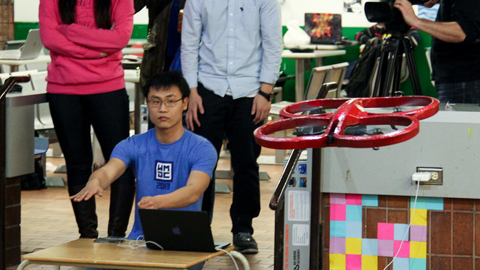
Fourth-year undergraduate students in The Edward S. Rogers Sr. Department of Electrical & Computer Engineering (ECE) put their gesture-controlled drones to the test in a battle that displayed their skills in programming, piloting, teamwork and creativity.
With the flick of a wrist, Silverio Miranda (CompE 1T4) sent a drone soaring high in the air, flipping and rotating with ease. But he didn’t use The Force – he piloted his gesture-controlled quadcopter with hand and arm movements.
The four teams in the competition – Team AFK, Team Freedom, Team Goose and Team Roar – spent the past year designing and writing unique gesture-input programs to control the drones, and practicing precision piloting. Energy was high ahead of this, their first event, a talent competition, designed to show off original stunts and manoeuvres.
“I’m a little nervous,” said Xiabo Zhang (CompE 1T4), pilot for Team Goose. “We have a secret weapon we’re going to bring out; we’ll see if it works.”
Professor Parham Aarabi (ECE) acted as faculty advisor to all four teams, helping them hone their skills over the course of the year. Watch a preview and interview with Professor Aarabi (1:31).
“They’ve come up with a lot of interesting aerial tricks and new manoeuvres we haven’t seen before,” said Professor Aarabi. “My prediction of who would win this competition has changed continuously throughout the year.”
Team AFK took top prize in the talent competition, stunning the audience by performing precision spins and flips about 10 metres off the ground. This earned them a five-second head start during the time trial race, after which teams were ranked from first to fourth before proceeding straight into semi-finals, then the bronze and gold-medal matches.
Speed and efficient flying won Team Roar the gold medal. Each member of Team Roar took home a Leap Motion Controller, a device that lets you interact with your computer, robots and smart devices by moving your hands and fingers in the air – translating your motions into precise 3D input. Silver-medal winners Team AFK also earned prizes from Leap Motion and Team Freedom won the glory of bronze.
“I think we deserved this win because it’s been a long process; a lot of late nights,” said Team Roar’s Junqian Zhang (ElecE 1T4).
“We focused on developing good tricks for the talent portion, but that was really time-consuming,” added Ming Fei Wang (CompE 1T4). “We crashed a lot of times.”
Aarabi has hosted robotics competitions before, but never with flying robots.
“This was about students using their own imaginations to see what they can do with some really cool technology,” he said. “It was great to see so many people enthusiastic about the projects, and to see the students having fun.”
Stay tuned for a segment about Jedi Wars on the Space Channel television show InnerSpace. Cameras were on hand to interview all four teams and film the fierce competition.
See more photos from Jedi Wars 2014.

Whether we’re transporting goods halfway across the planet, or making steel in large-scale factories, limiting our carbon emissions is an immense challenge.
But Professor Murray Thomson (MIE) and his team at U of T Engineering are up to the task. Their research explores new types of biofuel, different combustion methods and advanced sensors that are all aimed at reducing our impact on the environment.
Professor Thomson, Director of the Combustion Research Laboratory and the NSERC CREATE program in Clean Combustion Engines, recently spoke with U of T’s Sustainability Office about how his research is creating a cleaner tomorrow.
Who are you, and what do on campus?
My work involves researching bio-fuels and combustion, as well as developing sensors to improve energy efficiency in large industrial processes. There are a lot of new and forthcoming regulations in the area of pollution, including new standards for gasoline engines, diesel engines and aircraft. My challenge is to lower particulate emissions to meet these new standards.
In terms of bio-fuel, we are currently working with a number of different types, including biodiesel and something called bio-oil, which is made from sawdust and waste wood. Canadian companies are very prominent in the bio-oil sector, and we are collaborating with them on improving the utility of these fuels.
What does your position at NSERC entail?
I am a member of the research management committee at the BioFuelNet NSERC National Center of Excellence, where research activities are divided into four different themes covering the entire life of bio-fuel: feedstock, conversion, utilization and Social, Economic and Environmental Sustainability. I am a co-leader in the “utilization” section, which looks at the practical, pragmatic uses of bio-fuels.
As well I am the director of the NSERC CREATE program in Clean Combustion Engines, a 6-year training and internship program for graduate students that focuses on bio-fuels and other alternative fuels.
How do you define sustainability?
Sustainability is a process or a product that could go on indefinitely. Bio-fuels are a good example. From a carbon point of view, one could say they are sustainable, because for every kilogram of CO2 absorbed by a plant, a kilogram is then burnt as fuel and released. Theoretically, at least, there is no net CO2 produced.
What have been your greatest environmental successes?
From a scientific point of view, we did some of the earliest and most cited works on the combustion of butanol, which is a proposed alternative to ethanol that looks like it will be commercialized in the next few years.
With regards to commercialization and patenting, we’ve been successful in our development and commercialization of optical sensors for industrial process control. As far as having a big impact goes, the industrial furnaces in which we install these sensors are enormous consumers of energy. They are a good place to look for improvements to energy efficiency, because a small reduction of even a few percentage points can make a huge difference.
They also emit a great deal of CO2, so making the system more efficient represents not only a win for the company, which doesn’t have to spend as much on energy, but also for the environment. I’ve been working in this area for 15 years, and our lab here at the University of Toronto now has a number of sensors in various stages of commercialization.
Do you have any favorite environmental hobbies or activities outside of work?
I do a lot of canoe camping in the summer near Lake Temagami, which is a lovely spot up north. The trip I want to get working on is to the Spanish River. The railroad literally comes right up to the lake there. You can take your canoe on the train, get off, and start paddling right from the edge of the tracks. It’s an old tradition, dating back over a hundred years.
Is there anyone you’re impressed with for having made a practical difference on the Canadian bio-fuel scene?
Someone I’m impressed with who’s been able to make a difference is Esteban Chornet, a former professor at the University of Sherbrook. He started a company called Enerkem , which is now developing a process in Edmonton that makes ethanol from garbage.
Also, there is David Boocock, a professor in the Chemical Engineering department at the University of Toronto who started a company called Biox , which takes waste animal fat and turns it into bio-diesel.
I give them credit, because I know from personal experience how difficult it is to commercialize research ideas.
Professor Murray Thomson and the Combustion Research Laboratory recently celebrated a 20-year anniversary partnership with Tenova Goodfellow Inc. The two groups continue to work closely together on the development of new optical sensors used in more efficient steel-making. Read more.