
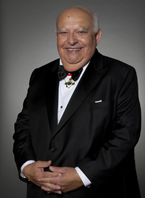
 Adel S. Sedra, professor and former chair of The Edward S. Rogers Sr. Department of Electrical & Computer Engineering, has been appointed to the Order of Ontario for 2013. The appointees were announced January 23 and invested by the Honourable David C. Onley, Lieutenant Governor of Ontario, at a ceremony at Queen’s Park.
Professor Sedra was selected for his distinguished engineering career as scholar and professor, as well as a leader in university administration. His seminal work has resulted in major developments in fields ranging from medical technology to wireless communications. With Professor K.C. Smith, Professor Sedra co-authored Microelectronic Circuits, the best-selling engineering textbook in history.
Created in 1986, the Order of Ontario, the province’s highest official honour, recognizes the highest level of individual excellence and achievement in any field. Professor Sedra is one of eight members of the University of Toronto community to be appointed in 2013. Also appointed were journalist Steve Paikin, film director David Cronenberg, lawyer and rights activist Avvy Yao Yao Go and pediatric neurosurgeon James Rutka, among other luminaries.
“Our province is richer for the contributions of these distinguished individuals,” said the Honourable David C. Onley, Lieutenant Governor of Ontario. “Through drive and determination they have pushed boundaries and serve as truly outstanding examples for all Ontarians.”
Professor Sedra received a B.Sc. degree from Cairo University, Egypt, in 1964, and his M.A.Sc. and Ph.D. degrees from the University of Toronto in 1968 and 1969 respectively; all in electrical engineering. He joined the faculty of the University of Toronto in 1969, rising to the rank of Professor in 1978. He served as chair of ECE from 1986-1993, and assumed the position of Vice-President, Provost, and Chief Academic Officer of the University of Toronto in 1993, a position he held until 2002. He joined University of Waterloo in 2003 as Dean of the Faculty of Engineering and a professor of Electrical and Computer Engineering.
Professor Sedra returned to University of Toronto earlier this month to deliver a Distinguished Lecture on his vision for the future of universities.
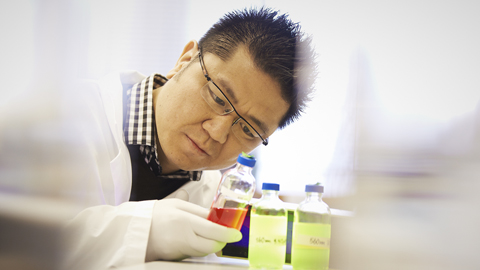
A team of researchers at the University of Toronto has discovered a method of assembling ‘building blocks’ of gold nanoparticles as the vehicle to deliver cancer medications, or cancer-identifying markers, directly into cancerous tumours.
The study, led by Professor Warren Chan of U of T’s Institute of Biomaterials & Biomedical Engineering (IBBME) and the Donnelly Centre for Cellular & Biomolecular Research, appears in an article in Nature Nanotechnology this week.
“To get materials into a tumour, they need to be a certain size,” explained Professor Chan. “Tumours are characterized by leaky vessels with holes roughly 50 – 500 nanometers in size, depending on the tumour type and stage. The goal is to deliver particles small enough to get through the holes and ‘hang out’ in the tumour’s space for the particles to treat or image the cancer.”
“If a particle is too large,” continued Chan, “it can’t get in, but if the particle is too small, it leaves the tumour very quickly.”
Professor Chan and his researchers solved this problem by creating modular structures ‘glued’ together with DNA.
“We’re using a molecular assembly model – taking pieces of materials that we can now fabricate accurately and organizing them into precise architectures. It’s like putting LEGO blocks together,” said Leo Chou, a PhD student at IBBME and first author of the paper. Chou was awarded a 2012-13 Canadian Breast Cancer Foundation Ontario Region Fellowship for his work with nanotechnology.
“The major advantage of this design strategy is that it is highly modular, which allows you to ‘swap’ components in and out,” said Chou. “This makes it very easy to create systems with multiple functions, or screen a large library of nanostructures for desirable biological behaviours.”
The long-term risk of toxicity from particles that remain in the body, however, has been a serious challenge to nanomedical research.
“Imagine you’re a cancer patient in your 30s, and you’ve had multiple injections of these metal particles,” said Professor Chan. “By the time you’re in your mid-40s, these are likely to be retained in your system and could potentially cause other problems.”
DNA, though, is flexible, and over time, the body’s natural enzymes cause the DNA to degrade, and the assemblage breaks apart. The body then eliminates the smaller particles safely and easily. While the researchers are excited about this breakthrough, Professor Chan cautioned that there is still more work to do.
“We need to understand how DNA design influences the stability of things, and how a lack of stability might be helpful or not,” he said. “The use of assembly to build complex and smart nanotechnology for cancer applications is still in the very primitive stage of development. Still, it is very exciting to be able to see and test the different nano-configurations for cancer applications.”
The project was funded by the Canadian Institutes of Health Research (CIHR), Natural Sciences and Engineering Research Council of Canada (NSERC), Canadian Breast Cancer Foundation (CBCF) and Canada Foundation for Innovation (CFI).
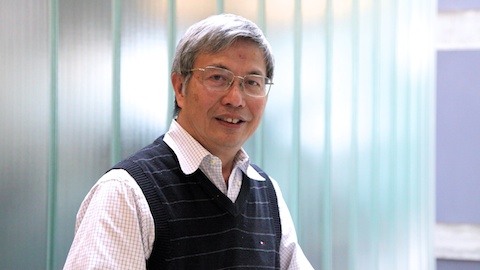
Professor Honghi Tran (ChemE), Director of the Pulp & Paper Centre, has been awarded the John S. Bates Memorial Gold Medal by the Pulp and Paper Technical Association of Canada (PAPTAC).
The Bates Medal is PAPTAC’s most prestigious award, instituted in 1989 to recognize the organization’s founder and first chairman, John S. Bates. The engraved gold medal is awarded annually to a single member in recognition of his or her long-term scientific and technological contributions to the pulp and paper industry.
Professor Tran is an internationally renowned expert in the field of pulp and paper research. He holds the Frank Dottori Chair in Pulp and Paper Engineering and has served as Director of the Pulp and Paper Centre since 2003. Professor Tran is known for applying his research to develop technologies and strategies for mills to increase their energy and chemical recovery efficiencies. As a result, he has attracted significant support from the pulp and paper industry not only in Canada, but worldwide, successfully creating and directing 10 large industrial research consortia to date. He is a Fellow of the Technical Association of the Pulp & Paper Industry and has won several of their most prestigious awards.
“We are delighted that Professor Tran has been recognized for his innovative research and exceptional leadership in the pulp and paper field,” said Cristina Amon, Dean of the Faculty of Applied Science & Engineering. “On behalf of the Faculty I offer my warmest congratulations for this well-deserved honour.”
Professor Tran will receive the award on February 6, during PaperWeek Canada’s Awards Business Luncheon in Montreal.
 University Professor Emeritus Bernard Etkin (UTIAS), an Engineering alumnus and former Dean of the Faculty, has been selected to receive the American Institute of Aeronautics and Astronautics (AIAA) Aerospace Guidance, Navigation, and Control Award for 2014. This award has been bestowed on Professor Etkin “for outstanding achievement in and dedication to research and education in the field of guidance, navigation and control for over a half century.”
A graduate of the Faculty’s Engineering Physics program, Professor Etkin’s accomplished career encompassed aeronautical research, consulting, teaching and academic leadership. In 1957, he joined the University of Toronto Institute for Aerospace Studies, where he taught 30 courses in aeronautics over the course of his career. He served as Dean of the Faculty of Applied Science & Engineering from 1973-1979.
Professor Etkin’s research on aerodynamic theory led to eight patents and three widely used books on flight dynamics, which have been published in several languages. He contributed to the design and production of two gliders and most of the Avro and de Havilland aircrafts. Professor Etkin also made many contributions to space flight. Most notably, he was a member of the team at UTIAS which helped avert a tragedy when an in-flight explosion damaged the Apollo 13 spacecraft. When the service module became crippled, they performed crucial calculations on the correct pressure needed to separate the entry module from the damaged spacecraft, allowing the astronauts’ safe return.
Professor Etkin is a Founding Fellow of the Canadian Academy of Engineering and a Fellow of the Royal Society of Canada, the American Institute of Aeronautics and Astronautics and the Canadian Aeronautics and Space Institute. He was inducted into the Order of Canada in 2003.
“Bernard Etkin exemplifies the commitment to excellence and to service that we strive to instill in all our graduates,” said Cristina Amon, Dean of the Faculty of Applied Science & Engineering. “It was our great good fortune that he chose to spend his career at U of T. On behalf of the Faculty, I offer my warmest congratulations on this prestigious award.”
The award was presented on January 14, 2014, at the AIAA Science and Technology Forum and Exposition in National Harbor, Maryland.

Before co-founding one of the Internet’s most popular websites, Alexis Ohanian suffered some pretty big failures. The biggest was My Mobile Menu, a mobile app that could allow users to order food before arriving at restaurants.
It was an idea ahead of its time (smartphones were still rare) so when Ohanian and partner Steve Huffman pitched the notion to venture capitalist Paul Graham he was quick to reject it.
Ohanian and Huffman conceived Reddit and the rest is Internet history. The popular social news site had 100 million visitors in the last month alone, clicking through five billion pages of articles, photos and videos.
“Sucking is the first step to being sort of good at something,” explained Ohanian to over 300 University of Toronto students this week, hosted by the U of T Engineering’s Entrepreneurship Hatchery.
Ohanian eagerly recalled his post-university days of inventing Reddit, encouraging students to, “start having ideas and do them. Don’t let ‘I don’t know what I’m doing’ stop you from doing it.”
Ohanian was joined by U of T alumnus, Yuri Sagalov (EngSci 0T8 + PEY), who recently co-founded AeroFS, a start-up offering a file syncing and storage tool for businesses that need increased online security.
“My advice is to build something that you’re passionate about,” urged Sagalov, who hasn’t been immune to failures either. During an early funding pitch, he once had a potential investor get up and walk right out of the room. AeroFS overcame these early hurdles to attract investment from the likes of Reddit’s Ohanian and others.
Joseph Orozco, Executive Director of The Entrepreneurship Hatchery, said failure is okay, as long as it’s not the end. “This is the time to take the risk. And if students have an idea, the Hatchery is a great place to start.”
Now in its second year, the Hatchery boasts a team of experienced mentors and 48 student entrepreneurs. Students are hatching ideas like Air Xposure, an affordable way to take aerial video using helicopter drones, and Modly, a portable lighting system for smartphone photos.
The Entrepreneurship Hatchery will continue to grow in its new home in the Centre for Engineering Innovation & Entrepreneurship (CEIE) a dynamic new environment that will foster creativity and inspire 21st-century learning and innovation. CEIE is set to break ground later this year.
Ohanian’s visit to U of T kicks off the second leg of a North American tour promoting his new book, Without Their Permission: How the 21st Century Will Be Made, Not Managed, which includes 77 university stops.
“Why 77 universities?” Ohanian finished, “because this is what I wish I’d been told when I was in school.”
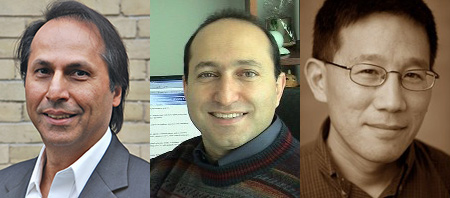
Professors Nasser Ashgriz (MIE), Shahrokh Valaee (ECE) and Christopher Yip (ChemE, IBBME) have been elected Fellows of the Engineering Institute of Canada (EIC), on the basis of “exceptional contributions to engineering in Canada.” The EIC is a federation of Canadian engineering societies that sponsors education standards, recognizes individual engineers and records engineering history.
Nasser Ashgriz has made outstanding contributions in the area of fluid dynamics with widespread relevance across industry and society. His research has contributed to improvements in items ranging from fuel injectors to solid and liquid propellant rocket engines to ink-jet printers. His collaborations have spanned several industries, including auto, aerospace, utilities, pulp and paper and printing. Professor Ashgriz’s achievements have been recognized with a number of prestigious awards, including the TOKTEN (Transfer of Knowledge Through Expatriate Nationals) Award from the United Nations and the Ralph Teetor Award from the Society of Automotive Engineers. He is a Fellow of the American Association for the Advancement of Science.
Shahrokh Valaee, Associate Chair for Undergraduate Studies in The Edward S. Rogers Sr. Department of Electrical & Computer Engineering, has made significant contributions in the areas of signal processing and communications networks throughout his career. In particular, his work on distributed source localization has created a new research area and established him as a leader in the field of signal processing. Professor Valaee has an outstanding record of leadership in his professional community. He is the Editor of IEEE Transactions on Wireless Communications and has served on the Technical Program Committee of more than 70 international conferences and symposiums. Professor Valaee is an Honorary Member of The Canadian Society of Iranian Engineers and Architects and a Senior Member of IEEE.
Christopher Yip serves as the Director of the Institute of Biomaterials & Biomedical Engineering. He was elected for his innovative research focusing on the development and application of tools for measuring the biophysical characteristics of single molecules. Professor Yip is also an outstanding teacher, educating students at all levels at the critical interdisciplinary junction between medicine and engineering. He contributes to the teaching programs of the Faculty of Applied Science & Engineering and the Faculty of Medicine and has won teaching awards from both faculties. Professor Yip is a Fellow of the American Association for the Advancement of Science. He held the Canada Research Chair in Molecular Imaging from 2000-2010.
“We are delighted that the Engineering Institute of Canada has recognized the achievements of these outstanding engineers,” said Cristina Amon, Dean, Faculty of Applied Science & Engineering. “On behalf of the Faculty, I congratulate them for their many accomplishments and thank them for their contributions to U of T and to the engineering profession.”
New Fellows will be honoured at the EIC’s Annual Awards Gala in Ottawa on March 15, 2014, presided over by Professor Jean Zu (MIE), EIC President.