
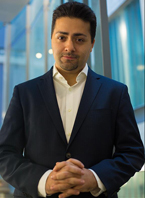
A new algorithm designed at the University of Toronto has the power to profoundly change the way we find photos among the billions on social media sites such as Facebook and Flickr. This month, the United States Patent and Trademark Office will issue a patent on this technology.
Developed by Parham Aarabi, a professor in The Edward S. Rogers Sr. Department of Electrical & Computer Engineering, and his former Master’s student Ron Appel (ECE MASc 0T8), the search tool uses tag locations to quantify relationships between individuals, even those not tagged in any given photo.
Imagine you and your mother are pictured together, building a sandcastle at the beach. You’re both tagged in the photo quite close together. In the next photo, you and your father are eating watermelon. You’re both tagged. Because of your close ‘tagging’ relationship with both your mother in the first picture and your father in the second, the algorithm can determine that a relationship exists between those two and quantify how strong it may be.
In a third photo, you fly a kite with both parents, but only your mother is tagged. Given the strength of your ‘tagging’ relationship with your parents, when you search for photos of your father the algorithm can return the untagged photo because of the very high likelihood he’s pictured.
“Two things are happening: we understand relationships, and we can search images better,” says Professor Aarabi.

The nimble algorithm, called relational social image search, achieves high reliability without using computationally intensive object- or facial-recognition software.
“If you want to search a trillion photos, normally that takes at least a trillion operations. It’s based on the number of photos you have,” says Aarabi. “Facebook has almost half a trillion photos, but a billion users—it’s almost a 500 order of magnitude difference. Our algorithm is simply based on the number of tags, not on the number of photos, which makes it more efficient to search than standard approaches.”
Work on this project began in 2005 in Professor Aarabi’s Mobile Applications Lab, Canada’s first lab space for mobile application development.
Currently the algorithm’s interface is primarily for research, but Aarabi aims to see it incorporated on the back-end of large image databases or social networks. “I envision the interface would be exactly like you use Facebook search—for users, nothing would change. They would just get better results,” says Aarabi.
While testing the algorithm, Aarabi and Appel discovered an unforeseen application: a new way to generate maps. They tagged a few photographs of buildings around the University of Toronto and ran them through the system with a bunch of untagged campus photos. “The result we got was of almost a pseudo-map of the campus from all these photos we had taken, which was very interesting,” says Aarabi.
This work received support from the Natural Science and Engineering Research Council of Canada. It will be presented at the IEEE International Symposium on Multimedia Dec. 10, 2013.
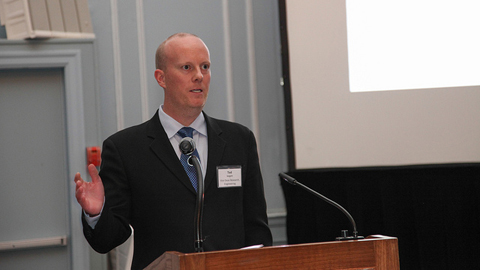
Most people don’t go looking for problems, but U of T Engineers seem to be an exception to that rule. In fact, Ted Sargent, Vice-Dean, Research for the Faculty of Applied Science & Engineering, stood in front of a room of about 200 industry partners and faculty on Nov. 21 and asked for more problems. Speaking at an industry partners reception at The Faculty Club, he then went even farther. He thanked representatives from companies ranging from telecom and software to biotech and sustainable energy for presenting some of their most difficult challenges to faculty and students. “People from industry bring to us something that is incredibly valuable, which is problems that are important. They are societally relevant, they are important to health and to the environment,” said Sargent, who is also a Professor in The Edward S. Rogers Sr. Department of Electrical & Computer Engineering (ECE) and holds the Canada Research Chair in Nanotechnology. “When you come to us with problems, we often end up making fundamental discoveries because we go off in directions we wouldn’t have otherwise,” he added. Meanwhile, Ken Stevens, Manager of Collaborative Research at Dupont Canada, stressed that his company’s research partnerships with U of T Engineering have been a two-way street.

“We value collaboration to keep our pipeline of innovation full,” he said. “I’ve been impressed by the multidisciplinary aspect of research here. This is where major things happen. It’s a wonderful institution and one of the leading research-intensive universities in the world.” While Stevens spoke of Dupont Canada’s long-term relationship with U of T Engineering, others such as April Khademi, Senior Scientist at digital pathology company PathCore, were looking to establish new partnerships.
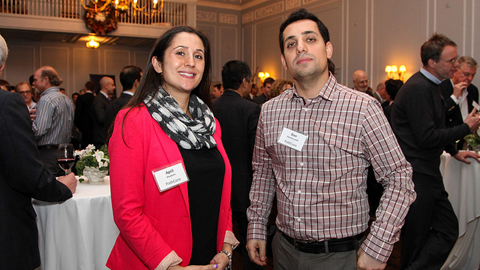
PathCore is a two-year-old company that develops software to help pathologists make better and faster diagnoses. “We want to give researchers access to our software so they can help us validate and refine it,” said Khademi. IBM contract advisor Perry Fuller says his company’s technology incubation lab has repeatedly called on U of T engineers to help with the kind of refinement Khademi is looking for. “We look at products we develop in the lab and ask if they have problems that bright minds at universities could work on. It not only gives faculty a good project, but it allows us to apply their solutions to our products,” said Fuller.
U of T Engineers got a big boost for their work in the developing world, thanks to grants from Grand Challenges Canada (GCC). Four of eight grants awarded to U of T researchers go to Engineering faculty: Timothy Chan (MIE), Radhakrishnan Mahadevan (ChemE), Javad Mostaghimi (MIE) and Edmond Young (MIE).
“This is a testament to the outstanding quality and standard of research here, and reflects the global impact U of T Engineering has,” said Professor Ted Sargent (ECE), Vice-Dean, Research, Faculty of Applied Science & Engineering.
Overall, the U of T research includes applications ranging from implementing a low-cost test for diagnosing malaria in Tanzania to reducing ambulance response times in Bangladesh.
The U of T researchers have been granted a collective $890,095 from GCC, through is ‘Stars in Global Health’ program. The focus of the funding – which comes from the Government of Canada – is on healthcare innovations that could transform the way disease is treated in the developing world.
“Innovation powers development leading to better health and more jobs. I feel proud that Canada, through Grand Challenges Canada, has supported almost 300 bold ideas to date in our Stars in Global Health program,” said Dr. Peter A. Singer, chief executive officer, GCC and a professor in U of T’s Faculty of Medicine. “This is one of the largest pipelines of innovations in global health in the world today.”
In addition to the projects of U of T researchers, GCC funded 75 other initiatives being led by researchers from a variety of other countries.
“On behalf of the U of T research community, congratulations to these global health experts,” said Professor Paul Young (CivE), Vice President, Research and Innovation at U of T. “We are thrilled that these scientists are contributing to the global fight to improve health and health care in developing countries. The health challenges people face are as difficult as ever, but researchers like these people will make a vital impact in collaboration with others around the world. We are deeply thankful to Grand Challenges Canada for this important investment.”
The U of T Grand Challenges Canada recipients from Engineering and their videos are:
[youtube https://www.youtube.com/watch?v=OrEfm98N2wU?feature=player_embedded]
Professor Timothy Chan, Mechanical and Industrial Engineering
AERO: Ambulance Emergency Response Optimization system for developing countries
“We will reduce ambulance response times by developing a software system leveraging existing infrastructure that optimizes ambulance pre-positioning locations, and provides real-time travel time estimation and route optimization info to drivers.”
[youtube https://www.youtube.com/watch?v=tnOL9n06xJI?feature=player_embedded]
Professor Radhakrishnan Mahadevan, Chemical Engineering and Applied Chemistry
Low cost TB drugs created using synthetic biology (India)
“An estimated 9 million people are infected with multi drug-resistant TB; 1.4 million die per year. Successful completion of this University of Toronto-led project will lead to an innovative yeast-based bioprocess for the low-cost synthesis of antibiotic and lower the cost (now $5,000 per patient) of treating the disease in the developing world.”
[youtube https://www.youtube.com/watch?v=JFlCQPUhjoA?feature=player_embedded]
Professor Javad Mostaghimi, Mechanical and Industrial Engineering
Development of Antibacterial Copper Coatings for Reducing Healthcare-Associated Infections
“Copper and its alloys are known to efficiently kill bacteria. The idea is to deposit a well-adhered thin layer of copper-based coatings on frequently touched surfaces of two intensive care units and compare them to a standard ICU over a long period.”
[youtube https://www.youtube.com/watch?v=muVuusz-ewU?feature=player_embedded]
Professor Edmond Young, Mechanical and Industrial Engineering
Simple liquid microculture assay for diagnosing multidrug-resistant tuberculosis
“Current methods of detecting TB remain inadequate for low-resource settings. Our idea is to develop new technology for detecting TB via direct liquid microculture that is cheap, easy to use, and able to assess resistance to many drugs at once.”
Additional U of T recipients of grants from Grand Challenges are:
Professor Shana Kelley, Biochemistry
Lab-free, low-cost malaria testing
Professor Stephanie Nixon, Physical Therapy and Dalla Lana School of Public Health
Free new online resources for the rehabilitation of HIV-related disability patients in Sub-Saharan Africa (SSA)
Professor Barry Rosen, U of T Obstetrics and Gynaecology and University Health Network
Taking a LEEP! Implementing a “See and LEEP” strategy for women in Western Kenya with positive cervical cancer screening
Professor G. Andrew Woolley, Chemistry
A simple yeast-based blood screening assay
Six members of the U of T Engineering community have been recognized by the Ontario Society of Professional Engineers (OSPE) and Professional Engineers Ontario (PEO) with Ontario Professional Engineers Awards.
Professor Stavros Argyropoulos (MSE) has been awarded a Research and Development Medal. Alumni Michael Branch (ElecE 0T3) received the Young Engineer Award, Carlos de Oliveira (CivE MASc 0T6) garnered the Entrepreneurship Medal and Charles Richard Donnelly (MinE 7T6, MASc CivE 8T1) received the Engineering Medal in the Engineering Excellence category. Anthony (Tony) Pasteris, president of Minerva Canada (a valued partner to the Faculty in safety education), received the Citizenship Award. University Professor Michael Sefton (ChemE, IBBME) is this year’s recipient of the Gold Medal, Ontario’s most prestigious engineering honour.
Throughout his 40-year career, Professor Argyropoulos has conducted pioneering research on the kinetics and assimilation of additions in liquid metals, thereby reducing the time and cost involved in developing new metal alloys. In addition, he has made significant contributions to the engineering profession through his teaching and mentoring of young engineers, his partnerships with industry and his leadership in technical societies. Professor Argyropoulos’ research was recognized with the Canadian Metal Chemistry Award in 2009. In 2010, he was inducted as a Fellow of the Canadian Academy of Engineering.
Michael Branch is the founder and CEO of Inovex Inc., a web and mobile software firm specializing in products and services for the healthcare and energy sectors. He has been instrumental in developing Inovex’s lineup of secure healthcare data collection and decision-making tools for physicians and public health policy drivers in Ontario. A committed volunteer within and outside the engineering community, Branch is currently the President of the University of Toronto Engineering Alumni Association. He also serves as a Board Member of Streetwise Actors and a member of the Haltech Regional Innovation Centre.
Carlos de Oliveira is President and CEO of Cast Connex Corporation, a company specializing in technology that enables steel structures to better withstand earthquakes. He co-founded Cast Connex (with Michael Gray) in 2007, based on a technology he developed during his MASc thesis work at U of T. de Oliveira has overseen the research, development and commercialization of several innovative product lines, from prototype development through to marketing and sales. Under his leadership, Cast Connex’s products have been adopted worldwide by industry-leading architectural and construction firms.
Charles Richard (Rick) Donnelly serves as Global Director of Water Power at Hatch Ltd. in Niagara Falls. As a globally recognized leader in dam safety, he has travelled the world over – U.S., Chile, Peru, Uganda, Ethiopia, Costa Rica, Guatemala, India and Iran – to conduct hydroelectric feasibility studies. His expertise includes designing and constructing concrete and embankment dams, tunnels and underground structures. For his excellence as an engineering professional, Donnelly has been honoured with many awards, including Ontario’s highest award for dam safety both in Canada and internationally. Over the course of his illustrious career, he also authored nearly 100 technical papers.
Throughout his career, Tony Pasteris has developed and taught various safety, health and environment training programs around the world. In 2006, he was appointed president of Minerva Canada, a not-for-profit organization which promotes the integration of occupational health and safety into the curricula of Canadian engineering schools. Over the past seven years, Pasteris has significantly grown this organization and created a network of partner schools (including U of T) and faculty members committed to creating a safety education curriculum for Ontario universities.
University Professor Michael Sefton is a pioneer in tissue engineering and a leader in biomaterials, biomedical engineering and regenerative medicine. He was the first to recognize the importance of combining living cells with synthetic polymers to create artificial organs and tissues. A former president of the U.S. Society for Biomaterials, Professor Sefton has been a leader in his profession and in the academic community. As director of IBBME from 1999-2005, he led its development into one of the best institutes of its kind in North America. His many honours include the Killam Prize in Engineering and Fellowship in the Royal Society of Canada.
“I am delighted that OSPE and PEO have recognized these outstanding members of our community for their accomplishments, their leadership and their service,” said Cristina Amon, Dean, Faculty of Applied Science & Engineering. “On behalf of the Faculty I offer my heartfelt congratulations and my thanks for their exemplary contributions to the engineering profession.”
The Ontario Professional Engineers Awards recognize engineering excellence and community service. Eleven awards in total will be given out this year. The recipients will be honoured at a gala at the Toronto Congress Centre on November 23, 2013.

Researchers at the University of Toronto’s Institute of Biomaterials & Biomedical Engineering (IBBME) and the McEwen Centre for Regenerative Medicine have developed the first-ever method for creating living, three-dimensional human heart tissue that behaves like mature heart tissue.
Importantly, the method can be used to make models of both healthy and arrhythmic beating heart tissue. Findings were published in PNAS (Proceedings of the National Academy of Science) this week.
Arrhythmia is a relatively common condition in which the feedback of electrical pulses of the heart is interrupted, leading to heartbeats that might be too slow, too fast, or irregular. For some people, it can be a life-threatening condition. Having good, flexible models, such as this, can help advance strategies for treating heart disease.
Generally, beating human heart cells aren’t easily grown, and there have been barriers in developing models of heart disease on this small scale. The researchers, however, figured out the right mix of structures and cell-types associated with heart function to do this.
“We can now combine this compositional knowledge with electrical stimulation and mechanical stimulation to obtain a truly biomimetic system necessary for cardiac research,” said corresponding author Associate Professor Milica Radisic, from IBBME and the Department of Chemical Engineering & Applied Science. She is also the Canada Research Chair in Functional Cardiovascular Tissue Engineering.
Radisic was named one of the “Top Researchers Under 35” by MIT’s Technology Review, and was awarded the 2012 Young Engineer Achievement Award by Engineers Canada. The research was performed under the supervision of Professor Peter Zandstra (IBBME), who was named a University of Toronto Inventor of the Year in 2011-12 and recipient of the 2013 Till & McCullough Award. He is the Canadian Research Chair in Stem Cell Bioengineering.
The study marks the first time that researchers defined and formulated the precise type and ratio of cell types that produce highly functional cardiac tissue.
“Hearts are not just composed of one type of cell,” said fourth-year IBBME PhD Student Nimalan Thavandiran and first author of the study. But until now, researchers did not know how to mix different cell types in engineered heart tissue so the tissue would achieve the composition and maturity level of the native human heart.
Thavandiran solved this mystery by separating out specific heart-related cell types derived from human pluripotent stem cells and mixing them back together. Using various metrics associated with functional hearts – contraction, electrical activity and cell alignment – Thavandiran was able to develop a formula for engineering highly functional heart tissue.
“The composition of the cells is vital,” said Thavandiran. “We discovered that a mixture of 25 per cent cardiac fibroblasts (skin-like cells) to 75 per cent cardiomyocytes (heart cells) worked best.” The carefully composed cell ratios were then grown in three-dimensional ‘wires’ that mimic the structure of human heart tissue.
“An exciting result of our study is our ability to have a miniaturized model that can be used to measure normal and diseased human heart responses to drug therapies,” said Zandstra, study coauthor.
After discovering the right combination of cells, the researchers then designed the first-ever, three-dimensional arrhythmia tissue model. And with this combination, the researchers were able to engineer a circular tissue model associated with arrhythmia.
The team then applied electrical pulses to the arrhythmic tissues, ‘zapping’ the irregularly beating tissue into a state of regular contractions. The work opens the door to better understanding and treating arrhythmias.
Stressing the urgent need for highly functional heart tissue to perform important drug screening research, Thavandiran said, “We’re making a really big push to bring this model to the marketplace.”
The team has been working with the Centre for the Commercialization of Regenerative Medicine (CCRM) to commercialize their tissue modelling platform.
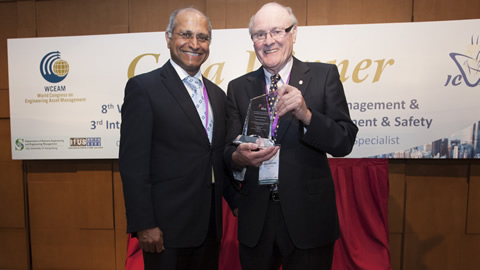
Professor Emeritus Andrew K.S. Jardine (MIE) was honoured by the International Society of Engineering Asset Management (ISEAM) with the 2013 Lifetime Achievement Award for his exceptional dedication and contributions to advancing the field of Engineering Asset Management. Professor Jardine is the second ever recipient of the award.
Professor Jardine’s research includes preventive maintenance on machinery to ensure reliable operation, investigating the frequency needed to check protective devices, such as pressure safety valves, and determining the life-cycle cost of equipment and when it should be replaced.
As director of the Centre for Maintenance Optimization & Reliability Engineering (C-MORE), he and his team apply real-world research in engineering asset management in areas such as condition-based maintenance, spares management and maintenance and repair contracts.
In his acceptance speech, Professor Jardine remarked, “Today, organizations have become convinced that asset management decisions have to be based on evidence, as opposed to the view of the expert. To this end, I have been very fortunate to have collaborated over the years with many organizations throughout the world to ensure that their asset management decisions are based on evidence.”
Professor Jardine is also an accomplished author. His second book, Maintenance, Replacement and Reliability (1973), is in its sixth printing, while the bestsellingMaintenance, Replacement & Reliability: Theory and Applications (2006), co-authored with A.H.C. Tsang, is now in its second edition (2013). He is also the author of two reliability optimization software programs licensed to organizations in transportation, mining, electrical utilities and process industries. “
Congratulations to Professor Jardine for this significant recognition by the International Society of Engineering Asset Management,” said Professor Jean Zu, Chair of the Department of Mechanical & Industrial Engineering. “Professor Jardine and the C-MORE research group, under his leadership, have contributed greatly to the field of Asset Management. On behalf of the Faculty, I congratulate him on this great distinction.”
ISEAM is a multidisciplinary professional learned society dedicated to the development and recognition of Asset Management as an integrated and important body of knowledge.
Professor Jardine was recognized October 31 during the 8th World Congress on Engineering Asset Management (WCEAM) held jointly with the 3rd International Conference on Utility Management & Safety (ICUMAS) in Hong Kong. For more information about Professor Jardine’s research, visit the C-MORE website.