

Professor Cristina Amon (MIE), Dean of the Faculty of Applied Science & Engineering, has been inducted into the Hispanic Engineer National Achievement Awards Corporation (HENAAC) Hall of Fame.
The annual honour recognizes a member who has achieved a level of excellence that opens doors to advances in science, technology, engineering and math, and opens minds about the contributions of Hispanics in these fields.
Great Minds in STEM established the Hall of Fame to recognize its most accomplished winners. Dean Amon has already been twice named one of America’s most important Hispanics in technology.
Previous inductees include Louis Martin-Vega, Dean of Engineering at North Carolina State University, Adalio Sanchez, General Manager of IBM’s System x server unit and John Tracy, chief technology officer of The Boeing Company and senior vice president of Engineering, Operations & Technology.
Dean Amon was inducted into the Hall of Fame at the HENAAC conference in New Orleans on Oct. 4, during a ceremony that also honoured other top engineers and scientists within the Hispanic community for various technical and professional achievements.
Since her appointment in 2006, Dean Amon has provided strategic and visionary leadership of one of the world’s most distinguished Engineering schools.
A pioneer in the development of Computational Fluid Dynamics for formulating and solving thermal design problems subject to multidisciplinary competing constraints, Dean Amon continues her research at the University of Toronto in nanoscale thermal transport in semiconductors, energy systems and bioengineered devices.
She received her Mechanical Engineering diploma from Simón Bolívar University and continued her education at the Massachusetts Institute of Technology, where she earned her MS and ScD degrees.
“The University community is delighted to see Dean Cristina Amon honoured again. She has fostered research excellence, championed educational enhancements, and accelerated innovation at the Faculty of Applied Science and Engineering. And as this latest award indicates, she is also an inspiring role model,” said David Naylor, President of the University of Toronto.
Dean Amon has been inducted into four academies, the Canadian Academy of Engineering, the Spanish Royal Academy, the Royal Society of Canada and the U.S. National Academy of Engineering.
She has also received numerous awards, including the ASME Gustus Larson Memorial Award, ASEE Westinghouse Medal and the ASME Heat Transfer Memorial Award. Most recently, she was recognized as one of Canada’s most Influential Women in 2012 and was honoured with the Society of Women Engineers’ (SWE) highest honour, the 2011 SWE Achievement Award, for her outstanding contributions to engineering over more than 20 years. She was also the recipient of the prestigiousYWCA Toronto Woman of Distinction award, which recognizes her achievement in improving the lives of girls and women in science and engineering.
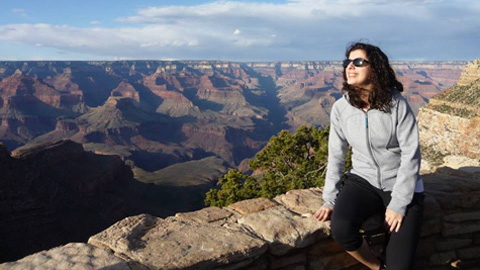
Ekaterina Tzekova (CivE) is a PhD candidate in the Department of Civil Engineering at the University of Toronto. Currently, she is engaged in a project to retrofit the historic Gemini House with sustainable, low-energy technologies. Tzekova is also a co-organizer of the Promise to Future Generations initiative, “an oath that is taken by graduating students and industry representatives to protect the rights of future generations.”
Tzekova sat down with the University of Toronto Sustainability Office to discuss her work and the importance of sustainability in engineering.
How do you define sustainability?
I believe sustainability is thinking with a long-term outlook and taking into account our impacts on future generations. In terms of my research and work, being sustainable is reducing the impacts of buildings on our environment.
What have been your greatest environmental successes? Challenges?
I am currently involved in a project to retrofit an 1870’s historic single family home owned by the University of Toronto, called the Gemini House. Our goals are to significantly reduce the heating demands of the building as well as offer flexible ways to operate the indoor spaces. The added challenge of working with a historic building makes this project very unique.
What exciting environmental opportunities lie ahead for you in your studies, work and/or life?
I am personally very excited to begin testing the design concepts at the historic single family home we are currently working on. If we can show that significant energy savings can be achieved, we can apply our concepts to a variety of other buildings.
What’s the biggest challenge facing U of T students, staff and faculty that keeps our campus from becoming more sustainable?
I believe one of the biggest challenges is changing our behaviour. I believe people in general are supportive of becoming more sustainable, both in their personal and professional lives, but the challenge is to actually make a change. These are not easy problems we are trying to solve, so sometimes the task is very daunting. However, I am a firm supporter of the ‘ripple effect’. If people can start with making small changes pretty soon we will be seeing large impacts!
Who are your eco-heroes?
I am a huge fan of Jacques Cousteau. He was not only a researcher: he also produced films that reached a very large audience and really helped educate people on marine conservation. His red hat was also pretty spectacular.
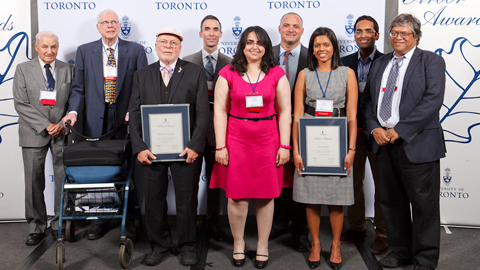
“On behalf of the Faculty of Applied Science & Engineering, I would like to extend my deepest gratitude to our many alumni and friends who offer their time and expertise to benefit our students and support our Faculty,” said Dean Cristina Amon. “We value their tremendous contributions and take great pride in the recognition they have received through the Arbor Awards.”
The following alumni and friends were recognized at the annual ceremony:
George Babu (EngSci 0T0)
Babu has enthusiastically worked to amplify alumni engagement in the job shadowing program and increased attendance at events. He also contributed to the strategic plan for the International Fellowships and the Faculty’s capital project, the Industry Presence Suites.
Alan Bowler (ChemE 5T3)
Bowler has been a class leader for six decades and has helped to plan the Class of ’53 annual gatherings and five-year reunions, as well as getting the Skule Lunch & Learn newsletter out on time.
Warren Brown (ECE 5T3)
Brown has over 60 years of exemplary service as the representative for The Edward S. Rogers Sr. Department of Electrical & Computer Engineering, Class of ’53. He also helped with the organization and operation of the Skule Lunch & Learn speaker series that has been taking place for nearly 40 years.
Sankar Das Gupta (MSE)
Das Gupta has provided advice and support to the Department of Materials Science & Engineering for more than 25 years. He has participated in high-profile speaking engagements, including the Faculty’s Boundless Campaign Launch and the Division of Engineering Science’s Education Conference.
Gerard Charles Frost (ChemE)
Frost has passed his skills and in-depth knowledge on to younger students through his volunteer work with the Faculty. In the last two years, he has guided and instructed first-year students in their Engineering Strategies & Practice coursework and mentored students interested in pursuing a career in water technology.
Andy Kikites (CivE 0T4)
Kikites has been an active volunteer with the Department of Civil Engineering since he graduated. He has participated in recruitment and career development events for prospective and current students, and helps to connect Civil Engineering students and alumni with employment opportunities.
Ted Maulucci (MechE 8T9)
Maulucci is a member of the Industry Advisory Board of the Department of Mechanical & Industrial Engineering. He co-founded One Million Acts of Innovation, a not-for-profit group that partners with the University of Toronto and is committed to working with students and others to bring new ideas to market.
Anahita Panthaky (ECE 1T0)
Panthaky began volunteering in The Edward S. Rogers Sr. Department of Electrical & Computer Engineering when she was a student and has continued as an alumna for recruitment events. Her support has contributed to the success of the department’s efforts to recruit the most promising candidates.
Varuna Prakash (MSE 0T8, IBBME MHSc 1T0)
Prakash has tirelessly shared her professional experiences with the Faculty through guest lectures, speaker series and student mentorship programs. She is also a member of the steering committee planning the centenary celebration for the Department of Materials Science & Engineering.
Kenneth Carless (K.C.) Smith (EngPhys 5T4, ElecE MASc 5T6, PhD 6T0)
Smith is one of the Faculty’s most active and dedicated alumni. His work for the Division of Engineering Science has contributed to the growth of the international internship program, and he has served on the EngSci Board of Advisors, as well as helped to secure fundraising support for numerous scholarships.
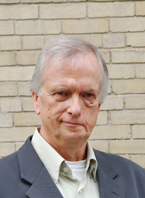
Professor Michael W. Carter (MIE) has been elected Fellow of the Institute for Operations Research and the Management Sciences (INFORMS). Fellows have exemplified outstanding lifetime achievement in operations research/management sciences, have demonstrated exceptional accomplishments and made significant contributions to the advancement of the field.
Using scientific methods like mathematical modelling, statistics and algorithms, operations research (OR) aims to make decisions related to the coordination and effectiveness of any process or organization.
INFORMS is the largest professional society in the world for professionals in the field of operations research, management science and analytics.
As director of the Centre for Research in Healthcare Engineering (CRHE), Professor Carter’s research focus is on healthcare resource modelling in hospitals, home care, rehabilitation, long-term care and mental health. Professor Carter has supervised more than 200 engineering students in over 120 projects with healthcare institutions. He is currently involved in a number of research projects forecasting the demand for healthcare professionals, provincially and nationally, and the infrastructure needed to support them.
In addition to his work at the University of Toronto, Professor Carter is an advisory board member for the Regenstrief Centre for Healthcare Engineering at Purdue University, an Adjunct Professor at the School of Management at the University of Ottawa and an Adjunct Scientist at the Institute of Clinical Evaluative Sciences, Toronto. Professor Carter is also a fellow of the Canadian Academy of Engineering (CAE).
“I am delighted that Professor Michael Carter has been recognized internationally by the Institute for Operations Research and the Management Sciences,” said Professor Jean Zu, Chair of the Department of Mechanical & Industrial Engineering. “Professor Carter’s research is critical in reshaping our view of the Canadian healthcare system. He is an internationally renowned expert on healthcare delivery and has made groundbreaking contributions to Canadian healthcare research. On behalf the faculty, I congratulate him on this significant honour.”
Professor Carter will be inducted October 7 at the INFORMS Annual Fellows Ceremony and Luncheon in Minneapolis, MN.
On October 23, Professor Carter will be the first speaker in the MIE Research Spotlight, where he will discuss a healthcare human resource modelling technique used by the Centre.

The University of Toronto Operations Research Group (UTORG) in the Department of Mechanical & Industrial Engineering (MIE) has been recognized as a student chapter by the Institute for Operations Research and the Management Sciences (INFORMS).
Operations Research, or simply OR, is an interdisciplinary science that uses scientific methods like mathematical modelling, statistics and algorithms to make decisions related to the coordination and effectiveness of any organization. Applications of OR can be found in business, health care, financial engineering, military, supply-chain management, manufacturing, public policy and more.
INFORMS is the largest professional society in the world for professionals in the field of operations research, management science, and analytics.
Founded in 2010, UTORG is a graduate student-run organization, serving the operations research community at U of T. The group hosts biweekly talks on current OR-related research in MIE, invites up to four distinguished speakers annually, and holds numerous technical workshops and social events.
UTORG’s listserv reaches over 250 subscribers, and their events attract additional OR researchers from the Department of Computer Science, Department of Mathematics, Rotman School of Management, and other engineering disciplines. The group also reaches a worldwide audience through OR Café, an OR themed blog run by UTORG members.
UTORG is the only active INFORMS student chapter in Canada. UTORG is also a student chapter of the Canadian Operational Research Society (CORS).
“UTORG is pleased to become a student chapter of INFORMS,” said Derya Demirtaş, Industrial Engineering PhD candidate, and president of UTORG/INFORMS/CORS student chapter. “To be recognized at the international level is an exceptional achievement for UTORG, and attests to the vibrant OR community we have here at the University of Toronto.”
“I am delighted UTORG has been recognized by INFORMS as a student chapter,” said Professor Timothy Chan (MIE), the group’s faculty advisor. “UTORG’s success is the result of tremendous effort put in by many graduate students over the years, and I congratulate them on this notable recognition.”
Members of UTORG will attend the October 8 student chapter session during INFORMS Annual Meeting in Minneapolis, MN.

The Blue Sky team, composed mostly of U of T Engineering students, has been preparing for the annual Bridgestone World Solar Challenge for the past two years. When the race begins on October 6, they’ll be competing against 39 other teams from 23 countries, including teams from Cambridge, Stanford and the University of Michigan, the defending champions in the race’s Challenger Class. But the members of Blue Sky are confident they’ll do well in the race.
More important, they’re glad of the opportunity to participate in a global community that promotes solar energy and the continued advancement and application of renewable energy technologies, says the team’s advancement director, Tiffany Hu (MechE 1T4).
Since arriving in Darwin a few weeks ago, the team has been testing the car, getting used to the Australian climate and meeting members of the competing teams.
“To be honest, we are pleasantly surprised that B-7 has been showing excellent reliability and stability after almost two weeks of testing in Australia,” Hu says. “Besides occasional scraping of the driver fairing, everything is working fine! We also had a couple small panics where we thought the brake pedal was stuck or when we thought the car wouldn’t start, but they were all quickly realized as small glitches in vehicle operations.”
“Each team is assigned a pit where we can work on the car. When taking a break from our work, we get a chance to visit other teams and look at other solar cars. It’s always a lot of fun meeting people from around the world who have been sharing similar experiences as us: spending ridiculous amount of time to build a solar car. From lending equipment to sharing anecdotes from fabrication, the sense of camaraderie at the track in itself is a unique part of the World Solar Challenge experience.”
Blue Sky has a long history at U of T. The club was founded in 1996 when a small group of Mechanical and Electrical & Computer engineering students came together to form the Advanced Solar Electrical Vehicle Program. Over the years, team alumni have mentored new team members, sharing their expertise and experience. The latest vehicle, B7, features new photovoltaic technologies and aerodynamic design and is 20 per cent lighter than its predecessors.
Hu says all is going well so far. Besides getting ready for the race, they visited Darwin’s Marrara Christian School, where they showed off the car to the students and answered questions.
“While younger students were fascinated by the sound of B-7′s electric horn, older students delved in the principles behind our mechanical and electrical systems,” she says.
For news and updates about the World Solar Challenge, visit their website.