

A Canadian technology that has the potential to boost the number of stem cells given to patients undergoing transplants of the blood-forming system has been recognized as the most influential stem cell research paper authored by a Canadian in the past year.
The University of Toronto’s Peter Zandstra (IBBME) is the recipient of the prestigious 2013 Till & McCulloch Award in recognition of his global stem cell research.
Zandstra will accept the award and present a lecture entitled “Engineering pluripotent stem cell derived microtissues” as part of the Till & McCulloch Meetings, Canada’s premier stem cell event.
“We are delighted that Professor Zandstra has been honoured by the Stem Cell Network for his tremendous contributions and innovative research,” said Cristina Amon, Dean, Faculty of Applied Science & Engineering. “This prestigious award further demonstrates our Faculty’s commitment to pushing boundaries in the pursuit of discovery and engineering excellence.”
Michael Rudnicki, Scientific Director of the Stem Cell Network, who launched the Till & McCulloch Award in 2005 and will make the award presentation, says the Zandstra group’s publication was chosen due to the impact their technology is expected to have.
“This technology will hasten the promise of regenerative medicine and the therapeutic possibilities of umbilical cord blood and hematopoietic stem cells in particular,” Rudnicki said. “It is very likely that Fed-Batch technology will improve the outcome of blood system transplants for many patients. We are proud to award the 2013 lecture to Dr. Zandstra for his pioneering work.”

First author Elizabeth Csaszar (PhD ChemE 1T3) (pictured left), Zandstra and his team have developed a new culture system that has the ability to dramatically expand the clinical applications of hematopoietic (blood) stem cells (HSCs). Their breakthrough discovery is based on a Fed-Batch bioreactor technology and has the potential to improve the viability and success of cord blood stem cell transplantation by allowing for better-matched donors and increasing the number of stem cells in a transplant unit.
This new system will accelerate the possibilities of using HSC transplantation in clinical settings, especially in the treatment of certain forms of leukemia.The success rate of blood system transplantation is strongly correlated to the number of cells used. Zandstra’s Fed-Batch technology can produce over 11 times more HSCs than originally existed and is designed to be adaptively scaled-up for human transplantations in clinical settings.
The article for which the award was granted, published in the February 2012 issue of Cell Stem Cell, entitled “Rapid Expansion of Human Hematopoietic Stem Cells by Automated Control of Inhibitory Feedback Signaling,” explains this novel discovery to expand cord blood cells.
Zandstra is a professor at the University of Toronto’s Institute for Biomaterials & Biomedical Engineering, a principal investigator with the McEwen Centre for Regenerative Medicine and the chief scientific officer at the Centre for Commercialization of Regenerative Medicine.
“When I was told I would be receiving the 2013 lecture award, I was very honoured to be recognized in this way by the scientific community,” said Zandstra, Canadian Research Chair in Stem Cell Bioengineering.
“I am thrilled to be in the same company as the previous winners, who are all exceptional researchers in our field and help to drive advances in health care that will improve the lives of many. This technology, and others being supported and developed through the Stem Cell Network, the Leukemia and Lymphoma Society and CCRM funding, represents an exciting opportunity for Canadian leadership in the clinically important area of cell transplantation to treat leukemia.”
The Till & McCulloch lecture takes place in Banff, Alberta, Thursday, October 24, 2013 at 8:45 a.m. at the Fairmont Banff Springs Hotel. The lecture will be broadcast live to the World Conference on Regenerative Medicine being held in Leipzig, Germany.
The Stem Cell Network established the Till & McCulloch Award in honour of Canadians Drs. James Till and Ernest McCulloch, whose pioneering work established the field of stem cell research. The Till and McCulloch Award is presented each year by the Stem Cell Network, as part of the Till & McCulloch Meetings. The Award is given to one researcher in Canada, who is nominated through a public process. The adjudication committee chooses the awardee based on what is determined to be the year’s most influential peer-reviewed article by a Canadian stem cell researcher.
(Read additional background on the Till & McCulloch Award, and a list of previous winners.)
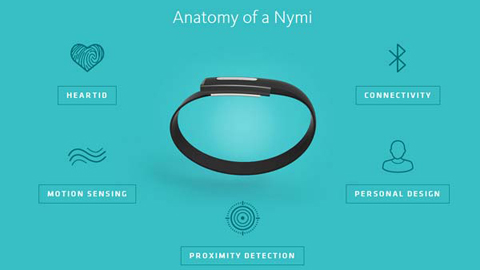
Imagine never having to remember another password or PIN number again. And now imagine that freedom coming in the form of a tiny watch-like gadget that listens to your heart.
Using our unique heartbeats to eliminate the jumble of complicated word-and-number combinations in these tech-heavy times was the goal of Karl Martin (EngSci BASc 0T1 Masc 0T3 PhD 1T0) and Foteini Agrafioti (ElecE Masc 0T7 PhD 1T1), founders of Bionym.
The U of T Engineering researchers and entrepreneurs came to the Creative Destruction Lab with ideas for biometric recognition systems. Its mentors, workshops and services – including direct access to investors – then helped Bionym develop its concept, goals and products. The Nymi launched only a year later, in early September, 2013.
In a video for U of T News, Bionym CEO, Karl Martin, explains how he went from academic to entrepreneur at U of T.
To read the full article on Bionym, visit U of T News.

What can we learn from plants about making the best use of the sun’s abundant energy?
That’s the question underlying an ambitious new research project that has won $1 million in the 2012–13 Connaught Global Challenge funding competition.
The project team director, Professor Ted Sargent of The Edward S. Rogers Sr. Department of Electrical & Computer Engineering, says the funding will help him and co-investigators merge previously disparate fields of study — and potentially open up a new avenue for creating inexpensive, efficient, clean energy capture technologies.
On one side of the project are the fields of photobiology and quantum biology. Photobiology is about studying the interaction of light with living organisms like plants. Quantum biology investigates the nanoscale physics of the natural world.
“Scientists, including leaders at U of T, have been advancing our understanding of how biology works, in particular how solar energy is harvested by plants and algae,” says Sargent. “It’s been a breakthrough area, and U of T has played a leadership role.”
The other side of the project is the development of technologies — like solar cells — to harvest the sun’s energy. U of T has also been a leader in this field. Sargent himself is known for his innovative work in creating colloidal semiconductors — solar cells that can be painted onto a surface.
The Connaught Global Challenge will bring together these two broad areas of inquiry. Sargent hopes that learning more about how plants capture light and transfer energy at the molecular level, and about and how quantum effects at these scales account for nature’s effectiveness and robustness in energy capture, will inspire the group as it seeks to create the next generation of low-cost, high-efficiency solar cells and lighting technology.
“The amount of solar energy reaching the earth in an hour is enough to meet the world’s energy needs for a year. It’s an incredibly abundant source, and nature has figured out how to harvest it efficiently, cost-effectively and robustly,” he says.
Humans, so far, lag behind nature. “We can make low-cost solar cells, but they’re not very efficient. We can make them more efficient, but then they get expensive. Breaking this compromise is the crux of next-generation solar research.”
In addition to solar cells, the group is focusing on low-cost lighting technology, because in the developed world, lighting accounts for 20 per cent of electrical demand.
“There are a few things that are just amazing about plants,” says Sargent. “One is the antenna effect.” Plants, he says, have a lot of light-absorbing molecules, mainly chlorophyll. Yet the reaction that turns this light into stored chemical energy only happens in a few places in the plant.
“How does the energy get from these many light absorbers to a few reaction centres? It’s through a finely tuned and regulated energy funnelling process. Nature has figured out, through the course of evolution, how to build incredibly efficient funnels. This is an idea that we could apply to making better solar cells.”
Sargent is working with six other U of T faculty members as co-investigators: Professor Nazir Kherani of The Edward S. Rogers Sr. Department of Electrical & Computer Engineering and the Department of Materials Science & Engineering, Professors Eugenia Kumacheva, Greg Scholes and Dwight Seferos of the Department of Chemistry, Professor Zheng-Hong Lu of the Department of Materials Science & Engineering and Professor David Sinton of the Department of Mechanical & Industrial Engineering.
The Connaught Global Challenge funding will allow the investigators to come together with students and post-doctoral fellows who are emerging leaders in different subfields of the project. A distinguished visitor component of the program will bring Sir Richard Friend of the University of Cambridge to campus. Friend is world-renowned for his work on the physics and engineering of carbon-based semiconductors. A symposium component will bring together leaders from the clean-tech community and serve as a catalyst for partnerships between academics and research-oriented companies in Canada.
The project, says Sargent, involves both basic and applied research. The group is constantly thinking about “how to translate insights from basic research into practical technologies that can be commercialized.”
The Global Challenge is the marquee program of U of T’s Connaught Fund. Created from the 1972 sale of Connaught Laboratories, which first mass-produced U of T’s Nobel award-winning discovery of insulin, the fund invests close to $4 million annually in emerging and established scholars at U of T.
“The idea behind the Connaught Global Challenge,” says Professor Paul Young (CivE), U of T’s vice-president (research and innovation) and chair of the Connaught Committee, “is to allow our researchers to focus intensively on a major challenge of the 21st century. This project has truly transformative potential. The co-investigators are thinking creatively about how to approach the problem of sustainable energy, and I look forward to seeing what emerges from their collaboration.”
The inaugural Connaught Global Challenge award, given in 2010-11, led to the establishment of the Fraser Mustard Institute for Human Development. Today the institute is conducting groundbreaking interdisciplinary research on how fetal and early life experiences influence lifelong health and learning.
Sargent hopes the 2013 project will jumpstart the creation of a “U of T school.”
“We have a chance to lead globally. We have all the ingredients. It’s a question of bringing them together, which is what the Connaught Global Challenge will enable us to do.”
The ultimate goal: better solar cells and lighting technology, which means cleaner, renewable energy.
“This is a huge societal opportunity,” says Sargent. “Sustainable energy solutions are one of the most critical environmental and economical needs facing our society today. We need to solve this problem.”
Eleven Engineering staff members received one individual and four team Excellence Through Innovation Awards from U of T for their “above and beyond” contributions to the University and its mandate. These awards recognize the contributions of administrative staff in advancing the University’s strategic objectives; encouraging administrative innovation and providing a platform for sharing best practices.
 Tomas Bernreiter, of the Department of Mechanical & Industrial Engineering (MIE), garnered an individual award for establishing the Multidisciplinary Energy Laboratory, to increase collaboration between departments. This space was created by renovating and overhauling the outdated MIE Heat Engines Lab. Currently shared by MIE, Chemical Engineering & Applied Chemistry and the Division of Engineering Science, the lab allows students to access equipment not available through their departments in a safe environment.

Helen Bright, Janice Haugan and Sergei Metropolitansky, of the Office of the Registrar, were recognized for their development of the Academic Offence Tracking Tool (AOTT), designed to better manage and track alleged academic offences within the Faculty. Offence cases were previously managed via a Microsoft Access database, a system that was inefficient and time consuming. The AOOT database allows instructors to report suspected instances of academic offences online, and allows all parties to easily monitor the status of a case.
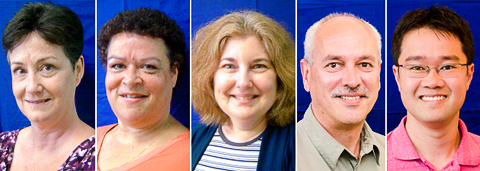
Linda Espeut, Karen Irving, Jayne Leake, Jaro Pristupa and Joe Wong, of The Edward S. Rogers Sr. Department of Electrical & Computer Engineering (ECE) were honoured for creating Magellan, a web-based graphical user interface with underlying database. Magellan was developed to combine information from ROSI/NGSIS, ECE’s database of instructors, and faculty teaching loads. The program helps audit each student’s progress, track faculty’s professional certification and assist with undergraduate teaching assignments. It also generates offer letters and teaching assignment letters to faculty.
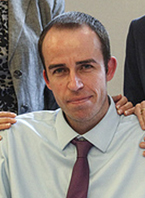 Tom Nault, of the Office of the Registrar, was part of a team of registrarial staff from across the University who were recognized for developing the Registrarial Professional Development (PD) Day. This was designed as an opportunity for registrarial staff across all three campuses to come together to share best practices in various registrarial fields. The day also allowed individuals to network with colleagues from across the University. The inaugural PD day was a great success, with over 300 registrants from several Faculties.
 Dan Pettigrew, of the Office of the Registrar, received an award as part of the team responsible for enhancing the usability and effectiveness of the Degree Explorer system. Currently used by four Faculties, Degree Explorer is a web tool using real-time ROSI data to manage students’ progress toward program and degree completion. It allows administrators to catalogue, manage and deploy their respective course, program and degree rules and allows students to plan and monitor their progress towards their degrees.
“These awards acknowledge the essential role played by our staff in providing innovative excellence to advance the University’s research and teaching mandates, as well as the Faculty’s mandate to remain Canada’s leading engineering school,” said Cristina Amon, Dean, Faculty of Applied Science & Engineering. “On behalf of the Faculty, I congratulate the winners and thank all our staff for their tremendous contributions.”
Excellence Through Innovation Award recipients will be recognized at a reception at the President’s Residence on October 23.
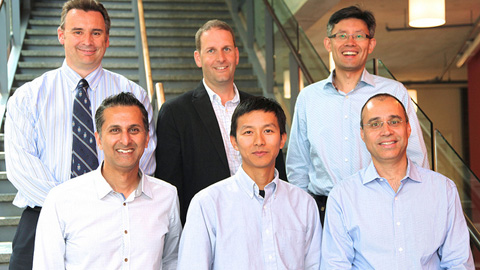
Back row: Professor Stewart Aitchison (ECE), Faculty of Applied Science & Engineering; James Fraser, ChipCare Corp. chief executive officer; James Dou, ChipCare Corp. chief technology officer.
A University of Toronto spinoff company poised to radically improve HIV treatment in the developing world has landed one of the largest angel investments in Canadian health care.
ChipCare Corporation, co-founded by University of Toronto PhD candidate in The Edward S. Rogers Sr. Department of Electrical & Computer Engineering, James Dou, is slated to receive $2.05 million. The funding, from government and private investors, will allow ChipCare Corp. to refine its handheld tester for monitoring infection-fighting white blood cells.
“The impact on in-the-field HIV diagnostics alone could be revolutionary; this financing is critical to our commercialization roadmap,” says Dou, ChipCare’s chief technology officer.
Dou developed the device with his PhD supervisor, Professor Stewart Aitchison (ECE) of the Faculty of Applied Science & Engineering.
About the size of a grocery store scanner, it gives blood test results on the spot and within minutes.
It allows healthcare providers to monitor levels of a collection of white blood cells called CD4 cells. HIV destroys CD4 cells, leaving patients vulnerable to infection. If the device indicates low numbers of these cells, healthcare workers can administer antiretroviral drugs.
Bringing the device to the patient means those affected by HIV don’t have to travel long distances for assessment.
With joint funding from the federal government and Toronto-based private investment group Maple Leaf Angels, ChipCare Corp. will spend the next three years refining the device to reduce its cost and increase its durability.
“To the best of our knowledge, this is at least the second largest healthcare angel investment in Canada’s history – and it might well be the largest by the time the project reaches full maturity,” says Adrian Schauer (ECE 0T3) of Maple Leaf Angels. “The diagnostic potential of this device can hardly be overstated. We are investing heavily in its commercialization because we see the potential to revolutionize bedside testing for many conditions, from HIV and malaria in the developing world, to sepsis, heart disease and cancers here at home.”
The federal government funding – announced Sept. 16 – is being channeled through Grand Challenges Canada, which funds innovators in low- and middle-income countries and Canada, and through MaRS Innovation.
“It’s been very rewarding to see a project move from the lab to a real world application,” says Aitchison.
With the help of U of T’s Innovations and Partnerships Office (IPO), MaRS Innovation and Rotman School of Management, Dou, Aitchison and biological testing expert Rakesh Nayyar created the start-up company, ChipCare Corp.
Creating a light, affordable camera lighting system to replace the heavy bulk of typical photographic equipment earned Anastasiya Martyts (EngSci 1T6) and Tiange Li (Life Sciences 1T6) The Entrepreneurship Hatchery’s first $20,000 Lacavera Prize.
Martyts and Li presented Modly – their modular, customizable lighting system – at the Hatchery’s Demo Day on September 12, competing with eight other teams to win the top prize sponsored by entrepreneur and telecommunications executive Anthony Lacavera (CompE 9T7). Their product grew out of Li’s desire as an amateur photographer for an easy-to-use, portable system capable of creating versatile lighting effects. Martyts describes it as “a system for hobbyists developed by hobbyists.”
The multidisciplinary duo will continue to develop the lighting system with the help of Hatchery mentor Anil Bhole, an intellectual property lawyer, and co-mentor Amy Chong, a Rotman School of Management MBA candidate.
Three other teams at Demo Day won the Orozco Prize, named after the Hatchery’s executive director, Joseph Orozco and sponsored by Professors Jonathan Rose and Vaughn Betz, both of The Edward S. Rogers Sr. Department of Electrical & Computer Engineering:
AirExposure
Denis Loboda (MechE 1T3), Neil Sharma (MechE 1T3) and Peter Izraelski (geography and communication culture & information technology) use drones mounted with professional camera equipment to create a cost-effective method of aerial cinematography;
Sonar
Jane Guo (EngSci 1T2) and Benjamin Slater (EngSci 1T3) harness web-based video conferencing to connect mental health therapists with patients; and,
DealsHype
Michael Zhang (ECE 1T5) and Satyam Merja (Pharmacy 1T4) provide small businesses with web-based customer rewards programs that give consumers mobile access to coupons and specials.
The business ideas pitched at Demo Day reflect the Hatchery’s goal of fostering entrepreneurship by creating a collegial environment where students can turn brilliant ideas into viable businesses. The featured teams also illustrate the cross-disciplinary nature of the Hatchery, which is based within U of T’s Faculty of Applied Science & Engineering but encourages collaboration with other disciplines.
“Ten to 15 years from now, we’ll be able to point to a number of successful entrepreneurs and say they developed their formative experience at the Hatchery,” says Professor Jonathan Rose, who also serves on The Entrepreneurship Hatchery’s Advisory Committee.