
U of T Engineers have been very much in the public eye this week as Toronto recovers from the record-breaking rainstorm that hit the city on July 8. Here’s a summary of some of the coverage.
Jennifer Drake (CivE): Prof. Jennifer Drake, who conducts research into low impact development stormwater systems, watershed planning and stormwater management, told U of T News that the City responded well to the storm. She advised residents to have a basic emergency kit ready. Homeowners need to install a backflow prevention device and sump pump.
Reza Iravani (ECE): Prof. Reza Iravani, head of the Centre for Applied Power Electronics, was interviewed by both the Globe and Mail and the Toronto Star. Prof. Iravani told the Globe that if the trend towards more extreme weather conditions continues, existing infrastructure will need to be modified. He told the Star that the current practice of building facilities underground needs to be changed.
Bryan Karney (CivE): Toronto handled the July 8 torrential rainstorm “remarkably well”, according to Professor Bryan Karney in the Globe and Mail. Professor Karney, who leads Civil Engineering’s engineering and energy systems division, said no storm or sewer system could have handled the amount of rainfall the city saw that day, which even outdid 1954’s Hurricane Hazel. “We managed it remarkably well, which meant that the major system by and large did its job,” Professor Karney told the Globe’s Jeff Gray. The full interview with Professor Bryan Karney can be found here.
It’s been a decade since the Human Genome Project finished sequencing our genome, and everyone and their grandmother knows that gene expression controls critical biological processes. Genes encode proteins, and proteins are the building blocks of the human body.
But a single gene can have multiple functions. How? One way is by altering the action of RNA, the intermediary between DNA and finished proteins. When DNA is transcribed into RNA, other proteins in the cell can detect motifs in the RNA and cause it to be modified or destroyed, altering the function of the gene.
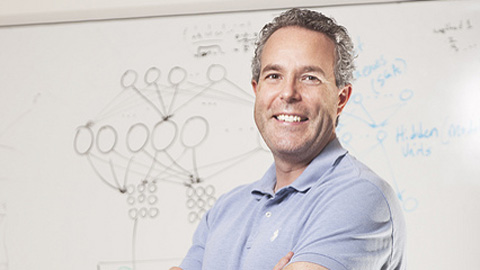
A group of U of T researchers led by professors Tim Hughes (Terrence Donnelly Centre for Cellular and Biomolecular Research) and Quaid Morris (CCBR, ECE) and including ECE professor Brendan Frey, have amassed a large collection of 207 RNA motifs. Their work was published in the latest issue of Nature, out July 11.
“The compendium of motifs is more comprehensive than anything generated before and advances the field a leap forward,” said Frey. He is interested in how these motifs and other patterns in DNA and in RNA form a ‘regulatory code’ that dictates how and when genes will be expressed, modified and destroyed, depending on conditions within the cell. “My group is now using the motifs to produce a more accurate regulatory code for alternative splicing.”
Alternative splicing is a process whereby cells cut up and reassemble, or splice, RNA strands. Most human genes get spliced in more than one way, for example, enabling a single gene to be expressed differently in a liver cell versus a brain cell. Using machine learning techniques such as deep learning, Frey’s group has developed a method for predicting RNA splicing patterns, identifying regulatory programs in different tissues, and locating previously unknown regions that control alternative splicing.
What are the applications of this discovery? Frey said that now that a good chunk of RNA motifs are known, he and others can look for mutations in DNA that change those motifs, disrupt the regulatory code, and cause disease. “This work might someday allow biomedical researchers to predict the disease-related effects of genetic mutations and even develop treatments for them, using our regulatory code as a kind of ‘cell simulator’.”
Read the paper on the Nature site:http://www.nature.com/nature/journal/v499/n7457/full/nature12311.html.
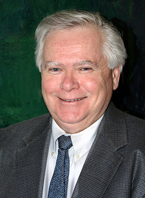
Professor Doug Hooton (CivE) has added to his banner year with another award, the Frank E. Richart Award, presented by the American Society for Testing and Materials (ASTM).
Professor Hooton has long been recognized as a leading figure in engineering research and leadership, currently serving as NSERC/CAC Industrial Research Chair in Durable and Sustainable Concrete.
The Frank E. Richart Award, which is presented only once every three years, recognizes meritorious contributions to the Society in research and standardization with concrete and concrete aggregates.
He was also recently inducted as a 2013 Fellow in the Canadian Academy of Engineering (CAE) alongside 46 of his colleagues from around the country, including 13 U of T engineers.
Professor Hooton is well known as an expert on cementitious materials and concrete durability. He has been active in more than 40 industry standards, technical and code committees in both North America and Europe, and holds a number of leadership positions on these committees.
Several new standard-test methods and building-code changes related to concrete durability in Canada and the U.S. have been developed or championed by Professor Hooton based on the results of his research.
“On behalf of the Faculty, I would like to congratulate Professor Hooton on his prestigious ASTM award,” said Dean Cristina Amon. “We are delighted that he is once again being honoured for his pioneering research in the field of concrete materials.”
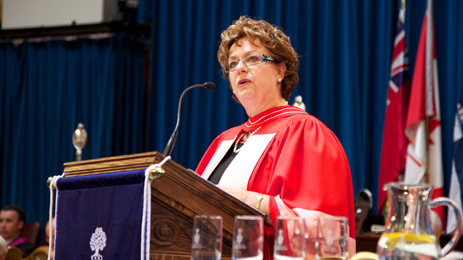
On June 28, U of T Engineering alumna Anne Sado (IndE 7T7, Doctor of Laws, honoris causa 1T1) was appointed Member of the Order of Canada.
Sado, who has served as President of George Brown College since 2004, was honoured for enhancing the role of colleges in the educational sector and bringing a new vision to George Brown.
The Order of Canada is one of the country’s highest civilian honours, which recognizes a lifetime of outstanding achievement, dedication to community and service.
Sado, George Brown’s first female president, has led the college to new heights, becoming one of Canada’s largest, most diversified and respected colleges. Since 2004, it has more than doubled in size, while Sado has built new partnerships with industry and government to create more opportunities for students.
This recent honour is one of many in Sado’s career. In the past year, she was named one of Canada’s Top 100 Most Powerful Women for the second time by the Women’s Executive Network, as well as being named a Women of Influence Diversity Champion. She is also the recipient of the YWCA Toronto Women of Distinction in Education award, the Queen’s Diamond Jubilee Medal and the Queen’s Golden Jubilee Medal. In 2011, she received an honorary degree from the Faculty for her successes in the engineering profession, and in 2010, she was inducted into U of T Engineering’s prestigious Hall of Distinction for her lifelong accomplishments as an engineering alumna.
“On behalf of the Faculty, I extend my heartfelt congratulations to Anne Sado,” said Dean Cristina Amon. “This is a tremendous, well-deserved honour, and we are so proud to call her one of our graduates. Her leadership is truly inspiring to me, and to all of us at U of T Engineering.”

What’s smarter than the Internet?
It just might be the network demonstrated at the SAVI testbed workshop and annual general meeting, held Thursday and Friday in the Bahen Centre at U of T.
“Keep in mind, the Internet itself was a testbed 50 years ago,” said Hadi Bannazadeh, SAVI’s testbed platform architect. “In 20 to 30 years, one of these testbeds could become the next Internet—that’s what we’re competing for.”
Smart Applications on Virtual Infrastructure, or SAVI, is an NSERC Strategic Network that includes nine universities, more than 20 industry partners, research and education (R&E) networks, and high-performance computing (HPC) centres.
SAVI’s distinguishing feature is the breadth of its scope. The national network is pioneering an infrastructure for connecting things and services that haven’t even been invented yet — everything from SmartGrids for more efficient power distribution and consumption, to e-health information, to telecommunications applications.
“We’re not trying to do this in isolation, but as part of the community,” said SAVI’s Scientific Director Professor Alberto Leon-Garcia (ECE). “We’re focused on the future — on developing infrastructure technologies so as to create what we call an open marketplace.”
Now completing its second year, SAVI is deploying the first phase of its testbed network and teaching all its partners how to use it. It has converged clusters of heterogenous resources, or ‘nodes’, at University of Toronto, York, Waterloo, McGill and University of Victoria. Carleton is expected to join soon.
At the annual general meeting, researchers and students from 10 universities across Canada presented more than 45 posters and demonstrations on SAVI’s key themes: smart applications, extended cloud computing, integrated wireless/optical access and smart edges. The term ‘smart edge’ refers to aggregated data centres closer to where end users need their processing power, providing a local boost to massive remote cloud servers.
Program highlights included keynote addresses from Dr. Dongmyun Lee, executive vice president of Korea Telecom’s Infrastructure Research Lab; Dr. Chip Elliott, PI and project director of the United States’s national testbed, GENI; Professor Tho Le-Ngoc of McGill; as well as Leon-Garcia, SAVI Scientific Advisor David Mann and Zouheir Mansourati, vice president of technology strategy at TELUS.
Learn more on the SAVI website: http://www.savinetwork.ca/
This story was originally posted on December 7, 2012. Updated on July 4, 2013.
Electrical and Computer Engineering Professor Edward (Ted) Sargent is the winner of the 2012 Steacie Prize. The U of T community – including Dean Cristina Amon, Peter Lewis, Associate Vice-President, Global Research Partnerships, and Dr. John Smol, Chairman of the Board of Trustees of the E.W.R. Steacie Memorial Fund – celebrated his award at a reception on July 4, 2013.
Not only is Professor Sargent the fourth consecutive University of Toronto recipient of the prestigious award, but he’s ensuring the award stays in the family: last year’s recipient was his wife, U of T Pharmacy Professor Shana Kelley.
The Steacie Prize is awarded each year to one person 40 years of age or less who has made notable contributions to research in Canada. The Prize is administered by the Trustees of the E.W.R. Steacie Memorial Fund, a private foundation dedicated to the advancement of science and engineering in Canada.
Professor Sargent, who is also the Vice-Dean, Research, of the Faculty of Applied Science & Engineering, is widely known as the inventor of full-spectrum solution-processed solar cells, a new class of solar energy harvesting devices based on colloidal quantum dots (CQD). He also holds the world record for the highest-performing solar cell in this promising new class of materials. Professor Sargent has also made fundamental contributions to understanding how electronic transport proceeds in CQD solids and to advancing the materials chemistry of novel nanomaterials.
Professor Sargent has been named one of the ‘Scientific American 50’, one of ‘Canada’s Top 40 Under 40’ and one of the world’s 100 top young innovators by MIT Technology Review. He is also a Fellow of the American Association for the Advancement of Science and the Institute of Electrical Electronics Engineers.
His publications have been cited over 6,000 times. In the past six years, he has authored 18 papers in some of the world’s most prestigious journals, includingScience, Nature, Nature Materials, Nature Chemistry, Nature Nanotechnology andNature Photonics. His research has also been featured in The Economist, The New York Times, National Geographic, The Wall Street Journal and The Financial Times. Professor Sargent’s book The Dance of Molecules: How Nanotechnology is Changing Our Lives (Penguin 2005) has been translated into French, Spanish, Italian, Korean and Arabic. He is a KAUST Investigator.
“This award celebrates the remarkable advances made by a team of incredibly skilled, and deeply dedicated, graduate students, post-doctoral fellows, undergraduate students, research associates, and research engineers,” Sargent said. “Many of these talented people have since gone on to start their own research groups and companies, and many continue to push the frontiers of nanotechnology and its applications, both at U of T and in the wider world,” he said.
“I wholeheartedly congratulate Ted Sargent on receiving this prestigious award, and I thank the selection committee of the Steacie Prize,” said U of T Engineering Dean Cristina Amon. “Ted is a brilliant researcher. The work of Ted and his team in solar cell technology is rapidly moving us toward the reality of an efficient and economical source of solar energy.”
The award has been won 18 times by U of T researchers since its inception in 1964. Last year, Professor Kelley won the award for her work on development of nanomaterial-based detection systems that can track minuscule quantities of biomolecular analytes.