
June 19 holds a lot of significance for Lorne Mlotek (CivE 1T3). On the back of his watch, once owned by his grandfather, it is inscribed ‘June 19, 1955.’ It’s also the date of his birthday. And now, it’s the date he proudly graduated from U of T Engineering.
“I’m really happy to be graduating. I was terrified four years ago, because I knew I was going into the best engineering school with the best engineering students – and I was right. But I had a great time and I made it here today,” said Mlotek, who is now focused on creating his very own start-up company.
Mlotek is one of the Faculty’s approximately 1,500 newest alumni who celebrated the end of their academic career – and new beginnings – during two ceremonies at Convocation Hall yesterday. Among them, 932 undergraduates and 569 graduate students earned degrees (261 receiving MEng degrees, 203 obtaining MASc degrees and 105 earning PhD degrees).
“Today we celebrate the tremendous accomplishments of the U of T Engineering class of 2013 …You are here today because you rose to the challenge. You met and you exceeded our expectations,” said Dean Cristina Amon in her Convocation address.

She also spoke about the impact alumni have made after graduating from U of T Engineering. “The graduates of our Faculty have made remarkable contributions that have transformed the practices of our profession and improved our society. They took risks with the confidence that comes from the solid preparation provided by U of T Engineering.”
Dr. Donald Sadoway (EngSci 7T2, MSE MASc 7T3, PhD 7T7) and Paul Cadario (CivE 7T3) are shining examples. Both received Honorary Doctorates for their influential and inspiring contributions to not only the engineering profession, but also society.
Dr. Sadoway, a John F. Elliott Professor of Materials Chemistry at the Massachusetts Institute of Technology, is a renowned educator and influential voice in the advancement of sustainable energy research.
In speaking to the engineering class of 1T3, he advised them to “Aim high. Find your passion and pursue it, and don’t live life in beige,” he said. “As engineers, ask, ‘What are the big problems?’ Engineering is science to serve societies.”
Cadario, with years of senior-level experience at The World Bank, is a distinguished name in international development and global policy. He had a similar message to the new engineering alumni, encouraging them to take a leadership role and invent a future that is inclusive, secure and sustainable.
“As new graduates, the future belongs to you,” he said. “Give back often, and as often as you can. And when you are asked to do something unexpected, or something risky – remember, you’re a U of T engineer. You can do anything.”

For Loic Markley (ElecE MASc 0T7, PhD 1T3), Convocation marks the beginning of his teaching career at the University of British Columbia. During his time as a graduate student at U of T Engineering, he got the opportunity to hone his teaching skills as a TA for third-year Engineering Science students. “My experience at U of T has been fantastic, there are just so many great professors here. I’m very excited about the next step.”
While some graduates will go on to teach, others are going into industry, like Huda Idrees (IndE 1T2 + PEY), who is looking to delve into the software-design sector. During Idrees’ five years at the Faculty, she got involved in a slew of student clubs and initiatives, which won her a Gordon Cressy Student Leadership Award in April. After being such an active member of the U of T Engineering community, Idrees says graduating feels bittersweet. “I came here as an international student, and yet felt right at home. My time here has just been unbelievable.”
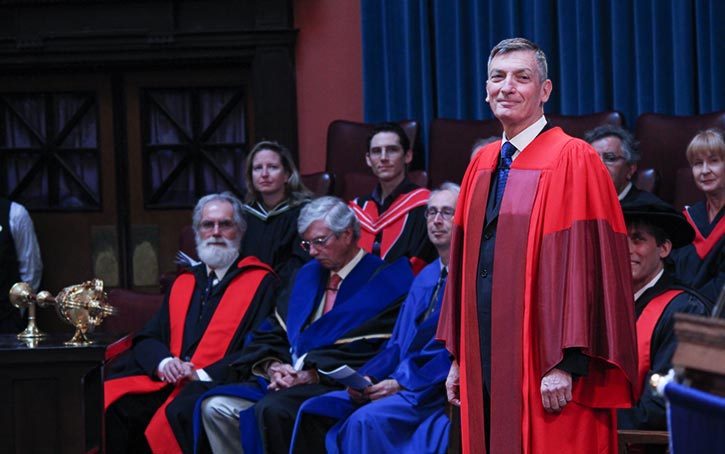
Donald Sadoway (EngSci 7T2, MSE MASc 7T3, PhD 7T7), now has a fourth degree from U of T – Doctor of Engineering, honoris causa – in recognition of his pioneering research and outstanding contributions to higher education and sustainable energy.
Dr. Sadoway, the John F. Elliott Professor of Materials Chemistry at the Massachusetts Institute of Technology, received his honorary degree at the June 19 morning Convocation ceremony from U of T Chancellor Michael Wilson.
In his Convocation address, Dr. Sadoway told the U of T Engineering graduating students that engineers “are the steward of the earth’s resources. Engineering is science in service to society.” He urged the graduates to find someone to pay them to do what they love, and to aim high and strive for maximum ripple effect. “Ask yourself, ‘What are the big problems and what am I doing about them?'”
After Convocation, Engineering Dean Cristina Amon paid tribute to Dr. Sadoway. “Don Sadoway represents the very best about engineering – a curiosity about how the world works, a desire to change ‘what was’ into ‘what could be’, and a passion to inspire his students to share that curiosity and desire.”
She noted that Dr. Sadoway was named one of Time Magazine’s 100 most influential people in 2012, both for his impact as a teacher and for his research in the field of materials engineering for energy-storage technologies.
Dr. Sadoway and his research team developed a portable battery that can store significantly more energy per kilogram than a traditional lithium battery, known as the sLimcell. More recently, he has developed a grid-level liquid metal battery that uses low-cost, abundant materials. This new battery technology could make non-constant energy sources such as solar and wind much more economical and effective.
“Innovative, accomplished, and committed to research, teaching and mentoring, Don: you are an inspiration, not only to your own students, but also to our students and graduates,” Dean Amon said. “I am so proud that you are an alumnus of our Faculty, and I am proud that we are honouring you today.”
A U of T News interview with Donald Sadoway can be found athttps://www.utoronto.ca/news/honorary-graduate-donald-sadoway
Donald Sadoway’s Convocation address can be found at http://youtu.be/F2E-zM0dHEo

Forty years after graduating from U of T, Paul Cadario (CivE 7T3) came back to receive a second degree. But he never really left his alma mater.
Not only is Dr. Cadario a Distinguished Senior Fellow in Global Innovation at the Faculty of Applied Science & Engineering and the Munk School for Global Affairs, but he has been involved as a volunteer with U of T almost since the day of his graduation.
He received his Doctorate of Laws, honoris causa, from U of T Chancellor Michael Wilson at the afternoon Convocation ceremony on June 19. His degree was awarded both for his involvement with U of T and for his service at the World Bank, where he worked for almost 40 years, playing a number of roles worldwide (for his full biography, see below).
After receiving his honorary degree, Dr. Cadario addressed the graduating class, telling them to remember that their first job will not be their last job, and to take every aspect of their life, and not just at work, as a way to learn something new. “Learn the rules like a pro so that you can break them like an artist .”
Following the Convocation ceremony, U of T Engineering Dean Cristina Amon recounted some of the many ways in which Dr. Cadario has contributed to the university, including his service on various advisory boards and his leadership by example in financial support to U of T Engineering.
“Over the past seven years, I have frequently relied on Paul’s counsel, as have many of our faculty members, staff and students,” she said, noting in particular that “Paul was instrumental in encouraging us to better integrate design into our undergraduate curriculum, and Paul is bringing his lifetime of experiences and good judgment to bear on our nascent Centre for Global Engineering as it grows into adolescence.”
U of T News has published an interview with Paul Cadario. It can be found athttp://www.utoronto.ca/news/honorary-graduate-paul-cadario.
Biography
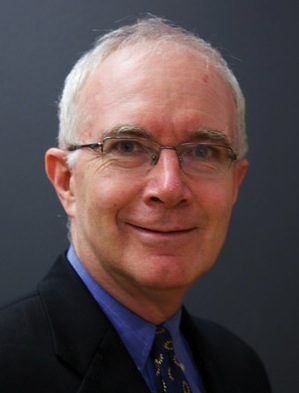
Paul Cadario (CivE 7T3) joined the World Bank in 1975 and played a diverse number of roles worldwide, including nearly two decades with the World Bank’s frontline development programs in Western Africa and China and then with public sector management throughout Asia. Among the challenges he enjoyed were establishing the first World Bank-financed operations in Guinea Bissau and Mongolia and managing the strategy, budget and logistics for the Bank’s work in twenty-two former Soviet and central European states after the collapse of the Soviet Union. In 1998, he began working on the World Bank’s efforts to modernize and streamline its business for the digital age of transparency and accountability, starting with the renewal of the Bank’s global information systems. Focusing on results, quality assurance and compliance, from 2001 he oversaw the multi-billion dollar portfolio of grants managed and disbursed by the World Bank as a trustee for governments, foundations, non-governmental organizations and private development partners. His work took him from Afghanistan to Zimbabwe, from Guinea to Indonesia, and from Bhutan to Burundi.
Cadario’s ties as a volunteer to U of T have been strong for over 40 years. He was a member of the Governing Council twice, as a student in 1972-73 and then as an elected Alumni Governor from 1985 to 1994. He was the first president of the University of Toronto Alumni Association to live outside the GTA. He chairs the Dean’s Advisory Board for the Faculty of Applied Science & Engineering, and is a member of the Board of Advisors for the Department of Civil Engineering. He is also a member of the advisory boards for the School of Public Policy and Governance and for the MGA Program of the Munk School of Global Affairs. He serves as a University representative on the Banting Research Foundation board and mentors MBA students at the Rotman School of Management. He supports fundraising on behalf of the University as president of the Associates of the University of Toronto, Inc. and as a member of the Engineering Campaign Cabinet for Boundless.
After his retirement from the World Bank in 2012, Cadario was appointed Distinguished Senior Fellow in Global Innovation at the Faculty of Applied Science & Engineering and the Munk School for Global Affairs.
Cadario earned his BASc in civil engineering from the University of Toronto in 1973. A Rhodes Scholar, he received a BA and MA in philosophy, politics and economics from the University of Oxford. More recently, he earned a master’s degree in organizational development from American University.
As an undergraduate, Cadario worked as a U of T research assistant in the Northwest Territories where he developed a passion for Inuit art that remains to this day.

Over 1,000 U of T Engineering students graduate every year. Each one of them is exceptional, and each one has a story to tell. We talked to five of those students – Shailin Gosalia (MechE 1T2 + PEY), Jocelyn Light (EngSci 1T3), Catherine Phillips-Smith (ChemE 1T3), Luis Ramirez (ElecE 1T2 + PEY) and Sandra Sousa (ElecE 1T3) – about what roads led them to U of T Engineering, and what roads they will take in the future.
Shailin Gosalia: It’s All About Community

For Shailin Gosalia (MechE + PEY 1T2), being an engineering student at the University of Toronto wasn’t about doing just the coursework, it was also about community. When he started his studies in 2008, he had just moved to Canada and understood all too well what it was like being a newcomer.
“While Toronto is an extremely multicultural city, I felt that having a strong network within the university setting would help students settle sooner,” he said. And so, three years ago, he became part of the then fledging Indian Students’ Society (ISS).
The goal of the ISS is to help students become integrated with the university culture, meet people, find ways to integrate Indian and Canadian cultures, and have fun.
“They can still continue to enjoy their old cultural values while learning to integrate into a new culture. I believe in appreciating one’s roots, but moving forward in the Canadian direction – one of multi-multiculturalism, tolerance and acceptance of everyone,” he said.
The group is now 800 strong (he figures about 40 per cent are engineering students). It organizes events for Frosh week, as well as a series of debates, shows and social gatherings throughout the year.
Gosalia spent his final year at U of T Engineering as ISS president. He was also an active member of an intramurals soccer team over the past four years, and served as both a player and coach for Tri-Campus Cricket at the university.
Not surprisingly, because of his involvement on campus, he was awarded the Gordon Cressy Student Leadership Award in recognition of his volunteer work with U of T Engineering. He also held a position at the U of T Telefund Centre, raising over $15,000 towards student scholarships and awards.
Gosalia was driven towards engineering in part because he liked mathematics and physics, but also because he had a dream of learning skills that would let him help find solutions to some of the world’s pressing problems. Partway through first year he zeroed-in on health care.
“I want to apply my engineering skills in the biomedical field to see how we can reduce the workload on healthcare workers, how we can incorporate technology into existing frameworks of the healthcare sector so we can reduce inefficiencies and improve overall care for patients.”
Jocelyn Light: Learning (and Giving Back) Outside the Classroom

As Jocelyn Light (EngSci 1T3) found out at U of T Engineering, learning engineering skills and what it takes to become an engineer doesn’t have to be done all in the classroom. Or even in Canada for that matter.
With an underlying interest in social justice, and wanting to help people in desperate circumstances, she participated in programs that took her to different parts of Africa. Her activities led to her winning a Gordon Cressy Student Leadership Award.
One year, she spent her summer months in Gambia, thanks to a summer placement with the Centre for Global Engineering. There, she was paired with ChemE PhD student Bev Bradley who was working on ways to make medical oxygen more accessible to people who live in resource-poor areas.
One of Light’s projects was analyzing data on temperature and humidity and how it affected the lifespan of the rechargeable batteries used in portable oxygen concentrators – devices that extract and concentrate oxygen from the air. Batteries are important for various medical devices because power in Gambia is not stable, she said. She also worked on a project relating to the disposal and incineration of medical waste.
Light spent her next summer in Malawi, this time with a team from Engineers Without Borders (EWB). In Malawi, her work was related more to agriculture and the challenges faced by small-time, independent farmers.
She is keen on biomedical engineering, and her eventual goal is to be involved in projects that help people. Right now, she’s working in the EWB offices, helping to set policies, and matching people with specific talent and skills to parts of the world where it is needed.
Her work with EWB is eye-opening, she said. It’s helping her decide “what it is that I want to be doing in the sense of what I want to be contributing to our society and our systems.”
Catherine Phillips-Smith: Hives, Horses and Ocean Health

What do bees, the ocean, horses, chemistry, skiing and stage work have in common? The answer is Catherine Phillips-Smith (ChemE 1T3).
‘Variety’ is the best word to describe Phillips-Smith, whose interests include everything from being a part-time beekeeper to painting props for Skule Nite shows to participating in a summer student fellowship at Woods Hole Oceanographic Institution (WHOI). She even helped organize the Skule Arts Festival – an annual week-long festival showcasing U of T Engineering students’ artwork.
When she first stepped onto the U of T campus, Phillips-Smith made a decision. “I figured that in four years there is so much you can do, and I’m just going to do as much as I can. University is what you make it, I tried to make it the best I could,” she said.
But her varied interests were evident at a young age. She’s been riding horses regularly for the past 12 years. She decided to become a beekeeper in high school, after reading Susan Hubbard’s vampire novel The Society of S, which had a character who kept bees.
At the end of her first year at U of T, she installed her first beehive on the farm where she goes riding. She now has eight hives, each producing up to 120 pounds of honey a year.
Phillips-Smith also installed a hive on the roof of the Galbraith Building. “It’s an experiment in urban agriculture, run partly through the department and some grad students,” she said. During her time at U of T Engineering, she tended the hive, and led workshops on beekeeping.
In the winter, she is a part-time ski instructor at Beaver Valley. And with an interest in nature and the environment, WHOI was a natural attraction. She spent three months there learning how to monitor and study ocean health by studying its colour – which indicates the amount of phytoplankton present.
“I learned a lot about the huge role the ocean plays in everything and how we’re changing it. You wouldn’t think we could change such a big part of the world – the ocean is everywhere. But we are changing it, and the changes are getting pretty out of hand,” she said.
Her passion for the environment has paid off academically. At Convocation this year, she was awarded the Mackay Hewer Memorial Prize, given to a ChemE student whose thesis/capstone design project is judged to be the best in the environmental category.
And the future? Phillips-Smith hopes to continue to work and do research relating to the environment. Naturally.
Luis Ramirez and Sandra Sousa: The Spirit and Energy of U of T Engineering

If ever two students reflected the spirit and energy of U of T Engineering, Luis Ramirez (ElecE 1T2 + PEY) and Sandra Sousa (ElecE 1T3) did. Not only were they involved in a myriad of student-based campus activities, but they motivated many other students to get involved as well.
That motivation was most obvious when they co-chaired the Engineering Student Society’s Blue and Gold committee in the 2011-2012 school year. But before that, Sousa already had a history of being active in engineering activities. In her first year, she managed the Cannon Ball. The following year, she was named Godiva’s Crown, “something that is supposed to represent school spirit,” she said. Clearly, a sign of things to come.
She was also involved with Skule Nite for four years, working both on and backstage, and occasionally was part of the Bnad (sic). Skule Nite was a natural draw – when she was growing up, she leaned towards music and drama, though as she got older she appreciated the creativity in math and science, and found herself in engineering.
Ramirez meandered his way towards engineering via an early love of playing video games. Both he and Sousa ended up in Electrical and Computer Engineering.
While serving as B&G chairs, a lot happened. They coordinated events and volunteers for Frosh! Week, Godiva Week, and various clubs and parties – including bowling nights, and even a Game of Thrones Marathon. And they ran the engineering pub.
Volunteers on the committee built floats for Frosh! Week – one float in the style of a big castle for the Homecoming Parade was big enough to support the entire Bnad.
A particular highlight for Ramirez and Sousa was the building of a float for Toronto’s annual Pride Parade.
“We wanted a float that would show our support for Pride and that our fellow students could identify with, so we chose to build a giant shiny version of Godiva’s horse,” Ramirez said. It was the first year that U of T Engineers added a float to their normal Pride activities of simply marching in the parade. The float consisted of a big decked-out pick-up truck with a large horse sitting on top. The Bnad, along with other supporters, marched behind.
It was such a hit that Pride Toronto presented U of T Engineering with the Special Judges Award for Shock and Awe. The shock part of the award was undoubtedly earned when the engineers fired the Skule Cannon in front of the judges. “We tried to make an ‘Earth shattering kaboom’,” Ramirez joked.
(Find out how you can get involved and march with engineering students in this year’s Pride Parade.)
All these events are inspired by longstanding U of T Engineering traditions, Ramirez said.
“We have this awesome community in engineering. So many people are involved, and there are so many different aspects to it. It gives all of us a great opportunity to come out of our shell and develop our talents,” he said.
Aside from B&G activities, and studying, Ramirez played and coached rugby. He also took a PEY elective where he worked for a company that develops mobile apps, and now has an interest in networking infrastructure.
Sousa is now helping with project management for a big hospital renovation project. She enjoys working with people and sees herself continuing work that involves teams.

Professor Yu-Ling Cheng (ChemE), Director of the Centre for Global Engineering(CGEN), has been recognized by the University of Toronto with a Distinguished Professor Award. Established in 2009, this award is designed to advance and recognize individuals with highly distinguished accomplishments. Professor Cheng will hold the title of Distinguished Professor in Global Engineering for a five-year term effective July 1.
Professor Cheng served as Chair of Engineering Science from 2000-2005. In this role, she undertook ambitious curriculum changes that have significantly enhanced this program and oversaw an enrolment expansion from about 600 to 900 students without compromising program quality. In addition, she co-developed the Biomedical Option, one of the first undergraduate biomedical engineering programs in the world.
She served as Acting Chair of the Department of Chemical Engineering & Applied Chemistry in 2006 and was elected Speaker of Faculty Council in 2007. In 2008, she chaired the Dean’s Task Force on Globalization. This led to the creation of CGEN, of which Professor Cheng now serves as Director. Her innovative research and educational work has the potential to change how Canadian engineers engage with the global engineering community and tackle global problems such as poverty and environmental sustainability.
Currently, Professor Cheng is leading a team of engineers in a project to reinvent the Western-style toilet to provide people in developing nations with affordable sanitation that doesn’t rely on running water, sewer systems or electricity. This effort is part of the Reinvent the Toilet Challenge, funded by the Bill & Melinda Gates Foundation. Professor Cheng’s team was the only Canadian group selected for this project. They garnered third place for their innovative design during Phase 1 of the challenge and recently received funding to further develop their prototype.
Professor Cheng has won several awards in recognition of her commitment to engineering education. These include the President’s Teaching Award, the Faculty Award, the OCUFA Teaching Award and the Government of Ontario’s Leadership in Faculty Teaching Award. She also serves as a mentor and role model for women engineering students; her efforts in this area were recognized with the inaugural Breaking the Glass Ceiling Award from the U of T Chapter of Women in Science and Engineering (WISE).
“Professor Yu-Ling Cheng is an exceptional academician dedicated to her innovative research, her outstanding teaching and her inspired leadership within and outside the Faculty,” said Cristina Amon, Dean, Faculty of Applied Science & Engineering. “She is most deserving of the title of Distinguished Professor. I am delighted that she has been recognized with this prestigious honour.”

Schedule and Events
Convocation day for the Faculty of Applied Science & Engineering is Wednesday June 19, 2013. There is a morning ceremony and an afternoon ceremony with a reception for graduates at Hart House following each.
See the Office of Convocation website for further details.
Message from the Dean
Message from the Dean: Upcoming Graduates of Spring 2013
Social Media Participation
Thanks to all of you using #UofTGrad13 and #skule who joined us on Twitter.
Follow us on Twitter @uoftengineering!
Useful Campus Information
Limited parking on campus
St. George Campus Map
Watch the Archived Ceremonies Online
Did you miss the ceremonies in person? Would you like to relive the moment? Watch archived footage of the live feed from Convocation Hall.
Views of Convocation
Celebrate convocation by experiencing videos and images from past years’ events.