
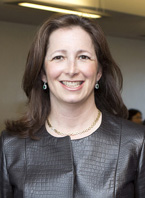
Professor Molly Shoichet (ChemE, IBBME) was recently profiled by Forbes for her research into stem-cell delivery.
Professor Shoichet’s lab is looking to solve a complex challenge facing stem-cell researchers: how to ensure that cells delivered to patients don’t die after transplantation to the point of care.
Speaking to colleagues of the International Society of Stem Cell Research (ISSCR), in Boston recently, she explained how her team have designed a very simple, injectable material that can help transplant cells into the central nervous system, and even into the eye.
She calls it a hydrogel, essentially a mix of hyaluronan and methyl cellulose.
“What we’re doing is looking at delivering molecules that will stimulate the stem cells and promote their neuralization as a way to advance tissue and function repair,” said Professor Shoichet.
Her lab is currently running tests, with hopes to move the technology into the clinical trial stage. “And we have begun to explore this with collaborators industry,” she said.
“Timing is always difficult to pinpoint,” she added. “But we are truly excited by our results.”
To read the full story, visit Forbes.com.
A U of T team – including researchers from Electrical and Computer Engineering and the Institute of Biomaterials & Biomedical Engineering – has created an electronic chip that can analyze blood and other clinical samples for infectious bacteria with record-breaking speed.
Life-threatening bacterial infections cause tens of thousands of deaths every year in North America but current methods of culturing bacteria in the lab can take days to report the specific source of the infection, and even longer to pinpoint the right antibiotic that will clear the infection.
The new technology, reported in the journal Nature Communications, can identify the pathogen in a matter of minutes, and looks for many different bacteria and drug resistance markers in parallel, allowing rapid and specific identification of infectious agents.
“Overuse of antibiotics is driving the continued emergence of drug-resistant bacteria,” said Shana Kelley (Pharmacy and Biochemistry), a senior author of the study. “A chief reason for use of ineffective or inappropriate antibiotics is the lack of a technology that rapidly offers physicians detailed information about the specific cause of the infection.”
The researchers developed an integrated circuit that could detect bacteria at concentrations found in patients presenting with a urinary tract infection. “The chip reported accurately on the type of bacteria in a sample, along with whether the pathogen possessed drug resistance,” explained Chemistry PhD student Brian Lam, the first author of the study.

One key to the advance was the design of an integrated circuit that could accommodate a panel of many biomarkers. “The team discovered how to use the liquids in which biological samples are immersed as a ‘switch’ – allowing us to look separately for each biomarker in the sample in turn,” said Ted Sargent (Electrical and Computer Engineering), the other senior author of the report.
“The solution-based circuit chip rapidly and identifies and determines the antibiotic resistance of multiple pathogens – this represents a significant advance in biomolecular sensing,” said Paul S. Weiss, Kavli Chair in NanoSystems Science and Director of the California NanoSystems Institute at UCLA.
Ihor Boszko, Director of Business Development at Xagenic, a Toronto-based in vitro diagnostics company said the breakthrough could have significant practical implications. “This kind of highly sensitive, enzyme-free electrochemical detection technology will have tremendous utility for near patient clinical diagnostics. Multiplexing of in vitro diagnostic approach adds the capability of simultaneously testing for multiple viruses or bacteria that produce similar clinical symptoms. It also allows for simple and cost effective manufacturing of highly multiplexed electrochemical detectors, which will certainly have a significant impact on the availability of effective diagnostic tools.”
Other authors of the paper were Jagotamoy Das (Chemistry), Richard Holmes (Pharmacy), Ludovic Live (IBBME) and Andrew Sage (IBBME). The paper , “Solution-based circuits enable rapid and multiplexed pathogen detection,” can be found athttp://www.nature.com/ncomms/2013/130612/ncomms3001/full/ncomms3001.html

From June 4 to 8, U of T Engineering hosted the 12th Consortium on Sustainable Materials (COSM) UT2 Graduate Student Workshop. This year’s conference, ‘Materials for Sustainability,’ brought together 14 faculty and graduate students from the University of Tokyo, and more than 30 professors and graduate students from U of T’s departments of Chemical Engineering & Applied Chemistry (ChemE), Materials Science & Engineering (MSE) and Mechanical & Industrial Engineering (MIE).
The workshop featured more than 20 graduate-level research topics, such as sustainable metallurgical processing, advanced nano-composites, bio-inspired microstructured materials, organic optoelectronics, and many more.
“UT2 is a great opportunity for graduate students to meet with colleagues and faculty members from a different institution in a different country. It creates opportunities for new collaborative research projects and exchange programs between the two universities,” said Leili Tafaghodikhajavi (MSE PhD candidate), one of this year’s student organizers.
“The workshop has further strengthened ties between two leading engineering schools in two continents,” said Professor Charles Q. Jia, Associate Chair, Graduate Studies (ChemE) and one of this year’s faculty co-leads. “It has provided a valuable opportunity for graduate students to share the excitement of their research and build friendships that will help them professionally.”
The workshop was supported by the Department of Materials Engineering and the International Research Center for Sustainable Materials at the University of Tokyo, the Consortium on Sustainable Materials (COSM), along with the three participating engineering departments from the University of Toronto.
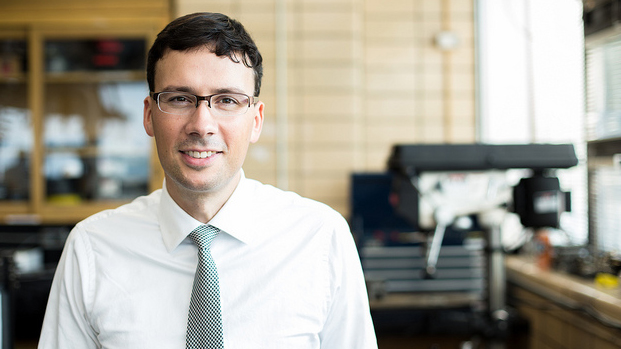
Professor David Sinton is a mechanical engineer. So at first glance it seems odd his lab is full of algae. Sinton’s research has always focused on small-scale plumbing, or fluidics — the movement of fluid at the micro- and nano-scale. Traditional applications have been exclusively biomedical, and Sinton’s work before 2004 was too.
His early work in energy focused on fuel cell technologies, as well as sensors that combine fluidics and optics. On a sabbatical in 2009, he started thinking about how the tools of fluidics and optics could be applied broadly to sustainable energy challenges.
“The first thing that struck me about energy is that it’s so big. In terms of scale, it’s the biggest problem we have. I’m a small-scale fluids guy, so it wasn’t an obvious fit. Certainly not every energy challenge needs a guy like me. I had to think about where I could have impact.”
He arrived at photosynthesis. “The largest energy process on earth is accomplished at small scales, through light and fluid interactions in plants and photosynthetic microorganisms distributed all around the world.”
If it’s been a long time since high school bio, here’s a refresher: plants (and some creatures like bacteria) convert sunlight into energy. Sunlight + carbon dioxide + water = oxygen and energy (in the form of sugars).
After making the connection between small-scale fluids, optics and photosynthesis, Professor Sinton started working with microalgae. The type of algae we see in ponds and puddles has great potential to generate fuel from solar energy. “In terms of fuel production per area, you can do a much better job growing algae than you can with traditional biofuels,” he explains.
The $100,000 McLean award will help advance his work in sustainable energy. The prestigious McLean Award honours emerging leaders in basic research in the fields of physics, chemistry, computer science, mathematics, engineering sciences, and statistics. The award is jointly funded by a gift from U of T alumnus William McLean and U of T’s Connaught Fund. Created from the 1972 sale of Connaught Laboratories, which first mass-produced U of T’s Nobel award-winning discovery of insulin, the Connaught Fund invests close to $4 million annually in emerging and established scholars at U of T.
“Professor Sinton exemplifies the spirit of the Connaught Fund,” says Judith Chadwick, U of T’s assistant vice president (research services). “Connaught is dedicated to supporting researchers who are targeting unmet societal ends and who have the potential to make a transformative contribution. On behalf of the University of Toronto, I extend my congratulations to him on this well-deserved award.”
To read the full profile on Professor Sinton, visit U of T’s Research & Innovation website.
U of T researchers, including four affiliated with the Faculty of Applied Science and Engineering, have won just under $2.5 million in infrastructure funding in the Canada Foundation for Innovation’s latest Leadership Opportunity Fund competition.
Engineering recipients were:
- Tobin Filleter, Department of Mechanical and Industrial Engineering, “Nanomechanics and Nanotribology Platform for Characterizing Energy Efficient Materials.”
- Penney Gilbert, Institute for Biomaterials and Biomedical Engineering, “Muscle Stem Cell Bioengineering Laboratory.”
- Benjamin Hatton, Department of Materials Science and Engineering, “Microstructured Surfaces and Adaptive Materials Engineering.”
- Paul Yoo, Institute for Biomaterials and Biomedical Engineering, “Electrical Neuromodulation of Spinal and Supraspinal Reflexes for Treatment of Lower Urinary Tract Dysfunction.”
The other recipients were:
- Judith Andersen, Department of Psychology, University of Toronto Mississauga, “Laboratory for the Study of the Psychophysiological Effects of Stress on Physical Health.”
- Prabhat Jha, Centre for Global Health Research and St. Michael’s Hospital, “Integrated Million Death Study e-Platform.”
- George Mochizuki, Department of Physical Therapy and Sunnybrook Research Institute, “Neuromuscular Recovery After Stroke: Assessment and Intervention.”
- Brian Shoichet, Leslie Dan Faculty of Pharmacy, “Structural and Systems Pharmacology Laboratory for Drug Discovery.”
- Marla B. Sokolowski, Department of Biology, University of Toronto Mississauga and Department of Ecology and Evolutionary Biology, “Gene-Environment Interplay Research Laboratory.”
- Michael Wheeler, Departments of Medicine and Physiology and University Health Network, “Creation of the Diabetes Discovery Core to Facilitate Innovative New Directions in Understanding Diabetes Pathophysiology and in Developing New Clinical Modalities to Manage the Disease.”
- Shelley Wright, Dunlap Institute and the Department of Astronomy and Astrophysics, “Astronomical Instrumentation Development for Large Optical and Future Giant Segmented Telescopes”
- Yeni Yücel, Department of Ophthalmology and Vision Sciences and St. Michael’s Hospital, “Tracking Nanoparticles with Whole-Animal Imaging and Hyperspectral Microscopy: A Novel Strategy for Identifying Biomarkers and Treating Diabetes.”
“The CFI’s continued investment in U of T research is greatly appreciated,” said Professor Paul Young (CivE), U of T’s vice-president (research and innovation). “The tools and infrastructure these grants support allow our researchers to conduct some of the world’s most cutting-edge research. Their work will advance our understanding of ourselves and our world as well as lead to outcomes that improve our quality of life.”
Students interested in the environment and engineering can soon take advantage of a unique joint undergraduate/graduate program offered by the University of Toronto Scarborough (UTSC) and the Faculty of Applied Science & Engineering (FASE).
UTSC Dean & Vice-Principal (Academic) Rick Halpern and U of T Engineering Dean Cristina Amon signed a Memorandum of Understanding agreeing to the creation of the joint degree program on June 6.
Participants in the five-year program will graduate with a Bachelor of Science (BSc) in Environmental Science and a Master of Engineering degree (MEng) in either Chemical or Civil Engineering. In the first three years, students work on their BSc requirements. In fourth year, they continue to take some undergraduate courses and some graduate courses. In the fifth year, they take their remaining graduate courses. The program is anticipated to start in September 2013.
Though it may mean harder work for students, the agreement creates a new opportunity for them and shortens the timeframe to graduation, said Bill Gough, vice-dean, graduate education and program development at UTSC. “I think the excitement of being included in engineering in this fashion overrides the sense of extra work that has to be done,” he said.
“This agreement marks two historic firsts: the first collaboration between FASE and UTSC and the first program of its kind in Canada,” Dean Amon said at the signing ceremony.
Dean Halpern noted that several other faculties and departments at U of T are now considering joint bachelor’s/master’s degree programs. “We have 19 others cued up behind us.” Amon and Halpern thanked Professors William Gough and Chris Damaren, vice-deans of graduate studies at UTSC and U of T Engineering respectively, for bringing the program to fruition.
“This is a happy moment,” he said. “It’s been a pleasure working with the Faculty of Applied Science & Engineering.” Dean Amon in turn said she was glad of the opportunity to collaborate with UTSC. “Our strengths complement each other perfectly,” she said.