
How can we improve teaching and student learning? Can we connect with students through texting, or invert the traditional classroom experience altogether? These were just a few of the questions posed at U of T’s second EdTech Workshop, held at the Bahen Centre on May 28.
The workshop showcased leading applications and best practices for innovative teaching and learning. The 250 attendees learned about everything from webinars and lecture capture, to online office hours, group-marking software and e-textbooks. They also listened to presentations from 13 of U of T’s leaders in educational technology, including engineering Professors Jim Wallace (MIE) and Susan McCahan (MIE), Vice-Dean, Undergraduate, and Lecturers Jason Bazylak (MIE), Jason Foster (EngSci) and Dr. Micah Stickel (ECE), First Year Chair.
This year’s workshop was led by Allison Van Beek, Instructional Technology Specialist, who, in the spirit of the event, tried some innovative ways to capture the day’s activities.
“We broadcasted our opening remarks into a smaller room to demonstrate how that could work for a distributed-learning environment,” said Van Beek. “We also asked one of our vendor participants, Akindi, to help us design a custom bubble-sheet trivia game.” What’s more, all the sessions throughout the day were lecture captured and will be posted online.
“This day was designed to be a ‘show and tell’ experience, where instructors could share what they’ve learned as educators,” said Van Beek. “I hope that it inspired people to try something new … I also hope that people become more aware of how much interest there is to implement technology in the classroom.”
This is the second time U of T Engineering has hosted the EdTech Workshop. The first was in 2011, and was chaired by the late Harpreet Dhariwal , former Instructional Technology Specialist for the Faculty.
“The 2013 workshop continued the spirit of his work,” said Van Beek.
Van Beek is already looking ahead to next year’s EdTech Workshop, where she hopes to live-stream the sessions, add more interactive elements and have more collaborative sessions.
“I expect to see some big jumps in how we use technology in the classroom at U of T this year, especially in U of T Engineering,” she said. “I can’t wait to showcase those efforts next year.”
Learn more about this year’s EdTech presenters.

Civil engineering students Amanda Cirinna (1T3) and Steven Goldstine (1T3) recently took top honours at the Home Sweet Home Student Challenge, an annual competition developed by OntarioGreenSpec.ca and vied for by schools across the province.
The competition, which is adjudicated by an advisory board of 12 academic leaders and green-building practitioners, was created to engage Ontario’s post-secondary students in the research, innovation and adoption of green-building techniques.
Schools were given a specific scenario for a project to take on and given several months to come up with a comprehensive proposal that was presented to the board.
This year’s challenge? To design a modest retirement residence for Rick Mercer, comedian and noted environmentalist.
“Many factors influenced the physical design of our home,” the team wrote in their submission to the committee. “Although the primary objective of the design was to be as sustainable and efficient as possible, we balanced this with other considerations such as liveability, aesthetic appeal, practicality and optimal use of land.”
In the end, they settled on a one-and-a-half-storey house, with the defining feature being an offset, south-facing window wall on the the second storey – which then leads to an open, high-interior atrium.
The engineering students competed as part of their final-year capstone design project, a major undertaking designed to bring together all the fundamentals they had learned over four years in one culminating, practical experience.
The project was undertaken with the guidance of Professor Kim Pressnail (CivE), an expert in building science and sustainability. Professor Pressnail was instrumental in redesigning the curriculum in Civil Engineering to integrate sustainability concepts.

Engineering Science students Sherri Cui (1T5) and Shen Wang (1T5) have won first prize in a national safe design award competition for their innovative mobile health and safety app.
Cui and Wang were presented with the 2013 James Ham Safe Design Award by Minerva Canada Safety Management Education President Tony Pasteris at a ceremony at Ryerson University last week. The annual competition challenges Canadian university engineering students to make an original contribution toward integrating safety into engineering design. Cui and Wang received a cash prize of $3,500 for designing the app, which addresses and makes workers more aware of the risks associated with slips, trips and falls.
The award honours former U of T Engineering Dean James Milton Ham whose Royal Commission Report on Health and Safety led to the creation of Ontario’s Occupational Health and Safety Act in 1979. Professor Ham served as Dean of U of T Engineering from 1966 to 1976 and as U of T President from 1978 to 1983.
Wang said he and Cui were thrilled to win the award. “We worked at it for the better part of the semester and took many iterations of the solution between we could come up with the final idea. We were informed about this after our final exam of second year Engineering Science. It was a great way to end off the year.”
Professor Mark Kortschot, Chair of Engineering Science, said he was proud of Cui and Wang. “I am really thrilled that Sherri and Shen showed the initiative and creativity needed to compete for and win this award. Engineering Science strives to produce engineers with a deep knowledge of fundamentals, but we also build a strong foundation of design thinking beginning on the first day of classes in first year. Sherri and Shen’s elegant approach to the very important problem of worker safety suggests that they are on their way to becoming outstanding design engineers.”
Wang described the development process: “A major step in idea generation was first recognizing that this was a huge problem. We did a lot of research regarding the biggest contributors to lost time due to injury. Afterwards, we realized that there was a barrier between our presumptions and recognizing the severity and importance of slips, trips, and falls. From there, we worked to develop better ways of conveying such important information to workers.”
The app is not yet available, Wang said. “It exists as a concept with an user interface and some front end production to display the idea. The app would require access to databases that we do not have easy access to. However, we have interest from multiple groups about our application.”
Minerva Canada is a not-for-profit organization dedicated to promoting the teaching of safety, health and environmental management in post-secondary schools across Canada. The James Ham Safe Design Awards were established to encourage students and engineering faculty members to integrate safety into all designs, produce safer designs of devices, processes and systems and raise awareness of process safety management safety, health and environment in engineering schools.
For more information about Minerva Canada and the James Ham Safe Design Award, go to safetymanagementeducation.com.
U of T Engineering researchers, working with colleagues from Carnegie Mellon University, have published new insights into how materials transfer heat, which could eventually lead to smaller, more powerful electronic devices.
Integrated circuits and other electronic parts have been shrinking in size and growing in complexity and power for decades. But as circuits get smaller, it becomes more difficult to dissipate waste heat. For further advances to be made in electronics, researchers and industry need to find ways of tracking heat transfer in products ranging from smartphones to computers to solar cells.
Dan Sellan (PhD 1T2) and Professor Cristina Amon, of the Department of Mechanical and Industrial Engineering, investigated a new tool to measure the thermal and vibrational properties of solids. Working with colleagues from Carnegie Mellon University, they studied materials in which heat is transferred by atomic vibrations in packets called phonons. Their results were recently published in Nature Communications.
“In an analogy to light, phonons come in a spectrum of colors, and we have developed a new tool to measure how different color phonons contribute to the thermal conductivity of solids,” said Jonathan Malen of Carnegie Mellon.
According to the researchers, the new tool will give both industry and academia a clearer picture of how an electronic device’s ability to dissipate heat shrinks with its size, and how materials can be structured at the nanoscale to change their thermal conductivity.
For example, in the initial demonstration, the team showed that as silicon microprocessors continue to shrink, their operating temperatures will be further challenged by reduced thermal conductivity.
“Our modelling work provides an in-depth look at how individual phonons impact thermal conductivity,” said Sellan, who undertook his research as a PhD Candidate in Professor Amon’s lab. Currently an NSERC Postdoctoral Fellow at The University of Texas at Austin, Sellan is developing experimental techniques for thermal measurements.
Professor Amon, who is also Dean of U of T Engineering, said Sellan’s insights will allow researchers to design nanostructured thermoelectric materials with increased efficiency in converting waste heat to electrical energy. “This work has exciting implications for the future of nano-scale thermal conductivity research,” she said.
It would be hard to find a university student these days who isn’t glued to their smartphone screen – whether outside or inside the classroom.
As tech blog ReadWrite explains, “The modern classroom is alive with the clicking of laptops and tapping of smartphones, and it’d be naive to think their owners are just dutifully taking notes.”

Enter a new breed of educational apps that aim to re-engage students via the smartphones that distract them. One such app is Top Hat, which is being used by Lecturer Jason Bazylak, who teaches one of the largest mechanical engineering courses at U of T Engineering.
To make participation less intimidating, he requires his students to use the app, which allows him to text the class multiple-choice questions that they can answer on their phones. If 96 per cent or more of the class gets it right, he moves on to the next topic. If they don’t, he continues on the same topic until he’s certain the class has grasped it.
“It takes a lot of courage to raise your hand and shout out questions in a group that big,” said Bazylak about his class of more than 1,000 students. “I wanted to support the quiet students who might not speak up otherwise.”
This June, Bazylak will attend the Canadian Engineering Education Convention to present a paper on his use of the new app.
To learn more, check out the ReadWrite article.
Dietary advice tailored to your DNA. A ‘bio-printer’ that prints skin-like tissue that can be used to dress wounds.
These are just two of the inventions that might change your life in coming years.
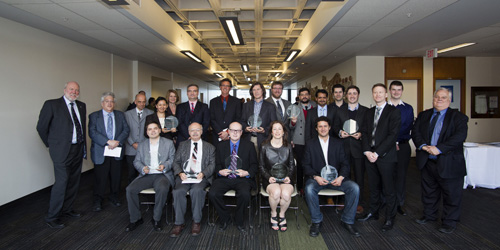
They’re also two of 10 inventions whose creators were celebrated May 15 at the University of Toronto’s 2013 Inventors of the Year ceremony. Five U of T engineers were among the recipients honoured.
“The Inventor of the Year Award is meant to recognize inventions that have the potential to improve our quality of life,” said Professor Paul Young (CivE), vice-president (research and innovation). “The winning inventions represent the very best of innovation at U of T, and on behalf of the University, I extend my congratulations.”
To qualify for the award, entrants and their teams must be faculty members or trainees who disclosed their inventions to U of T’s Innovations and Partnerships Office (IPO) within the past five years. Inventions are assessed based on their uniqueness, potential for global impact and commercial appeal.
Professor Young noted that many of the inventions include students as co-inventors. “More than two-thirds of all inventions disclosed at the University of Toronto have a student or post-doc as a co-inventor, and this is also reflected in the winning projects. We have several entrepreneurship education initiatives on campus, but in many ways, the best experience is practical. Students at U of T have the opportunity to work with some of the world’s leading inventors, and they’ll take that creative spirit with them wherever they go after graduation.”
The U of T Engineering researchers honoured are:

Professor Axel Guenther (MIE, IBBME), with Professor Milica Radisic (IBBME) and graduate students Lian Leng, Arianna McAllister, Andrew Woollard and Boyang Zhang. Professor Guenther’s team developed a 3D ‘bio-printer’ that can produce wound dressings that accurately mimic human skin;

Professor Peter Lehn (ECE), who invented a new power electronic circuit topology for ultra-high efficiency conversion of low- to high-voltage direct currents;
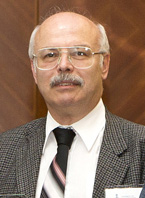
Professor Andreas Mandelis (MIE), with team members Jose A. Garcia, Jinseok Jeon, Anna Matvienko and Lena Nicolaides. The team of inventors, which includes Dr. Stephen Abrams, CEO of Quantum Dental Technologies, has invented a way to monitor cavities without using ionizing dental x-rays;
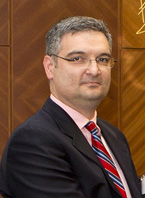
Professor Milos Popovic (IBBME), with team members Santa Huerta Olivares, Massimo Tarulli, Peter Lehn (ECE) and Aleksandar Prodic (ECE). The team is designing neuroprosthetic devices that help restore or replace nervous system function damaged by stroke or spinal cord injury; and,

Professor Molly Shoichet (ChemE, IBBME), with team members Dimpy Gupta, Charles Tator (University Health Network), Jordan Wosnick and Ryan Wylie. Professor Shoichet’s team develops materials for drug delivery and regeneration.