
Professors Paul Chow (ECE), Andrew Goldenberg (MIE), Chul Park (MIE), Shamim Sheikh (CivE) and Yu Sun (MIE) have been recognized by the Engineering Institute of Canada (EIC) for their outstanding engineering achievements. Andrew Goldenberg received the Sir John Kennedy Medal, the EIC’s highest honour. Chul Park was awarded the K.Y. Lo Medal for significant engineering contributions at the international level. Professors Chow, Sheikh and Sun have been named EIC Fellows for their exceptional contributions to engineering in Canada.
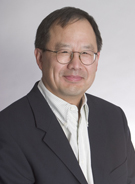 Professor Chow, the Dusan and Anne Miklas Chair in Engineering Design, has made several key contributions to computer architecture as a researcher, educator and industry leader. He has performed groundbreaking research on field programmable gate array (FPGA) architectures and their applications in fields from biomedicine to finance. He has also developed and taught innovative courses on integrated chip design, resulting in student-designed chips that have significantly furthered research in the field. Professor Chow serves on the Board of CMC Microsystems and was a leader in the formulation of their most recent strategic plan.
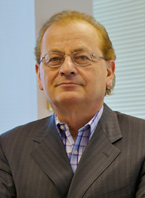 In addition to being a world class researcher, Professor Goldenberg is a successful entrepreneur who has brought his research into the market place to the benefit of all Canadians. Professor Goldenberg’s research has resulted in 42 patents. In 1982 he founded Engineering Services Inc. (ESI), which develops robotics-based modular automation, mobile robots, customized robotic systems, and intelligent mechatronics systems. With clients in 19 countries, ESI has consolidated Canada’s presence in the field of robotics technology. Professor Goldenberg also co-founded Virtek Engineering Science Inc. and Anviv Mechatronics Inc. He was elected a Fellow of EIC in 2010.
 A world leader in the field of plastic foaming, Professor Park holds the Canada Research Chair in Microcellular Plastics and is Founder and Director of the Microcellular Plastics Manufacturing Laboratory and the Centre for Industrial Application of Microcellular Plastics. Professor Park’s microcellular research has produced pivotal breakthroughs that have reshaped plastics engineering and had a major impact across a number of industries. His research has generated 20 patents, and hundreds of companies throughout the world have licensed his microcellular systems. He is a Fellow of EIC and received the EIC Julian C. Smith Medal in 2010.
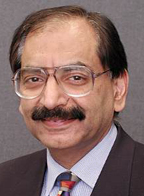 Professor Sheikh’s engineering achievements include the development of new materials, procedures for the design of concrete structures under extreme loads, innovative techniques for the life extension of structures and the application of his research in the development of sustainable infrastructure. Professor Sheikh has a distinguished record of service and leadership on technical committees for professional societies in Canada and the U.S. He also serves as a consultant to the United Nations, oil companies such as Petro-Canada and Shell, and engineering companies around the world.
 Professor Sun is the Canada Research Chair in Micro and Nano Engineering Systems. His research focuses on the manipulation and characterization of single cells, biomolecules and nanomaterials using microelectrical mechanical systems (MEMS). Professor Sun has invented automated processes for biological cell manipulation that are revolutionizing how genetic studies, cancer research, and clinical cell surgery and diagnostics are conducted. His research has resulted in 16 patents. Many of the technologies he has developed are widely used in academia, industry and medicine. Professor Sun is in great demand as an invited speaker and serves on the editorial boards of several top-tier international journals.
“We are grateful and proud that the Engineering Institute of Canada has recognized five of our faculty members for their exemplary contributions to engineering in Canada and internationally,” said Cristina Amon, Dean, Faculty of Applied Science & Engineering. “The recognition of so many U of T engineers is both an honour and a testament to the excellence of our Faculty.”
Professor Jean Zu (MIE Chair), President of the EIC, will preside over the EIC’s Annual Awards Banquet in Montreal on May 28, 2013.
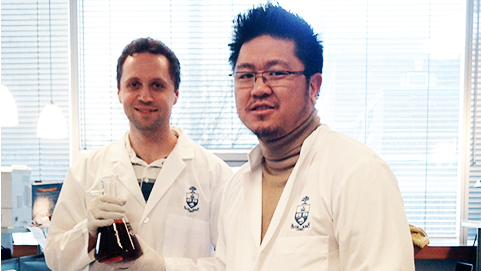
A diagnostic ‘cocktail,’ containing a single drop of blood, a dribble of water and a dose of DNA powder with gold particles, could one day lead to the treatment of the world’s leading diseases.
This homegrown brew is being developed by IBBME PhD student Kyryl Zagorovsky and Professor Warren Chan (IBBME), a Canada Research Chair in Nanobiotechnology, and a recent winner of the NSERC E.W.R. Steacie Memorial Fellowship.
“There’s been a lot of emphasis in developing simple diagnostics,” said Professor Chan. “The question is, how do you make it simple enough, portable enough?”
Professor Chan’s lab studies nanoparticles – in particular, the use of gold particles in sizes so small that they are measured in the nanoscale. He and his group are working on custom-designing nanoparticles to target and illuminate cancer cells and tumours, with the potential of one day being able to deliver drugs to cancer cells.
Zagorovsky’s rapid-diagnostic biosensor will allow technicians to test for multiple diseases at one time with one small sample, and with high accuracy and sensitivity. The biosensor relies upon gold particles in much the same vein as your average pregnancy test. With a pregnancy test, gold particles turn the test window red because the particles are linked with an antigen that detects a certain hormone in the urine of a pregnant woman.
“Gold is the best medium,” explained Professor Chan, “because it’s easy to see. It emits a very intense colour.”
Currently, scientists can target a particular disease by linking gold particles with DNA strands. When a sample containing the disease gene (e.g., Malaria) is present, it clumps the gold particles, turning the sample blue.
Rather than clumping the particles together, Zagorovsky immerses the gold particles in a DNA-based enzyme solution (DNA-zyme) that, when the disease gene is introduced, ‘snip’ the DNA from the gold particles, turning the sample red.
“It’s like a pair of scissors,” said Zagorovsky. “The target gene activates the scissors that cut the DNA links holding gold particles together.”
The advantage is that far less of the gene needs to be present for the solution to show noticeable colour changes, amplifying detection. A single DNA-zyme can clip up to 600 ‘links’ between the target genes.
Just a single drop from a biological sample such as saliva or blood can potentially be tested in parallel, so that multiple diseases can be tested in one sitting.
But the team has also demonstrated that can transform the testing solution into a powder, making it light and far easier to ship than solutions, which degrade over time. Powder can be stored for years at a time, and offers hope that the technology can be developed into efficient, cheap, over-the-counter tests for diseases such as HIV and malaria for developing countries, where access to portable diagnostics is a necessity.
“We’ve now put all the pieces together,” said Professor Chan.
Read Globe and Mail’s profile on Professor Chan and Zagorovsky’s research.
University of Toronto researchers won or shared honours in six of eight prize categories in this year’s awards from the Natural Sciences and Engineering Research Council of Canada (NSERC), presented Feb. 27 in Ottawa.
Among them are U of T Engineering professors Warren Chan (IBBME), Paul Santerre (IBBME, Director) and Yu Sun (MIE), as well as PhD student Graham Carey (ECE).
The accolades represent an unprecedented performance by U of T scholars, ranging across the academic life-cycle, from graduate students through rising stars in mid-career, to lifetime achievers.
Professors Chan and Sun won the E.W.R. Steacie Memorial Fellowship, awarded to enhance the career development of outstanding and highly promising scientists and engineers who are faculty members of Canadian universities.
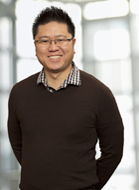 Professor Chan is a global leader in nanotechnology and is breaking new ground using quantum dots in biomedical applications. He is leading the development of hand-held devices capable of screening for molecules that indicate the presence of pathogens, including HIV, Hepatitis B and C, malaria and syphilis. (Read a Q & A with Chan here.)
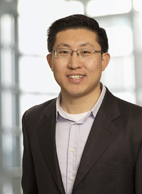 Professor Sun is an international leader in developing robotics and automation technologies for manipulating biomaterials. His research into automated processes for biological cell manipulation is revolutionizing how genetic studies, cancer research and clinical cell surgery and diagnostics are performed. (Read a Q & A with Sun here.)
 Professor Santerre was awarded the Synergy Award for Innovation, which honours outstanding achievements in university-industry collaborations. His partnership with Interface Biologics is producing transformative biomedical polymers to make medical devices safer and more effective. They have created products ranging from catheter lines to polymer-coated stents for opening blocked arteries. (Read a Q & A with Santerre here.)
 Carey, who works under the supervision of Professor Ted Sargent (ECE), Vice-Dean, Research, is exploring some of the key challenges in making quantum dot solar cell systems more efficient. Quantum dots are microscopic pieces of semiconductor that can be layered—like paint—onto a surface. He is looking at ways to improve the stability of each layer to minimize energy loss and increase efficiency. (Read a Q & A with Carey here.)
“We are delighted that three of our professors and one of our graduate students have been honoured by NSERC for research which advances engineering knowledge and benefits all Canadians” said Cristina Amon, Dean, Faculty of Applied Science & Engineering. “These prestigious awards demonstrate our Faculty’s strength in all aspects of engineering innovation – ranging from fundamental investigations to successful technology transfer and commercialization.”
To read about all U of T winners, visit U of T News.

Professor Greg Evans (ChemE) is this year’s recipient of the Northrop Frye Award, one of U of T’s Awards of Excellence. The Northrop Frye Award recognizes those who have gone above and beyond the University’s standard of excellence, setting themselves apart through innovation in teaching and their commitment to conveying the excitement and importance of research to undergraduate and graduate students.
Professor Evans has been a leader in innovative curriculum development which integrates teaching and research, parlaying his leadership in research institutes to provide unique learning opportunities for our students. In 2003, he led the development of the Southern Ontario Centre for Atmospheric Aerosol Research (SOCAAR), an interdisciplinary centre for the study of air quality, with a focus on how aerosols impact human health and the environment. In 2008, he co-founded the Canadian Aerosol Research Network (CARN) to unite Canada’s emerging expertise in aerosols science. The 178 undergraduates and 52 graduate students whose research he has supervised have had the opportunity to use these cutting-edge facilities, and to work with his research partners from academia, industry, and government.
While serving as Vice-Dean, Undergraduate (2005-2007), Professor Evans created the Undergraduate Engineering Research Day (UnERD), a one-day research symposium/competition for undergraduate engineering students which has since grown to a large annual event. Professor Evans is also co-leader of Leaders of Tomorrow, the Faculty’s unique leadership education program. Currently, he is leading an initiative to create a PhD program on Engineering Education within the Faculty, and is also part of a parallel effort to create a PhD program in Occupational and Environmental Health at the Dalla Lana School of Public Health.
Professor Evans has been honoured for his innovation in teaching and research with a number of accolades. These include the 2009 Bill Burgess Chemical Engineering Teacher of the Year Award, the 2009 Ontario Professional Engineers Research and Development Medal, the 2010 American Society for Engineering Education Outstanding Teaching Award and the 2010 Engineers Canada Medal for Distinction in Engineering Education.
“I am delighted that Professor Evans’ contributions to research and education have been recognized with this prestigious award,” said Cristina Amon, Dean, Faculty of Applied Science & Engineering. “He exemplifies the qualities of leadership, dedication and innovation the University seeks to encourage through the Awards of Excellence program.”
Professor Evans and other Awards of Excellence recipients will be honoured by the University at a reception at the Great Hall of Hart House on April 10.
A pair of space telescope satellites, designed by U of T Engineering’s Space Flight Laboratory (SFL), are now circling the Earth, prepared to find and study the brightest stars in the sky.
Measuring only 20 centimetres a side, and weighing less than seven kilograms, the nano-satellites are the smallest astronomical satellites ever built. They were launched February 25 from the Satish Dhawan Space Centre in Sriharikota, India. Funded by Austria, they are the first two components in the planned six-satellite BRIght Target Explorer (BRITE) mission.
One of the two satellites launched February 25 was also built at SFL while the other was built in Austria. Four more satellites are planned for BRITE, two to be funded by Poland and the final two by the Canada Space Agency, said Cordell Grant, Manager of Satellite Systems for the Space Flight Laboratory. Each twin in a pair watches the sky in a different colour (red or blue), providing another layer of data to the scientists.
Grant said that so far the satellites are working fine. “It was nerve-wracking watching the launch because something can always go wrong. I felt great when it launched successfully, and I felt even better a few hours later when we actually ‘talked’ to the satellites and ensured they were both working.”
“We demonstrated that nano-satellites can be developed quickly, by a small team and at a cost that is within reach of many universities, small companies and other organizations,” Grant said. “A nano-satellite can take anywhere from six months to a few years to develop and test, but we typically aim for two years or less.”
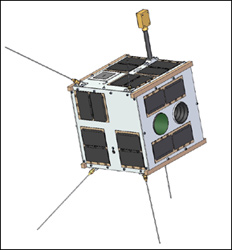
Until now, such nano-satellites had been used only to monitor the earth and experiment with new technologies. “Researchers, scientists and companies worldwide, who have great ideas for space-borne experiments, but do not have the means to fund a large spacecraft, can now see their ideas realized,” said Grant. “BRITE has the potential to open an entirely new market for low-cost high-performance satellites.”
The Space Flight Laboratory is responsible for operating the satellites during the commissioning phase, which is expected to last a couple of months, Grant said. Operation of the satellites will then gradually be transferred to Austria.
BRITE is the first nano-satellite mission intended for astronomy, and the first-ever astronomy constellation – more than one satellite working toward a common objective – of any size. The previous world-record holder for small astronomy satellites was the MOST satellite, designed and assembled in part by the Space Flight Laboratory. Launched in 2003 and still operating, MOST was the first entirely Canadian satellite for astronomy, weighing in at 53 kilograms. Compared to the 11 metric tons of the Hubble Space Telescope, MOST was aptly called a micro-satellite.

“BRITE is expected to demonstrate that nano-satellites are now capable of performance that was once thought impossible for such small spacecraft,” said Grant. But only small telescopes can fit within a 20 centimetre cube. Therefore, BRITE is not intended to take pretty pictures, but will simply observe stars and record changes in their brightness over time. Such changes could be caused by spots on the star, a planet or other star orbiting the star, or by oscillations and reverberations within the star itself – the analogue of earthquakes on stars. The study of these so-called “starquakes” is called asteroseismology.
To perform precise measurements of the brightness of stars, the telescopes need to be above the atmosphere. Otherwise, scintillation — the atmospheric effect that causes stars to twinkle – overwhelms the relatively small brightness variations of the stars themselves. By avoiding this, a very small telescope in space can produce more accurate data than a much larger telescope on the ground. Also, unlike telescopes on Earth which are useless during the day, in bad weather or when the stars set below the horizon, telescopes in space can potentially observe stars all the time.
[youtube https://www.youtube.com/watch?v=8eh5cu5tys4]
As their name suggests, the BRITE satellites will focus on the brightest stars in the sky including those that make up prominent constellations like Orion the Hunter. These stars are the same ones visible to the naked eye, even from city centres. Because very large telescopes mostly observe very faint objects, the brightest stars are also some of the most poorly studied stars.
It turns out that the brightest stars are also the largest. Big bright stars lead short and violent lives and deaths (supernovas) and in the process seed the universe with heavy elements without which life on Earth would be impossible. To better understand these stars is to better understand how life arose on our planet, Grant said.
Xagenic Inc., a healthcare diagnostics company founded by U of T Engineering Professor Ted Sargent (ECE), Vice-Dean, Research, and Pharmacy Professor Shana Kelley, is receiving almost $1 million from the federal government’s Investing in Business Innovation initiative.
“Infectious disease is an enormous burden on the health care system, and with increasing levels of virulent infections and rising antibiotic resistance rates, we need better solutions for rapid and specific diagnosis,” said Professor Kelley, chief technology officer of Xagenic.
Established by Professors Kelley and Sargent, Xagenic is a venture capital backed start-up company dedicated to developing diagnostic tools for the healthcare sector.
Xagenic’s technology promises to transform the way infectious diseases are diagnosed by enabling rapid-result molecular diagnostic testing to take place outside of clinical laboratories.
The company’s fully automated technology platform will enable widespread decentralized diagnostic testing to be performed outside a laboratory – with results occurring in 20 minutes. Using ultra-sensitive microelectrode arrays, Xagenic’s infectious disease diagnostic tests will detect a variety of analytes in samples, quickly identifying diseases and enabling doctors to make immediate treatment decisions while patients are still in the clinic.
This easy-to-use and inexpensive device eliminates unnecessary delays, reduces healthcare costs, and will transform the way patients receive care and are treated.
“The technology uses electrochemical signals to report on the presence of infectious pathogens in clinical samples,” said Professor Kelley. “It provides a solution that can deliver rapid information about what kind of infection is present on a clinically actionable timescale.”
The Investing in Business Innovation initiative is designed to boost private sector investment in start-up businesses to accelerate the development of new products, processes and practices and bring them to market. With this investment from the Government of Canada, Xagenic is one step closer to revolutionizing the way infectious diseases are diagnosed and treated across the globe.