
In Canada alone, the number of people living with dementia, or similar cognitive impairment, stands at 747,000. By 2038, it’s projected that number will rise to a staggering 5.5 million.
As there’s yet to be a cure for dementia, those living with the impairment require personalized care. However, the number of qualified healthcare professionals is not expected to meet the growing demand.
Enter Professor Goldie Nejat (MIE), who’s developing intelligent, assistive robots. Her current prototype, ‘Brian,’ provides cognitive and social stimulation in order to help reduce the decline of, or improve, brain functioning through interaction.
U of T News recently profiled Professor Nejat, who showcased the benefits and abilities of ‘Brian’:
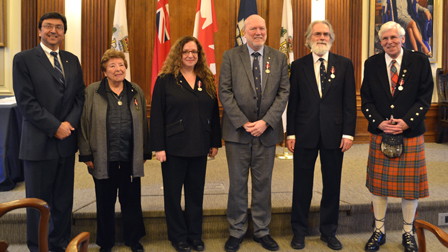
By the end of this year, 60,000 Canadians will have received a Queen Elizabeth II Diamond Jubilee Medal in recognition of their contributions to Canada.
The medal was established to commemorate the 60th anniversary of Her Majesty’s accession to the throne, and among this esteemed group of recipients are many members of U of T Engineering.
On February 14, Professor Emeritus Alex McLean (MSE) and Professor Paul Young (CivE), Vice-President, Research & Innovation, were honoured. On February 28, Milica Radisic (ChemE, IBBME) will also be awarded the distinguished medal. They join past recipients, Professors Levente Diosady (ChemE) and Molly Shoichet (ChemE, IBBME).
Professor McLean served as Chair of the Department of Metallurgy & Materials Science (now known as ‘Materials Science & Engineering’) from 1992 to 1997. During this time, he commissioned and led a Departmental Strategic Planning Committee that transformed the undergraduate curriculum to reshape broader fundamental learning areas and applied knowledge in materials engineering. He is also one of the world’s most distinguished scientists studying the physical chemistry of steelmaking. His pioneering research has revolutionized industrial practice and led to significant improvements in steel quality. He is a Fellow of the Royal Society of Canada (RSC) and was also honoured with the Thomas W. Eadie Medal for his substantial and sustained contributions to metallurgical engineering.
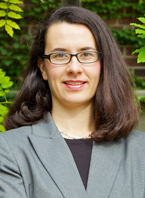
A leader in the field of tissue engineering and regenerative medicine, Professor Radisic has achieved international recognition for developing patches of engineered tissue that mimic a beating heart. She was the first to use electrical stimulation during cellular growth, resulting in tissues behaving in the same manner as normal heart tissue. In June, she received the Young Engineer Achievement Award by Engineers Canada, and was named one of the world’s Top 35 Innovators Under 35 by MIT’s Technology Review in 2008.
Over the last 25 years, Professor Young has been a global leader in the fields of rock mechanics and geophysics, significantly advancing the understanding of fundamental mechanics of fracturing in brittle materials, induced seismicity, micromechanical modelling and geophysical imaging. His contributions to engineering sciences have had international applications in mining, underground disposal of radioactive waste and petroleum engineering. Professor Young served as President of the British Geophysical Association from 1999-2003. And in 2005, he received the John A. Franklin Award from the Canadian Geotechnical Society, given to outstanding researchers who have made significant contributions to the field of rock engineering. He is a Fellow of the Royal Society of Canada and the Geological Society of London. In 2009, he received the Royal Society of Canada’s Willet G. Miller Medal for outstanding research in earth sciences.
“I would like to congratulate the latest U of T Engineering recipients of the Diamond Jubilee medal; all three of whom richly deserve the honour,” said Acting Dean Yu-Ling Cheng. “Professors McLean, Radisic and Young have all made their mark in their respective fields. Their contributions advance our profession – and make the world around us better.”
What exactly is a Co-Curricular Record (CCR), and why does it matter to engineering students?
The University of Toronto initiated Town Hall meetings on all three campuses, including one held on the St. George campus on February 1 to explain the initiative, answer questions and gather student feedback.
The CCR is an official U of T document that recognizes students’ co-curricular involvement as a significant part of their university experience, and will be available on an opt-in basis, beginning September 2013. The CCR can be used to motivate students to participate more in extracurricular activities, which can help complement their studies.
The project, which is still evolving, is in response to recommendations from U of T-student focus groups in 2010, and from many consultations with students since then, as the University refined and shaped the project.
TrackOne student Stephanie Gaglione is eager to opt-in for the CCR. “Most first-year students that I’ve spoken to about the CCR are excited by it, and I think it will make it easier to navigate all of the different clubs and activities at U of T by having everything in one place.” U of T Engineering had also provided information on the CCR in October at the Dean’s Student Town Hall.
At the St. George campus Town Hall meeting, Lucy Fromowitz, Assistant Vice-President, Student Life, gave an overview of the CCR, and Kimberly Elias, CCR Project Manager, presented on some of the updates to the process that have stemmed from working-group recommendations.
Elias’s presentation included a demonstration of the ‘framework search tool’ being developed, allowing students to seek out activities based on factors such as time offered, skills that they’d like to gain (e.g., communication, systems thinking), as well as the type of activities they’re interested in. Elias also mentioned that the CCR will be customizable, allowing students to show or hide their experiences, according to the audience (e.g., hiding political affiliations for job applications).
Students are encouraged to check ccr.utoronto.ca for more information, or contact ccr@utoronto.ca with any questions.
Create a foosball-playing prosthetic forearm prototype – fashioned only from items in a Lego kit. That was the challenge put forth to competing teams at this years’ annual Biomedical Engineering Competition (BMEC).
The competition, hosted by U of T’s Club for Undergraduate Biomedical Engineering (CUBE) on February 3, had more than 60 undergraduates putting their engineering skills to the test to create small, customizable and programmable robots out of limited materials.
Teams then presented and demonstrated their designs, discussing how a real prototype could be made, including the material science, biocompatibility factors and feedback controls involved.

This year’s BMEC was judged by faculty members Paul Santerre (IBBME Director), Mary Nagai (IBBME) and Benjamin Hatton (MSE, IBBME).
“It was fascinating. With something as simple as Lego, the students were able to create something complex,” said Professor Nagai.
The teams ended the competition in an elimination-style foosball tournament – the ultimate test of their designs.
Although they were not the winners of the foosball tournament, top prize for the most holistic and detailed design went to third-year Engineering Science students Mason Leschyna, Pratik Agrawal and Henry Xu.
The design that ultimately won the tourney – created by fourth-year Engineering Science students Simon Bromberg, Eric Ma, Ben Ouyang and Zongyi Yang – surprised the judges.
“The funny thing was, mechanically, we originally chose a design that allowed some more range of movement and greater freedom,” said Professor Nagai. “But the design we thought was too simple was the arm that was most successful at the foosball competition – that arm won. It just goes to show that the best design on paper does not always translate into functionality.”
The event showcases a growing passion for biomedical engineering – a research field that extends across years and disciplines – with first-year through fourth-year competitors hailing from across all engineering departments at U of T.
This year’s competition was so popular, in fact, signups exceeded available space by 50 per cent.
“The CUBE executive would like to thank all competitors and judges, and is looking forward to next year’s competition,” said Lara Fu (EngSci 1T2 + PEY), co-chair of the CUBE Executive.
Five U of T Engineering researchers are among U of T recipients of Natural Science and Engineering Council of Canada (NSERC) Strategic Project Grants (SPG) programs announced February 8, 2013.
Professors Elizabeth Edwards (ChemE), Ömer Gülder (UTIAS), Nazir Kherani (ECE, MSE), Jorg Liebeherr (ECE) and Andreas Mandelis (MIE) received grants under the program, which is designed to increase research and training in targeted areas that could enhance Canada’s economy, society and environment within the next decade.
The funding is focused on large-scale, multidisciplinary research projects in targeted research areas that require a network approach and involve collaboration between academic and Canadian-based organizations. The SPG program helps to address Canada’s science and technology priorities. The primary goal of these grants is to increase research and training in targeted areas that, like the SNG program, could enhance Canada’s economy, society and/or environment in the next 10 years.
The grants awarded to U of T Engineering researchers were:
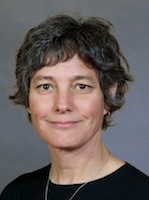 Elizabeth Edwards (ChemE), $489,400: Expanding the ability to anaeorobically digest pulp and paper mill waste;
  Ömer Gülder (UTIAS), $738,000: Environmental performance, sustainability and durability improvements in fuel-flexible combustors for stationary and motive engines;
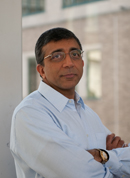 Nazir Kherani (ECE, MSE), $536,160: Efficient light harvesting using nanoparticle-based selectively transparent and conducting photonic crystal and index-graded antireflective films;
 Jorg Liebeherr (ECE), $218,270: Enabling heterogenous self-organizing machine-to-machine networks; and,
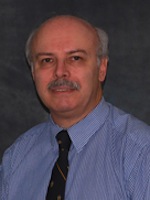 Andreas Mandelis (MIE), $403,500: Non-destructive imaging of manufacturing flaws in industrial automotive power metallurgy green and sintered parts using a novel IR thermal-wave technology.
“This funding is a tremendous boost to U of T’s ability to address real-world problems that affect all Canadians,” said Professor Paul Young (CivE), U of T’s vice president (research and innovation). “We are deeply thankful to the Government of Canada and NSERC for this investment in our applied research.”
Toronto – and other cities around the world – can significantly reduce greenhouse gas (GHG) emissions by implementing aggressive but practical policy changes, says a new study by Professor Chris Kennedy (CivE) and World Bank climate change specialist Lorraine Sugar (MASc CivE 1T0).
Professor Kennedy and Sugar make the claim in ‘A low carbon infrastructure plan for Toronto, Canada,’ published in the latest issue of The Canadian Journal of Civil Engineering. The paper aims to show how cities can make a positive difference using realistic, achievable steps. Their research shows that it is technically possible for cities, even in Canada, to reduce their greenhouse gas emissions by 70 per cent or more in the long-term.
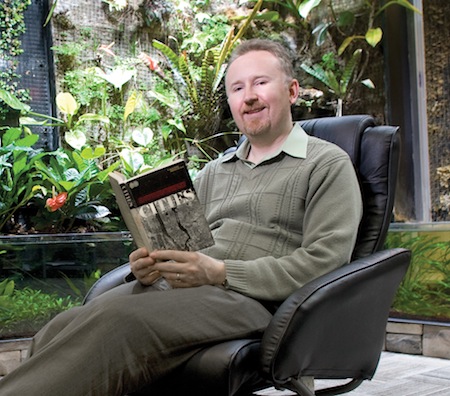
“This is the sort of reduction the international community is calling for, so we can avoid the potentially serious consequences of climate change,” said Professor Kennedy.
Professor Kennedy and Sugar note that more than half of the world’s population lives in urban areas and over 70 per cent of global greenhouse gas emissions can be attributed to cities.
“Cities are where people live, where economic activity flourishes,” said Sugar. “Cities are where local actions can have global impact.”
The study focuses on buildings, energy supply and transportation. Best practices as well as options and opportunities are detailed.
“It is possible for a Canadian city, in this case Toronto, to reduce its GHG emissions by the sort of magnitudes that the international scientific community have indicated are necessary globally to keep global temperature rise below 2 C,” Professor Kennedy and Sugar write.
“With current policies, especially cleaning of the electricity grid, Toronto’s per-capita GHG emissions could be reduced by 30 per cent over the next 20 years. To go further, however, reducing emissions in the order of 70 per cent, would require significant retrofitting of the building stock, utilization of renewable heating and cooling systems, and the complete proliferation of electric, or other low carbon, automobiles.”
The biggest obstacle is the city’s building stock, according to Professor Kennedy. Buildings have a lifespan measured in decades, so it takes time to replace older buildings with more energy-efficient ones.
The study arose out of a handbook Professor Kennedy and his students produced for the Toronto and Region Conservation Authority in 2010, Getting to Carbon Neutral: A Guide for Canadian Municipalities. In the current paper, he and Sugar wanted to demonstrate how cities could achieve measurable results by adopting the policies outlined in the guide.
Professor Kennedy, author of The Evolution of Great World Cities: Urban Wealth and Economic Growth (2011), teaches a course on the design of infrastructure for sustainable cities. He has consulted for the World Bank, the United Nations and the OECD on urban environment issues.
Links
‘A low carbon infrastructure plan for Toronto, Canada‘:
Getting to Carbon Neutral: A Guide for Canadian Municipalities