

A University of Toronto Engineering team has received a major grant from the Bill and Melinda Gates Foundation to continue work on designing for a waterless, hygienic toilet that is safe and affordable for people in the developing world.
The Gates Foundation awarded the grant, worth $2.2 million for 15 months, to U of T Engineering Professor Yu-Ling Cheng (ChemE), Director of the Centre for Global Engineering in the Faculty of Applied Science & Engineering, and her team. Earlier this year, Professor Cheng’s team, which also includes researchers from Western University and the University of Queensland, placed third in the Foundation’s Reinventing the Toilet Challenge.
The U of T Engineering solution uses a sand filter and UV disinfection to process liquid waste and a smolder chamber, similar to a charcoal barbeque, to incinerate solid waste that has been flattened and dried in a roller/belt assembly. Going forward, the team will work to further simplify the process, reduce mechanical complexity and minimize odor.
“I am very proud of our entire team and the work we have done up to now,” Professor Cheng said. “We have proven that our concept works technically, now we are going to get busy to make sure it will work for the users – some of the 2.6 billion people in the world who do not have access to basic sanitation.” Western toilets, which rely on running water, an extensive sewer network and an expensive processing system, are not suitable for the needs of people in the developing world – many of whom live in places without the infrastructure we take for granted, she said.
Working with local partners in Bangladesh, Professor Cheng and her team hope to have an operational prototype by December of 2013, one that uses readily available materials and equipment that can be maintained locally, she said.
“We are all proud of the accomplishments of Professor Yu-Ling Cheng and her team, and grateful to the Gates Foundation for the continued support,” said Professor Cristina Amon, Dean of the Faculty of Applied Science & Engineering. “The toilet research project and the Centre for Global Engineering exemplify U of T Engineering’s commitment to doing innovative research that matters and which has global impact.”
Besides Cheng, the U of T Engineering team includes engineering professors Mark Kortschot, Elizabeth Edwards, Yuri Lawryshyn, and Levente Diosady, as well as PhD candidate Tiffany Jung and research associate Zachary Fishman. Professors José Torero of the University of Queensland and Jason Gerhard of Western University are also key collaborators on the project.
For more information about the Centre for Global Engineering, go to cgen.utoronto.ca. For more information about the Bill & Melinda Gates Reinventing the Toilet Challenge, click here.
Engineers design vehicles that are safe, reliable and fuel efficient. But engineers must also consider the human factor: the driver.
Since driver errors contribute to more than 90 per cent of vehicle crashes, designing operator feedback systems may help drivers improve their behind-the-wheel habits and make our roads safer.
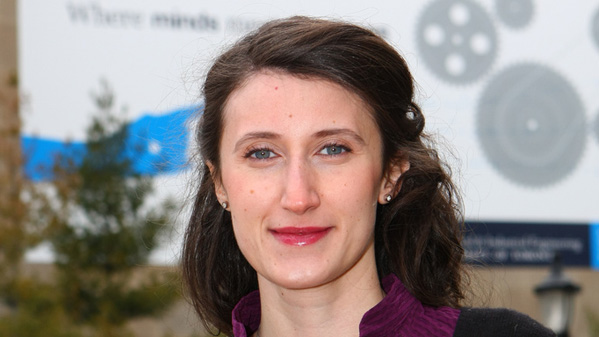
Enter Industrial Engineering Professor Birsen Donmez (MIE), who in partnership with Toyota’s Collaborative Safety Research Center (CSRC) has received $813,000 in funding over three years to investigate driver feedback systems. She is the only Canadian researcher to receive funding from the CSRC.
“Feedback is currently not tailored to the individual and is not provided consistently, thus it may be absent in some situations,” said Professor Donmez. “But emerging vehicle technology, such as eye trackers, can improve responses to road events and inhibit potentially risky behaviours.”
Professor Donmez’s research group will work to determine how feedback systems should be designed to help prevent risky behaviors, and without imposing additional workload or a potential distraction to the driver.
Her team is considering what risky behaviours should trigger feedback, what information should be provided to the driver, as well as when, how and where feedback should be presented. For example, feedback can be auditory, such as a ‘beep,’ or visual, presented on a dashboard or a head-up display. Their research will consider individual differences, such as being susceptible to distractions or having risk-taking tendencies, as well as how drivers adapt to feedback over time.
The project will include a series of experiments conducted in a newly acquired driving simulator facility, which enables testing of drivers’ reactions as well as cognitive and physiological responses to various situations in a controlled environment. Transport Canada will provide additional in-kind equipment support valued at $250,000 for the last phase of the project, which will involve on-road testing of the most promising feedback alternatives identified in the simulator experiments.
Toyota’s Collaborative Safety Research Center (CSRC) works with leading North American universities, hospitals, research institutions and federal agencies on research projects aimed at developing and bringing to market advanced safety technologies that help reduce the number of traffic fatalities and injuries. Toyota has committed approximately $50 million over the next five years. Published research will be made available to federal agencies, the industry and academia.
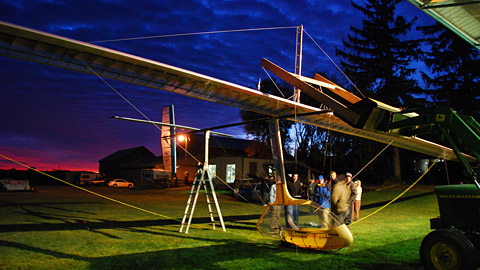
An historic human-powered ornithopter flight by the Toronto-based Snowbird in 2010 has been certified as a world record first by the Federation Aeronautique Internationale (FAI).
The Snowbird is a human-powered flapping wing aircraft that was designed and built by and Todd Reichert and Cameron Robertson of AeroVelo, while they were University of Toronto Engineering graduate students at the Institute for Aerospace Studies (UTIAS). The craft weighs just 42 kilograms (94 pounds), but has a wing span of 32 metres (105 feet).
With Reichert powering and piloting, the Snowbird sustained altitude and airspeed for 19.3 seconds, and covered a distance of 145 metres.
In addition to certifying their historic flight, the FAI also awarded Reichert and Robertson and their company AeroVelo with The Prince Alvaro de Orleans Borbon Grant, worth US $20,000.
According to the FAI Executive Board: “The unique projects that Todd Reichert, Cameron Robertson and AeroVelo have developed have become symbols for creativity and encourage youth participation and interest in sport aviation. The FAI Executive Directors were also convinced by the fact that this project was not only the result of innovative research but also directly enhanced the capability and understanding of students.”
[youtube https://www.youtube.com/watch?v=pJYISQ-EAIw]
Professor David Zingg, director of U of T Engineering’s Institute for Aerospace Studies, welcomed the recognition from FAI: “It is gratifying to see the superb quality of UTIAS graduates reflected in this outstanding international recognition.”
The grant was awarded in support of AeroVelo’s ATLAS Human-Powered Helicopter project, which is attempting to win the American Helicopter Society’s Sikorsky Prize for the first human-powered helicopter to hover for at least one minute and reach an altitude of three metres. Reichert and Robertson, along with a group of U of T Engineering students, have been working since May 2012 to build and fly ATLAS.
Providing opportunities for engineering students to experience real world applications of engineering practices and theories is a passion for both Reichert and Robertson, and is one of the main goals of the AeroVelo group. “The project offered a rare opportunity to work at the leading edge of engineering on an incredibly challenging and engaging project” said Reichert. “It’s where passion and science meet that you will find the innovative discoveries.”
On September 3, 2012, Atlas achieved a 17-second flight and became the first human-powered helicopter to fly with active pilot controls. Since then, the team has made further refinements that reduce the power requirements by roughly 20 percent, and is preparing for a second round of flight testing.
Professor Susan McCahan, Vice-Dean, Undergraduate Studies, and fourth-year MIE student Huda Idrees discussed how to encourage more women to enrol in engineering on CBC’s Metro Morning show on November 23.
You can listen to their discussion with Metro Morning host Matt Galloway here:http://www.cbc.ca/metromorning/episodes/2012/11/23/women-in-engineering/.

U of T Engineering Professor Emerita Ursula Franklin, a world-renown materials scientist, peace advocate and humanitarian, has been inducted into the Canadian Science and Engineering Hall of Fame. John A.D. McCurdy (1886-1961), who graduated from U of T Engineering in 1906, was posthumously inducted.
The Hall of Fame, part of the Canadian Science and Technology Museum in Ottawa, honours individuals whose outstanding scientific or technological achievements have had long-term implications for Canadians. There are only 54 members, including notables such as Alexander Graham Bell, Frederick Banting and Sandford Fleming.
Professor Franklin joined U of T Engineering as the first female professor of metallurgy and materials science (now known as materials science and engineering). In 1984, she became the first woman to receive the title “University Professor,” the highest academic rank at the University of Toronto, in recognition of her service to U of T and the community at large. Among her many other accomplishments, Professor Franklin is known for her investigation into the presence of strontium-90 in children’s teeth, which ultimately led to the ban of atmospheric nuclear weapons testing in the 1960s. Professor Franklin is the author of The Real World of Technology and The Ursula Franklin Reader: Pacifism as a Map, and other works. She is a Companion of the Order of Canada and a Fellow of the Royal Society of Canada.
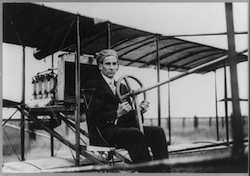
McCurdy began his studies in mechanical engineering at the University of Toronto at the age of 16 and graduated in 1906. In 1909, he made aviation history when he piloted the first Canadian-designed aircraft ever flown – the Silver Dart – off the ice of Lake Bras d’Or in Nova Scotia. In 1910, he became the first Canadian to be issued a pilot’s licence and made the first flight from Florida to Cuba in the following year. McCurdy served as Lieutenant Governor of Nova Scotia from 1947-1952 and received an Honorary Air Commodore rank from the Queen in 1959. He continued to be active in Canadian aviation until his death in 1961.
“I am delighted that the Canadian Science and Engineering Hall of Fame has honoured Professor Franklin and John McCurdy,” said Cristina Amon, Dean of the Faculty of Applied Science & Engineering. “We can all be inspired by their accomplishments. U of T Engineering’s long and illustrious history is the sum of the individual stories of people like Ursula Franklin and John McCurdy.”
The induction took place on November 21 at the museum in Ottawa.
Six members of the U of T Engineering community have been recognized by the Ontario Society of Professional Engineers (OSPE) and Professional Engineers Ontario (PEO) with Ontario Professional Engineers Awards. Alumnus John Bianchini (ChemE 8T5) has been awarded the Management Medal. Professors Doug Hooton (CivE) and Shaker Meguid (MIE) received Research and Development Medals. Professor Goldie Nejat (MIE) has been awarded the Young Engineer Medal. Alumnus George Nowak (CivE 7T3) garnered the Engineering Excellence Medal and alumnus Bert Wasmund (ChemE PhD 6T6) received the Gold Medal, Ontario’s most prestigious engineering honour. The Ontario Professional Engineers Awards recognize engineering excellence and community service. Eleven awards in total were announced this year.
The Ontario Professional Engineers Awards recipients will be honoured at a gala at the Toronto Congress Centre on November 17, 2012.
John Bianchini has been with Hatch Limited since 1985. He began his career as a process engineer and was named Hatch’s Global Managing Director, Metals in 2004. Since that time, Hatch’s metals unit has seen its net income rise 233%. Bianchini has been particularly effective in introducing clients and colleagues to innovative process design, new methodologies and emerging technologies. Among his key management initiatives were the development of new coal and iron ore business units and the bolstering of offices and project teams in Brazil, Chile and Peru.
Doug Hooton is known internationally for his research on cementitious materials and concrete durability. He is working to provide innovative and effective approaches for improving the environmental sustainability and durability of concrete, as well as providing leadership in the development of related codes and industry standards. His research has already resulted in the ability of the Canadian building industry to produce more sustainable materials, including new cementitious systems that reduce carbon emissions by as much as 50% compared to conventional concrete.
Shaker Meguid’s innovative research in engineering mechanics and design is recognized worldwide. Early in his career he invented a technique to ensure controlled shot-peening that was a breakthrough for surface treatment of aerospace and automotive components. Later, he established himself at the forefront of computational mechanics and multi-scale modeling of materials. His work in determining the fatigue fracture behaviour of materials in the presence of residual stresses has led to collaborations with automotive and aerospace companies such as General Motors and Pratt & Whitney.
Goldie Nejat’s research is leading to the development of intelligent assistive robotic aids that can help find victims in disaster situations, improve the quality of patient-centered care and transform the way hospital wards and nursing homes function. Her research is helping Canada meet the challenges posed by an aging population and keeping us at the forefront of the service robotics industry. Nejat has developed a unique socially intelligent assistive robot named Brian for healthcare applications. Brian is a human-like robot designed to monitor, stimulate and aid individuals suffering from dementia.
George Nowak’s work to improve the safety and efficiency of airports has positively impacted communities throughout Canada and in 26 other countries around the world. Nowak has applied engineering principles to bring innovation to the design and construction of airport pavements and related infrastructure. He led the engineering infrastructure team for the Caribbean Airports Project, a major initiative in the 1980s to improve airport safety at 19 Caribbean airports. Nowak is currently leading the design of the new runway at Calgary International Airport.
Bert Wasmund, Executive Director of Hatch Limited, has had a remarkable career comprising technical innovation, senior management in a global engineering company, and significant contributions to engineering education. He is credited with transforming the metallurgical industry through a series of innovations that reduced energy consumption and harmful emissions while improving workplace safety and productivity. Wasmund has personally provided significant endowment scholarships for students, as well as championing Hatch’s research partnerships with the University.
“For six members of our community to receive these prestigious awards is a testament to the strength of our Faculty and the breadth of our achievements,” said Cristina Amon, Dean, Faculty of Applied Science & Engineering. “We are proud of their accomplishments and grateful to OSPE and PEO for recognizing the remarkable contributions of these outstanding alumni and faculty.”