
Professors Elizabeth Edwards (ChemE), Frank Kschischang (ECE) and Jonathan Rose (ECE) have been elected Fellows of the Royal Society of Canada (RSC) – one of Canada’s most prestigious academic honours.
The RSC is the senior national body of distinguished Canadian scholars, artists and scientists. It consists of nearly 2,000 Fellows, who are selected by their peers for outstanding contributions to the natural and social sciences, the arts and the humanities.
This year’s new Fellows will be inducted into the RSC during the Induction and Awards Ceremony on November 17 at the Ottawa Convention Centre.
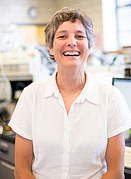 Professor Edwards has achieved international recognition for her pioneering research on how biological processes affect pollutants in the environment. Her research was largely responsible for disproving the belief that hydrocarbons such as benzene could not be biologically degraded under anaerobic conditions. More recently, she developed a bacterial culture called ‘KB-1’, which breaks down the chlorinated solvents used in dry-cleaning and industrial degreasing into harmless substances, thus decontaminating groundwater polluted with these chemicals (a process known as bioaugmentation).
KB-1 is the most widely used bioaugmentation culture in the world, having successfully decontaminated hundreds of groundwater sites across North America and Europe. Professor Edwards’ research has garnered a Killam Research Fellowship and a NSERC Synergy Award for Innovation. She is a Fellow of the Canadian Academy of Engineering.
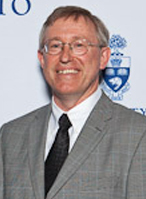 A Tier One Canada Research Chair in Communication Algorithms, Professor Kschischang is a world-renowned researcher in the fields of digital communications and coding theory. His work on subspace codes for network coding introduced a radically new approach to communications in networks such as the Internet.He is co-inventor of the factor graph, a type of graphical model with applications in error-control coding, signal processing and DNA-sequencing, to name just a few.
Professor Kschischang’s research in the field of optical communications has been equally groundbreaking, attracting attention from leading theoreticians and industrial practitioners.He is a Fellow of the Engineering Institute of Canada and the Institute of Electrical and Electronics Engineers (IEEE), and a recipient of a Killam Research Fellowship. He is President of the IEEE Information Theory Society.
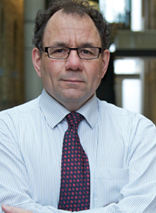 Professor Rose is a pioneer in the research and development of Field Programmable Gate Array (FPGA) architecture and the Computer-Aided Design (CAD) tools needed to use and explore them. He was among the first to develop new logic synthesis and placement and routing algorithms to deal with the special prefabricated nature of FPGAs. His group also produced a CAD tool called VPR, which enables the exploration of FPGA architecture and is widely used in academia and industry. Professor Rose played a key part in the architectural development of the world’s two leading FPGAs, the Xilinx Virtex FPGA and the Altera Stratix series.
The company he co-founded with Professor Vaughn Betz (ECE), Right Track CAD, delivered a CAD tool to Altera that increased Altera’s FPGA’s performance the equivalent of two integrated circuit process generations. Professor Rose is a Fellow of IEEE and the Canadian Academy of Engineering and a Foreign Associate of the U.S. National Academy of Engineering.
“We are proud of their achievements and congratulate them on this richly-deserved recognition.” said Cristina Amon, Dean, Faculty of Applied Science & Engineering. “We are delighted that the RSC continues to recognize our faculty members as among the top academics in Canada. This is a testament to the accomplishments of these outstanding scholars and to our standing as Canada’s premier engineering school.”
For the last 25 years, the Pulp & Paper Centre at U of T has been the heart of powerful collaboration with industry, yielding innovations that have made a world of difference.
From November 6 to 8, the Centre’s researchers and industry partners met at U of T for an annual research consortium. The topic was how to increase energy and chemical recovery efficiency.
But it was also an opportunity to celebrate the 25 years – and counting – of fruitful university-industry partnership fostered by the Energy & Chemical Recovery (E&CR) group, one of the five research groups that make up the Centre.
“The fact that there are 22 companies from seven countries here today is, itself, evidence of the strong collaboration across nations and continents,” said Dean Cristina Amon at the meeting, where attendees came from as far away as Brazil and New Zealand. “Many of you have been supporting this research program for more than a decade, and we deeply appreciate your continuing commitment.”
The Pulp & Paper Centre was founded by Professor Doug Reeve (ChemE) in 1987, with the mission of stimulating research for the manufacturing of pulp and paper products, as well as encouraging collaborative research with industry partners.
Under Professor Reeve’s 15 years of leadership, and now Professor Honghi Tran’s (ChemE) direction, the Centre and E&CR have cultivated almost 50 industry partners to date.
The result? Research collaboration that’s created game-changing products.
“Many results we obtained from our research have been applied or used quickly by our partners to improve their processes and operations – there’s just too many to mention,” said Professor Tran.
One example is the design of sootblower nozzles, which produce high-intensity steam jets to efficiently remove deposits from heat transfer tube surfaces in recovery boilers (a special unit used to burn spent liquor from the pulping process). These nozzles are now used in more than 95 per cent of recovery boilers, saving the industry an estimated US$100 million per year, globally.
At the consortium, companies who’ve supported E&CR since the very beginning, such as Babcock & Wilcox Canada Ltd, were recognized with commemorative plaques.
“Many of you have been at this table for 25 years,” said Professor Reeve. “It goes without saying how unique that is, internationally, and at U of T.”
Professor Paul Young (CivE), U of T’s Vice President, Research & Innovation, added to that sentiment, “Collaboration between universities and many different types of partners is absolutely necessary if we are to bring bright and valuable new advances to global society.”
“In this spirit, let me congratulate the Pulp and Paper Centre on your magnificent track record over the past quarter century in building and maintaining partnerships with industry to enhance the value of your work, and the contribution you make to the world,” he added.
Although the consortium was an opportunity to honour the past 25 years of success, Professor Tran is very much focused on the future. His Energy & Chemical Recovery group received a three-year NSERC Collaborative Research and Development grant in June, which will further their research in biomass combustion and the impact of boiler operations.
On November 13, alumnus Taylor Martin (MechE 0T7 + PEY) and Steve Tam enlightened a lunchtime Speakers Series of The Entrepreneurship Hatchery.
The inventive duo explained how Kickstarter and the jumpstart of a U of T Engineering education gave the Beacon Bicycle Company the boost it needed for early success. The co-founders have designed, manufactured and distributed their unique, theft-proof bike light across North America. The LED lights are strapped to a bike’s seat post or handlebars using a zip tie. They already have interest from Australia and Japan.
Martin said the project management and design skills plus the engineering discipline he learned in class and during his Professional Experience Year (PEY) gave him the confidence to set out on his own. And, the pair probably inspired a few bright lights back at their alma mater to return the favour.
On November 13, nearly 400 engineering students stepped out of Convocation Hall as new alumni.
One of those graduates is Robert Netopilik, who received his Master of Applied Science in the Department of Civil Engineering (CivE). He was among the 25 undergraduates and 369 graduate students who earned degrees this fall.
“It’s an amazing feeling to have all your hard work culminate to this moment. I truly valued the experience,” said Netopilik, as his girlfriend Patricia Sheridan proudly looked on. Sheridan is currently a PhD candidate at U of T, researching engineering leadership education – a first in Canada.
As she continues her studies at U of T Engineering, Netopilik will be working at GO Transit as a Junior Project Coordinator, helping to create a new airport railway on the Georgetown line.
The future looks exceptionally bright for Netopilik and his graduating class. Take Saja Al-Dujaili, for example, who obtained her doctorate in biomedical engineering from the Institute of Biomaterials & Biomedical Engineering (IBBME). She will be doing postdoctoral research at the University of Michigan. And there’s CivE graduate Amy Jiang, who earned a Master of Engineering. She has her sights set on the private sector, and will be working as a transport planner at consulting company, BA Group.
Seeing students go on to promising careers never gets old for engineering professors.
Professor Markus Bussmann, Associate Chair of Graduate Studies in the Department of Mechanical & Industrial Engineering, helped preside over Convocation on behalf of Dean Cristina Amon. As faculty supervisors, he and his colleagues work very closely with graduate students over several years, building relationships and investing in their research.
“I think it’s one of the reasons many of us choose to work as professors – the chance to work with smart, ambitious and talented young people at a very important stage of their lives,” said Professor Bussmann. “Convocation offers the chance to see them off and wish them well. I think I enjoy Convocation more than my students.”
Read Dean Amon’s message to the Class of 1T2 .

Faculty, staff, students and alumni arriving on the St. George campus on November 9 were greeted by a newly constructed, full-sized cenotaph dedicated to the men and women of Canada’s Armed Forces.
Installed on King’s College Circle, in front of Convocation Hall, the monument is part of an engineering tradition that began in 2005. Since then, students from U of T Engineering have been designing and building respectful and innovative memorials to commemorate Remembrance Day.
Exactly who these students are is a mystery.
The monument’s creators do not want to detract from the cenotaph’s purpose, which is to support Remembrance Day, said Rishi Maharaj (EngSci 1T2 + PEY), President of U of T’s Engineering Society.
“It’s a deliberately anonymous group of students.”
For the first time this year, the students presided over their own Remembrance Day service. Immediately following the Soldier’s Tower service students began to gather around the cenotaph.
“I had the great pleasure of being by King’s College Circle today, and saw something truly remarkable,” said Linda Phillips-Smith, an alumna of Victoria College and the Faculty of Law. “Young people all commemorating Remembrance Day, thoughtfully… and with great reverence.”
Maharaj, who presided over the brief service, said they wanted to catch students making their way to classes, but did not want to detract from the Soldier’s Tower service. He also said his goal for this service was to make Remembrance Day a bit more relatable to people his own age.
“We should not forget that even today there are people deployed abroad with the Canadian Forces and that all the tragedy of war is not necessarily [in] the past for everyone in this country,” said Maharaj.
“The burden of protecting this country falls as much on our generation as it has on any previous generation.”
This story was originally posted on U of T News .
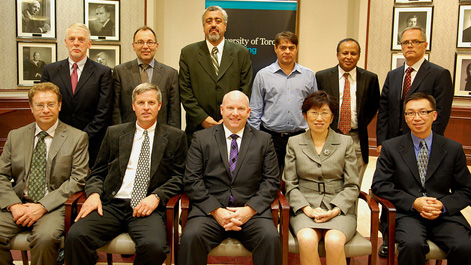
Whether it be designing process maps to standardize business procedures, or modelling the costs of flight delays and cancellations, students had the opportunity to explore these topics during the inaugural year of the University of Toronto Institute for Multidisciplinary Design & Innovation (UT-IMDI).
October 30 marked the official launch of the Institute, which was established earlier this year in collaboration with Bombardier, Pratt & Whitney Canada and UTC Aerospace Systems. At the launch event, Professor Ted Sargent (ECE), Vice-Dean, Research, congratulated the institute on behalf of the Faculty.
During UT-IMDI’s first year, nine undergraduate students landed exclusive aerospace projects with industry partners, completing their design projects over the summer under the supervision of a senior engineer and a faculty member.
Once such student was Harry Zengjin Chen (MechE 1T4), who worked on maintenance programs and planning databases at Bombardier Aerospace’s area site in Toronto, Ont. “This internship was a wonderful opportunity,” said Chen. “Not only was I able to learn technical skills, but I also gained tremendous project management experience. UT-IMDI is one of the best initiatives at U of T Engineering.”
“The institute provides remarkable opportunities to expose students to a real-life project, with industry-level deliverables,” said Professor Kamran Behdinan (MIE), the Institute’s founding Director. “All projects are determined collaboratively, based on the needs of industry and building on the strengths of our curriculum, bringing design and innovation into practice.”
Echoing the enthusiasm of students and industry is Todd Young, Vice President, Customer Services and Support, Commercial Aircraft, Bombardier Aerospace, and Chair of the UT-IMDI advisory board. “We have a fantastic opportunity to establish a world-class program, which will produce the most highly-trained multidisciplinary graduates, ready to launch into exciting and rewarding careers in engineering,” said Young.
“We look forward to collaborating with U of T Engineering as the institute grows,” he added.
The institute is partnering with additional companies, and over the next five years will expand to more than 70 summer projects annually. Students in all engineering disciplines will have the opportunity to select and apply, based on the project needs, through a competitive interview process.