
With just a few words, Padina Pezeshki captivated her audience: “Here’s a woman suffering from advanced breast cancer,” she said simply, “the kind that has spread to her bones. The kind that has fractured her spine.”
But Pezeshki, a PhD candidate at the University of Toronto’s Institute of Biomaterials & Biomedical Engineering (IBBME), painted a picture of hope and survival through a novel therapy that may significantly alter the course of cancer that has spread to bone.
That presentation earned Pezeshki a trip to Vancouver to participate in the Canadian finals of TED Talks’ 2013 Talent Search, which is focused on the theme: “The Young. The Wise. The Undiscovered.”
TED Talks are an extremely popular non-profit series of online presentations geared towards spreading new and innovative ideas. TED staged presentations in 14 cities around the world, including Vancouver.
Pezeshki, who co-invented a commercially-available spine device that earned three patents, discussed her PhD research involving advances in radio frequency technology used to treat bone cancer.
“It’s a totally different pressure [than giving an academic presentation] because of the scope and context and potential for what it can do,” said Pezeshki of the TED Talks stage.
Although radio frequency therapies have been in use for some time, the problems associated with this technology — not reaching the entire tumor or damaging surrounding healthy tissue — have been persistent issues. What’s so novel about Pezeshki’s technique?
“Its success in the tissue being targeted,” Pezeshki described.
The technology Pezeshki has been working with — a collaborative project involving the University of Toronto, the Orthopaedic Biomechanics Lab at the Sunnybrook Research Institute and Baylis Medical Company — has incorporated several nuances into its design that make it more effective than similar conventional technology. The resulting device delivers a much more controlled and consistent application of radio frequency energy that targets cancer tissue more effectively, so much so that researchers have recently begun clinical trials of the device in the U.S. and Canada.
“All of the pre-clinical trials, testing, validating and optimizing the device on test subjects have been part of my PhD project,” Pezeshki explained. “My PhD project results led to FDA approval for these clinical trials.”
Pezeshki’s advancement in the TED Talks competition will be determined through online voting currently underway. The number of clicks and comments each presenter receives will be used by organizers to determine which candidates are included in next year’s line-up.
“It was my secret birthday gift to myself,” said Pezeshki of her application, which involved a CV and a one-minute video. “The deadline was my birthday and I didn’t tell anyone I applied.”
“This was a great opportunity for Padina to present her work to a large audience and motivate other young women in bioengineering and biomedical research,” said Professor Cari Whyne from the Department of Surgery and cross-appointed to IBBME, who is co-supervising Pezeshki’s research. “Padina’s enthusiasm is reflected in her work in the lab and her dedication to the science and engineering of RF (Radio Frequency) ablation for cancer spread to bone.”
While she’s in the limelight now, celebrity isn’t a career option for Pezeshki. Although a self-proclaimed TED Talks fan, her passion lies in the biomedical engineering field and translational sciences. Several people came up to her after her presentation to tell her stories of loved ones lost to cancer, something she hopes her research might subsequently change.
“This is my motivation,” she said. “I hope I become useful to the world.”
View the Vancouver finalists’ presentations here.

On June 20, Professor R. Doug Hooton (CivE) was presented with the V.M. Malhotra Award at the first International Congress on Durability of Concrete in Trondheim, Norway.
Professor Hooton was recognized for his outstanding and sustained contributions in the broad area of durability of concrete. It is a research area that impacts one of the foundations of Canadian society – physical infrastructure.
As the NSERC/CAC Senior Industrial Research Chair in Concrete Durability and Sustainability, Professor Hooton is investigating ways the concrete industry can reduce point source greenhouse gas emissions, increase the durability of concrete and make the material more sustainable.
Among Professor Hooton’s many honours, he is the recipient of the American Concrete Institute’s (ACI) Arthur R. Anderson Medal, the Award of Merit from the Canadian Standards Association and American Standards for Testing and Materials (ASTM), and is a Fellow of ASTM and ACI.
“On behalf of the Faculty, I would like to congratulate Professor Hooton, a pioneer and innovator in the field of concrete materials,” said Dean Cristina Amon, Faculty of Applied Science & Engineering. “We are delighted that he is once again being recognized for his significant research contributions.
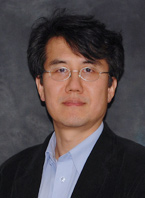
Professor Chul B. Park (MIE) has been recognized by the American Society of Mechanical Engineers (ASME) and Society of Manufacturing Engineers (SME) with the M. Eugene Merchant Manufacturing Medal.
The award is given to an individual who has had significant influence and responsibility for improving the productivity and efficiency, either by research or by implementation of research, of manufacturing operations. The award was established in 1986 in honour of M. Eugene Merchant, a pioneer in manufacturing research and development.
Professor Park is the Canada Research Chair in Microcellular Plastics and the founder and Director of the Microcellular Plastics Manufacturing Laboratory. A world leader in the development of innovative technologies for the manufacture of microcellular foamed plastics, he holds 20 patents and his research has been licensed by more than 200 companies.
“The Department is extremely delighted that Professor Park been recognized by his colleagues of the American Society of Mechanical Engineers and Society of Manufacturing Engineers,” said Professor Jean Zu, Chair of the Department of Mechanical & Industrial Engineering. “Professor Park is a true innovator and an exceptional leader in his field. I congratulate him on this outstanding honour.”
Professor Park is a Fellow of the Canadian Society of Mechanical Engineering (CSME), the American Association for the Advancement of Science (AAAS), the Royal Society of Canada (RSC), the American Society of Mechanical Engineers (ASME), the Society of Plastics Engineers (SPE), the Canadian Academy of Engineering (CAE) and the Engineering Institute of Canada (EIC).
He will receive his award during the ASME Mechanical Engineering Congress & Exposition November 9 to 15 in Houston, Texas.

Adjunct Professor Scott D. Ramsay of the Department of Materials Science & Engineering (MSE) is this year’s recipient of the Wighton Fellowship from the Sandford Fleming Foundation at the University of Waterloo.
The Fellowship is a national award that recognizes excellence in the development and teaching of laboratory-based courses in Canadian undergraduate engineering programs.
Since 2004, Professor Ramsay has instructed MSE 101: Introduction to Materials Science & Engineering, a first-year core course taught across multiple programs at U of T Engineering. He has developed a range of creative in-lecture demonstrations, filmed lecture videos and delivered these course materials via social media channels. He also introduced six new laboratory activities and made substantial improvements to two existing learning exercises.
A notable example of his dedication to improving MSE 101 was the design of a ballistic pendulum experiment. In this exercise, a 0.22 calibre rifle encased behind a securely sealed chamber is fired through different metal samples to demonstrate a traditional materials engineering impact test. Launching the lab involved above-and-beyond efforts in the construction of multi-tier safety infrastructure, along with obtaining the required approvals from the Toronto Police, the Chief Firearms Officer of the Ontario Provincial Police (OPP) and the Royal Canadian Mounted Police (RCMP), as well as numerous levels of University administration.
“I am extremely gratified that Dr. Ramsay has been recognized for his work to make comprehensive improvements to laboratory teaching,” said Professor Jun Nogami, Chair of MSE. “As a Department, we feel that it is vitally important to provide hands-on experiences for first-year students across the Faculty. Scott’s work has greatly improved student engagement in our labs, and feedback indicates that students’ understanding of materials engineering concepts has also been enhanced.”
This is the second time that U of T Engineering has received the Wighton Fellowship. Senior Lecturer Paul Jowlabar of the Department of Chemical Engineering & Applied Chemistry received the award in 2008 for teaching excellence.

IBBME PhD candidates Mark Blaser and Lewis Reis had a lot to celebrate after attending the CIHR Canadian Student Health Research Forum (CSHRF), a conference which only the top 5% of doctoral students in Canada are invited to attend.
Blaser and Reis were awarded honourable mentions at the June 12-14 conference, which focused on health research.
“The calibre of students and their research presented at this conference was astounding, so to even be considered as a nominee to attend this conference was a huge accomplishment for me and helps put into perspective the research I am doing and the quality of it,” said Reis. “To then get an honourable mention for my poster was completely unexpected, but again very rewarding.”
Reis, who works under Associate Professor Milica Radisic (IBBME, ChemE), is researching the incorporation of ‘growth factor’ molecules – molecules that help direct repair – into a gel that can be delivered to the heart after an injury such as a heart attack. The hope is to save the injured muscle or repair the damaged tissue.
And under the supervision of Associate Professor Craig Simmons (MIE, IBBME), Blaser’s research also touches on the heart. “My work focuses on aortic valve disease,” said Blaser, who hopes to discover earlier diagnoses and the production of “possible targets for pharmacological intervention, so that surgical replacement can be avoided in the future.”
Blaser also recently won second place in the ‘Young Investigator’ competition at the 2012 Heart Valve Biology and Tissue Engineering Conference in Greece and third place in the poster competition at the 2012 Canadian Connective Tissue Conference in Toronto.
A world away, Yun Xiao, who fast-tracked into the collaborative PhD program between the Department of Chemical Engineering & Applied Chemistry and IBBME, presented her research in tissue engineering and wound healing at the 9th World Biomaterials Congress held in Chengdu, China from June 1-5.
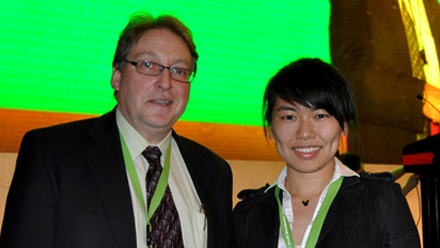
Out of the 1,735 poster presentations from students, professors, research departments and companies, Xiao walked away with the ‘Best Poster’ prize for her work entitled “Developing Cardiac Biofibers with Microfabricated Devices.”
The World Biomaterials Congress was just Xiao’s first academic conference experience, but she wasn’t at all phased by the competition. “I was more concerned about finishing everything in five minutes than being nervous,” she explained.
Recent graduates and current graduate students from the University of Toronto’s science, math and engineering programs will have the opportunity to gain real-world business skills and experience through new internships, thanks to an investment by the Federal Development Agency for Southern Ontario (FedDev Ontario).
The Honourable Gary Goodyear, Minister of State responsible for FedDev Ontario, announced the funding at a press conference held June 27 in the Lassonde Mining Building. The Government of Canada’s contribution of up to almost $4.2 million will establish the University of Toronto Graduate Enterprise Internship Program.
“Today’s announcement will help young scientists and engineers get the professional experience, mentorship and business skills they need as they develop into the next generation of leaders in business and innovation in southern Ontario,” said Minister Goodyear.
The program will be based at U of T’s Engineering Career Centre. Participants in the program are provided with a six-month paid internship at a small- or medium-sized business in southern Ontario. To be eligible, students must have graduated within the last five years from a U of T science, technology, engineering, or mathematics program or are current graduate students or postdoctoral fellows in one of those fields. The funding is expected to provide space for 300 participants.
“This program will help our students be better prepared for work opportunities while ensuring that Southern Ontario meets its future labour market needs,” said Engineering Dean Cristina Amon.
One of those students participating in the program is Alfred Inacio, who graduated from The Edward S. Rogers Sr. Department of Electrical & Computer Engineering in 2009 with bachelor’s degree in computer engineering. Iancio is currently working as Account Manager with Intelex Technologies Incorporated, which develops environmental health and safety software.
“I am honing my sales and professional skills that will not only help me develop my career, but will serve Intelex well. Luckily, because Intelex is an exciting and growing company, my opportunities there are limitless,” said Inacio.
“The Graduate Enterprise Internship Program at the University of Toronto will allow recent graduates as well as graduate students from our science and engineering programs to build their work experience and develop their careers,” said Professor Jill Matus, U of T’s Vice-Provost, Students. “U of T is very appreciative for the support provided by the Government of Canada through FedDev Ontario.”
Created in 2009, FedDev Ontario supports the southern Ontario economy by building on the region’s strengths and creating opportunities for jobs and economic growth. This investment is being provided through FedDev Ontario’s Graduate Enterprise Internship, which provides funding for not-for-profit organizations and post-secondary institutions to arrange internship and mentoring opportunities for recent graduates and graduate students with small- and medium-sized enterprises.