

Professor Andreas Mandelis (MIE) has received the 2012 Canadian Association of Physicists (CAP)-National Optics Institute (INO) Medal for Outstanding Achievement in Applied Photonics for his seminal contributions to the field of photothermal and photoacoustic science and applications.
A Canada Research Chair in Diffusion-Wave Sciences and Technologies, Professor Mandelis has authored more than 300 refereed papers, as well as the acclaimed textbook,Diffusion-Wave Fields: Mathematical Methods and Green Functions.
He is a Fellow of the Royal Society of Canada and was the inaugural recipient of the Premier’s Discovery Award in Natural Sciences and Engineering in 2007. In 2010, he received the Killam Research Fellowship, one of Canada’s most prestigious research awards. Earlier this year, he was recognized by the American Physical Society (APS) with the Joseph F. Keithley Award. His research includes developments in dental imaging and instruments for the early detection and monitoring of osteoporosis.
The Canadian Association of Physicists (CAP) is a broadly-based national network of physicists working in educational, industrial, and research settings. CAP advocates support of, and excellence in, physics research and education, representing Canadian physicists to government, granting agencies, and many international scientific societies.
Professor Mandelis will give a plenary talk on his research and receive his medal at CAP Congress, June 11-15 in Calgary, Alberta.

The Faculty of Applied Science & Engineering and the Munk School of Global Affairs announced the joint appointment of Paul Cadario, a Senior Manager at The World Bank, as a Distinguished Senior Fellow in Global Innovation. In this role, he will share his experience and expertise with students and faculty members at the Munk School of Global Affairs and the Faculty of Applied Science & Engineering, from which he graduated in 1973 with a degree in Civil Engineering.
Cadario has spent more than 35 years working in international development at the World Bank, a Washington, D.C.-based international financial institution that works to reduce poverty around the globe. The majority of his work has focused on development in Africa and Asia, though he has also overseen World Bank activities in central and eastern Europe and the former Soviet Union.
In his new role, Cadario will deliver two public lectures during the course of his fellowship, which began May 1 and runs through April 30, 2015. He will also mentor students in the Master of Global Affairs program and at the Centre for Global Engineering, as well as meet and work with faculty members throughout the University.
“We are very pleased to welcome Paul Cadario home to the University of Toronto and especially Engineering,” said U of T Engineering’s Acting Dean, Professor Yu-Ling Cheng, who is also Director of the Centre for Global Engineering. “Paul will expand our efforts to educate truly global engineers and enrich the experience for our students and scholars.”
“We are delighted to partner with Engineering in this important area of innovation,” said Professor Janice Gross Stein, Director of the Munk School of Global Affairs. “Our students will benefit enormously from Paul Cadario’s global experience and his mentorship.”
In addition to his studies at U of T, Cadario attended Oxford University as a Rhodes Scholar, where he earned a Master of Arts degree in economics and political science. He also possesses a Master of Science in Organization Development from American University. No stranger to the University community, Cadario was on the Governing Council from 1985-1994, served as President of the University of Toronto Alumni Association from 2007–2009 and was inducted into the University’s Engineering Hall of Distinction in 2008. In September, Cadario delivered Engineering’s annual plenary speech, which marks the start of the school year within the Faculty.
“I am thrilled to be working with Munk and Engineering, key players in the University’s mission to prepare global citizens. Both are renowned for their scholarship on the great global challenge, to make societies peaceful, prosperous and sustainable. True innovation requires an applied knowledge of the local situation, something engineers, thinkers and leaders need to do together, and I look forward to helping make that happen,” said Cadario.
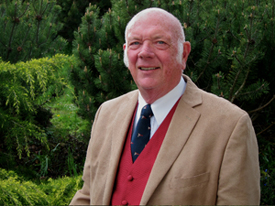
Former MIE Chair David Sanborn Scott is set to receive an honorary doctorate from the University of Victoria (UVic) on June 13, 2012.
Professor Scott, who is being recognized for his groundbreaking work in energy systems, is humbled by the honour. “It reinforces that luck plays a major role in life and careers. Of the many people who merit an honorary degree, I am lucky that someone thought of nominating me,” he said.
Before joining UVic, Professor Scott spent 22 years at U of T Engineering. During his time at U of T, he served five years as Chair of the Department of Mechanical & Industrial Engineering and founded the Institute for Hydrogen Systems, which led groundbreaking research projects on hydrogen as a source of fuel and energy conservation. He also chaired the Canadian Advisory Group on Hydrogen Opportunities, which later published the influential report, Hydrogen: National Mission for Canada.
In 1989 he joined UVic, where he founded the Institute for Integrated Energy Systems, a research body that continues today with some 70 researchers and support staff.
A leading expert in hydrogen energy, Professor Scott is the Vice-President of the International Association for Hydrogen Energy (North America) and an Honorary Chair of the 2012 World Hydrogen Energy Conference. He is the author of Smelling Land: The Hydrogen Defense Against Climate Catastrophe and is also a Fellow of the Canadian Academy of Engineering. In 2006, he was awarded the Jules Verne Award for “outstanding contributions to hydrogen physics, hydrogen energy, sociology and philosophy.”
While he left U of T Engineering more than 20 years ago, Professor Scott looks back at his years here as having a profound impact on his career. “It was a catalyst to a broader understanding of engineering history, where it had come from, where it should be going, and how it can contribute to the well-being of our moist blue planet,” he said. “I have much to thank U of T Engineering.”
Graduating future innovators is an ambitious task, but one that U of T Engineering’s educators wholly understand. Three shining examples of that commitment were honoured with teaching awards on April 18 at the Celebrating Engineering Excellence reception.
Drew Cheung (EngSci 1T0, CivE MASc candidate) was presented with the Teaching Assistant Award, while Professor Jonathan Rose (ECE) was honoured with the Faculty Teaching Award, and lecturer Micah Stickel (ECE) received the Early Career Teaching Award.
Cheung, a teaching assistant for three Civil Engineering courses, is known to his students as a mentor who goes “above and beyond” the commitment to student success. Not only does he implement a mid-term evaluation of his teaching abilities to ensure he’s doing the best job possible, he sets up office hours and special pre-exam review sessions on his own time.
The teaching awards were presented by Acting Dean Yu-Ling Cheng, who introduced Cheung by sharing that he had stayed late into the night helping his students before their exam, even though he had one of his own the next day. “Teaching Assistant evaluations go up to seven, but some of his students write an eight,” she added.
And for almost 25 years, Professor Rose has been one of the Faculty’s most dedicated and effective teachers. He’s particularly known for his emphasis on the teaching of design and his long record of innovation in labs and design courses. He is extremely popular with students and is highly-sought after as a supervisor and mentor. Professor Rose has received the departmental teaching award four times and continually receives some of the highest student evaluation scores in the Faculty.
One student had written in their nomination letter about Professor Rose, “[He] is a mentor and an inspirational figure for what Engineering can achieve. Best professor ever.”
“I was moved and gratified,” said Professor Rose. “Education of the next generation is one of the missions our university is entrusted with by the public. While research is important, and connecting education with research is crucial, our most important long-term effect is in educating our students.”
Stickel is also the recipient of three departmental teaching awards – an especially impressive feat as he began teaching in the The Edward S. Rogers Sr. Department of Electrical & Computer Engineering in only 2007. He is known as an innovator in the classroom, incorporating tablets into his lectures and creating online assignments and quizzes. In addition, he is also engaged in scholarly work to quantify the impact of new technologies in teaching, publishing three papers on the subject. In 2008, he was named a New Faculty Fellow at the Frontiers in Education (FIE) Conference, one of the most significant engineering education conferences in the world.
“To know that my efforts have resonated with many of my students over these initial years of my career is extremely satisfying,” said Stickel. “I am also grateful for this award given the strong record of teaching excellence within the Faculty and specifically the ECE department.”
“Educating future engineers is a key priority for us,” said Acting Dean Cheng. “On behalf of the Faculty, I would like to congratulate this year’s recipients. They are a testament to the quality and dedication of our educators. No matter what stage in their teaching careers, they share the same goal of inspiring our students to be great engineers and leaders.”
This month saw the Faculty’s teaching excellence not only celebrated at the reception, but university-wide. Last year’s Faculty Teaching Award honouree, Professor Jim Wallace (MIE), was recognized with the 2012 President’s Teaching Award, U of T’s highest honour for teaching.
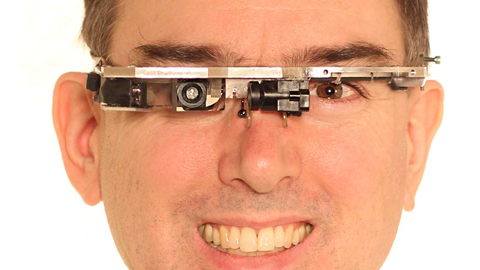
While Google’s latest project – developing eyewear that integrates computer technology – may have the technology world buzzing, a recent story by the U.K.’s The Guardian points out that a U of T Engineering professor did it first.
Professor Steve Mann of The Edward S. Rogers Sr. Department of Electrical & Computer Engineering, considered the father of wearable computing, started to develop prototypes of such devices beginning in the 1980s while still a graduate student at MIT. His glasses provide an augmented reality for users that integrates computer-generated data with the actual surroundings.
The article follows on the publication last week of a new chapter on wearable computing authored by Professor Mann for Interaction-Design.org, an online scholarly encyclopedia dedicated to human-computer interaction.
You can read The Guardian’s story on their website or learn more about the field by reading Professor Mann’s encyclopedia chapter.

U of T Engineering Professor Kamran Behdinan (MIE) has been named the NSERC Chair in Multidisciplinary Engineering Design. In his role, Professor Behdinan will establish real-world multidisciplinary senior design projects, which will utilize industrial collaboration and support. The projects will span all nine undergraduate engineering programs at U of T’s Faculty of Applied Science & Engineering. The establishment of multidisciplinary design projects will further unite design initiatives across the Faculty and encourage collaboration, design and innovation. The projects will encourage students to approach design on a national and international scale, addressing pressing issues such as sustainability.
“As the inaugural NSERC Chair in Multidisciplinary Engineering Design, I look forward to strengthening U of T Engineering students’ design education,” said Professor Behdinan. “We will encourage our students to provide innovative solutions to critical challenges that are being addressed by industry.” Professor Behdinan is currently the Director of the newly established Institute for Multidisciplinary Design & Innovation in the Department of Mechanical & Industrial Engineering. The Institute, which opened in January, facilitates engineering student learning and industry collaboration.
As a researcher, Professor Behdinan’s focus is on improving aerospace and automotive systems by refining multi-scale simulation of nano-structured materials. He was previously the NSERC Engineering Design Chair-holder at Ryerson University. In addition, he serves as the President of the Canadian Society of Mechanical Engineering.
“On behalf of the Faculty, I would like to congratulate and extend our gratitude to Professor Kamran Behdinan, who will bring tremendous expertise to his new role,” said Engineering Dean Cristina Amon. “The support from NSERC, design faculty and industry partners are of critical importance to the Faculty, as we join efforts to enhance our multidisciplinary design education curriculum.”
The new chair was made possible thanks to the generous financial support of the Natural Sciences and Engineering Research Council of Canada (NSERC) and the following industrial sponsors: AMD, Bombardier, Cameco Corporation, Canadian Tire, Defence Research and Development Canada, Ford, Goodrich, Magna International, Pratt & Whitney Canada, Sensor Technology, Teknion, Thermodyne Engineering and the University Health Network. “During the development of any innovation, the design stage is arguably the most important for delivering a product that meets the needs of the consumer,” said Suzanne Fortier, President of the Natural Sciences and Engineering Research Council of Canada (NSERC). “As the NSERC Chair in Multidisciplinary Engineering Design, Dr. Behdinan is leading the integration of design education within all of the University of Toronto’s engineering departments. The students who receive training under these enhanced programs will find themselves in a unique position to understand and contribute to the needs of Canadian industries.”