

In the age of high-speed computing, the photon is king. However, producing the finely tuned particles of light is a complex and time-consuming process, until now.
Thanks to the work by a team of engineers led by Professor Amr Helmy of The Edward S. Rogers Sr. Department of Electrical & Computer Engineering, a novel solution has been identified that will make the production of special class of photons faster and easier.
Advanced computing technologies – such as ultra-secure communication systems and optical quantum computers – use light to quickly relay information. To enable these technologies to work, a photon – the smallest unit of energy – has to be tightly coupled with another photon. These are known as entangled photon pairs. The current means of production uses relatively bulky optical equipment in specialized labs. The photons are also extremely delicate to construct and are very sensitive to mechanical vibrations. This complexity and associated cost currently makes the use of this technology in homes or offices impracticable.
Professor Helmy’s team offers an innovative solution. These engineers have successfully designed a new integrated counterpart to the delicate laboratory equipment that could produce the entangled photon pairs using an integrated circuit. Ultimately, the entire production of the photons could be completed using a single chip. The team in Toronto along with their colleagues at the University of Waterloo and Universität Innsbruck, have tested the first generation of these devices. They reported their findings in a recent issue of Physical Review Letters .
“The research offers the prospect of unleashing the potential of the powerful and underutilized quantum technologies into the main stream commercial world, out of the lab,” explained Professor Helmy.
While other attempts at creating a chip-based solution didn’t permit the addition of other components, Professor Helmy’s team used a semiconductor chip that would function with the other existing equipment. This makes it possible to have all of the required components that traditionally exist in a laboratory be on the same chip.
Utilizing quantum optical computing will be key in solving extremely difficult computational problems, such as complex data sorting. Optical computers are much faster than any classical computer thanks to their ability to use advanced modern algorithms. Producing entangled pairs using this chip is a first and significant step towards making them commercially available and perhaps might lead to future quantum-optical gadgets.

The fuel cell holds great promise as a technology that could well provide a way of powering our vehicles with much less energy use and environmental damage. But the technology isn’t quite right – yet. Fortunately, U of T Mechanical and Industrial Engineering (MIE) Professor Aimy Bazylak is on the case. She is focusing on the fact that fuel cell performance is compromised by water build-up. And her investigation into this phenomenon just got a big boost from the Province of Ontario’s Early Researcher Awards (ERA) program. Bazylak is one of seven U of T Engineering professors in the early stages of their research careers whose work has been honoured with funding from the ERA, which helps recently appointed Ontario researchers to build their teams and enables Ontario to attract and retain the best and brightest research talent. Each researcher receives $140,000 toward their projects. “This research work is important to helping us meet our healthcare challenges while fostering long-term job creation and economic growth. Ontario is a leader in healthcare innovation, and this furthers that position,” said Brad Duguid, Minister of Economic Development and Innovation. Bazylak says the ERA will enable her to “lead my research group to advance the understanding and development of polymer electrolyte membrane fuel cells, which convert hydrogen and oxygen to electricity, with only water and heat as local by-products. This funding will enable me to use state-of-the-art x-ray radiography to study the microscale features of the fuel cell and develop a powerful modelling tool for designing the next generation of fuel cells.” In addition to Bazylak, the other U of T Engineering ERA winners include:
- Ashish Jagadish Khisti, The Edward S. Rogers Sr. Department of Electrical & Computer Engineering (ECE);
- Sean Hum, ECE;
- Natalie Enright Jerger, ECE;
- Timothy Ching-yee Chan, MIE;
- Khandker Nurul Habib, Civil Engineering (CivE); and,
- Daman Panesar, CivE.
U of T President David Naylor hailed the value of the ERA. “The University of Toronto appreciates the Ontario government’s commitment to path-breaking research in the arts and humanities, social sciences and sciences alike,” said Naylor. “The Early Researcher Awards are an important step in supporting promising young researchers as they seek solutions to the most pressing issues of our time.” U of T performed well in the ERA competition, capturing 21 in total, which represents 33% of all the awards given to Ontario institutions. In addition, five U of T faculty members who applied through U of T partner hospitals were also awarded ERAs. Professor Paul Young, U of T’s Vice President, Research, notes that “while U of T has always done well in the ERA competition, our results in this round are stunning. This is a clear reflection of the quality of our early career researchers and the innovation inherent in their work. On behalf of the University, I applaud our new ERA winners and we offer our thanks to the Province of Ontario.”

The University of Toronto’s Faculty of Applied Science & Engineering will be contributing its strength and expertise to a new global centre dedicated to urban engineering. Called the Center for Urban Science and Progress (CUSP), it will be based at New York University and will focus on research and developing technologies for the critical challenges facing the world’s cities, including infrastructure, tech integration, energy efficiency, transportation congestion, public safety and public health.
The announcement was made today by New York City Mayor Michael Bloomberg. The new centre was established in response New York City’s groundbreaking Applied Sciences NYC initiative. The initiative seeks to increase the New York City’s capacity for applied sciences and dramatically transform its economy and is the result of an agreement among the City, the Metropolitan Transportation Authority and a consortium of world-class academic institutions and private technology companies. New York University (NYU) and the Polytechnic Institute of New York University lead the consortium.
In addition to the University of Toronto, other institutions participating in the consortium will include Carnegie Mellon University, University of Warwick, Indian Institute of Technology Bombay, as well as leading companies IBM, CISCO and Siemens.
Upon full build of CUSP’s downtown Brooklyn location, it is projected that 430 Master’s candidates and 100 PhD candidates will study in this ‘living laboratory,’ solving pressing problems for the cities of the world.
This partnership will ensure that the best thinking on urban engineering is brought home to Toronto and other Canadian cities. As well as having PhD students at CUSP, the University of Toronto will develop a new and cutting-edge professional Master’s program focused on cities engineering and management. This program will seek to attract students from a variety of disciplines who are interested in the sustainable growth and development of large urban centres.
U of T is the only Canadian university to be represented in the collaboration.
“The University of Toronto is proud and excited to partner with these outstanding international institutions in New York and we are grateful to Mayor Michael Bloomberg and his team for their support,” said Professor David Naylor, president, University of Toronto. “I also must thank President John Sexton of New York University and his team for their vision and leadership, and here in Toronto, Provost Cheryl Misak, Dean Cristina Amon of Engineering, and many other colleagues for their outstanding work in cementing a Canadian role in this unique partnership.”
“The University of Toronto has a long and deep history of research into building successful cities that are innovative, efficient and sustainable. This partnership is a fabulous opportunity for students and faculty at the University of Toronto to do research on important issues facing big cities,” said Cheryl Misak, Vice-President and Provost of the University of Toronto. “Our University and the entire Toronto region will see tremendous benefits from this work and from collaborations with colleagues from around the world.”
“U of T Engineering’s global impact is further extended by our involvement with CUSP,” said Dean Cristina Amon, Faculty of Applied Science & Engineering. “We are uniquely positioned to contribute to this international effort through leading research centres, such as the University of Toronto Cities Centre, the Centre for Resilience of Critical Infrastructure and the Centre for Sustainable Energy, among others.”
The CUSP partnership will offer tremendous benefits to U of T students and faculty:
- the proposed Master’s program on cities engineering and management will have students conducting coursework, as well as urban-focused research for one year at the University of Toronto and then at CUSP in Brooklyn;
- PhD students will be able to conduct research at CUSP;
- Internships for U of T students will be available at some of the top companies in the world;
- select faculty from the University of Toronto will be visiting professors at CUSP and will teach, conduct research and interact with government and industry in New York City;
- CUSP will solve urban challenges affecting all cities; and,
- U of T students and faculty will bring back vital expertise that can be applied to challenges facing the City of Toronto or other cities in Canada.
According to today’s announcement in New York, CUSP was selected in this major competition due to its unique and bold vision to provide solutions for the world’s growing cities in the 21st century. In addition, the announcement made clear that the academic partners, such as the University of Toronto, are known for their strong applied science and engineering programs and track records of research commercialization, as well as industry collaborations and partnerships.
Last December, as part of the Applied Sciences NYC initiative, Mayor Bloomberg, the President of Cornell University and the President of Technion-Israel Institute of Technology announced the first successful partnership – to build a two-million-square-foot applied science and engineering campus on Roosevelt Island in New York City. Today’s announcement about CUSP is the second such announcement. It is not known if there will be any further successful bids.
NYU will immediately begin building new facilities for CUSP using existing space in downtown Brooklyn. Some classes are slated to begin in September, 2013. The development plan also calls for an expansion into a renovated building by 2016 that would provide space for business incubation as well as CUSP research and labs.
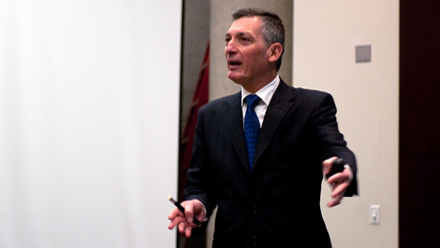
U of T Engineering alumnus and Massachusetts Institute of Technology (MIT) Professor Donald R. Sadoway (EngSci 7T2, MSE MASc 7T3, PhD 7T7) has been named one of Time magazine’s 100 Most Influential People in the World for 2012.
Dr. Sadoway is currently the John F. Elliott Professor of Materials Chemistry in the Department of Materials Science & Engineering at MIT.
He is renowned for his instruction of 3.091: Introduction to Solid-State Chemistry, a first-year undergraduate course at MIT. The combination of his teaching methodology and his unique lecture style has made the course one of the largest and most sought-after classes.
The popularity of this course has even reached outside MIT – Microsoft CEO Bill Gates was quoted in the Seattle Post-Intelligencer, “ … everybody should watch chemistry lectures – they’re far better than you think. Don Sadoway, MIT – best chemistry lessons anywhere. Unbelievable.”
Dr. Sadoway is also one of the world’s foremost researchers in the area of materials engineering for energy-storage technologies. In a recent online TED chalk-talk that has logged more than 380,000 views, he spoke about “The Missing Link to Renewable Energy,” describing how renewable energy resources can be made more viable for grid-level use through high-capacity batteries, built at low cost.
Using a combination of molten salt and liquid metal, Dr. Sadoway and two of his students have built these cost-effective, grid-level batteries and spun-off the Liquid Metals Battery Corporation (LMBC) through the support of fans like Bill Gates.
What’s more, his influence can be seen beyond his technological expertise. “In a battery, I strive to maximize electrical potential,” he said, during his TED2012: Full Spectrum talk. “When mentoring, I strive to maximize human potential.”
As a proud alumnus and active supporter of U of T Engineering, he served on the Board of Advisors for the U of T Department of Materials Science & Engineering from 1998 to 2002, under the leadership of past Chair and Professor Doug Perovic. In 2010, he was the inaugural speaker for the annual MSE Winegard Visiting Lectureship, where he spoke about “New Materials Engineering and the Path to Sustainability.”
“On behalf of the Faculty, I would like to extend my warmest congratulations to Dr. Sadoway on this exemplary recognition,” said Acting Dean Yu-Ling Cheng. “I am delighted that Dr. Sadoway has been recognized for his influential work as an engineer and educator. We are proud that he is one of our many outstanding, world-class U of T Engineering alumni.”
“In 1990, we had a horrible death in the subway where a blind woman fell in front of a train,” said Susan Reed Tanaka, Manager of Engineering with the Toronto Transit Commission (TTC).
Standing in the Great Hall of Hart House at the University of Toronto, Tanaka explained how this fatal incident sparked an initiative to make the TTC safer for the visually impaired. The search for a solution led to a collaboration between the CNIB (formerly, Canadian National Institute for the Blind), the TTC and visually impaired subway users.
And, on April 16, that continuing search brought Tanaka to the Praxis II Showcase, a full-day event where first-year U of T Engineering Science students pitched ideas to enhance the safety of TTC stations.
One team – consisting of students Paul Deng, Tristan Laidlow, Cody Tian and Shafquat Arefeen – designed a tactile map they hoped to install at key locations throughout subway stations. The map uses raised symbols marking the locations of doors, stairs and other obstacles on a simplified layout of the subway station to help the visually impaired build a mental image of their surroundings. For these students, a surprise came when Tanaka expressed her interest in their design.
“She wants to get in contact with us to further our solution and work alongside the TTC. Which is amazing,” said Arefeen. “It’s surreal, in a way.”
Jason Foster, co-instructor of the Praxis II course and Senior Lecturer in the Division of Engineering Science, was pleased, but not necessarily surprised, by this development.
“It is important for our students to realize that even in first year they can, through their efforts, have influence,” he said.
Improving the navigability of transit stations, however, was just one of eight issues tackled by the fledgling U of T Engineers presenting at this year’s showcase, now in its seventh year. Other teams, 67 in all, worked to help apartment dwellers grow their own food, increase the safety of wintertime bicycling, and keep raccoons out of the city’s Green Bin compost containers, among other projects.
“What we’re trying to do is bring a balance between solving the right problem, and solving the problem right,” said Foster.
He said the course encourages students to look for local community issues that can be addressed through engineering. The course stresses scientific rigor, design quality and creativity, but also stresses that presentation and communication skills are fundamental aspects of the design process — an emphasis that certainly helped students during the showcase.
Across the room from Deng, Laidlow, Tian, and Arefeen’s poster, Nichole He faced down the bright lights of an OMNI Television camera to explain her team’s retractable vacuum-pad attachment designed to improve the stability of the walkers commonly used by senior citizens.
“Two months ago, I probably couldn’t have stood in front of a camera and presented,” said He. “I feel more confident.”
In recapping their design, the unexpected media treatment, and their experiences as first-year Engineering Science students, He’s teammate, Afiq Asri, locked on to what may just be the underlying ethos of the Praxis II program.
“Everything can be engineered,” said Asri, “if you have the proper framing and you apply the right judgment and decisions.”
Read coverage of this year’s Praxis II Showcase in The Toronto Star or listen to an interview on CBC Radio’s Metro Morning .
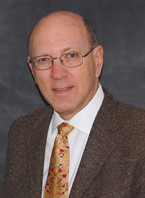
Professor Jim Wallace (MIE) has been named as a recipient of the 2012 President’s Teaching Award, U of T’s highest honour for teaching. He also now becomes a member of the prestigious U of T Teaching Academy.
Other U of T winners include Senior Lecturer Karen Reid, Department of Computer Science, Faculty of Arts & Science and Professor Ian Silver, Department of Psychiatry, Faculty of Medicine. Recipients were nominated by a committee chaired by the Provost. Their appointments to the Teaching Academy were approved April 19 by Academic Board.
Professor Wallace served as Chair of the Department of Mechanical & Industrial Engineering (MIE) from 1998-2003. As Chair, Professor Wallace spearheaded the creation of the Mechatronics and Information Engineering programs and initiated the teaching mentor program for new faculty.
He has developed innovative and effective new courses at both the undergraduate and graduate levels in the area of energy systems. Most recently, he led the development of an existing course, MIE 515 Alternative Energy Systems into an online course – the first online undergraduate course in the Faculty.
Professor Wallace’s teaching has also benefited from his research program. As the Director of the Engine Research and Development Laboratory at U of T, he has more than 30 years of experience conducting research on the topics of internal combustion engines, combustion and fuels. These research projects have provided a wealth of knowledge and examples that have been incorporated into the courses he teaches.
He has enjoyed a stellar reputation for teaching among students and colleagues since he joined the academic staff. He received the SAC-APUS Teaching Award just a few years into his teaching career and has over the years received several education awards from the Society of Automotive Engineers, the MIE Teaching Award (2010) and the Faculty Teaching Award from U of T Engineering in 2011.
“Jim Wallace is an outstanding educator with an unwavering dedication to teaching excellence, a leader in curriculum innovation and an inspiring mentor of students and colleagues alike,” said Dean Cristina Amon, Faculty of Applied Science & Engineering.
“He has been one of our Faculty’s most committed and talented teachers for more than three decades. I am thrilled that he has been recognized with the prestigious President’s Teaching Award,” Dean Amon said.
The President’s Teaching Award was established in 2006 to recognize sustained excellence in teaching, research on teaching and the integration of teaching and research. Awardees receive an annual professional development allowance of $10,000 for five years. Recipients are also designated as a member of the Teaching Academy for five years.
In its seven-year history, two other U of T Engineering faculty have been honoured with the President’s Teaching Award: Professor Yu-Ling Cheng (ChemE), Director of the Centre for Global Engineering (CGEN) and Acting Dean of the Faculty of Applied Science & Engineering (2008) and Professor Susan McCahan (MIE), Vice-Dean, Undergraduate (2007).