
Five U of T Engineering professors from the Department of Mechanical & Industrial Engineering (MIE) have been honoured by the Canadian Society for Mechanical Engineering (CSME) for their achievements in, and contributions to, the field.
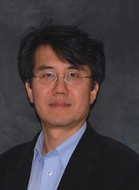
Professor Chul B. Park is the 2012 recipient of the C.N. Downing Award for distinguished service to CSME over many years. Professor Park is the Canada Research Chair in Microcellular Plastics and the founder and Director of the Microcellular Plastics Manufacturing Laboratory.
A world leader in the development of innovative technologies for the manufacture of microcellular foamed plastics, he holds 20 patents and his research has been licensed by more than 200 companies.
Professor Park is a Fellow of CSME, the American Association for the Advancement of Science (AAAS), the Royal Society of Canada, the American Society of Mechanical Engineers (ASME), the Society of Plastics Engineers, the Canadian Academy of Engineering (CAE), and the Engineering Institute of Canada (EIC).
Joining Professor Park as a CSME Fellow are Professors David Sinton, Pierre E. Sullivan and Murray J. Thomson. This recognition is awarded to those who have attained excellence in mechanical engineering and contributed actively to the progress of their profession and society.
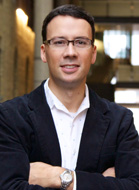 Professor Sinton joined the University of Toronto in September 2011, after serving as Associate Professor and Canada Research Chair at the University of Victoria (2003-2011). His research interests include fluidics and energy, involving the study and application of small scale fluid mechanics for use in energy systems and analysis. He received the 2006 CSME I. W. Smith Award, the 2006 Douglas R. Colton Award from CMC Microsystems, and the 2008 Early Career Achievement Award from the University of Toronto Engineering Alumni Association.
 Professor Sullivan’s research focuses on microscale electrohydrodynamics and aerodynamics control at aerodynamically low Reynolds numbers. His work has resulted in useful applications to microscale jets and has improved sensing and mixing technologies that are important to practical applications of electrowetting on dielectric devices, to name a few. Professor Sullivan previously served the MIE Department as Associate Chair, High School Liaison (2000-2004) and Associate Chair of Graduate Studies (2004-2009). He is a member of the CSME, ASME, Society of Automotive Engineering and the American Institute of Aeronautics and Astronautics.
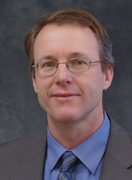 Professor Thomson has contributed significantly to the advancement of knowledge in the areas of alternative fuels, pollution control and combustion sensors, and his research has been widely applied in industry. He has commercialized and licensed four process sensors based on optics and spectroscopy, which are used by a number of companies to reduce energy consumption and pollutant emissions. He has also developed fundamental models of particulate emissions in flames, which he has applied to develop particulate emissions models for engines produced by companies such as Pratt & Whitney Canada. He has made outstanding contributions to the Canadian Section of the Combustion Institute, where he serves as Treasurer and as Member of the Board of Directors, and is an EIC Fellow.
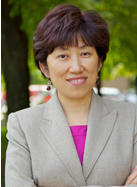 Professor Jean Zu, MIE’s Chair, has received the 2012 Robert W. Angus Medal for outstanding contributions to the management and practice of mechanical engineering. Professor Zu served as President of CSME from 2006-2008. In this role, she restored regional activities throughout the country, implemented an online membership database and created close ties between CSME and NSERC. She is currently President-Elect of the Engineering Institute of Canada and serves on the Canadian National Committee for the International Union of Theoretical and Applied Mechanics. Professor Zu is a Fellow of AAAS, ASME, CAE and EIC. Professor Zu was previously recognized with the C.N. Downing Award in 2011.
“We are proud CSME is recognizing five of our faculty members for their remarkable contributions to mechanical engineering,” said Engineering Dean Cristina Amon. “I congratulate them for this honour and the department as a whole for this distinction.”
The CSME Awards recipients will be honoured at the CSME Awards Ceremony on June 5 in Winnipeg.

A successful year full of award-worthy contributions by undergraduates was recognized on April 9 at the annual Engineering Society Awards. The awards celebrated the accomplishments of many student leaders and clubs.
The Engineering Society – better known as Eng Soc – is the undergraduate student government for the Faculty. It has presented awards annually for years, but the celebration was expanded to express the organization’s overall appreciation for Engineering’s many student clubs.
“This has been a really remarkable year, with a lot of initiatives by different students clubs,” said Praneet Bagga (ChemE 1T4), who chaired the Eng Soc Awards Committee and organized the celebration with Vlad Miklykh (ChemE 1T4). “We wanted to make sure that everyone’s efforts got recognized and that we had the chance to show our appreciation,” he added.
Twelve awards were presented to 13 students and four student clubs. The winners were:
Engineering Society Centennial Award
Awarded to a first- and second-year student who has demonstrated commitment and dedication to the Engineering Society and successfully improved the Society and student experience through their work.
Winners: Kimberly Shen (CompE 1T5) and Ishan Gupta (ChemE 1T4)
Engineering Society Semi-Centennial Award
Awarded to a third-year student who has shown commitment and dedication to the Engineering Society and successfully improved the Engineering Society and student experience through their work.
Winner: Kazem Kutob (IndE 1T2)
Engineering Society Award
Awarded to a fourth year who has demonstrated commitment and dedication to the Engineering Society and successfully improved the Engineering Society and student experience through their work.
Winner: Owyn Notario (CivE 1T1+PEY)
Publication of the Year
Awarded to one Engineering Society Editor-in-Chief in charge of the best overall publication.
Winner: Andrew Jerabek (MechE 1T3; The Toike Oike)
Director of the Year
Awarded to two Engineering Society Directors deemed to have done the best job with their respective positions, based on the level of growth and development of their role.
Winners: Yi-Wei Ang (Indy 1T2+PEY; You’re Next Career Fair), Kazem Kutob (IndE 1T2) and Vincent Tse (IndE 1T3; Hard Hat Café)
Discipline Club of the Year Award
Awarded to a Discipline Club with the greatest overall performance in improving the quality of student life by organizing quality events and services.
Winner: MSE Club
Joe Club Award
Awarded to one graduating student dedicated to their respective discipline club and successfully improved it over the course of their time at Skule™.
Winner: Ronald Victorino (MSE 1T1+PEY; MSE Club)
Top Affiliated Club of the Year
Awarded to an Engineering Society Affiliated Club with the greatest overall performance, in terms of quality and success of events and achievements during the year.
Winner: Blue Sky Solar Racing Team
Affiliated Club with Outstanding Representation
Awarded to one Engineering Society Affiliated Club with the greatest representation in public settings. This is judged on the impact the club has had on U of T Engineering’s reputation and the acknowledgments and praise it has received.
Winner: Skule™ Nite
Affiliated Club with Greatest Growth and Development
Awarded to an Engineering Society Affiliated Club with the greatest growth and development in membership and depth/quality of events and services.
Winner: Spark Design Team
Class Rep of the Year
Awarded to two Engineering Society Class Representatives deemed to have done the best with their respective positions. This is based on effort and quality of work in building a class community as well as representing them in Eng Soc and the Faculty.
Winners: Matthew Lattavo (CivE 1T4) and Laura Burget (ChemE 1T5)
Skule™ Cannon Award
Awarded to fourth-year students who have demonstrated commitment and dedication to Skule™ life through extracurricular involvement and greatly improving the student experience.
Winners: Amanda Bell (Indy 1T1 + PEY) and Wayne Lin (IndE 1T1 + PEY)
What do tricky surgical procedures, an uneven walking gait, sloppy driving and museum exhibits all have in common? They might be getting help from the apps coming out of Professor Jonathan Rose’s Creative Applications for Mobile Devices graduate ECE course. At least, if the class’s showcase event held on April 3 and 10 was any indication.
The class is a novel idea, bringing together two engineering programmers and a non-programming content expert (an ‘apper,’ in Rose’s terminology) to create a unique application perfectly suited for smartphones.
“The idea is that the apper and programmers build an app that either furthers research in the apper’s discipline, or advances that discipline in some way,” Rose said. “The apper is vital, because he or she brings knowledge, insights and ideas from their field to the app.”
At this semester’s showcase, U of T graduate students, both from the Faculty of Applied Science & Engineering and from elsewhere within the University, demonstrated a variety of apps, including those that:
- could provide surgeons with a ‘one-stop-shop for surgery vital signs and videos, so procedures could be viewed, assessed and annotated conveniently from a single iPad screen;
- may help stroke victims and others deal with ‘step-time asymmetry,’ an uncomfortable imbalance in stride;
- could give users quick, custom workout programs geared to their age, gender and fitness level;
- might improve drivers’ road skills in real time via the motion detectors in a mobile phone;
- could help healthcare workers conduct clinical trials more effectively in the field; and,
- allow museum patrons to leave digital messages in response to open-ended augmented reality questions associated with museum exhibits.
Professor Rose hopes many of them will be refined and sent on their way to the Android Marketplace or the iTunes App store.
“I think that is a concrete outcome of the course, and several of the apps could well be directly useful to other people,” said Rose, who, clearly, has a positive app-titude.

Professor Torstein A. Utigard passed away peacefully in his sleep in the early morning of April 11 after a long battle with cancer. The 57-year-old Materials Science & Engineering faculty member was surrounded by his immediate family.
Professor Utigard received his MASc and PhD from the University of Toronto under the supervision of the late Professor Emeritus and former Materials Science & Engineering Department Chair James M. Toguri in 1983 and 1985, respectively. After serving several years as a metallurgical research engineer in Switzerland and then at the Falconbridge Technology Centre in Sudbury, Ontario, he returned to the University of Toronto as an Assistant Professor of Metallurgy and Materials Science in 1989.
Over his career, Professor Utigard established an international reputation as an outstanding researcher and educator in the science and technology of pyro-metallurgical processing of non-ferrous metals. With more than 150 publications and 11 patents, Professor Utigard pioneered numerous developments pertaining to the physical chemistry aspects of metals refining. At the University of Toronto, Professor Utigard supervised 22 MASc and eight PhD graduates, as well as seven researchers and post-doctoral fellows, along with numerous undergraduate students in the areas of mineral processing, thermodynamics, kinetics and the sustainable extraction and processing of metals.
Professor Utigard held the Gerald R. Heffernan Chair in Materials Processing since 1999, and was a Fellow of the Canadian Academy of Engineering, as well as a Fellow of the Canadian Institute of Mining, Metallurgy and Petroleum.
“We are very sad to hear the news of Torstein’s passing,” said Professor Jun Nogami, Chair of the Department of Materials Science & Engineering. “He was not only a colleague and friend, but also a role model in the way he both lived and worked. Our thoughts are with his wife Kathy, and his two sons Eric and Brian.”
“On behalf of the Faculty of Applied Science & Engineering, I wish to express our sincere condolences to Professor Utigard’s family, colleagues and students,” said U of T Engineering’s Acting Dean, Professor Yu-Ling Cheng. “We have lost a valued and respected member of this Faculty. Torstein made significant contributions to this Faculty and to his research community through his teaching and scholarly work. He will be greatly missed.”
A celebration of Professor Utigard’s life will be held on Tuesday, April 17 at 1 p.m. at the Trinity College Chapel (6 Hoskin Avenue) on the University of Toronto’s St. George campus. Donations to the Canadian Cancer Society are being accepted in Professor Utigard’s memory.
Before the Titanic hit an iceberg and sank in the North Atlantic Ocean 100 years ago, the ship was deemed “unsinkable.”
In a recent CTV News report, Professor Doug Perovic (MSE) explained how several design flaws led to the Titanic’s demise.
“Essentially, three contributing factors led to a perfect storm,” he said. “There’s hitting the iceberg, but also the cold water temperature and the quality of the steel. Those are the initial factors that led to this gaping hole.”
Professor Perovic pointed out that 100 years ago, it wasn’t known that certain impurities in steel, principally sulfur, behave like glass under very low temperatures.
“Better steel would have bent,” he added. “It wouldn’t have fractured in so many pieces – and the end result would have been different.”
Strolling through this year’s Electrical & Computer Engineering Capstone Design Showcase, it’s hard not to think, “Hey, there really is an app for that.” But you might just as easily discover there is also an algorithm for that.
The best fourth-year projects – as judged by the ECE faculty – included apps for lonely GO Train commuters and shoppers eager to escape lineups by paying via smartphone before leaving the store. The showcase also featured algorithms to speed the process of bioengineering microRNA for treating genetic disease, as well as algorithms to predict the stock market, using 250 million daily tweets.
The April 5 event, which took place at the Bahen Centre atrium, showcased just 15 of a possible 100 projects.
“These projects tend to be very well executed or use technologies that are interesting, or not straightforward,” said Dr. Phil Anderson, Senior Lecturer in The Edward S. Rogers Sr. Department of Computer & Electrical Engineering. “In other years, several have gone on to get patents.”
Certainly, Sumanth Ravipati (CompE 1T2) and Thisal De Silva (CompE 1T2) would like to see their GO Train commuter app become so popular that they might one day charge for it. Right now, anyone can download it for free at Apple’s App Store.
Their inspiration comes from the newspaper t.o.night, whose popular ‘Shout Out’ feature posts commuters’ complaints, questions and requests.
“Every day you see the same faces on the train, but nobody talks to each other. They prefer hiding behind shout outs,” said De Silva. “So we thought why not put it on a platform and let them reply in real time, so they don’t have to wait a day.”
The app also allows for private chats between commuters, but only works when you’re actually on the train. “That way, you look forward to the commute,” said Ravipati.
Alex Litoiu (CompE 1T2) and his project partner Mike Del Balso (ElecE 1T2) are also harnessing social media, but with a different goal in mind. Their system for analyzing global patterns of emotion on Twitter predicts whether stocks will go up or down.
The pair’s algorithm analyzes tweets from around the world for a list of words other researchers have correlated to emotions.
Litoiu and Del Balso tested their system over three months. They discovered they could predict with 57% accuracy – on average – whether a given stock in the NASDAQ Stock Market would go up or down 24 hours after analyzing the previous day’s tweets.
“So for a certain stock, we might have 100% accuracy, for others 30%. When we average those numbers across all stocks we are doing much better than random,” said Litoiu.
Judging from the crowds around their display, and the constant stream of questions, they aren’t the only ones intrigued by their algorithm’s potential.