

The Society of Women Engineers (SWE) announced today that Professor Cristina Amon, Dean of the University of Toronto’s Faculty of Applied Science & Engineering, has received the 2011 SWE Achievement Award, the highest award given by the Society, for her outstanding contributions to the field of engineering over more than 20 years.
“Dr. Amon is widely recognized for her work in fluid mechanics and heat transfer, as well as for her leadership in engineering education,” says Melissa Tata, SWE president. “Her significant discoveries have advanced engineering science immensely, particularly in a broad range of manufacturing processes, and her groundbreaking research and education positively impacts her community, both in the industry and in the university.”
Prior to joining U of T in 2006 as Dean and Alumni Chair Professor in Mechanical and Industrial Engineering, Dean Amon was the Raymond J. Lane Distinguished Professor of Mechanical and Biomedical Engineering and Director of the Institute for Complex Engineered Systems at Carnegie Mellon University. Her research has advanced the engineering foundation of heat transfer enhancement by flow destabilization, nano-scale thermal transport in semi-conductors, and hemodynamics mass transport in biological systems, including aortic aneurysms and intravenous blood oxygenators. She has made pioneering contributions to concurrent thermal designs, innovation in electronics cooling and transient thermal management of wearable computers.
Dean Amon has delivered keynote lectures worldwide and contributed twelve book chapters, one textbook, and more than 280 refereed articles in the education and research literature. She has served the engineering profession with exceptional dedication; her many roles include Chair of the Global Engineering Deans Council and Chair of AAAS Engineering. She was elected to the U.S. National Academy of Engineering, Canadian Academy of Engineering, Spanish Royal Academy of Engineering, and Royal Society of Canada, and is a Fellow of several technical societies including AAAS, ASEE, ASME and IEEE.
Among her many awards and honours, Dean Amon has been recognized by SWE as their Distinguished Engineering Educator and Professor of the Year. She is a Senior Member of SWE and served as President of the SWE Pittsburgh section in 2004-2005. Cristina Amon created and led the development of the summer SWE workshop ‘Engineering Your Future’ for 8th-12th grade female and minority students. This workshop has been offered annually since 1993 by the SWE Carnegie Mellon chapter, with the objective of encouraging girls and underrepresented minorities to pursue careers in engineering. At the U of T, Dean Amon promotes women in engineering through a number of outreach initiatives, including Skule™ Sisters, Go Eng Girl, and Women Empowered in Engineering.
Dean Amon has also been recognized as an outstanding role-model for female engineers. She was the recipient of the 2010 Award for the Support of Women by Engineers Canada and the 2011 YWCA Toronto Woman of Distinction award. She been previously recognized by SWE as their Distinguished Engineering Educator and Professor of the Year.
Dean Amon earned her Engineering diploma from Simón Bolívar University and her MSc and ScD degrees from MIT. She has served on external advisory boards at several educational institutions, including Stanford University, UCLA, UIUC, University of Michigan and University of Pennsylvania.
“Cristina Amon, in addition to groundbreaking research contributions, has served the University of Toronto and its Faculty of Applied Science & Engineering with the greatest distinction,” said Cheryl Misak, U of T’s Vice-President and Provost. “She is a brilliant role model for and champion of women in engineering.”
Dean Amon was honoured at the Society of Women Engineers’ Achievement Awards Banquet in Chicago on October 14, 2011.
The University of Toronto and the King Abdullah University of Science & Technology (KAUST) hosted international research leaders at the Nanomaterials for Energy International Symposium.
Held September 29 and 30 at the Royal Ontario Museum, the symposium was an opportunity to learn about the latest developments in utilizing nanomaterials to harness and store energy.
Organized by Professor Ted Sargent (ECE), the event was intended to bring together leading university researchers and thought leaders from relevant commercial sectors, including venture capital investors and leading solar and battery companies.
The event was also an opportunity to celebrate the partnership between U of T and KAUST in advancing nanomaterials research.
“This remarkable event brought together research leaders from MIT, Stanford, EPFL, Columbia, KAUST, Penn State, Berkeley, U of T, Chicago, UIUC and IBM Research,” said Professor Sargent, “One of the many U of T graduate students in attendance called it an All-Star event – nothing could be more true. It was a stimulating event – and a privilege to have the world’s leaders in nanomaterials for energy research converge on U of T.”
Professor Sargent, along with researchers at KAUST and Pennsylvania State University, recently reported a breakthrough in the development of colloidal quantum dot (CQD) solar cells in Nature Materials. Quantum dots are nanoscale semiconductors that capture light and convert it into electrical energy.
The late Irving O. Shoichet was a remarkable man who loved science.
A successful entrepreneur, first in the oil and gas industry and then as an executive for his founding company Skycharter, Mr. Shoichet believed in building a community of ideas based on intelligent debate and discussion. He had a profound impact not only on his family, but friends, colleagues and others around him. The Irving O. Shoichet Lecture Series for the Department of Chemical Engineering & Applied Chemistry was established through a gift from Mrs. Dorothy Shoichet as a way to celebrate the accomplishments of her late husband and recognize his commitment to intellectual exchange and dynamic discourse.
The series provides an important forum for distinguished researchers from across North America and around the world to showcase cutting-edge scientific research that addresses critical issues facing our world today. Situated within the Department’s renowned Lectures at the Leading Edge series, the Irving O. Shoichet Distinguished Lecture brings together innovative thinkers and scientists to stimulate discussion and generate ideas. The inaugural lecture of 2010 featured MIT’s Professor Robert Langer, a world expert on biomedical engineering, and continues in 2011 with lecturer Professor Rakesh Jain of Harvard University.
Internationally recognized for his seminal research in tumor biology, Professor Jain promotes the normalization of blood vessels in the tumor as a way to more effectively deliver cancer drugs. He is the Cook Professor of Tumor Biology at Harvard Medical School and the Director of the Steele Laboratory in the Department of Radiation Oncology, Massachusetts General Hospital. His seminar, entitled “Delivery of molecular and nano-medicine in tumors” will illuminate the role of chemical engineering in understanding blood vessel function and cancer growth. The lecture will be delivered on Wednesday October 19 from 12:30 to 2:00 p.m. in room 116 of the Wallberg Building (200 College Street).
In concert with the lectureship, the Shoichet family has generously established an Irving O. Shoichet Graduate Scholarship. This important Scholarship is awarded to graduate students within the Department of Chemical Engineering & Applied Chemistry whose research and studies are focused on the areas of regenerative medicine and tissue engineering. The Scholarship enables students to reach their full potential and personifies Mr. Shoichet’s passion for the individual’s pursuit of higher education.
“My dad had a big heart and a love for learning,” says daughter, Professor Molly Shoichet of the Department of Chemical Engineering & Applied Science. “He was a perfectionist with a photographic memory. He and my mother encouraged us to pursue our dreams and strive for excellence in everything we do.”
In celebration of the importance of dreams, excellence and intellectual rigour, the Irving O. Shoichet Distinguished Lecture exposes the community to innovative thinkers.
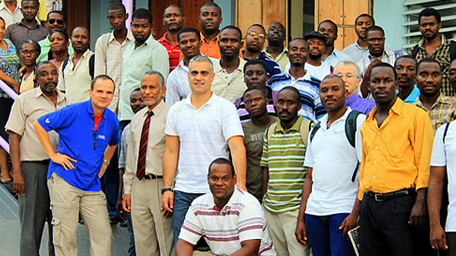
University of Toronto Engineering Professor Constantin Christopoulos (CivE) traveled to Haiti to join international instructors in delivering a two-day short course as part of a three-week earthquake engineering seminar in August.
There is perhaps no place where the lessons were more needed and nowhere were it was more difficult to deliver. On January 12, 2010, more than 316,000 people died due to a 7.0 earthquake that devastated the Caribbean nation.
The destruction that occurred in Haiti left the nation’s universities in ruins. With teaching spaces, labs and libraries destroyed, and faculty members among the killed or injured, help from abroad is needed to deliver the lessons Haiti’s engineering community requires.
“I responded to an international call seeking French-speaking experts in the field,” explains Professor Christopoulos, whose research focuses on structural dynamics and earthquake engineering.
The program was organized by MCEER at the University at Buffalo, State University of New York and hosted by l’Université Quisqueya in Haiti.
Professor Chistopoulos’ seminar focused on making steel structures more resistant to earthquakes.
“What occurred in Haiti was not simply an act of God. It was definitely an extreme natural event but its impact on structures could have been limited and catastrophic collapses could have been prevented,” Professor Chistopoulos explains.
More than 130 participants attended the seminar, which included current engineering students, local experts and members of the Haitian Ministry of Public Works. Planning has begun on establishing a new Master’s degree in earthquake engineering at the l’Université Quisqueya, which would be delivered by a team of instructors from other international institutions.
As Haiti is being rebuilt, Professor Chistopoulos notes that incorporating the latest earthquake resistant technology will be necessary to ensure the failures of 2010 are not repeated.
“Haiti had no building codes. Given our experience and expertise here in Canada, we can provide assistance and guidance,” he says, though he points out that it is not possible to just hand over advanced building design guidelines and expect that it would be fully implemented. “We will have to work with Haitian officials to tailor the code to be practically applied to their building environment.”
Prior to his trip in August, Professor Christopoulos’ only connection to Haiti was growing up in Montreal surrounded by its large Haitian expatriate community. However, he intends to remain involved by developing course options andresearching how earthquake resistant technology can be applied in Haiti.
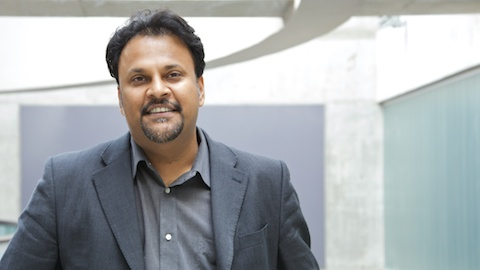
University of Toronto Engineering Professor Prasanth Nair (UTIAS) has been awarded the Canada Research Chair (CRC) in Computational Modeling and Design Optimization Under Uncertainty .
The prestigious honour recognizes Professor Nair’s research excellence, which involves developing the next generation of computational methods for improving the performance and safety of complex engineering systems.
His work will concentrate on ways to reduce the time and money it takes to run select systems that often do not perform the same way in theory as they do in the real world.
To address this challenge, he will “focus on developing new mathematical frameworks and methods for computational modeling in the presence of uncertainty,” he explained. “This work will ultimately be used to design systems that perform as intended – saving time and money and making engineered systems safer.”
Professor Nair, who joined the University of Toronto Institute of Aerospace Studies (UTIAS) in March 2011, is also excited that his research will take place at U of T Engineering where he’ll work with top peers and world-class computational infrastructure. “The Institute for Aerospace Studies, where I am based, is one of the top aerospace departments in the world, which attracts some of the best undergraduate and graduate students from Canada and across the world.”
Before being recruited to work at the University of Toronto, Professor Nair was appointed as a Research Fellow in the School of Engineering Sciences at the University of Southampton in England, later being promoted to Senior Lecturer.
Canada Research Chairs are divided into two tiers. Professor Nair was named a Tier II Chair, which recognizes recipients who are emerging research leaders in their fields. They are also awarded $500,000 over five years and may be renewed once at the discretion of their university.
“We are extremely grateful and proud that Professor Prasanth Nair has been awarded the Canada Research Chair,” said Professor Cristina Amon, Dean of the Faculty of Applied Science & Engineering. “This recognition attests to the high quality of Professor Nair’s research and his potential to become a leader in the field of computational modeling and design optimization.”
The Canada Research Chair program is a government-funded initiative, which was launched in 2000. It is part of a national strategy to recognize research excellence and attract first-class researchers from around the world to Canadian universities.
To learn more about all the new U of T CRC Chairs, visit U of T News.
Groundbreaking research by Professor Milos Popovic (IBBME) to restore movement in the hands of quadriplegic patients is featured in today’s The Globe & Mail.
Professor Popovic’s treatment focuses on functional electrical stimulation, in which electrical pulses are used to contract muscles in the patient’s body. This allows a patient to grasp things with his or her hand. Over the course of repeated treatments, the patient’s nervous system can be retrained so that he or she can eventually grasp items without using the electrical stimulation.
The experimental treatment is currently being studied through a national clinical trial being led by Professor Popovic and which is being funded through the Rick Hansen Institute.
Professor Popovic is a Core Professor in the Institute of Biomaterials and Biomedical Engineering and the Toronto Rehab Chair in Spinal Cord Injury Research at the Toronto Rehabilitation Institute.
Read the story to learn more about Professor Popovic’s work.