
Professors Tom Chau and Dr. Albert Yee of the Institute of Biomaterials & Biomedical Engineering (IBBME) were honoured at a gala ceremony at the University of Toronto Faculty of Medicine’s Annual Education Achievement Celebration on April 26.
Professor Chau, core faculty at IBBME, has been awarded the Graduate Faculty Teaching Award and the Graduate Student Mentorship. This award recognizes Professor Chau’s role as coordinator of the Master of Health Science in Clinical Engineering at IBBME and his mentorship of graduate students, in which he cultivates an environment of affirmation and embraces a philosophy of collaborative problem-solving.
Dr. Albert Yee, cross-appointed to IBBME, received the Excellence in Postgraduate Medical Education Award – Development /Innovation in Postgraduate Education. This award recognizes Dr. Yee’s leadership as coordinator for orthopedic surgery, his innovation in establishing an annual University of Toronto Orthopedic Division fellowship day, and his key role as inaugural co-director of the University’s Spine Program, a unique bi-divisional initiative with neurosurgery.
“These awards highlight the culture of excellence we are fostering at IBBME,” said Professor Paul Santerre, the Institute’s Director. “Not only do our investigators lead their respective research fields, they are also highly committed to providing unparalleled mentorship of their students. Collaboration, cross-disciplinary innovation, and visionary leadership are all cornerstones of what we do here at IBBME,” he noted.
Alumni Som Seif (IndE 9T9) and John Poulos (ElecE 9T7) have been named to Canada’s Top 40 Under 40™. Established in 1995, Canada’s Top 40 Under 40™ is a national program that celebrates the achievements of 40 Canadians who have reached a significant level of success before the age of 40.
Seif has been the architect of one of the most impressive success stories in the Canadian financial services industry. In the five years since starting Claymore Investments Inc. as President and CEO, he has overseen the company’s growth from a minor player in investment management to one of the leading exchange traded funds providers in Canada. Claymore now has assets worth more than $5.5 billion and has launched more than thirty publicly traded funds.
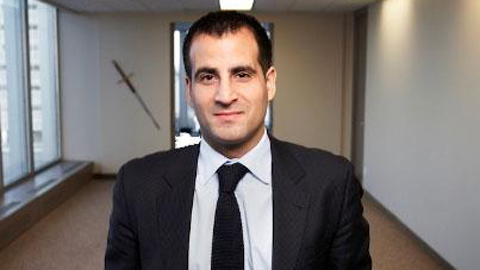
A devoted alumnus, Seif serves on the Engineering Alumni Association Biz Skule™ Committee and the MIE Advisory Board, and has coached the University of Toronto’s Varsity water polo team for seven years. His accomplishments and service have been recognized with the Faculty’s 7T6 Early Career Award and the University of Toronto’s Arbor Award.
Poulos is the founding President and CEO of Dominion Voting. He met James Hoover during a previous business venture in Silicon Valley where, together, they established an ambitious goal: to build a voting system that was so transparent even the most skeptical critic would have confidence in its accuracy. From small beginnings in 2003 doing an election in Quinte West, Ont., Dominion is now in about 150 municipalities and has been used in a number of provincial elections. It also has voting machines in 1,000 United States counties across 35 states. Today, Dominion’s machines include a roster of accessible technology such as audio readouts and large electronic screens. Innovations such as these have spurred its amazing growth – Dominion was No. 2 on Deloitte’s 2009 list of the 50 fastest-growing Canadian tech firms.
“These young alumni have not only achieved remarkable success very early in their careers, they have already begun to give back to the community,” said Dean Cristina Amon, Faculty of Applied Science & Engineering. “They are outstanding role models for young people and most deserving of this recognition.”
Recipients will be honoured at a gala luncheon at the Royal York Hotel on May 3.
Read the Canada’s Top 40 Under 40™ profiles at the The Globe and Mail and learn more about other U of T alums who were honoured at News @ U of T.
Since the first skateboards appeared in the 1950s, they have evolved from crude wooden planks with metal rollers to sleek, symmetrical boards with polyurethane wheels. Now Professor Mark Kortschot (ChemE) has put his own stamp on the iconic “sidewalk surfer,” creating a version so small it can be stuffed into a backpack.
Kortschot says he has always been interested in transportation devices, and wanted a quick way to get around the St. George Campus, where he has taught engineering for 22 years. He researched the market and found a need for a portable, smooth-riding board. “There was clearly a niche there,” he says.
Kortschot’s creation, dubbed the Sole Skate, is, at 43 centimetres long, about half the length of a typical board, has three wheels instead of four and weighs only one kilogram. After applying for a patent, he presented the idea to Razor, a California company best known for its aluminum scooters, who decided to make and sell the board. Time.com named the Sole Skate one of the best toys of 2010, dubbing it a “small and agile skateboard replacement.” Oh, and most important? His sons, aged 19 and 22, have pronounced the board “cool.”
To read the full article, visit U of T Magazine .
Ever take apart a mechanical toy to see how the parts work? Do you tinker with gizmos or get a rush pondering physics problems? Is math your second language?
Maybe you should get in touch with your inner engineer. No longer is this field just about bridges and beams. It encompasses an astoundingly diverse set of specialties from nanotechnology to chemical, mechanical and biomedical design.
And lucky for those with nascent tech talent, the demand for graduates these days is growing, especially in the areas of environment and public policy.
Know as well that all those guy-heavy engineering stereotypes just don’t wash any more. According to the Ontario Network of Women in Engineering, there were 10,268 female engineering undergraduates in Canada in 2009, 17 per cent of all engineering students, and many large tech companies that hire grads have put diversity policies in place.
What they say about the job
“I have a PhD from the University of Toronto in Civil Engineering. I’ve always been interested in environmental issues and the link between the environment and public health. I have an interest in keeping things clean and our planet livable.
“Drinking water’s a fascinating area of work, in that it combines very strict science with public health, politics, social issues, economics.
“The environment is always going to be an issue, and there’s a need to use the tools we have. One of those is technology, and engineering focuses on the technological side of the solution, but we’re also integrating social tools into our solutions. You can’t just do the equations – you have to bring people into the equation.”
– Ron Hofmann, Assistant Professor at U of T and a graduate of Concordia University, with a PhD from U of T. He is part of U of T’s Drinking Water Research Group.
Read the full article at NOW Magazine .
A team of civil engineering researchers is working on a plan to increase the efficiency of aging apartment buildings in Toronto by creating an outer perimeter whose temperature varies between the inside and outside temperature.
Nested Thermal Envelope Design, or NTED, is essentially a “building within a building,” said Marianne Touchie, a PhD candidate in Civil Engineering at the University of Toronto.
Touchie delivered a presentation on NTED and how it applies to high-rise residential buildings to an audience of about 120 at the recent Building Envelope Solutions conference, produced by MMPI and held at the On the Park conference centre in Toronto.
NTED, developed by Touchie, U of T Civil Engineering Professor Kim Pressnail and Ryerson University professor Russell Richman, is designed to control air flow, heat flow and moisture transfer.
Touchie said NTED allows the temperature of a perimeter to drift between the core and exterior temperature, using a heat pump between the perimeter and core space.
“Not only are heat losses moving from the core to that exterior captured in that perimeter zone, we’re also able to take advantage of passive solar gains from the exterior,” Touchie said. “By transferring that heat by an interior heat pump, we can use those losses and that potential solar gain to heat the core space.”
Studies have shown energy savings in a single family home of 74 per cent using NTED, she said.
In high-rise apartment buildings, the team is aiming to increase that, though she emphasized this is an “ideal” situation.
“We would like to see the energy use of these buildings reduced on the order of 80 or 90 per cent if we can start to meet the energy demands of these buildings using renewable energy sources,” she said.
About a third of Torontonians live in post-war apartment buildings, most of them constructed between the 1950s and 1980s when energy costs were lower, she said.
For an upcoming episode of Spark, host Nora Young spoke to Professor Andrew Goldenberg (MIE), who spearheads the Robotics and Automation Lab at the University of Toronto, on why researchers are obsessed with replicating robots to the human form.
To hear the full interview, visit the CBC website.