
Five members of the U of T Engineering community have been selected by the Ontario Society of Professional Engineers (OSPE) and Professional Engineers Ontario (PEO) to receive Ontario Professional Engineers Awards, out of a total of nine recipients province-wide. Stephen Armstrong, an instructor in our ELITE program, received the Engineering Excellence Medal. Professor Mansoor Barati (MSE) received a medal in the Young Engineer category. Professor Jeffrey Packer (CivE) was awarded a Research and Development Medal. Professor Andrew Goldenberg (MIE) and Professor Emeritus Joseph Paradi (ChemE) both received Entrepreneurship Medals. Presented since 1947, the Ontario Professional Engineers Awards recognize outstanding individuals for engineering excellence and community service.
Stephen Armstrong is founder and CEO of AMGI, an international strategic management consultancy. He is the author of Engineering and Product Development Management – The Holistic Approach, and has led many of the world’s top aerospace companies to successfully implement this system. His clients include deHavilland Aircraft, Lockheed Martin and Bombardier Aerospace. He is a Fellow of the Institute of Mechanical Engineers, U.K. and currently serves as Vice-Chair of its International Strategy Board. Mr. Armstrong teaches the ELITE course “Management of Innovation in Engineering.”
Mansoor Barati’s research is focused on high temperature materials processing; specifically novel and advanced processes for extracting and refining metals and alloys with high performance at low cost. His work has the potential to create innovative solutions for energy efficiency, higher quality materials and environmentally responsible materials processing. He has supervised 16 undergraduate theses, seven master’s degree students and three PhD students. His research has resulted in over 40 publications in leading technical journals and conference proceedings, two patent applications and invited presentations at several international meetings.
Jeffrey Packer’s 30-year research career on tubular steel structures has resulted in recognition as one of the world’s foremost experts in this field. He has published over 200 refereed articles and 14 books, including the Design Guide for Hollow Structural Section Connections, the world’s most popular reference publication on all aspects of hollow section steel connections. Professor Packer is a Fellow of the Institution of Civil Engineers in the U.K. and the American Society of Civil Engineers, and received an Honorary Doctorate from the University of Nottingham, U.K. He holds a Bahen/Tanenbaum Endowed Chair.
The Founder and Director of the Robotics & Automation Laboratory, Andrew Goldenberg’s research in robotics and automation has resulted in 33 patents, more than 125 peer-reviewed journal papers, over 280 conference papers and 12 chapters in books. Professor Goldenberg is the founder and President of two successful spin-off companies: Engineering Services Inc., a high-technology company which develops robotics-based automation technologies and Anviv Mechatronics Inc., which is involved in the development of state-of-the-art mechatronics products. He is a Fellow of ASME, EIC and IEEE.
Joseph Paradi is Chair in Information Engineering and Executive Director of U of T’s Centre for Management of Technology and Entrepreneurship (CMTE), which he founded. As a business leader, Professor Paradi founded or provided substantial guidance to 11 companies. As an educator, he has taught 13 undergraduate courses and five graduate courses on topics including entrepreneurship and technology management. Professor Paradi has supervised 13 PhD candidates, 42 MASc candidates, seven MEng candidates and 159 BASc theses. He is a Fellow of CAE and won a 2005 NSERC Synergy Award with the CMTE’s industrial sponsors.
“For five members of our community to receive these prestigious awards is both an honour and a testament of the strength of our Faculty,” said Cristina Amon, Dean, Faculty of Applied Science & Engineering. “I am grateful to OSPE and PEO for recognizing their outstanding contributions.”
The recipients of the Ontario Professional Engineers Awards will be honoured at a gala at the International Centre in Mississauga, Ontario on November 20, 2010.
South African physicists are using quantum cryptography to encrypt messages and data networks between Durban’s Moses Mabhida Stadium and police headquarters during the World Cup. The system, which uses particles of light, or photons, instead of math functions, is an emerging technology in the effort to thwart hackers, thought to already be in place for military and intelligence use, but rarely talked about in public. The system was developed by ID Quantique.
The Edward S. Rogers Sr. Department of Electrical and Computer Engineering’s Hoi-Kwong Lo, Canada Research Chair in Quantum Information, led a team that successfully hacked the ID Quantique system in a laboratory setting, and comments on commercial security systems and their “hackability.”
Click below to read more:

Dozens of scientists, engineers and doctoral candidates from hospitals, industry and universities from across Canada and in Korea and the Middle East dove deep into the world of electron-beam nanolithography recently at the Emerging Communications Technology Institute (ECTI), the University of Toronto’s state-of-the art facility in the Faculty of Applied Science & Engineering.
The students were the first to take an innovative nine-hour e-beam nanolithography training session, and will go on to apply their new skills in the fields of biomedicine, micro- and nano-electro-mechanical systems (M/NEMS), microfluidics, opto-electronics, microelectronics, energy and pharmaceuticals.
Opened last year, the research lab allows scientists and engineers to create next-generation devices that could make a large-scale impact on health care, information technology, clean technologies, digital media and the automotive industry. It is built around a $6.5-million electron beam lithography system, a tool able to define features as small as 10 nanometres: about 10,000 times smaller than the width of a human hair.
The facility is one of only two of its kind in Canada. Students in the course used the tool to create a nano-device they could take away with them. Many may be part of an exploding nanotechnology market, projected to be worth $1 trillion by 2014.
“This training opportunity demonstrates the Faculty of Applied Science & Engineering’s leadership role in providing researchers with the cutting edge tools they need to do world-class work,” said Dr. Aju Jugessur, the training instructor and manager of the facility.
“Providing researchers with the tools they need to undertake leading-edge research is what the Emerging Communications Technology Institute is all about,” added Professor Stewart Aitchison, Vice-Dean, Research, at the Faculty of Applied Science & Engineering. “Sometimes, when you want to make grand changes in the world, you have to start very, very small.”
For more information about the University of Toronto’s electron-beam nanolithography facility, please go to www.ecti.utoronto.ca, or contactstewart.aitchison@utoronto.ca or aju.jugessur@utoronto.ca

U of T Engineering student Hossam Abdelgawad (CivE) received the Young Researcher of the Year Award 2010 at the International Transport Forum, the leading global mobility summit, held in Leipzig, Germany on May 27. The 27-year-old PhD candidate was recognized for his study of mass evacuations of major cities in the event of a catastrophe.
The paper Abdelgawad delivered, Managing Large-Scale Multimodal Emergency Evacuations, co-authored by U of T Engineering Professor Baher Abdulhai (CivE), addresses a growing concern that large-scale evacuations of urban centres may becomes necessary, especially in light of recent disasters such as Hurricane Katrina in 2005 and the undetonated car bomb on New York’s Time Square on May 1, 2010. “The numerous catastrophes that menace major communities accentuate the need for proper planning for emergency evacuation,” explained Abdelgawad. “My research focuses on coordinating, controlling and optimizing the utilization of the existing transportation network capacity.”
A breakthrough towards efficient evacuation of major emergencies in cities, Abdelgawad’s proposed framework integrates car-based and mass transit based evacuations. Using a large-scale model for the City of Toronto, he successfully tested a simulated evacuation with rapid transit, buses and automobiles. Abdelgawad’s first step was to design a “demand estimation model” to accurately quantify the evacuation demand by calculating the mode of transport (drivers vs. transit users) over time (of day the crisis begins) over space (location). The output was then fed into two optimizing platforms. The first is the “Optimal Spatio-Temporal Evacuation model” (OSTE), which coordinates the evacuation scheduling, route choice and destination choice for vehicular traffic. The second, a new variant of the “Vehicle Routing Problem” (VRP), optimizes routing and scheduling for mass transit. The results of the study concluded that 1.2 million people using cars could be evacuated in close to two hours and that a transit-dependent population of 1.34 million can be efficiently evacuated within two hours.
“We congratulate Hossam Abdelgawad on this exciting award,” said Professor Brenda McCabe, Chair, Department of Civil Engineering. “The fact that his engineering scholarship is being recognized internationally provides further evidence of the strong reputation of our Transportation group and of U of T as a world-class university.”
Added Professor Cristina Amon, Dean of the Faculty of Applied Science & Engineering, “His internationally lauded research illustrates the innovative PhD candidates that U of T Engineering counts among our community of scholars. We are tremendously proud.”
Follow the link to read more about Abdelgawad’s work as reported by NEWS @ the University of Toronto.
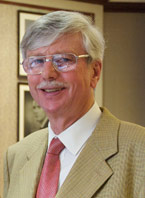
Former Dean and Professor Emeritus Michael E. Charles, FCAE, PEng, has been elected President of the Canadian Academy of Engineering (CAE), and started his presidency on June 4, 2010 at the conclusion of the CAE’s Annual General Meeting in Toronto.
The CAE is an independent, self-governing, non-profit organization serving the technological development of Canada by marshaling the knowledge and insights of eminent members of the engineering profession.
“It is an honour and a privilege to serve as President of the Academy,” said Professor Charles. “I will do my best to promote its objectives and at the same time reach out to other organizations which can help us respond to multi-disciplinary challenges, particularly with regard to Canada’s future in energy and the environment.”
Professor Charles has served in positions of leadership in both the public and private sectors. He was elected as a Fellow of the Academy in 1998 and has served on its Board of Directors since 2008.
Professor Charles is an influential figure in engineering, education and academic leadership. He served as Dean of the Faculty of Applied Science & Engineering from 1993 to 2001. He has continued to be active, serving on the Board of the Canadian Institute for Photonic Innovations (CIPI), and undertaking assignments under the auspices of the Council of Ontario Academic Vice-Presidents and the Alberta Ministry of Advanced Education and Technology. A chemical engineer, with a Bachelor of Science (Engineering) from Imperial College, London, United Kingdom and a PhD from the University of Alberta, he worked for the Research Council of Alberta and Imperial Oil before joining the University of Toronto.
His research has focused on novel problems associated with the pipeline transport of complex crude oils and particulate solids which resulted in some sixty-five publications. Having served as a member of the Governing Council of the University of Toronto, on the Boards of three of the Ontario Centres of Excellence, Charles is a Fellow of the Canadian Academy of Engineering, the Engineering Institute of Canada, and the Chemical Institute of Canada, and is a Senior Fellow of Massey College.
“Professor Charles’ record of professional accomplishment is exemplary, and this latest honour, election as President of the Canadian Academy of Engineering, again affirms his highly-regarded, extensive contributions to scholarship, education and professional cooperation,” said Professor Cristina Amon, Dean of the Faculty of Applied Science & Engineering. “The prestige and influence of U of T academic leaders is further demonstrated by the fact that we now count two out of the three academy Presidents as our own.”
Professor Catharine Whiteside, Dean of U of T’s Faculty of Medicine and Vice Provost, Relations with Healthcare Institutions, is serving as President of the Canadian Academy of Health Sciences for the 2009-2011 term.
The Canadian Academy of Engineering (CAE) comprises many of the country’s most accomplished engineers, who are committed to the application of science and engineering principles in the interests of the country and its enterprises. Established in 1987, the CAE is a member of the Council of Canadian Academies along with the Royal Society of Canada (Arts and Science) and the Canadian Academy of Health Sciences. The CAE is also an active member of the International Council of Academies of Engineering and Technological Sciences (CAETS), which involves 26 leading countries.
Members of the Academy are nominated and elected by their peers to honorary Fellowships, in view of their distinguished achievements and career-long service to the engineering profession. Fellows of the Academy are committed to ensuring that Canada’s engineering expertise is applied to the benefit of all Canadians, and can be identified by the FCAE after their names.
Announced on June 7 at the High Performance Computing Symposium, a team of researchers from the University of Toronto’s Department of Mechanical & Industrial Engineering (MIE) performed the largest simulation of bio-jet fuel combustion to date.
These supercomputer simulations will make it possible to identify the optimal mixtures of fuel to reduce soot formation and greenhouse gas emissions. The MIE team, comprised of Professor Murray Thomson (cross-appointed to the Department of Chemical Engineering & Applied Chemistry), postdoctoral fellow Seth Dworkin, and PhD candidate Meghdad Saffaripour, performed their research at SciNet, Canada’s largest supercomputer research and resource centre.
Follow the links below to read more:
Green Car Congress