
The Academic Board has approved the re-appointment of Cristina Amon as Dean of the Faculty of Applied Science and Engineering for a five-year term beginning on July 1, 2011.
The Search Committee advising the Vice-President and Provost received and reviewed much feedback from faculty, staff and students of the Faculty of Applied Science & Engineering, as well as from the broader University of Toronto community. This feedback, as well as input from an external review team and from the Committee members, was strongly supportive of re-appointing Professor Amon for a second term as Dean of the Faculty of Applied Science & Engineering.
The overwhelming support for Professor Amon’s re-appointment reflects her exceptional leadership of the Faculty during her first term as Dean. She has been a champion of communication, co-operation, transparency and increased diversity within the Faculty. She has enhanced the high standards of its academic programs, strengthened its finances and increased both the Faculty and its individual members’ profiles, both within the University of Toronto community and internationally.
Professor Amon joined the University of Toronto in 2006 as the 13th Dean of the Faculty of Applied Science & Engineering. She also holds the position of Alumni Chair of Bioengineering in Mechanical and Industrial Engineering. Prior to her leadership at U of T Engineering, she was Director of the Institute for Complex Engineered Systems (ICES) at Carnegie Mellon University, in addition to the Raymond J. Lane Distinguished Professor of Mechanical and Biomedical Engineering. As Director of ICES, Cristina Amon conceived and led interdisciplinary research initiatives, seeded high-impact projects, fostered a culture of innovation and promoted strong interactions with industry.
Professor Cheryl Misak, vice-president and provost, praised her exceptional leadership, noting, “Professor Amon has been a champion of communication, co-operation, transparency, and increased diversity within the Faculty. She has enhanced the high standards of its academic programs, strengthened its finances and increased both the faculty and its individual members’ profiles, both within the University of Toronto community and internationally.”
Read the story posted on NEWS @ the University of Toronto.
Paul Giampuzzi (MIE), Rehman Merali (UTIAS), Brendan Wong (ECE), Merrick Zoubeiri (ECE), Arian Omidzohour (ECE) and Soren Massoumi (ECE) won gold at RoboGames in the 120-lb Combat Robot category. RoboGames brings bright minds from all over the world to compete in more than 50 different events. This year, RoboGames took place in San Mateo, California from April 23-25, 2010.
Follow the link to read the full story, as reported by the Toronto Star.
You can also watch a clip of the final battle between TSA Inspected (the U of T robot) and Mortician (a robot from a California team) by following the link to the University of Toronto Robotics Association (UTRA) website.
Eric Miller and Amer Shalaby from the Department of Civil Engineering are part of a worldwide group of transport engineers working with the Hajj Center of Research Excellence to find solutions to Mecca’s dense traffic, especially during the hajj, the world’s largest pilgrimage. The city is planning on developing a massive public transit system.
The engineers aim to design a complex system of transit routes that would alleviate crowd control and chaos on the busy streets and turn Islam’s holiest city into a global model of how to handle masses of people in limited space.
Professor Shalaby is looking at gondola cable cars for rapid transit while Professor Miller is considering the lessons from high-density world events like the World Cup and the Vancouver Olympics for solutions to the issues of moving large numbers of people conveniently.
Click here to read the full story, as reported in The Globe and Mail .
Professor Mark Chignell from the Department of Mechanical and Industrial Engineering and graduate student Jamy Li authored a study, “Birds of a Feather: How personality influences blog writing and reading,” evaluating whether aspects of a blogger’s personality can be gleamed from his/her posts.
The researchers found that blog readers do, in fact, gain insight into writers’ personality traits by following their posts; Personal or narrative-style blogs are found to reveal the most about the writer’s personality.
Click here to read commentary on the study in Psychology Today.
ChemE Professor Levente Diosady has received the Babcock-Hart Award from the Institute of Food Technologists (IFT). This honour is awarded annually to a member of the IFT whose contributions to food technology have resulted in improved public health through nutrition or more nutritious food. The award is named after agricultural chemists Stephen Babcock and Edwin Hart who together devised the “single-grain experiment,” which was the start of modern nutritional science.
Professor Diosady is one of Canada’s leading food engineers. His research has improved vegetable oil processing, edible-oil refining, micronutrient fortification and meat curing. Over the past 15 years, Professor Diosady has worked to develop techniques for fortifying staple foods such as salt, sugar and rice with micronutrients to combat vitamin and mineral deficiencies, which adversely affect some two billion people worldwide. His research has led to cost-effective and easy-to-maintain solutions to micronutrient deficiencies, such as anaemia, in developing nations.
A triple alumnus of U of T, Professor Diosady was inducted into our Hall of Distinction in 2004. He is a Fellow of the Canadian Academy of Engineering, the Chemical Institute of Canada and the Canadian Institute of Food Science and Technology. Earlier this year, he was inducted into the Order of Ontario.
“Professor Diosady exemplifies our Faculty’s mission to apply innovative engineering solutions to global problems,” said Cristina Amon, Dean, Faculty of Applied Science & Engineering. “I am delighted that he continues to be recognized for his outstanding achievements in food engineering.”
Professor Diosady will be recognized at the IFT’s Annual Meeting and Food Expo in Chicago on July 17, 2010.
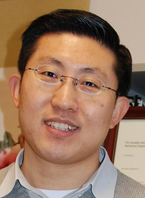
Professor Yu Sun (MIE) has been awarded the 2010 IEEE Robotics and Automation Society’s (IEEE RAS) Early Career Award, for contributions in enabling microrobotic and MEMS technologies for automated cell manipulation and characterization in cell biology and clinical applications. This award is bestowed on individuals in the early stage of their career, who have made an identifiable contribution or contributions which have had a major impact on the robotics and/or automation fields. Professor Sun is the first Canadian researcher to win this award since its establishment in 1999.
Yu Sun holds the Canada Research Chair in Micro and Nano Engineering Systems. His research focuses on the manipulation and characterization of single cells, biomolecules and nanomaterials using microelectrical mechanical systems (MEMS). While he only received his PhD in 2003, he has already published over 50 articles in refereed journals and 69 refereed conference publications. His research has also resulted in ten patents and two spin-off companies. Professor Sun is a Senior Member of IEEE and a Fellow of CSME. In 2009, he received the McLean Award for early career research from the University of Toronto.
“I am delighted that Professor Sun has been honoured by IEEE RAS for his contributions to cell characterization using MEMS technologies,” said Cristina Amon, Dean, Faculty of Applied Science & Engineering. “Recognition by this prestigious international society demonstrates the global impact that he and many of our other early career researchers are already making.”