Data analytics &
artificial intelligence news

Data analytics and artificial intelligence programs and research at U of T Engineering is reshaping processes to improve lives and generate value for people around the world.

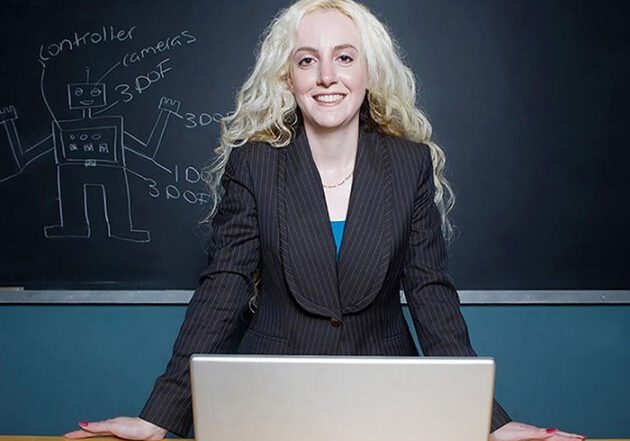
Pepper the robot, built by SoftBank Robotics, is the newest addition to U of T Engineering’s Autonomous Systems and Biomechatronics Lab led by Professor Goldie Nejat (MIE). Pepper is the first humanoid robot capable of recognizing and adapting to human emotions, one of the many new applications for machine intelligence. (Credit: Liz Do)

U of T Engineering to host inaugural alumni bootcamp on machine intelligence

Engineering Science offers one-day crash course led by experts in the field
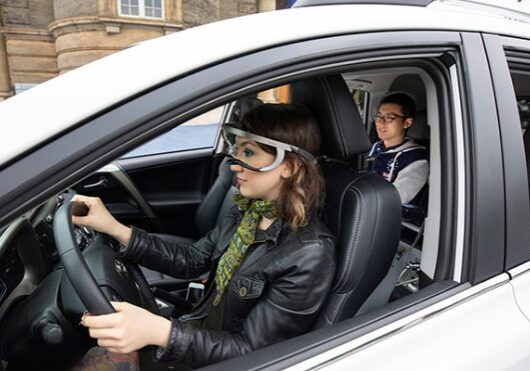
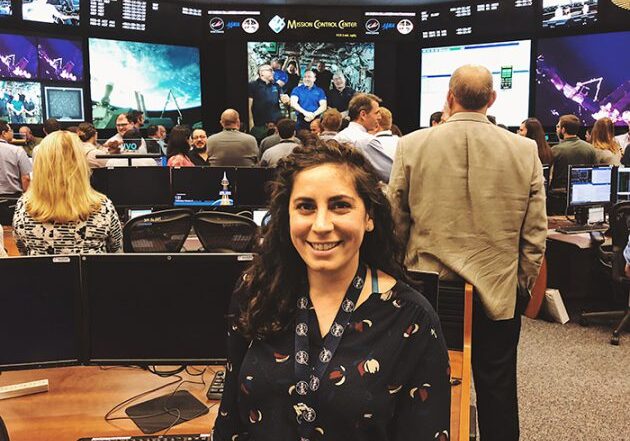
Nazli Kaya (MIE MASc candidate) wears the eye-tracking device used to accurately assess where drivers were looking when turning at intersections. (Credit: Laura Pedersen)

More than half of drivers don’t look for cyclists when turning right, reveals U of T Engineering study

Researchers tracked drivers’ eye movements to examine how attention is divided during turning, revealing that many fail to shoulder check — especially those who frequently drive downtown
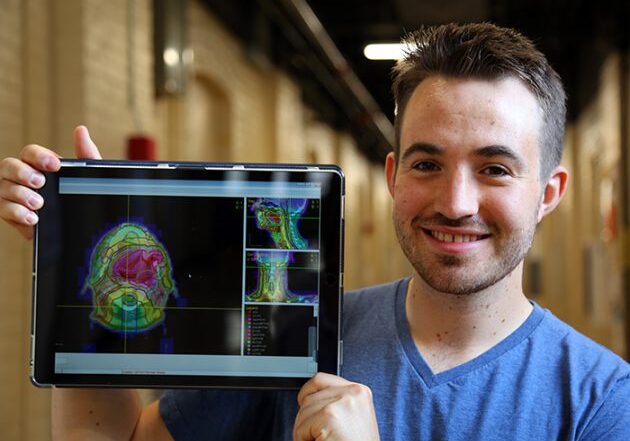
Aaron Babier (MIE PhD candidate) demonstrates his AI-based software’s visualization capabilities. (Credit: Brian Tran)

Smarter cancer treatment: AI tool automates radiation therapy planning

U of T Engineering researchers develop an artificial intelligence (AI) tool to cut the time of developing radiation therapy plans down to mere hours
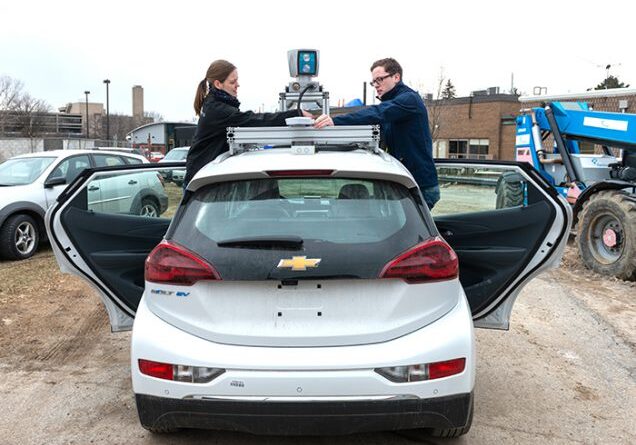
Mona Gridseth (left, UTIAS PhD candidate) and Keenan Burnett (EngSci 1T6+PEY, UTIAS MASc candidate) work on Zeus, a self-driving vehicle that recently took the top prize at the first competition of the three-year AutoDrive Challenge™. U of T Engineering’s new Engineering Science major in Machine Intelligence launches this September. It joins an MEng emphasis in Analytics that began January 2018. (Credit: Laura Pedersen)

U of T Engineering launches Canada’s first engineering undergraduate program in Machine Intelligence

Students will begin courses in the new major in September 2018
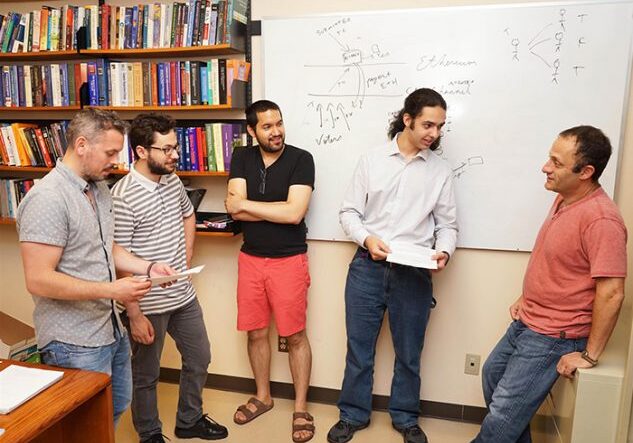
Veneris and team_credit Jessica MacInnis_700

U of T Engineering blockchain project receives funding injection from Connaught Fund

Multidisciplinary team unites researchers to apply blockchain technology in fields from law to finance

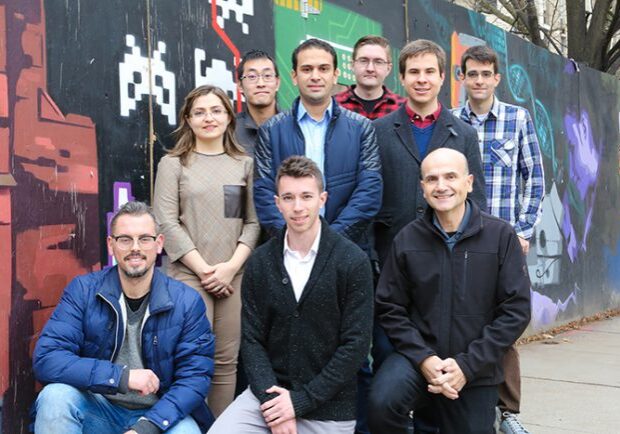
Professor Moshovos and his team. Front row, left to right: Zissis Poulos, Dylan Malone Stuart, Professor Andreas Moshovos; back row, left to right: Sayeh Sharifymoghaddam, Kevin Siu, Mostafa Mahmoud, Patrick Judd, Alberto Delmas Lascorz, Milos Nikolic. (Credit: Tyler Irving)

Building the computing engines that will power the machine learning revolution

New NSERC Strategic Partnership Network focuses on techniques to optimize hardware for artificial intelligence

On the left of each quadrant is a real X-ray image of a patient’s chest and beside it, the syntheisized X-ray formulated by the DCGAN. Under the X-ray images are corresponding heatmaps, which is how the machine learning system sees the images (Image courtesy of: Hojjat Salehinejad/MIMLab).

Training artificial intelligence with artificial X-rays

New U of T Engineering research could help AI identify rare conditions in medical images by augmenting existing datasets

Professor Parham Aarabi (ECE) is the CEO and founder of ModiFace, a spin-off company that uses augmented reality (AR) and artificial intelligence (AI) to build advanced facial visualization software for the beauty and medical industries. ModiFace has been acquired by L'Oreal. (Credit: Johnny Guatto)

U of T Engineering AI researchers design ‘privacy filter’ for your photos that disables facial recognition systems

New algorithm protects users’ privacy by dynamically disrupting facial recognition tools designed to identify faces in photos

Quantum computing will bring a whole new set of security concerns to the internet — but U of T Engineering advancements in Quantum Key Distribution (QKD) are providing solutions to these emerging challenges. (Creative Commons)

Going the distance with future-proof quantum cryptography

Professor Glenn Gulak and team show that error-correction decoding is no longer a computational bottleneck in long-distance Quantum Key Distribution