Department news

University of Toronto Institute for Aerospace Studies (UTIAS) news

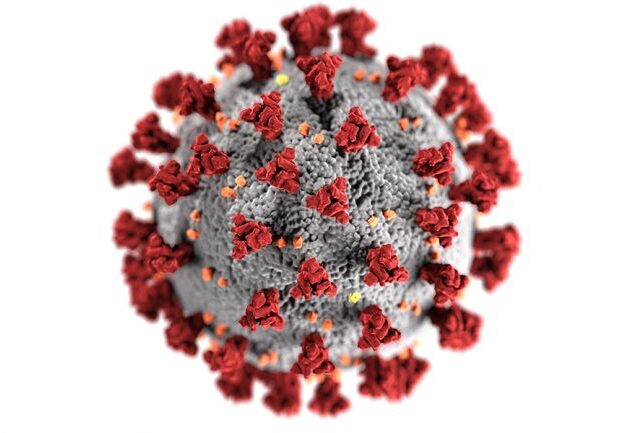
A new study looks at how droplets expelled by a cough or sneeze can break up into smaller pieces when they collide with mask material. The research underscores the importance of multi-layer masks to prevent the spread of COVID-19. (Photo: CDC, via Unsplash)

Physics experiment shows potential value of triple-layer masking

An experimental study carried out by an international team of engineers and physicists has added more evidence for the value of triple-layer masking to prevent the spread of COVID-19 and similar diseases.  “Any form of mask is better than no mask,” says Professor Swetaprovo Chaudhuri (UTIAS), one of the co-authors of a new paper published today in Science Advances.  […]
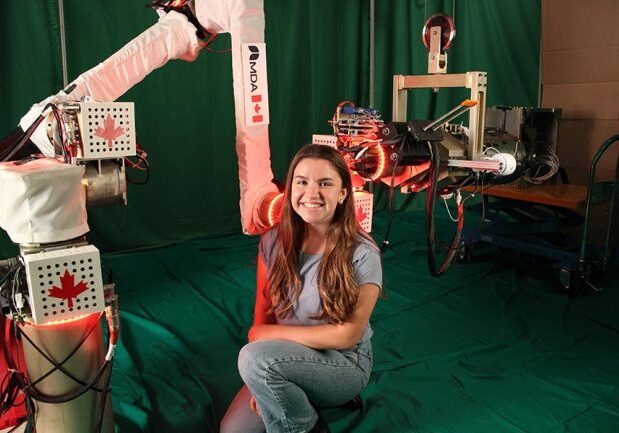
PEY Co-op student Erin Richardson (Year 3 EngSci) is spending 16 months at Canadian space engineering firm MDA, where she is working on a new generation of autonomous robots for the forthcoming Lunar Gateway space station. (Photo: MDA)

‘My dream job’: How a PEY Co-op student is helping develop a new generation of autonomous space robots

At Canadian space engineering firm MDA, Erin Richardson (Year 3 EngSci) is designing robotic systems for NASA’s Lunar Gateway
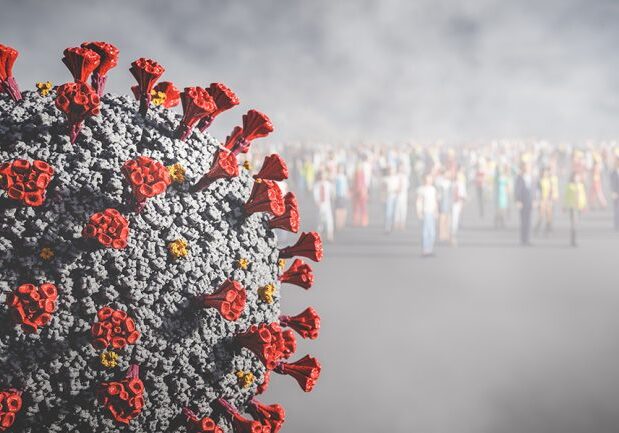
An improved mathematical model developed by an international team combines the “physics of the cloud” with the “physics of the crowd” to predict the dominant modes of transmission for the SARS-COV-2 virus that causes COVID-19. (Image: photocreo, via Envato)

Improved COVID-19 model leverages flow physics of airborne respiratory droplet ‘clouds’

The “first-principles approach” is the result of a collaboration between researchers in Canada, the U.S. and India
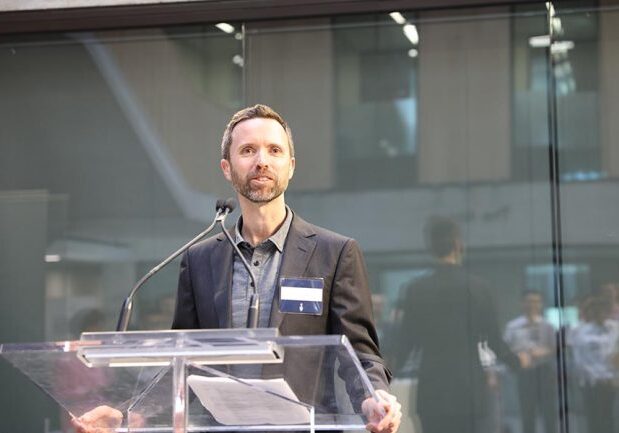
Professor Tim Barfoot (UTIAS), seen here at the launch of the Robotics Institute, held in May 2019, has been elected a Fellow of the Institute of Electrical & Electronics Engineers (IEEE). (Photo: Liz Do)

Professor Tim Barfoot elected an IEEE Fellow

Honour recognizes outstanding record of accomplishments in visual navigation of mobile robots for a variety of applications

Professor Jennifer Farmer (ChemE) is using a combination of “kitchen labs,” simulated lab platforms and data analysis reports in her Applied Chemistry course. (Photo courtesy Jennifer Farmer)

Three cool virtual labs: How U of T Engineering instructors are getting creative with remote active learning

Without access to on-campus lab equipment, software or space, instructors are finding new ways to give students hands-on experiences
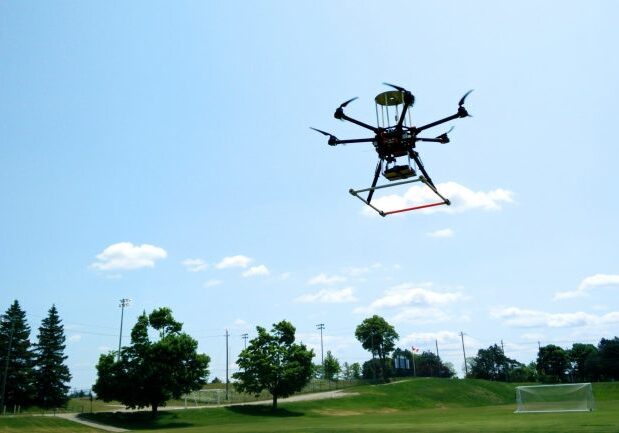
A precision flight-control test in wind with a hexacopter drone from Professor Steven Waslander‘s (UTIAS)  lab. Waslander will use the funding to acquire the latest in motion-capture technology in order to develop next-generation drones. (Photo courtesy of Steven Waslander)

Five U of T Engineering projects receive funding boost for state-of-the-art research tools

Motion-capture equipment to explore and develop robust autonomous drones is among five infrastructure projects receiving funding support
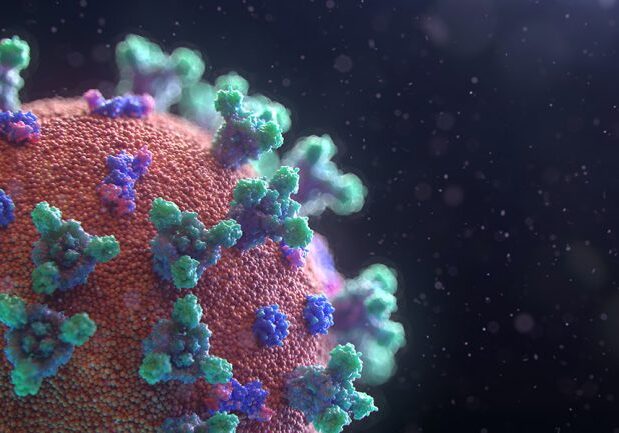
A new model, created by Professor Swetaprovo Chaudhuri (UTIAS) and his international collaborators, uses fundamental physics to predict the behaviour of the microscopic droplets that spread the COVID-19 virus. (Photo: Fusion Medical Animation via Unsplash)

Understanding the spread of COVID-19 through physics-based modeling

An international collaboration led by U of T Engineering professor Swetaprovo Chaudhuri leverages fundamental physics to model the aerosol droplets that spread the COVID-19 virus.

Severo is among 11 U of T Engineering recipients of the Vector Institute Scholarships in Artificial Intelligence. (Photo courtesy of Daniel Severo)

Eleven U of T Engineering grad students receive Vector Institute Scholarships in AI

Students pursuing research in artificial intelligence will get access to networking opportunities and professional development workshops at the institute

Left to right: Professors P.A. Sullivan, R.C. Tennyson, I.I. Glass, J.B. French, and B. Etkin (not shown: Prof. Peter Hughes) in 1970. (Photo courtesy UTIAS)

Solving Houston’s problem: How U of T Engineering’s Institute for Aerospace Studies helped Apollo 13 land safely

Professors from the University of Toronto Institute for Aerospace Studies determined how to safely separate the mission’s modules on re-entry