Department news

The Edward S. Rogers Sr. Department of Electrical & Computer Engineering (ECE) news

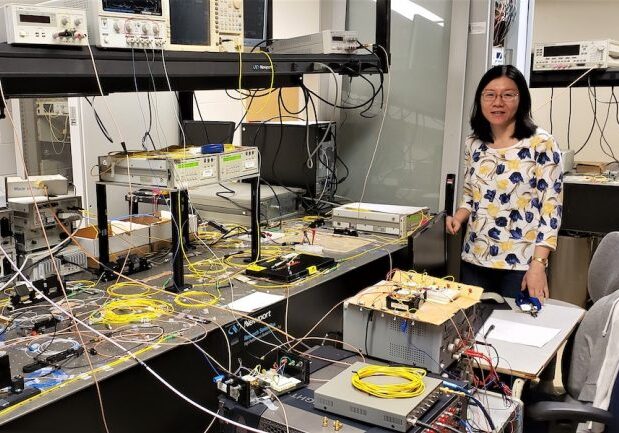
Professor Li Qian (ECE), shown in her lab pre-pandemic, is part of a research team that proposed a new quantum fingerprinting protocol, which is used to quickly and securely identify whether information from two sources is the same. (Photo: Don Figer)

Quantum ‘fingerprints’ made smaller and delivered faster

New protocol from ECE researchers solves communication complexity problems more efficiently and with off-the-shelf components
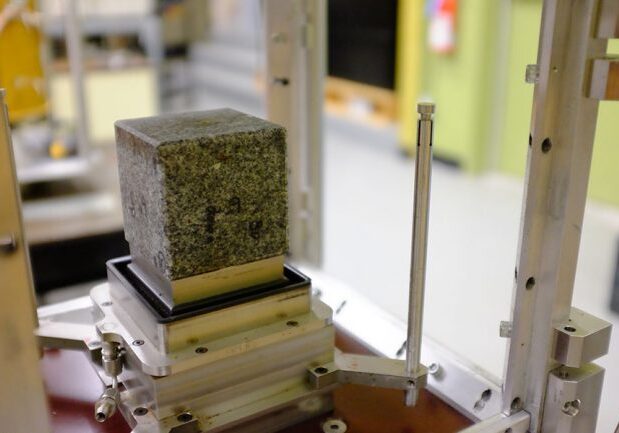
In the Rock Fracture Dynamics Facility (CivMin), rock samples are subjected to the stress, fluid pressure and temperature conditions they would experience in nature. The research is one of nine projects boosted by new funding from the Canada Foundation for Innovation. (Photo courtesy Sebastian Goodfellow)

Rock music: Listening for induced earthquakes among nine U of T Engineering projects funded through CFI

CFI’s John R. Evans Leaders Fund will support research into seismicity, water treatment, bioengineering and more
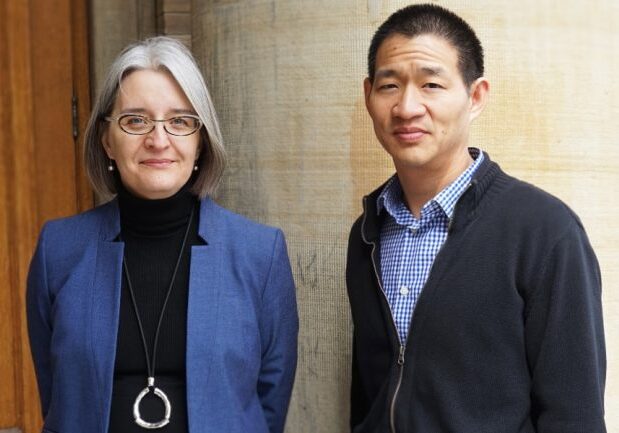
Professors Lisa Austin (Faculty of Law) and David Lie (ECE) — photographed before the COVID-19 pandemic — are part of a multidisciplinary team behind a new global study that explores the privacy expectations and behaviour of smartphone users. (Photo: Jessica MacInnis)

Privacy study sheds light on why we grant or deny app requests

U of T Engineering professor led a multidisciplinary team behind a new global study that explores the privacy expectations and behaviour of smartphone users

Professor Philippe Lavoie (UTIAS) is among five U of T Engineering researchers to receive funding in the latest round of the Ontario Research Fund – Research Excellence (ORF-RE) program. (Photo: Meredith Pullara)

Five U of T Engineering faculty receive Ontario Research Funding to advance transformative research

Projects include reducing aircraft noise emissions, developing all-weather autonomous vehicles
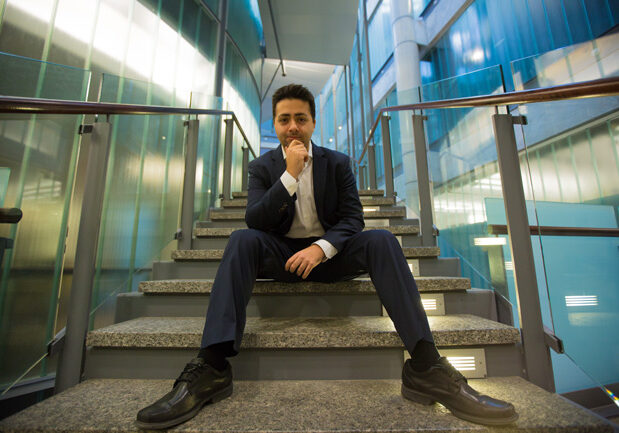
Professor Parham Aarabi (ECE) is one of a group of AI experts behind HALT AI, a U of T service that tests for bias in AI systems across a variety of diversity dimensions, such as gender, age and race. (Photo: Johnny Guatto)

New U of T initiative to assess bias in AI systems

U of T service measures the performance of AI algorithms across diverse inputs, such as gender, age and race.
campus_900x600_dariaperevezentsev

U of T Engineering professors and alumni elected to the Canadian Academy of Engineering

Fellows celebrated for their outstanding contributions to engineering in Canada and around the world.
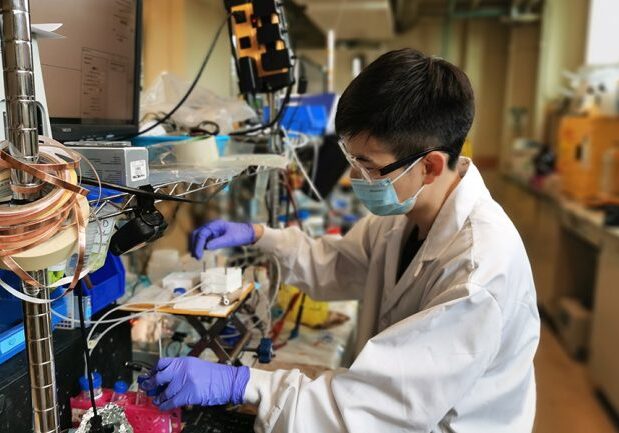
PhD candidate Jianan Erick Huang works on an electrolyzer in the lab of Professor Ted Sargent at the University of Toronto. The team has developed a new process for converting dissolved CO2 into higher-value products, such as ethylene. Unlike previous systems, the team’s electrolyzer can be run under strongly acidic conditions, greatly increasing the proportion of carbon that is converted. (Photo: Geonhui Lee)

Passing the acid test: New low-pH system recycles more carbon into valuable products

Electrochemical reactor runs under acidic conditions to convert more than 50% of CO2 into products such as ethylene and ethanol

Narinder Dhami (Skoll ElecE 0T5 + MBA 08) formed a coalition of South Asian community leaders to respond to the emergency situation in India. The coalition created the India COVID-19 Relief Fund to help facilitate donations from Canadians.

U of T Engineering alumna sets up funding initiative to help India recover from COVID-19

Narinder Dhami is part of a coalition of South Asian leaders working to maximize impact of donations from Canadians, with a goal of raising $1 million.

Professor Ervin Sejdić combines expertise in machine learning, signal processing and data science to improve health outcomes for patients. (Photo by: North York General Hospital)

ECE welcomes new faculty member Ervin Sejdić

In 2016, President Barack Obama presented Sejdić with the highest honour bestowed by the U.S. for young researchers