
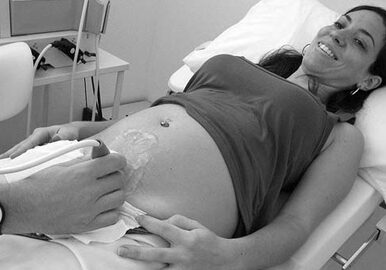
U of T engineers use “Sperm Olympics” to help couples get pregnant faster
In vitro fertility treatments can be intensely emotional and medically invasive, not to mention expensive. But technical developments from a research group at the University of Toronto may soon be able to shorten the journey to pregnancy – and that potential has piqued interest from international investors. The research group, QSperm, is looking to turn […]
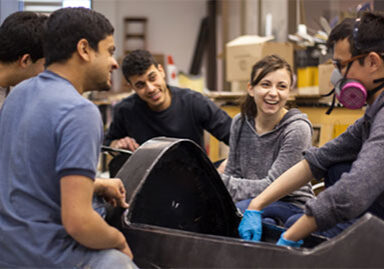
Engineering a more fuel-efficient engine from scratch
Last fall, eight engineering students from U of T crowded around a small leaf-blower engine and argued whether it could power the world’s most fuel-efficient vehicle. Then, they tossed it aside and started building a better one from scratch. Now – after their professors said it was impossible – that engine is at the heart […]

Stiffness: a new piece of the breast cancer puzzle
A new study has linked the stiffness of breast tissue to the progression of a particularly aggressive form of breast cancer. Published in Nature Medicine this month, the study may help clinicians differentiate between aggressive forms of the disease, which tend to have a poor prognosis, and less deadly forms. University of Toronto Assistant Professor […]

Health grants advance research in dental disease and cancer therapy
From gum disease to new cancer therapy, health concerns that affect millions are at the heart of two new Collaborative Health Research Projects (CHRPs) involving Professors Warren Chan (IBBME) and Eli Sone (IBBME, MSE). Making recovery from gum disease “stick” Assistant Professor Sone and his collaborators, Associate Professor Bernhard Ganss and Professor Chris McCulloch, are […]
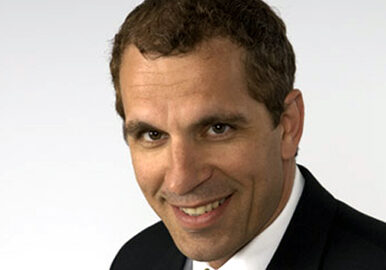
Could live-streaming black box data help prevent another Flight MH370 disaster?
Forensics engineer Doug Perovic, professor of materials science and engineering at U of T, recently shared his expertise with CBC and Global News about black box technology and its role in the Flight MH370 disaster. Malaysia Airlines MH370: Why airlines don’t live-stream black box data – CBC News (March 31, 2014) How live-streaming black box […]
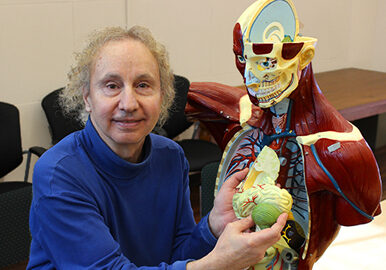
Can epileptic seizures be predicted and prevented?
Every day, 42 Canadians learn they have epilepsy. This chronic disorder touches 50 million people worldwide, and in the past, it’s even affected geniuses like Napoleon Bonaparte, Beethoven and Vincent Van Gogh. For Epilepsy Awareness Month, U of T’s Erin Vollick sat down with a leading neurological researcher at the University of Toronto, Professor Berj […]

CGEN: Leaving no child hungry in Dhaka, Bangladesh
Whether it refers to the environment, a start-up business or somebody’s wallet, the term sustainability has become a buzzword of the 21st century. But in areas like Dhaka, Bangladesh – where a quarter of the population lives below the poverty line and half of children are malnourished – if parents cannot feed their families, economic […]
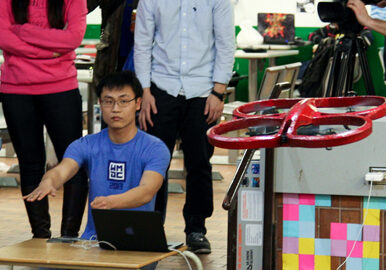
Jedi Wars: High-flying stunts wow at robotics competition
A long time ago, in a galaxy far, far away—well, actually, last week on the University of Toronto’s St. George campus – speed and stunts worthy of the Millenium Falcon wowed the crowd at the first Jedi Wars flying robotics competition. Fourth-year undergraduate students in The Edward S. Rogers Sr. Department of Electrical & Computer […]
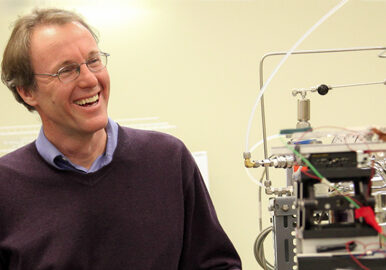
From bio-fuels to molten steel: How U of T engineers are curbing carbon emissions
Whether we’re transporting goods halfway across the planet, or making steel in large-scale factories, limiting our carbon emissions is an immense challenge. But Professor Murray Thomson (MIE) and his team at U of T Engineering are up to the task. Their research explores new types of biofuel, different combustion methods and advanced sensors that are […]
